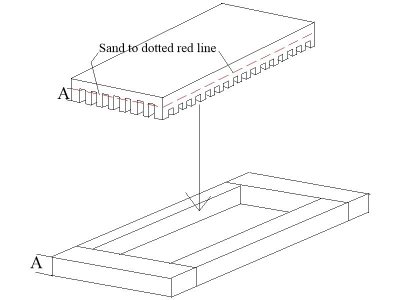




MAKING GRATINGS
This is one way to make gratings so they sit properly inside the coamings and head ledges.
This is based pretty much on how Bernard Frolich describes making them in his book The Art of Ship Modeling. There are various thickness slitting blades so an appropriate thickness slitting blade can be chosen to have ledges, battens, and the openings wind up around two inches to three inches rather than the gigantic openings we often see in kit gratings. Total time needed to make enough gratings for a model is about 2 hours plus time for the assembled gratings to dry when sprayed with lacquer following step 6 below.
Start with a slat of close grained hardwood like pear, castello, Alaskan cedar, Europeon boxwood or similar species.
1. Make a board with a plywood board and glue a guide and cut a slot for the blade so the distance between the edge of the guide and blade is the size of the opening that you want.
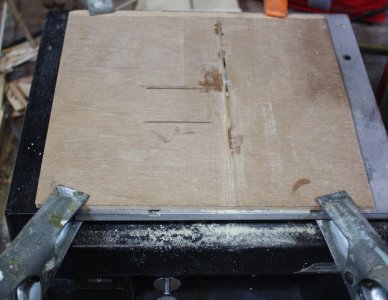
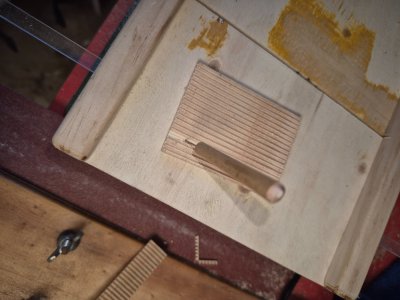
2. Make shallow cuts
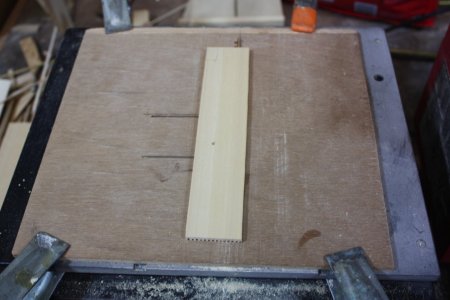
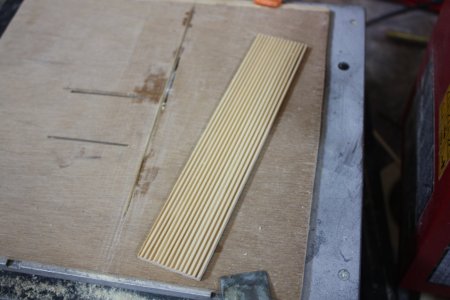
4 Make deep cross cuts that do not quite cut through the board.
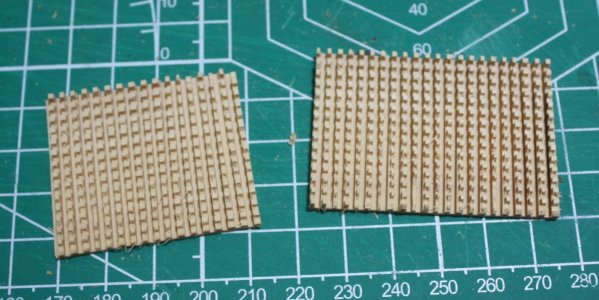
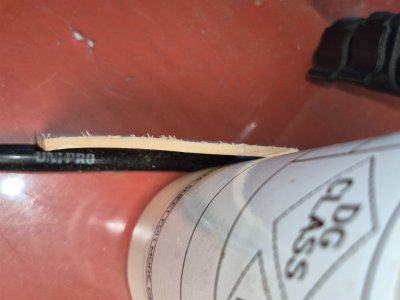
5. Make batten material
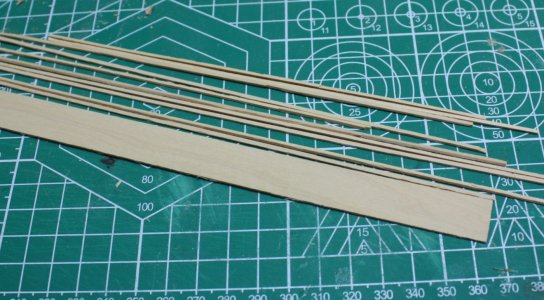
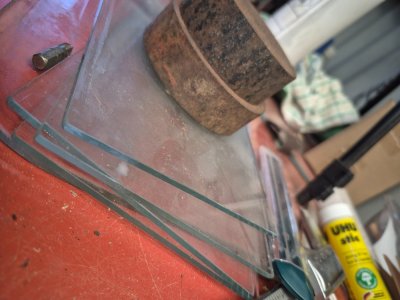
6. Inserting battens. Once they are all in place spray with lacquer to glue them in place.
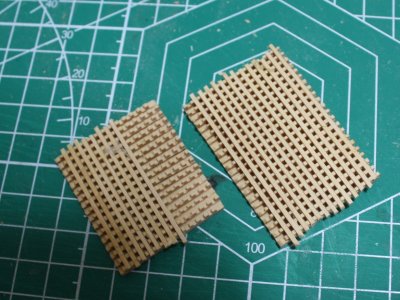
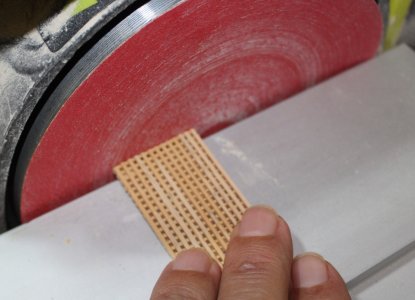
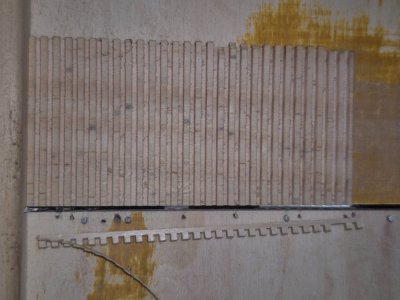
7. Sand away excess wood on the bottom and clean up any remaining unwanted wood. The piece on the right is nearly sanded through.
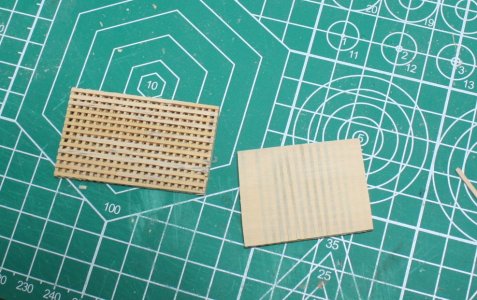
8 Assembled grating stock from which individual gratings can be cut. As can be seen in the photo, some light sanding is needed to clean up this stock piece.
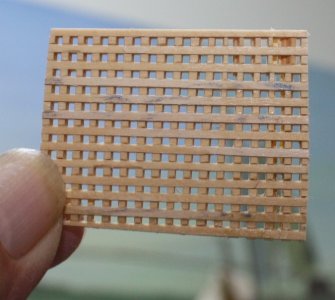
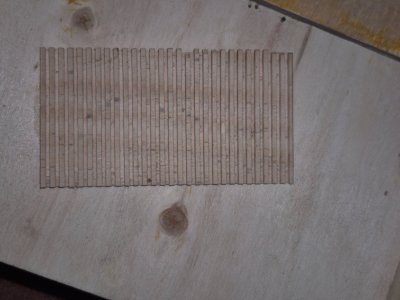
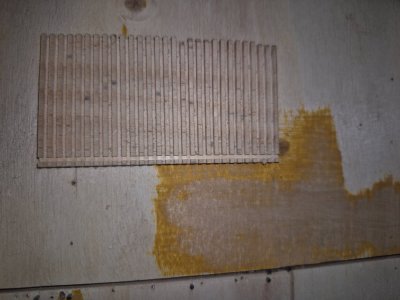
It is best to cut the pieces of grating as close as possible to the size in the drawings so there is a solid edge all around. Openings with hanging ends of battens and ledges was never done like in the second photo below. The battens always ran fore and aft. Once the gratings are made, then make and install the coamings so there is a tight fit.
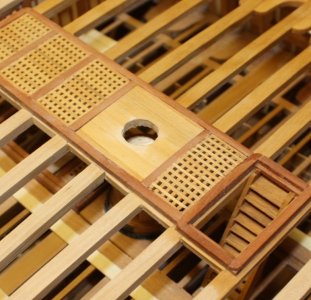
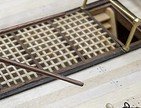
Delusional kit gratings below. The gratings never should have open holes along the outboard edge. The holes were normally between 2" and 3" square so a sailor's heel could not go into it.
I realize not everyone has the tools, but for those that do, I hope this will be helpful.
Allan
This is one way to make gratings so they sit properly inside the coamings and head ledges.
This is based pretty much on how Bernard Frolich describes making them in his book The Art of Ship Modeling. There are various thickness slitting blades so an appropriate thickness slitting blade can be chosen to have ledges, battens, and the openings wind up around two inches to three inches rather than the gigantic openings we often see in kit gratings. Total time needed to make enough gratings for a model is about 2 hours plus time for the assembled gratings to dry when sprayed with lacquer following step 6 below.
Start with a slat of close grained hardwood like pear, castello, Alaskan cedar, Europeon boxwood or similar species.
1. Make a board with a plywood board and glue a guide and cut a slot for the blade so the distance between the edge of the guide and blade is the size of the opening that you want.
2. Make shallow cuts
4 Make deep cross cuts that do not quite cut through the board.
5. Make batten material
6. Inserting battens. Once they are all in place spray with lacquer to glue them in place.
7. Sand away excess wood on the bottom and clean up any remaining unwanted wood. The piece on the right is nearly sanded through.
8 Assembled grating stock from which individual gratings can be cut. As can be seen in the photo, some light sanding is needed to clean up this stock piece.
It is best to cut the pieces of grating as close as possible to the size in the drawings so there is a solid edge all around. Openings with hanging ends of battens and ledges was never done like in the second photo below. The battens always ran fore and aft. Once the gratings are made, then make and install the coamings so there is a tight fit.
Delusional kit gratings below. The gratings never should have open holes along the outboard edge. The holes were normally between 2" and 3" square so a sailor's heel could not go into it.
I realize not everyone has the tools, but for those that do, I hope this will be helpful.
Allan
Last edited:





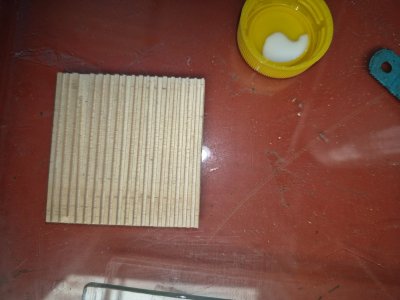


 I like your idea of the alignment dowels. I am guessing it helps keep everything square while cutting the grooves.