

I want to wish you a Happy Birthday, Wil.
Enjoy this day!
Regards, Peter
Enjoy this day!
Regards, Peter

 |
The beloved Ships in Scale Magazine is back and charting a new course for 2026! Discover new skills, new techniques, and new inspirations in every issue. NOTE THAT OUR NEXT ISSUE WILL BE July/August 2026 |
|
 |
As a way to introduce our brass coins to the community, we will raffle off a free coin during the month of August. Follow link ABOVE for instructions for entering. |
|


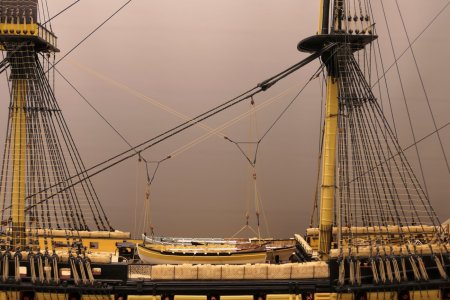


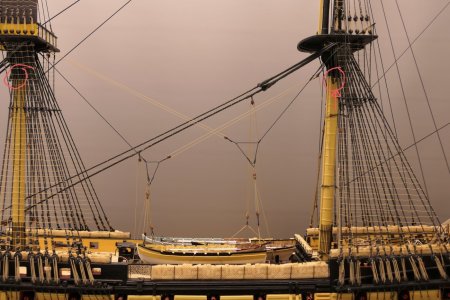
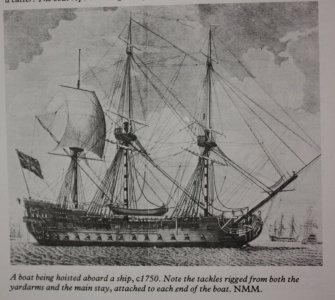
I looked at Steel, Lees, and elsewhere and cannot find a clear explanation on how the boats were launched. I looked in the Textbook of Seamanship which has great drawings but it is late 19th century so may not apply. https://maritime.org/doc/luce/index.phpStephan rightly pointed out to me that I had suspended one boat from a stay tackle, which logically of course cannot happen in reality.
THANK YOU STEPHAN!!For Alan, buy you a copy of the book of Harland, Leest and Harland are 2 books the fit together. Harland was on sailing ships and studied the way how things where done. Fantastic book to read. See attachment where I put the 3 pages about the tackles and hoisting of a boat.
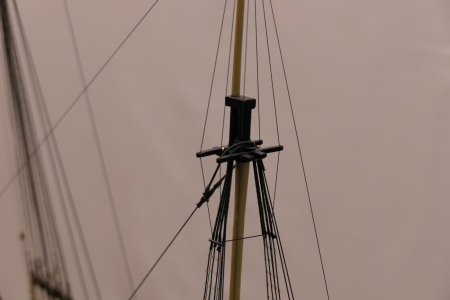
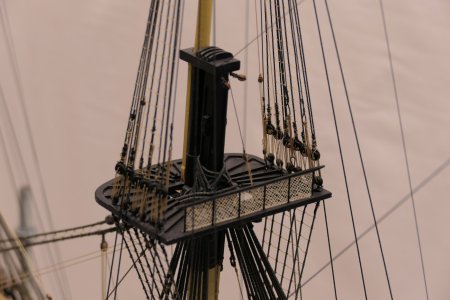
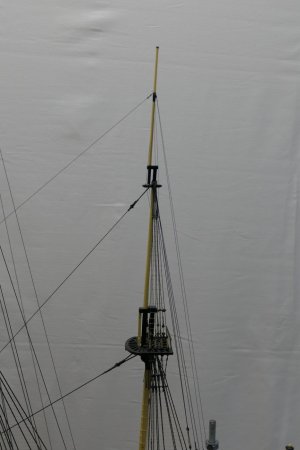
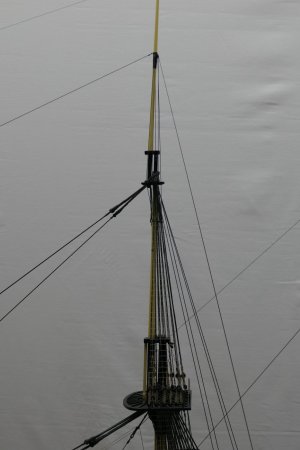
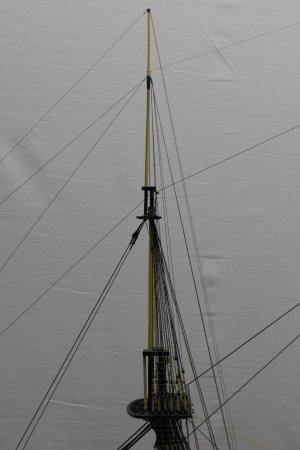
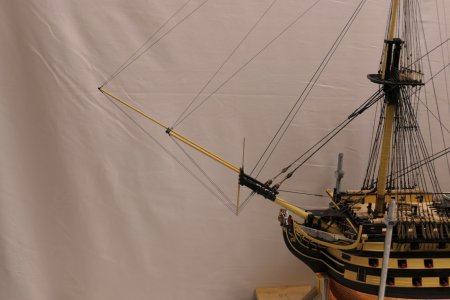
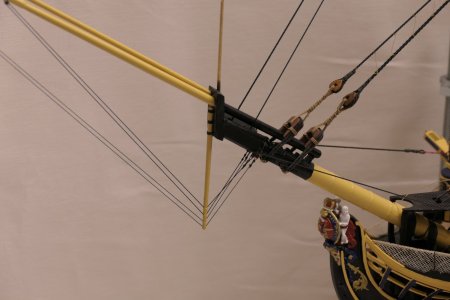
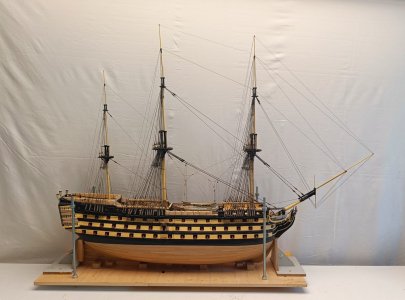
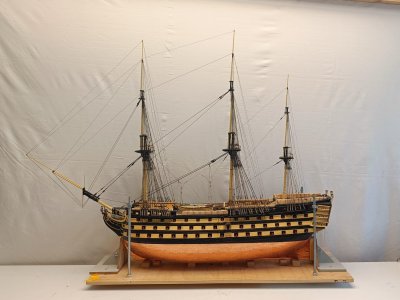

Beautiful job Will47 Standing rigging complete
Since my last post, almost 3 months have passed and I had hoped to be further along by now than I am.
After the tackles between the mizzen and the main mast, it was the fore topmast (or topmast) that came next. We are dealing here successively with:
Fore topmast tackle pendants
Fore topmast shrouds with ratlines and catharpins
Fore topmast futtock shrouds
Fore topmast stay
Fore topmast preventer stay
Fore topmast shifting backstays
Fore topmast standing backstays
Fore topmast breast backstays
In fact, this is again a repetition of steps, just like with the mizzen and the main mast, completing project number 7.
View attachment 593857
Next, one level higher, to the topgallant masts.
Successively from front to back:
Mizzen topgallant shrouds
Mizzen topgallant shifting backstays
Mizzen topgallant stay
Main topgallant shrouds
Main topgallant shifting backstays
Main topgallant stay
Main topgallant flagstaff stay
Main topgallant royal backstays
Fore topgallant shrouds
Fore topgallant shifting backstays
Fore topgallant stay
Fore topgallant flagstaff stay
Fore topgallant royal backstays
The topgallant shrouds are executed without ratlines and catharpins.
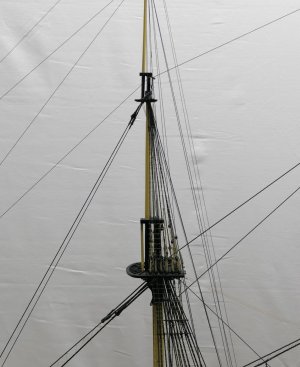
Worth mentioning at this stage is that the shrouds are fastened below the top of the upper mast sections. I did this by placing an eye splice tightly around the mast. The thickened part of this mast section ensures that the shrouds cannot slide down.
The further routing is then as follows:
A fiddly job, requiring a lot of work with tweezers. This is shown in Zu Mondfeld on page 279.
- hrough the holes in the topgallant cross-trees (outwards)
- Behind the catharpins of the topmast shrouds (back inwards)
- Behind the topmast shrouds towards the tops
- Fastened with a double eye splice on the inside behind the deadeyes on the tops
View attachment 593858
View attachment 593859
The stays then lie on top of the shrouds again at the masthead.
Projects 8, 9 and 10 are now also completed.
View attachment 593860
View attachment 593861
View attachment 593862
Then on to the bowsprit with successively:
Inner martingale
Outer martingale
Fore topgallant flagstaff stay
View attachment 593863
View attachment 593864
Initially, I had tightened the backstays of the foremast too much, causing the upper section of the mast not to stand upright but to lean too far backward. Not a good sight. I had hoped to correct this with the bowsprit stays, but unfortunately not. I then loosened all the lanyards again and gradually retensioned the lines so that the mast remained upright. As soon as you tighten one line too much, others start to slacken. So it is a matter of finding the right balance.
Once this was done, project 11 of 25 was also completed, meaning the standing rigging is entirely finished. This accounts for 64 of the 248 rope functions and 256 different ropes have been made, excluding all ratlines, lanyards and seizings.
The result can be seen in the photos below.
View attachment 593865
View attachment 593866
Just for the statistics:
• At this moment I have been working on building the Victory for 4 years;
• In these 4 years I have worked on the ship for 1800 hours over 490 days;
• Of this, 95 hours were spent building the ropewalk and the serving tool and modifying McKay’s table;
• And 110 hours on learning rope making;
• The standing rigging took me 375 hours.
All the work on the rigging has not bored me for a minute, not even the application of the ratlines. During that time you really see your ship grow, which gives a great deal of satisfaction. In addition, the choice to make your own rope adds enormous value. The correct proportions between rope thicknesses and the corresponding mast sections greatly enhance the overall appearance of the ship.
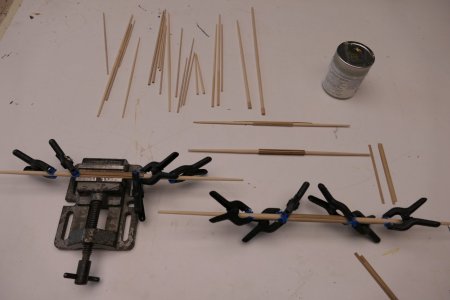
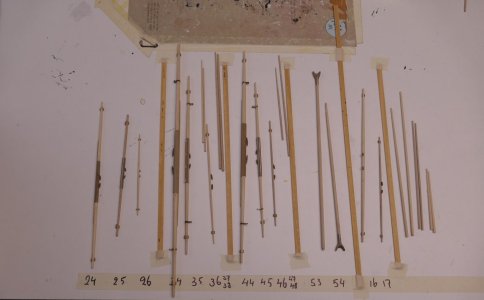
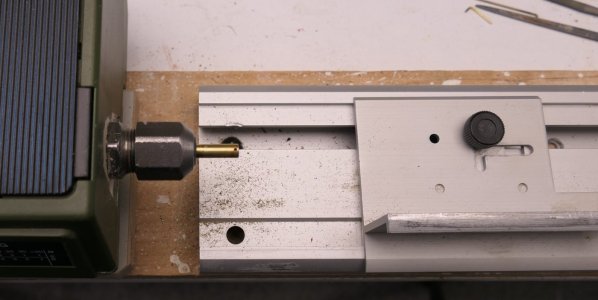
For now, I am closing the chapter of rigging. In the coming period I will focus entirely on making the yards and other wooden mast components. The ropewalk will be swapped for the lathe for a while.
To be continued.

True story. FabulousBeautiful job Will
Congrats
It took 'some time' but this is a impressive up-date, Wil. Very nice rigging!47 Standing rigging complete
Since my last post, almost 3 months have passed and I had hoped to be further along by now than I am.
After the tackles between the mizzen and the main mast, it was the fore topmast (or topmast) that came next. We are dealing here successively with:
Fore topmast tackle pendants
Fore topmast shrouds with ratlines and catharpins
Fore topmast futtock shrouds
Fore topmast stay
Fore topmast preventer stay
Fore topmast shifting backstays
Fore topmast standing backstays
Fore topmast breast backstays
In fact, this is again a repetition of steps, just like with the mizzen and the main mast, completing project number 7.
View attachment 593857
Next, one level higher, to the topgallant masts.
Successively from front to back:
Mizzen topgallant shrouds
Mizzen topgallant shifting backstays
Mizzen topgallant stay
Main topgallant shrouds
Main topgallant shifting backstays
Main topgallant stay
Main topgallant flagstaff stay
Main topgallant royal backstays
Fore topgallant shrouds
Fore topgallant shifting backstays
Fore topgallant stay
Fore topgallant flagstaff stay
Fore topgallant royal backstays
The topgallant shrouds are executed without ratlines and catharpins.
Worth mentioning at this stage is that the shrouds are fastened below the top of the upper mast sections. I did this by placing an eye splice tightly around the mast. The thickened part of this mast section ensures that the shrouds cannot slide down.
The further routing is then as follows:
A fiddly job, requiring a lot of work with tweezers. This is shown in Zu Mondfeld on page 279.
- hrough the holes in the topgallant cross-trees (outwards)
- Behind the catharpins of the topmast shrouds (back inwards)
- Behind the topmast shrouds towards the tops
- Fastened with a double eye splice on the inside behind the deadeyes on the tops
View attachment 593858
View attachment 593859
The stays then lie on top of the shrouds again at the masthead.
Projects 8, 9 and 10 are now also completed.
View attachment 593860
View attachment 593861
View attachment 593862
Then on to the bowsprit with successively:
Inner martingale
Outer martingale
Fore topgallant flagstaff stay
View attachment 593863
View attachment 593864
Initially, I had tightened the backstays of the foremast too much, causing the upper section of the mast not to stand upright but to lean too far backward. Not a good sight. I had hoped to correct this with the bowsprit stays, but unfortunately not. I then loosened all the lanyards again and gradually retensioned the lines so that the mast remained upright. As soon as you tighten one line too much, others start to slacken. So it is a matter of finding the right balance.
Once this was done, project 11 of 25 was also completed, meaning the standing rigging is entirely finished. This accounts for 64 of the 248 rope functions and 256 different ropes have been made, excluding all ratlines, lanyards and seizings.
The result can be seen in the photos below.
View attachment 593865
View attachment 593866
Just for the statistics:
• At this moment I have been working on building the Victory for 4 years;
• In these 4 years I have worked on the ship for 1800 hours over 490 days;
• Of this, 95 hours were spent building the ropewalk and the serving tool and modifying McKay’s table;
• And 110 hours on learning rope making;
• The standing rigging took me 375 hours.
All the work on the rigging has not bored me for a minute, not even the application of the ratlines. During that time you really see your ship grow, which gives a great deal of satisfaction. In addition, the choice to make your own rope adds enormous value. The correct proportions between rope thicknesses and the corresponding mast sections greatly enhance the overall appearance of the ship.
For now, I am closing the chapter of rigging. In the coming period I will focus entirely on making the yards and other wooden mast components. The ropewalk will be swapped for the lathe for a while.
To be continued.
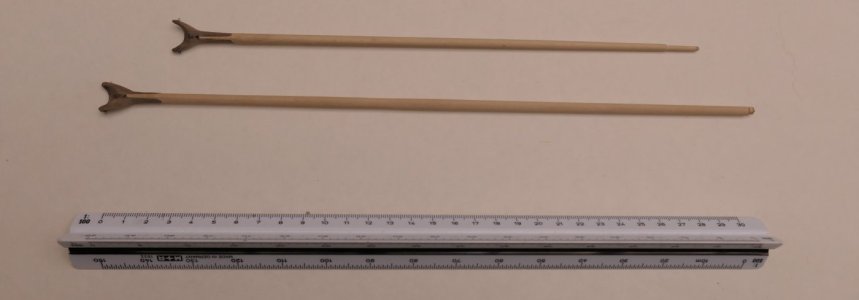
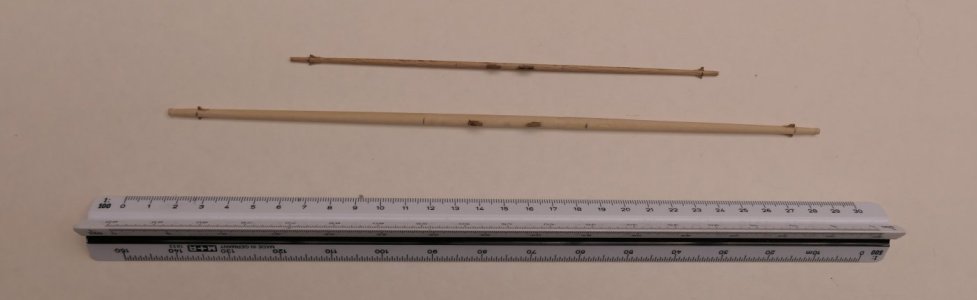
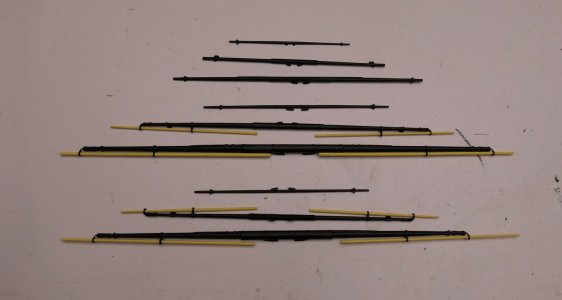
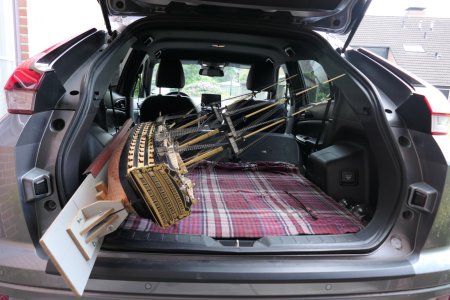
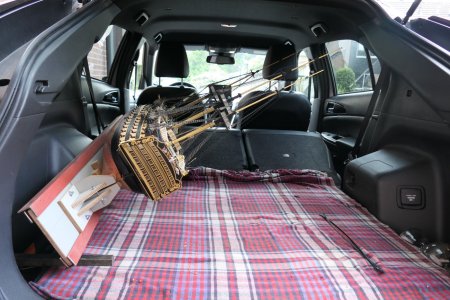
You have guts to move you Victory this way to A’dam, Wil. But it looks a very solid construction. Always nice when a ‘well-though-out’ plan comes together.Thank you all for your likes.
The whole discussion about sail materials has been occupying my thoughts quite a bit over the last few days. I have also had a very interesting conversation about it with AI. I use Claude.ai for this, which is much smarter than ChatGPT. It's great fun to pretend, despite having some prior knowledge, that you know nothing and ask questions along a more or less familiar path. I even had to correct Claude several times.
This conversation has given me a few insights:
First of all, my initial concern about using paper for the sails is beginning to fade. I am seriously considering it now, as it is much easier to work with than all the sewing required for fabric sails. What I still don't know is how the paper will behave when folding the reefed sails. Only practical tests will provide the answer to that.
Another question is which sails should be set full, reefed, or omitted altogether. At the moment, I am considering setting the following sails fully deployed: the gaff sail, the three topgallant sails, and perhaps a sail at the bottom of the bowsprit. It's a bit of a compromise that gives you something everywhere, while still keeping all the work on the masts and rigging clearly visible. All the remaining sails would be reefed. I intend to omit the studding sails and staysails completely. In reality, this configuration probably makes little sense, but aesthetics matter too. After all, a ship lying in harbour with reefed sails and its cannons run out makes no practical sense either, yet it certainly looks impressive.
Question: does anyone have photos of a ship with this kind of half-set/half-reefed sail arrangement?
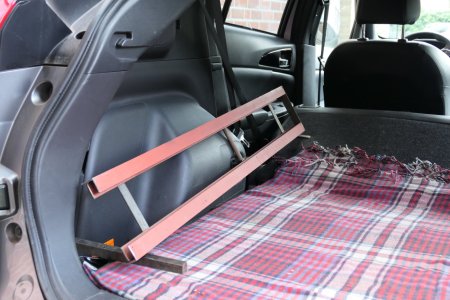
A few weeks ago, the idea of going to our expo in Amsterdam started to appeal to me again. And of course the big question was: “Will my Victory, with all her masts, still fit in my car? And if so, how?”
I first fitted my building board with a one-metre pole (because that's roughly how tall the Victory has become by now) at the position of the main mast and secured it upright with four pieces of string. Then I took it to the car and discovered that I had exactly 2 cm to spare. However, at that point the whole setup was not yet properly secured.
After sleeping on it for a few nights, I came up with a solution. I built a narrower building board and constructed a steel "sliding drawer" frame around it, which can be clamped absolutely rigidly at a specific point inside the car. The Victory fits inside—albeit with about a 60-degree list—but is securely supported and well protected.
View attachment 608448
View attachment 608449
View attachment 608450
You have to be creative!
Amsterdam, here we come.
Good morning Wil. WOW very brave. Enjoy Amsterdam. Cheers GrantThank you all for your likes.
The whole discussion about sail materials has been occupying my thoughts quite a bit over the last few days. I have also had a very interesting conversation about it with AI. I use Claude.ai for this, which is much smarter than ChatGPT. It's great fun to pretend, despite having some prior knowledge, that you know nothing and ask questions along a more or less familiar path. I even had to correct Claude several times.
This conversation has given me a few insights:
First of all, my initial concern about using paper for the sails is beginning to fade. I am seriously considering it now, as it is much easier to work with than all the sewing required for fabric sails. What I still don't know is how the paper will behave when folding the reefed sails. Only practical tests will provide the answer to that.
Another question is which sails should be set full, reefed, or omitted altogether. At the moment, I am considering setting the following sails fully deployed: the gaff sail, the three topgallant sails, and perhaps a sail at the bottom of the bowsprit. It's a bit of a compromise that gives you something everywhere, while still keeping all the work on the masts and rigging clearly visible. All the remaining sails would be reefed. I intend to omit the studding sails and staysails completely. In reality, this configuration probably makes little sense, but aesthetics matter too. After all, a ship lying in harbour with reefed sails and its cannons run out makes no practical sense either, yet it certainly looks impressive.
Question: does anyone have photos of a ship with this kind of half-set/half-reefed sail arrangement?
A few weeks ago, the idea of going to our expo in Amsterdam started to appeal to me again. And of course the big question was: “Will my Victory, with all her masts, still fit in my car? And if so, how?”
I first fitted my building board with a one-metre pole (because that's roughly how tall the Victory has become by now) at the position of the main mast and secured it upright with four pieces of string. Then I took it to the car and discovered that I had exactly 2 cm to spare. However, at that point the whole setup was not yet properly secured.
After sleeping on it for a few nights, I came up with a solution. I built a narrower building board and constructed a steel "sliding drawer" frame around it, which can be clamped absolutely rigidly at a specific point inside the car. The Victory fits inside—albeit with about a 60-degree list—but is securely supported and well protected.
View attachment 608448
View attachment 608449
View attachment 608450
You have to be creative!
Amsterdam, here we come.