Wonderful build, I'm more inspired now to make this my next build, when I complete other projects of course.

 |
The beloved Ships in Scale Magazine is back and charting a new course for 2026! Discover new skills, new techniques, and new inspirations in every issue. NOTE THAT OUR NEXT ISSUE WILL BE July/August 2026 |
|
 |
As a way to introduce our brass coins to the community, we will raffle off a free coin during the month of August. Follow link ABOVE for instructions for entering. |
|

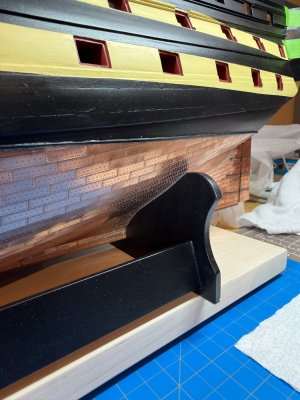


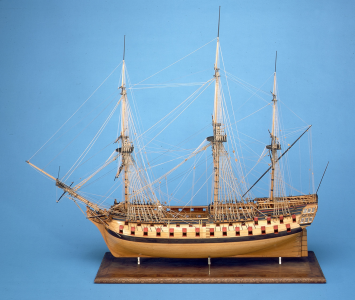
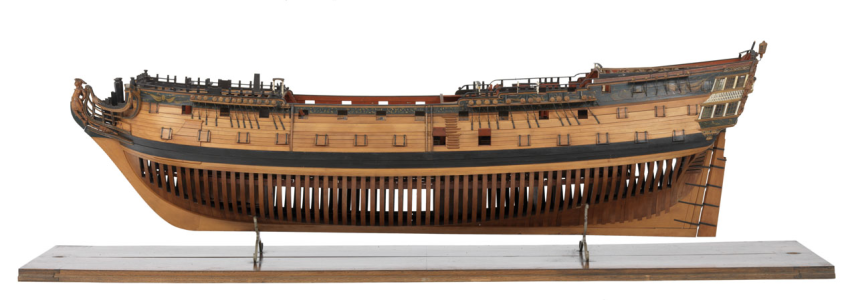

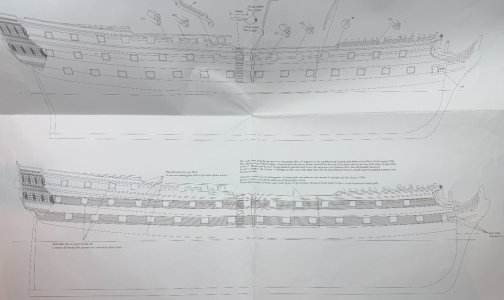
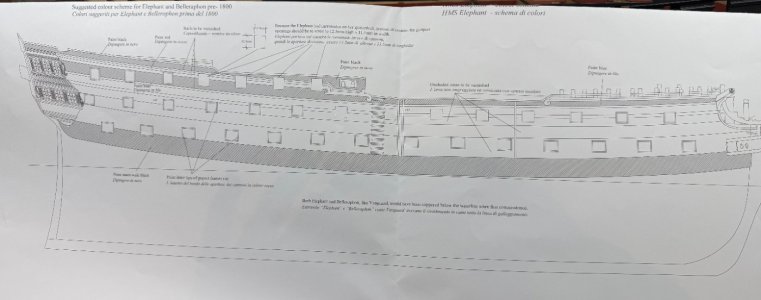
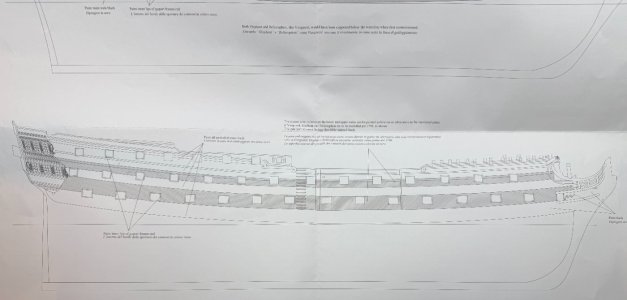
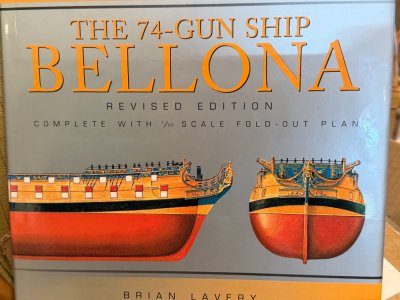
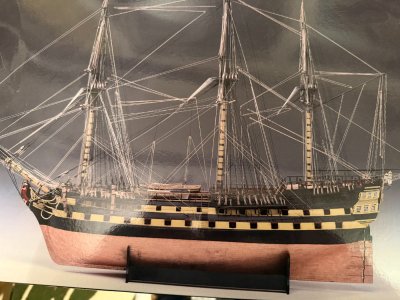
Thanks Adoyon, your reply is very much appreciated.See lower right corner showing black paint between the lower wale and waterline.
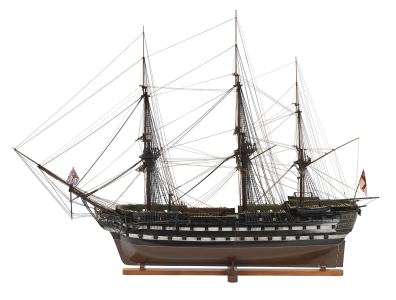
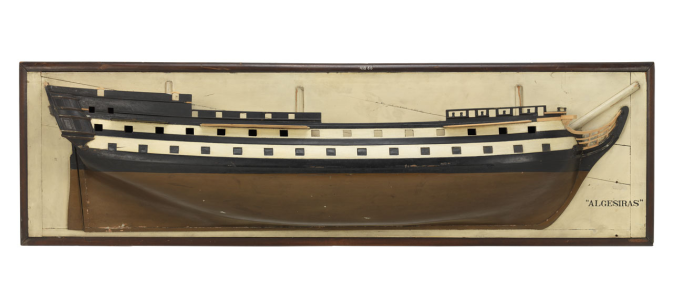

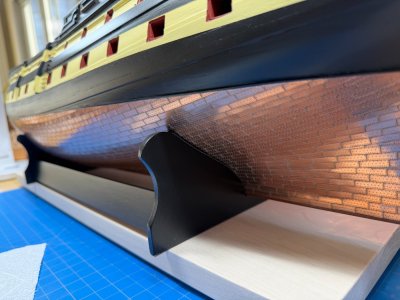
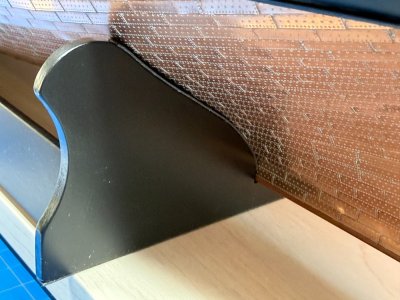
Welcome back Andre.I’m back and ready to work on fittings for the upper gun deck. I need to hold the ship upright and decided to finish the ship’s cradle.
View attachment 573044
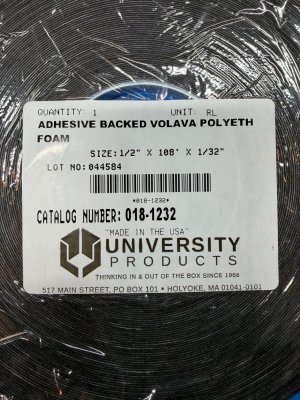
I'm adding strips of Adhesive Backed Polyethylene Foam to the cradle.
View attachment 573046
View attachment 573047
View attachment 573048
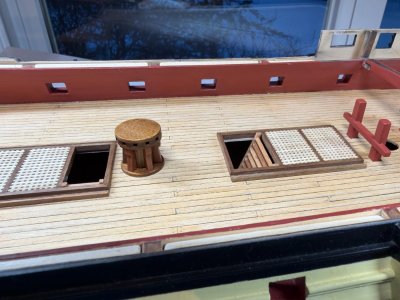
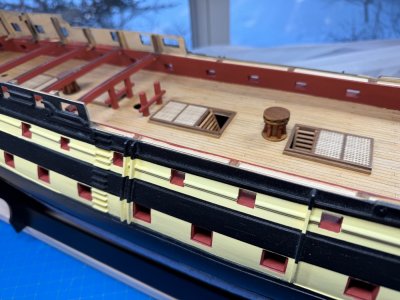
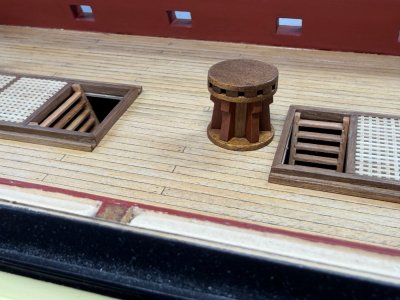


Beautiful Andre. Your scratch whelps are stunning. Cheers GrantI’m now working on some of the fittings for the upper gun deck. Nothing is glued down yet. I need to place the cannons before glueing deck beams.
View attachment 575172
View attachment 575173
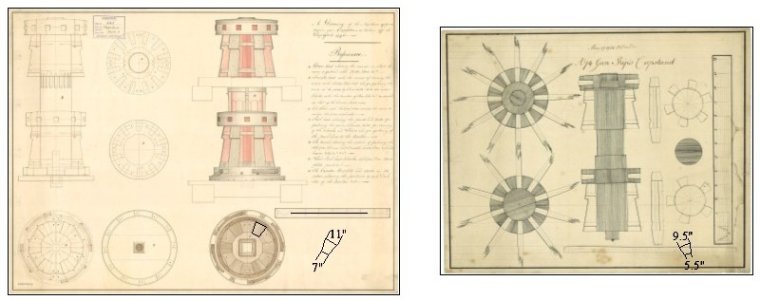
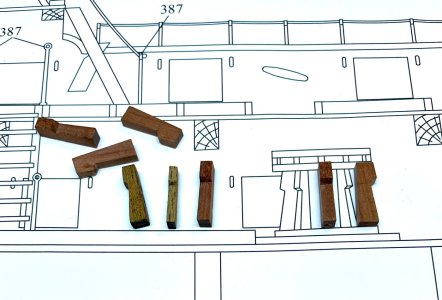
The kit comes with two capstans and 22 whelps. There is no mention of how many whelps to place around the capstan. Drawings in the kit’s plans show what is approximately six whelps. Also, in the book, Anatomy of the Ship HMS Bellona, it shows six whelps. However, the whelps provided are 1.5 mm thick and seem too thin to place six individually around the capstan. I tried gluing two together but didn’t like the glue seam showing since I planned on finishing with clear satin wipe-on poly. I made six whelps for each capstan from 3/32 in Swiss Pear wood. The following drawing shows the thickness of the kit’s whelps and the 3/32 in version I made.
View attachment 575174
View attachment 575175


The paintwork is truly perfect. That frogtape looks like working perfectly. Congrats!It took me a while to decide which yellow paint I should use on the hull of my ship. The yellow ochre that came with the Admiralty Paint Set seemed to be too dark. A little bit of research revealed that there were variations in the paint schemes used on British navy ships in the 18th century. I think it's likely that the yellow used was a shade known as “Bright Yellow”, which was commonly used on British naval ships during the late 18th century. With a little research, I learned that Bright Yellow was a light, vibrant yellow color that was created by mixing lead tin yellow with white lead or other white pigments.
I also learned that the HMS Victory was re-painted in 2017-2020 with its original colors during active service at the Battle of Trafalgar in 1805. The new yellow color on the Victory is much lighter than the previous orange-brown ochre that was on the ship for many years. I’m using Vallejo Ice Yellow on my Vanguard. To me it looks like it has about the same color value as the new color on the Victory.
View attachment 371810
View attachment 371811
View attachment 371812
View attachment 371813
View attachment 371814
View attachment 371816
View attachment 371815
Thank you Allan for these drawings. These capstans look similar to those in Anatomy of the Ship HMS Bellona. I did notice the taper of the whelps in the radial direction but thought it would not be worth the effort to try and taper them. Drawings in the book are at 1/96 scale. I measured the thicker edge with dividers and digital calipers and came up with .0985" x 96 = approximately 9 1/2". This would be about 1/8" thick at 1/72 scale. I thought this would look too thick at the barrel, so, I decided to use 3/32" thick wood without tapering.The sizes varied depending on the size of the capstan. You might find the following helpful.
Allan
View attachment 575486