



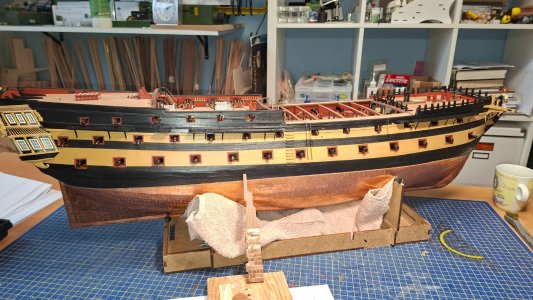
Actual side view...

 |
The beloved Ships in Scale Magazine is back and charting a new course for 2026! Discover new skills, new techniques, and new inspirations in every issue. NOTE THAT OUR NEXT ISSUE WILL BE July/August 2026 |
|
 |
As a way to introduce our brass coins to the community, we will raffle off a free coin during the month of August. Follow link ABOVE for instructions for entering. |
|

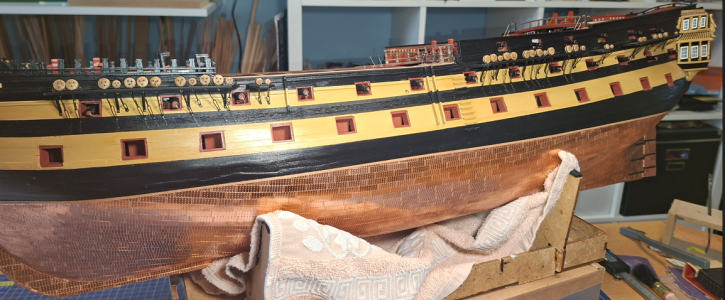
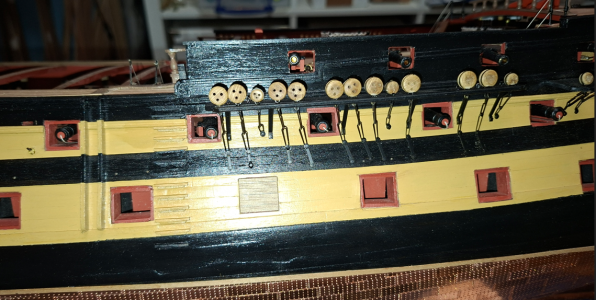
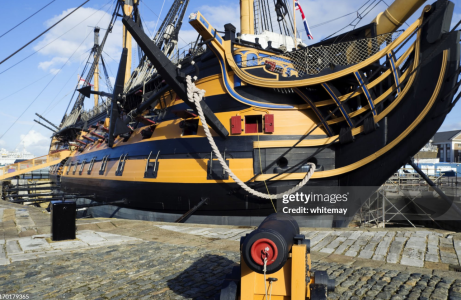
Hello,Good morning, I suspect that the models you might have seen are builders models focussed on the shape of the hull. HMS Victory and a number of paintings I have seen suggest that the closed port is black. In this way a chequerboard effect is created and the number of guns clearly identified. You can also google the images of HMS Surprise used in the film. Peter Weir was scrupulous in the authenticity of his film.
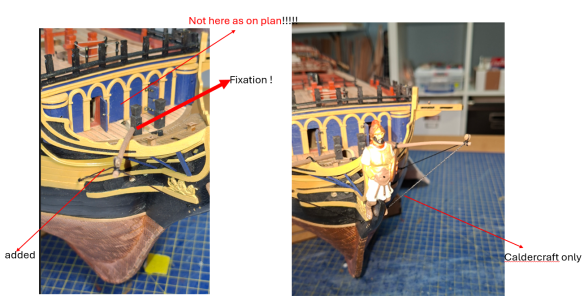
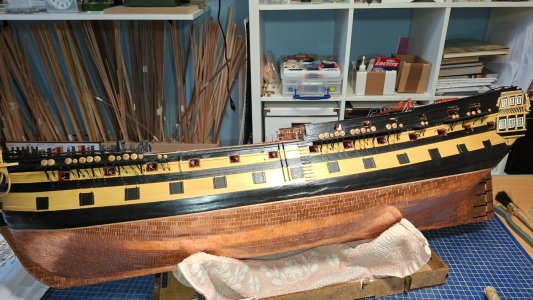
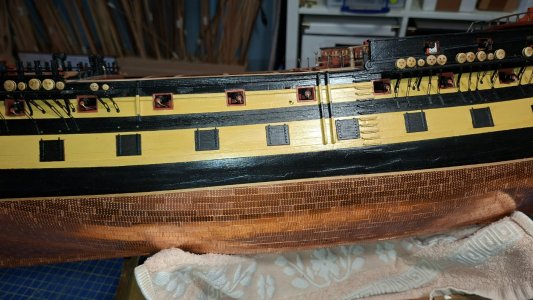
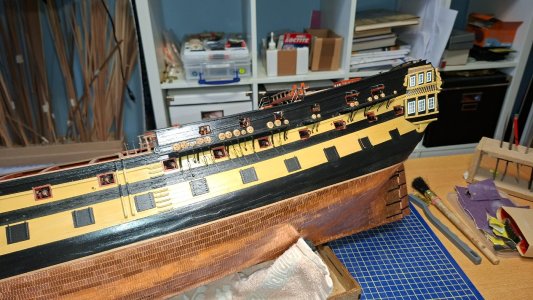
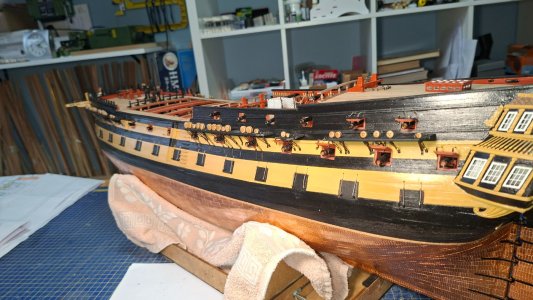
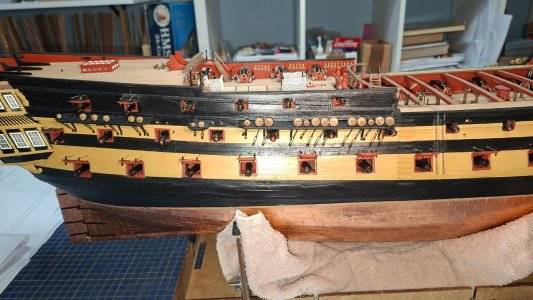
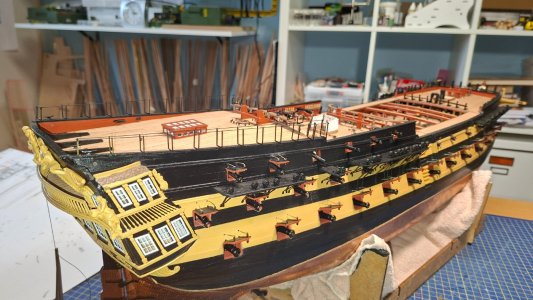
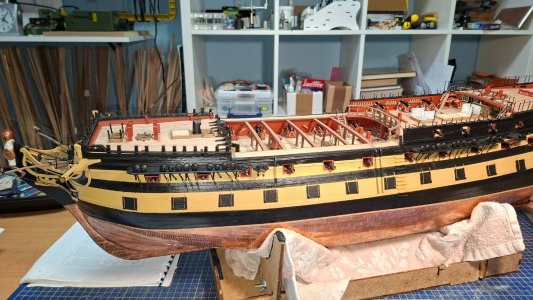
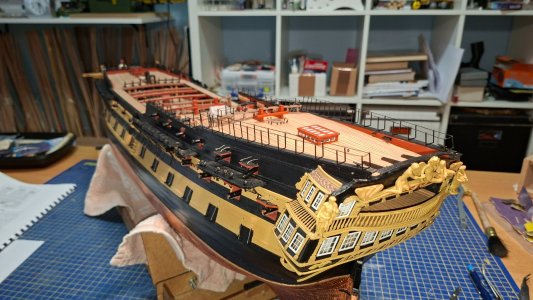
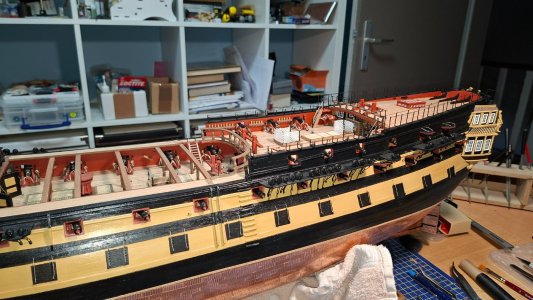
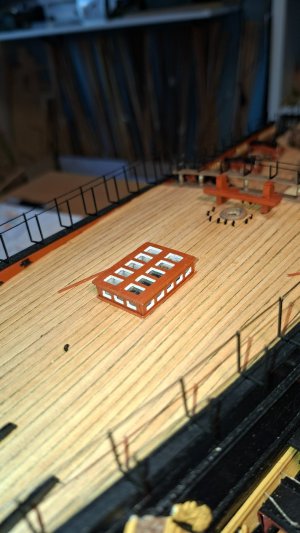
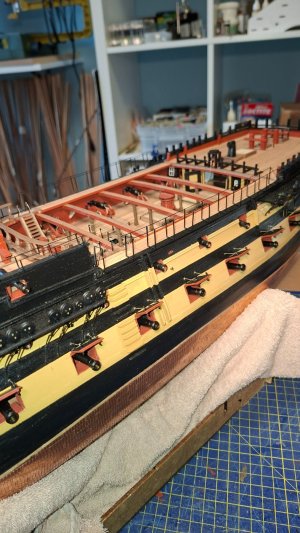
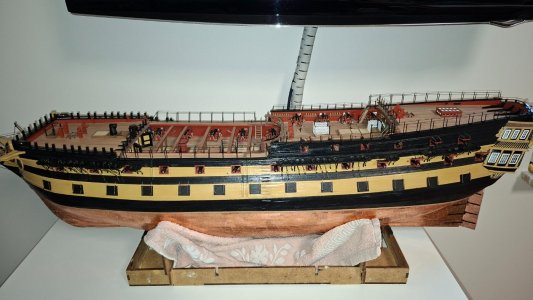

Thanks !I love that skylight!
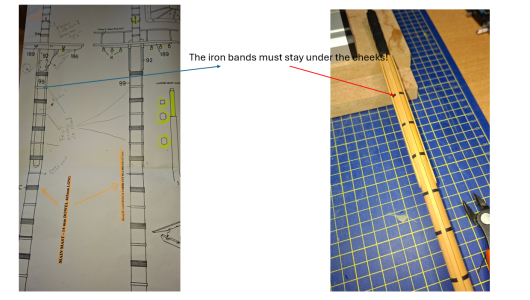
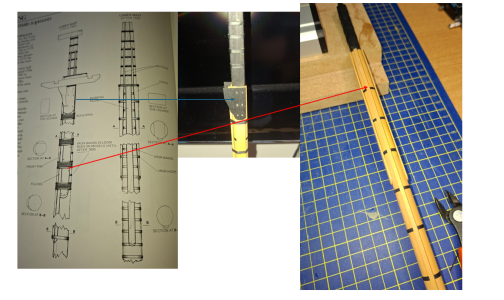
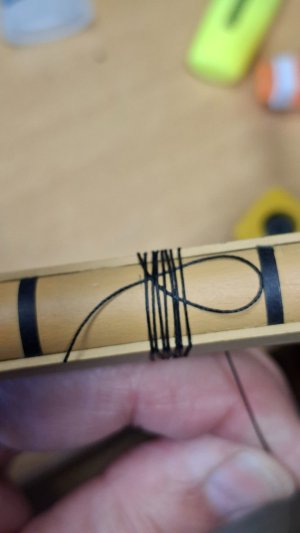
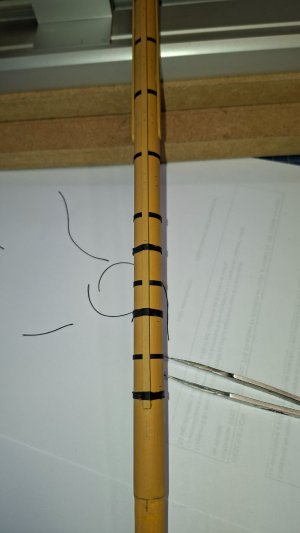
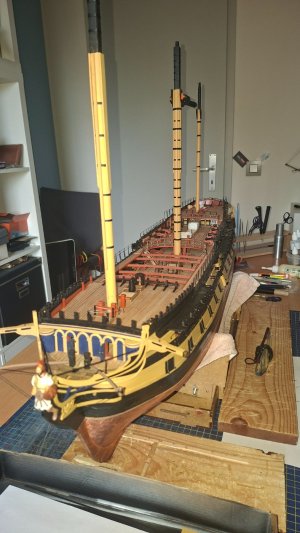
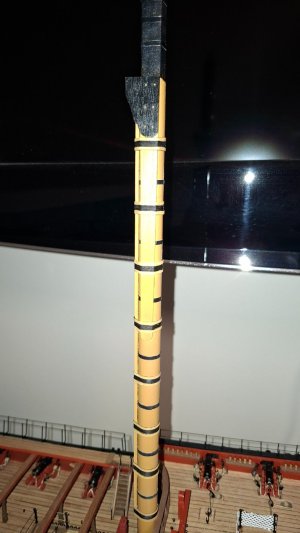
From around 1773 the masts were build with a Front Fish (called rubbing paunch) : was a strengthening piece of wood fastened on the fore side of the mast.
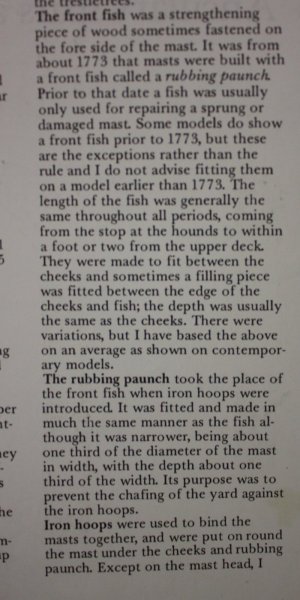
Thx Allan,Further to your post, more from Lees' Masting and Rigging, English Ships of War, page 2 is below. This is a bit confusing to me, especially with no fish or paunch on the drawing as you pointed out. It is great to see the research you continue putting into the project!
Allan
View attachment 579676
From what I could find your number is spot on, 2 liters per man per day. 64s carried between 300,000 and 500,00 liters of potable water. Round numbers 360,000/12000 30 days. Good thing they typically stopped in Cape Verde or the Canary Islands. I get thirsty just thinking about this.......
Allan
 , thanks. But water doesn't stay fresh for 30 days, does it? Assuming they kept it in barrels...?
Fungi and bacteria become an issue in a matter of days. Plastic would have been better (1-5 years)doesn't stay fresh for 30 days, does it

