

• Win a Free Custom Engraved Brass Coin!!!
    As a way to introduce our brass coins to the community, we will raffle off a free coin during the month of August. Follow link ABOVE for instructions for entering.
  • PRE-ORDER SHIPS IN SCALE TODAY!

    The beloved Ships in Scale Magazine is back and charting a new course for 2026!
    Discover new skills, new techniques, and new inspirations in every issue.

    NOTE THAT OUR FIRST ISSUE WILL BE JAN/FEB 2026

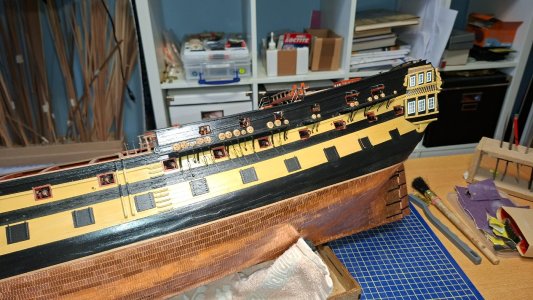
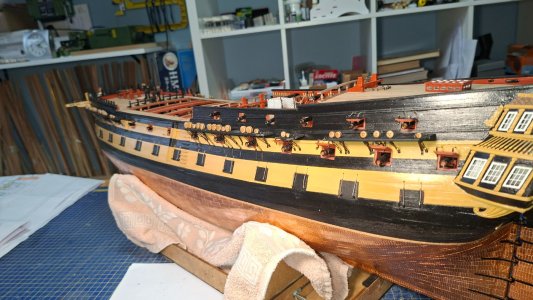
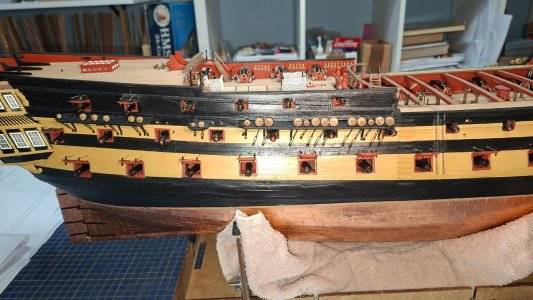
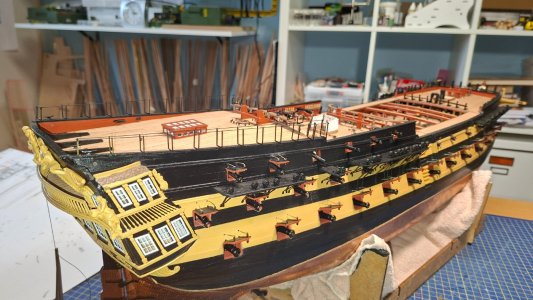
HMS Agamemnon by Caldercraft

Gentlemen,

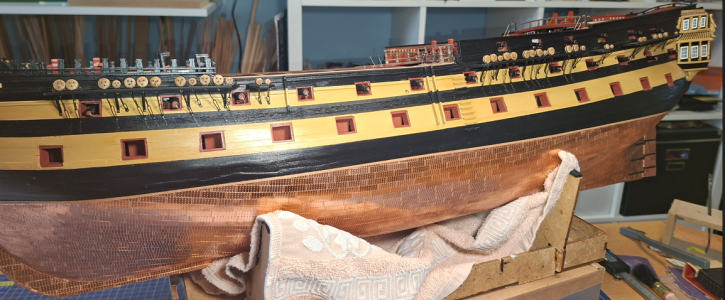
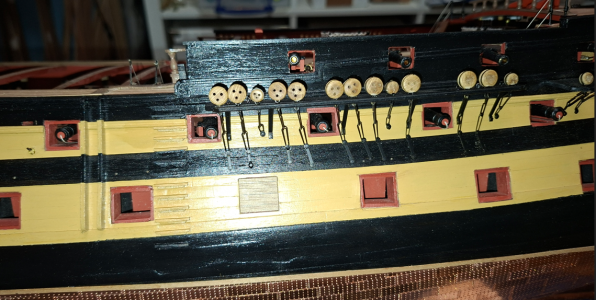
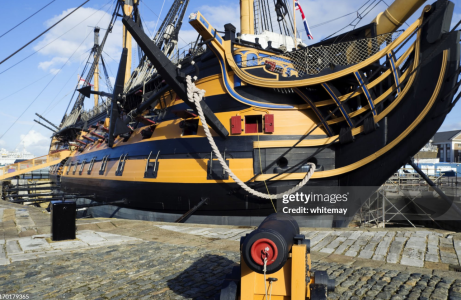
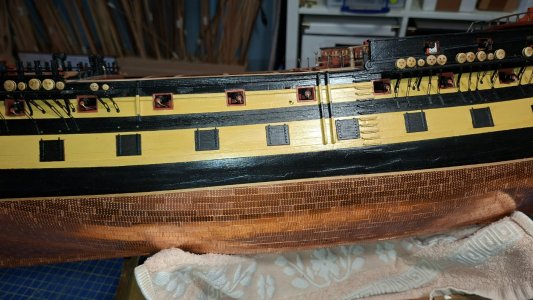
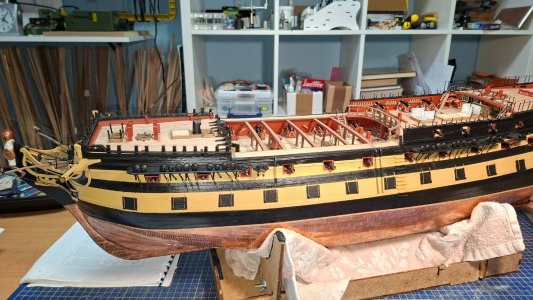
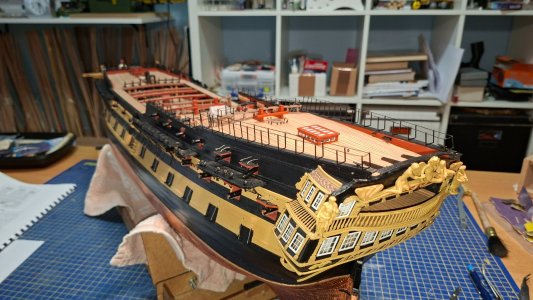
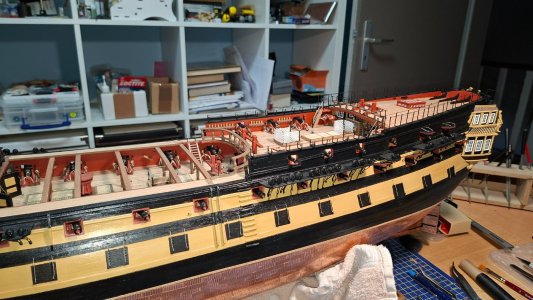
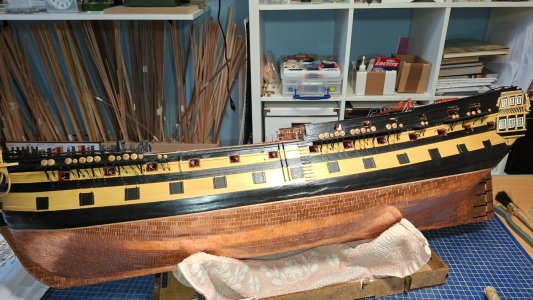
I have an important question. I'm going to close the gunports on one side. But, here's the question: should the ports be painted black or the same color as the hull (ochre)? Caldercraft recommends painting the ports black. The HMS Victoria's ports are actually black. On the other hand, I've seen the ports painted the same color as the hull on several older models. Can anyone give me some advice?
1770134222578.png


1770133848822.png
 
Good morning, I suspect that the models you might have seen are builders models focussed on the shape of the hull. HMS Victory and a number of paintings I have seen suggest that the closed port is black. In this way a chequerboard effect is created and the number of guns clearly identified. You can also google the images of HMS Surprise used in the film. Peter Weir was scrupulous in the authenticity of his film.
 
Good morning, I suspect that the models you might have seen are builders models focussed on the shape of the hull. HMS Victory and a number of paintings I have seen suggest that the closed port is black. In this way a chequerboard effect is created and the number of guns clearly identified. You can also google the images of HMS Surprise used in the film. Peter Weir was scrupulous in the authenticity of his film.
Hello,

Thx for the advise: you are confirming what I also noticed. I'll paint them black ;)
 
High time for an update, right?
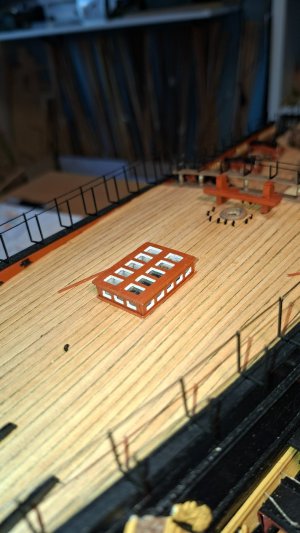
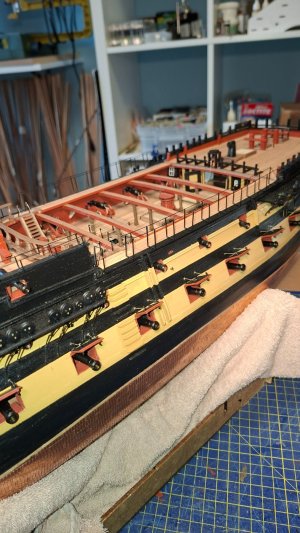
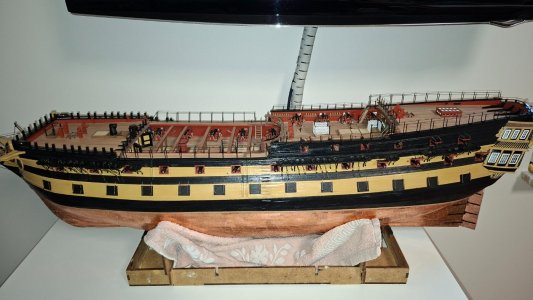
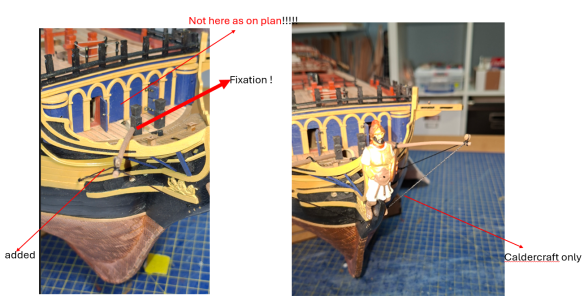
Over the past week and a half, I've been building the Gunports (sanding, painting, installing eyebolts, etc., and last but not least, fitting them in neatly). It's a lot of work, and it's time-consuming.

But first, the Bumkins:

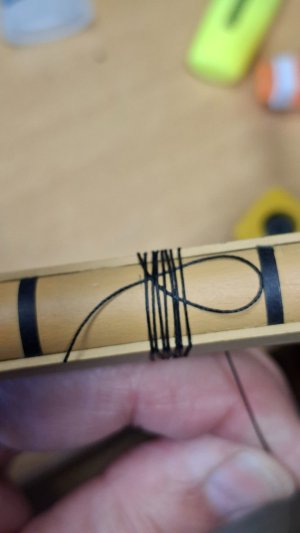
Caldercraft's plan only includes one shroud: see drawing. However, according to James Lee's reference work (Masting and Rigging...), a second shroud was provided from 1777 onward (see photos). This is missing from the Caldercraft plans, so I've naturally corrected it. The Bumkin should also be slightly curved: this, too, is not mentioned in the Caldercraft plans.
1770735715197.png
 
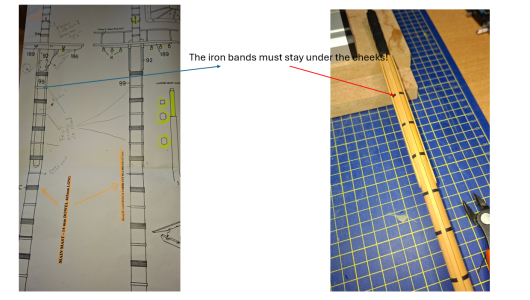
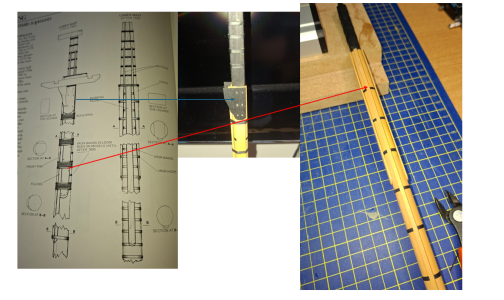
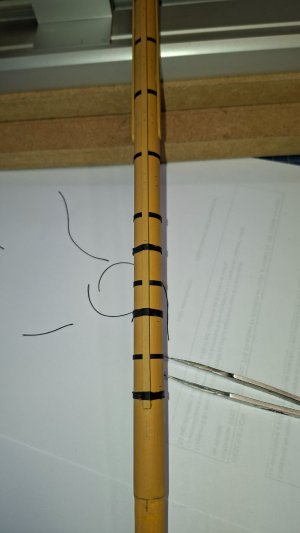
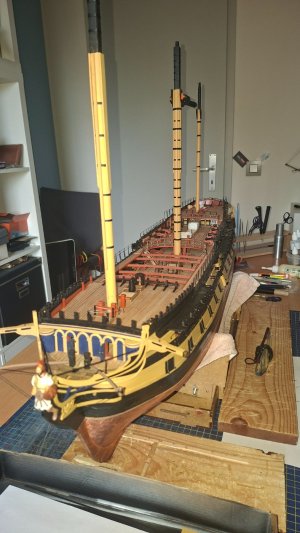
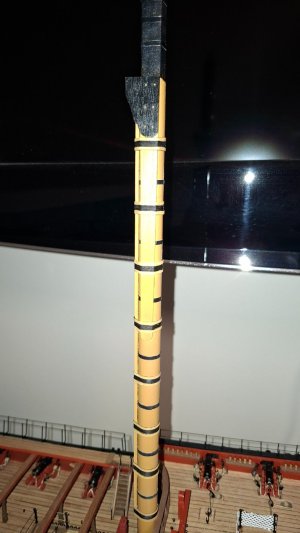
Voila, the mast assembly. I think I've noticed a few errors in the Cladercraft plans:
1- Iron bands:
1771512805598.png
2- Where is the front fish?
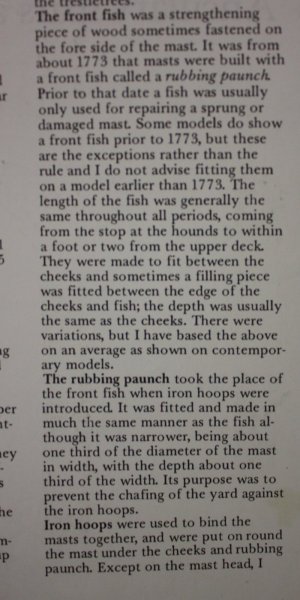
From around 1773 the masts were build with a Front Fish (called rubbing paunch) : was a strengthening piece of wood fastened on the fore side of the mast.
1771513169813.png
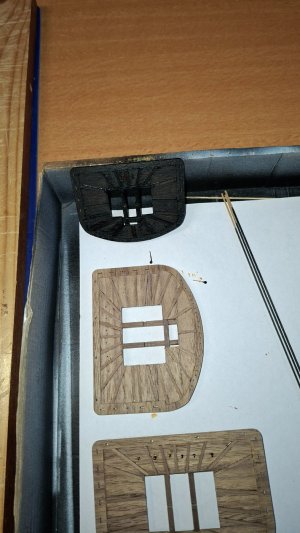
There is still a lot of work to be done such as mounting the Mast Battens etc... coming soon!

Aga655.jpg

Aga656.jpg

Aga657.jpg
 
From around 1773 the masts were build with a Front Fish (called rubbing paunch) : was a strengthening piece of wood fastened on the fore side of the mast.

Further to your post, more from Lees' Masting and Rigging, English Ships of War, page 2 is below. This is a bit confusing to me, especially with no fish or paunch on the drawing as you pointed out. It is great to see the research you continue putting into the project!
Allan

1771674678776.jpeg
 
Further to your post, more from Lees' Masting and Rigging, English Ships of War, page 2 is below. This is a bit confusing to me, especially with no fish or paunch on the drawing as you pointed out. It is great to see the research you continue putting into the project!
Allan

View attachment 579676
Thx Allan,

You can do two things, and don't get me wrong, both are equally valid: blindly follow the instructions and simply glue everything together and paint... or (in my case) try to build the ship as faithfully as possible.

PS
I recently wondered how much a crew of about 600 consumed in water per day. If you count 2 liters of water per person...that's 1200 liters per day. Suppose the voyage lasted 30 days...30 x 1200 = 36,000 liters of water. Water quickly goes rancid and is undrinkable...and they weren't going to drink 2 liters of wine a day, were they?
 
From what I could find your number is spot on, 2 liters per man per day. 64s carried between 300,000 and 500,00 liters of potable water. Round numbers 360,000/12000 30 days. Good thing they typically stopped in Cape Verde or the Canary Islands. I get thirsty just thinking about this....... :)
Allan
 
From what I could find your number is spot on, 2 liters per man per day. 64s carried between 300,000 and 500,00 liters of potable water. Round numbers 360,000/12000 30 days. Good thing they typically stopped in Cape Verde or the Canary Islands. I get thirsty just thinking about this....... :)
Allan
Okay, thanks. But water doesn't stay fresh for 30 days, does it? Assuming they kept it in barrels...?
 
Back
Top