



• Win a Free Custom Engraved Brass Coin!!!
    As a way to introduce our brass coins to the community, we will raffle off a free coin during the month of August. Follow link ABOVE for instructions for entering.
  • SUBSCRIBE TO SHIPS IN SCALE TODAY!

    The beloved Ships in Scale Magazine is back and charting a new course for 2026!
    Discover new skills, new techniques, and new inspirations in every issue.

    NOTE THAT OUR NEXT ISSUE WILL BE MARCH/APRIL 2026

Сестрорецк [Sestroretsk] Scratchbuild scale 1/64 Russ. torpedo boat 1894

Don't underestimate what card can do for you. The secret is picking the right sort. A job like you describe here can very well be executed with card that you take from packaged food. Smooth and shiny on one side, bare on the other. Not thicker than 0,5 mm. Perhaps you can divide the length of the ship in two, which makes the job a lot easier.
Good luck!
Thank you very much, Ab!
 
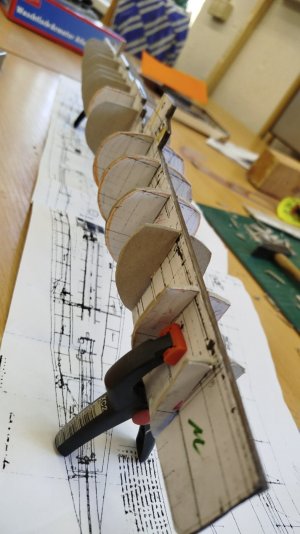
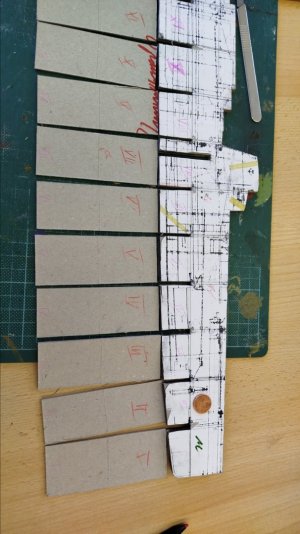
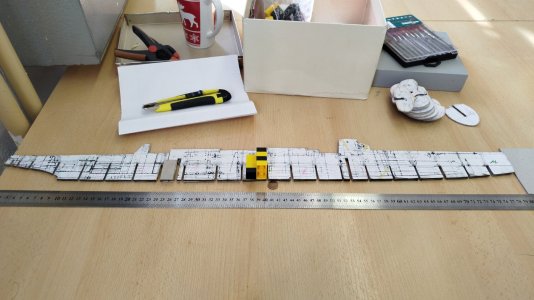
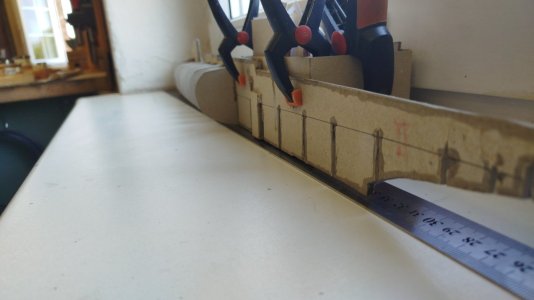
Today I do start the CWL horizontal "fillerpices" to force the bulkheads rectangular towards the centerboard:
IMG_20260128_103759_340.jpg

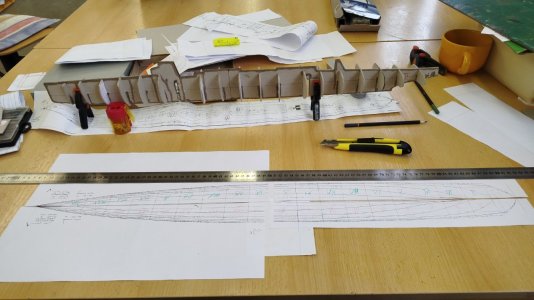
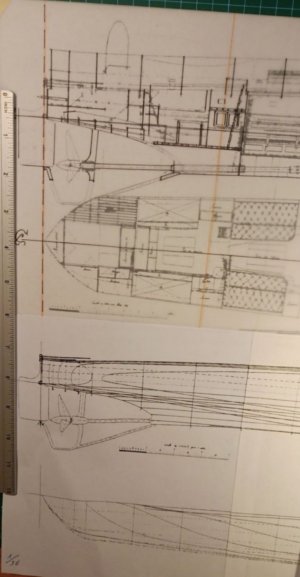
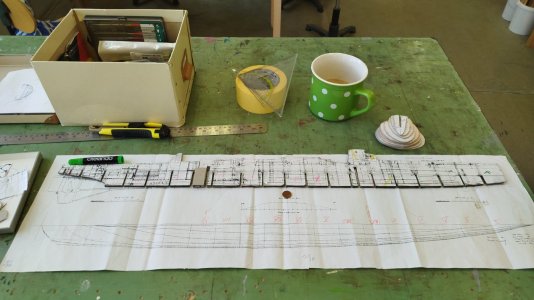
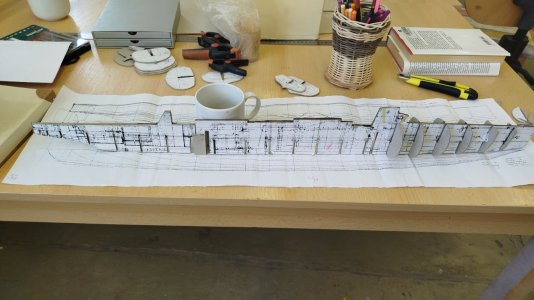
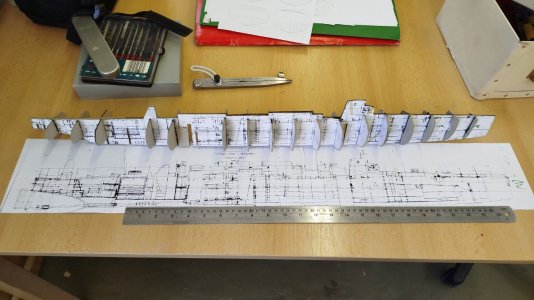
Here the WaterLineDrawing for the correctly set distances between the bulkheads:
IMG_20260128_105828_324.jpg

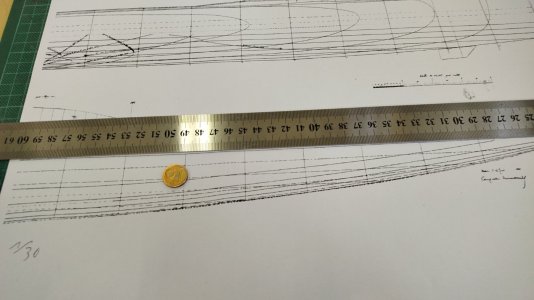
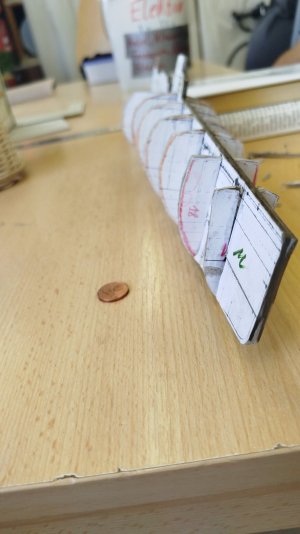
And the width is right the outboard hull line must be placed from point of the CWL/hull-crossing towards the next bulkhead as the straight was of the centerline's drawings is a problematic feature:
IMG_20260128_103622_697.jpg
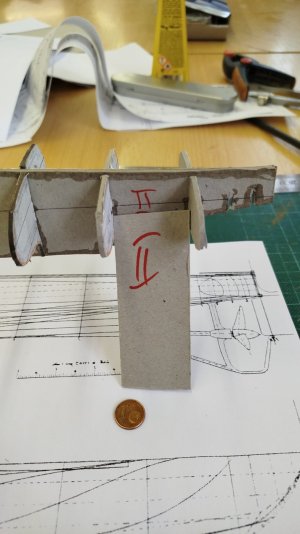
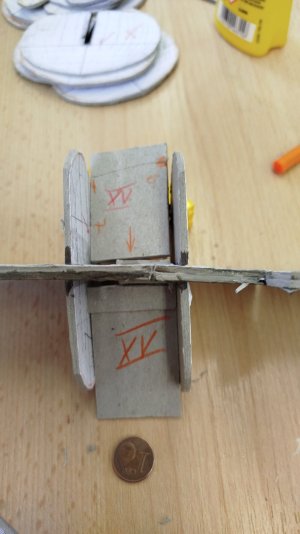
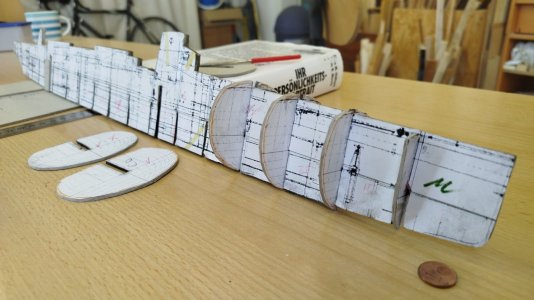
Here the dealing with the thick ess of half the centerboard and full thickness of the bulkheads...
IMG_20260128_112107_361.jpg
...and the three most aft bulkheads
IMG_20260128_114516_523.jpg

to form the quite complex trensom:
Polish_20241205_121831498.jpg

So let's see what can be done today?
 
Last edited:
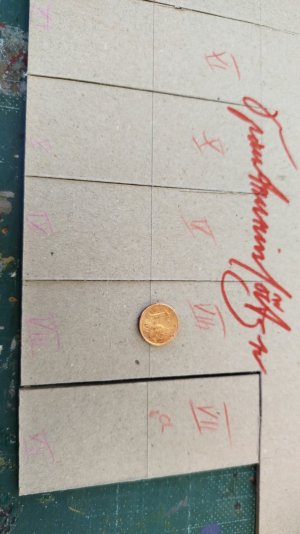
Hello, blowing the dust away I saw my self confronted with the construction of the filling pices between the bulkheads.
IMG-20260219-WA0002.jpeg

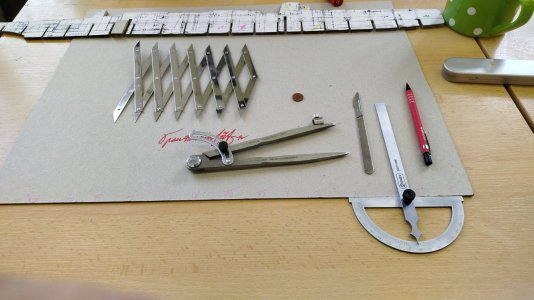
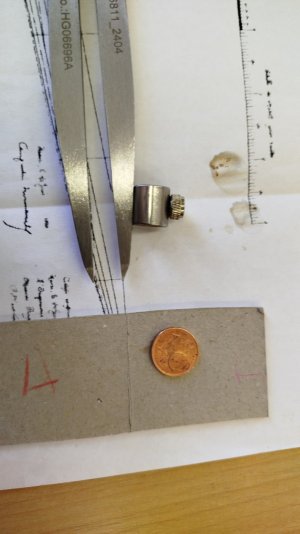
As percision is more importand then swiftness I worked my way with a drawing compass...
IMG_20260219_110853_740.jpg
..as my buttomhole streatcher for similar distances wasn't the right tool to use.

IMG_20260219_111236_724.jpg
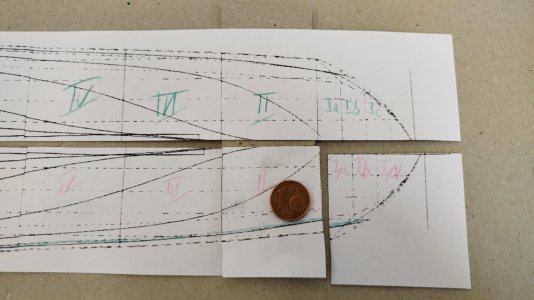
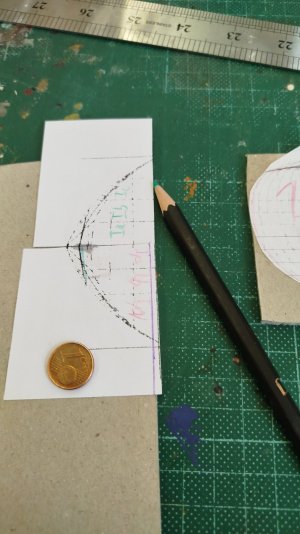
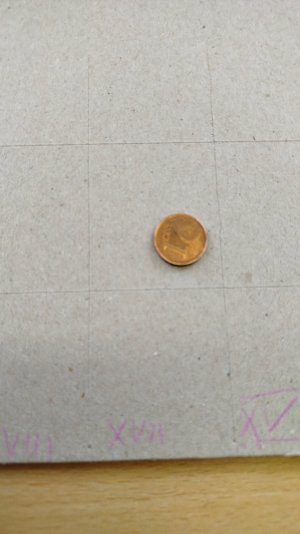
So I numbered all the gillingspaces from I up to XXIV.
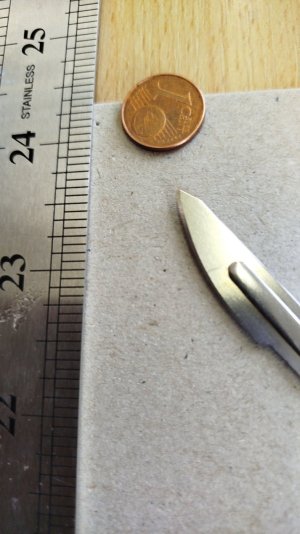
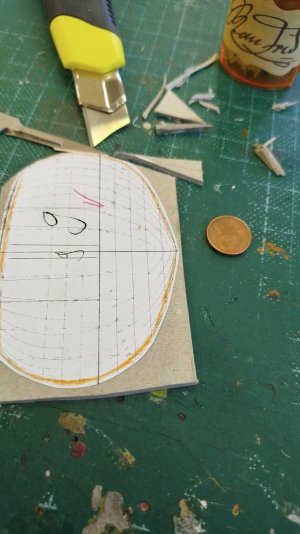
Scratching the lines with a dull scalpell blade:
IMG_20260219_112513_471.jpg
 
Hello
IMG_20260226_115751_458.jpg
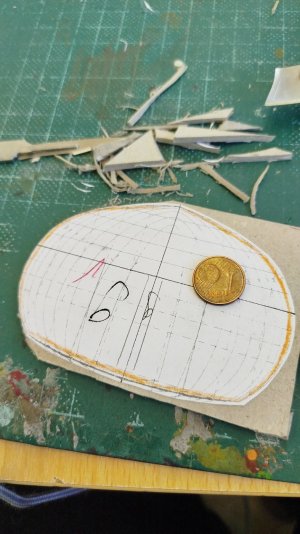
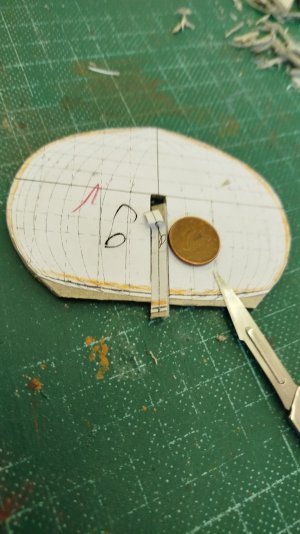
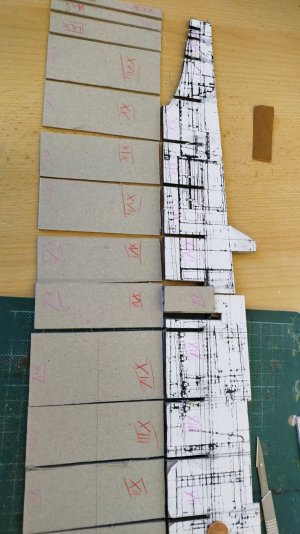
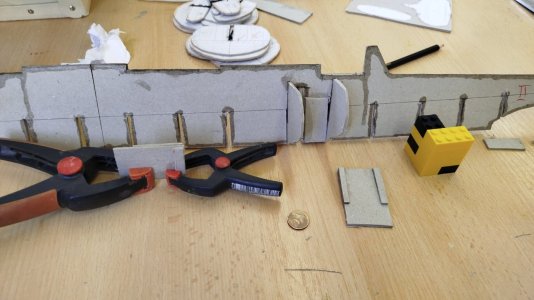
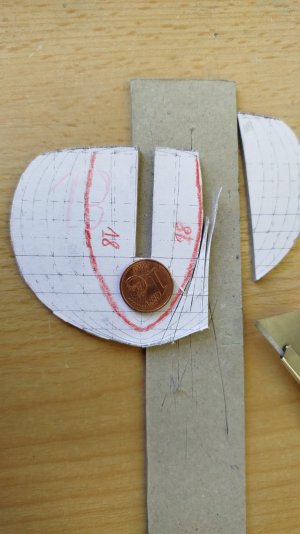
today I dealt with the filling pices between the bulkheads.

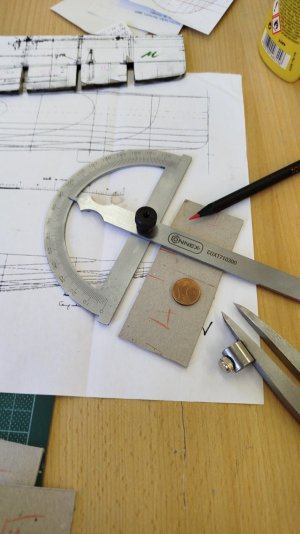
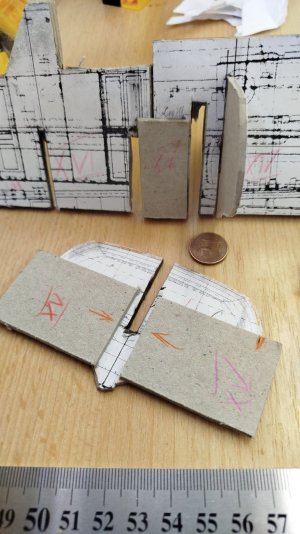
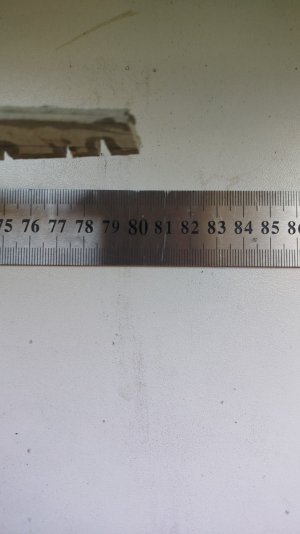
IMG_20260226_114148_130.jpgI took the breadth from the water line plan and
IMG_20260226_115133_369.jpg

have to remember to cut out two mms for the thickness of the centerboard.
IMG_20260226_114931_089.jpg
Polish_20260226_170730456.jpg
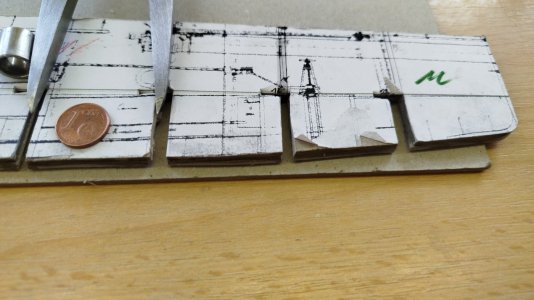
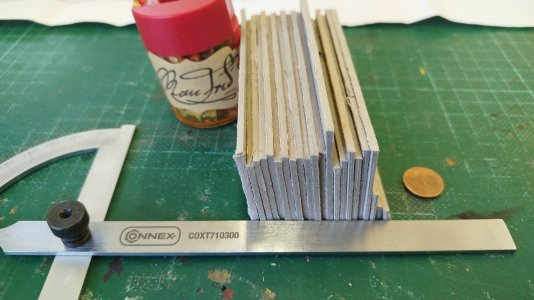
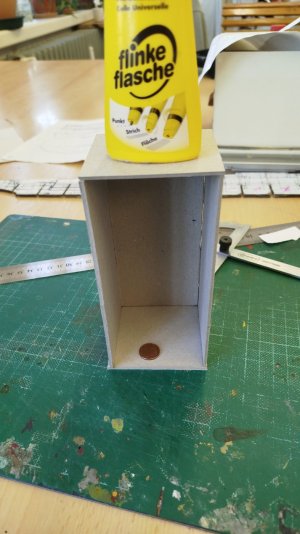
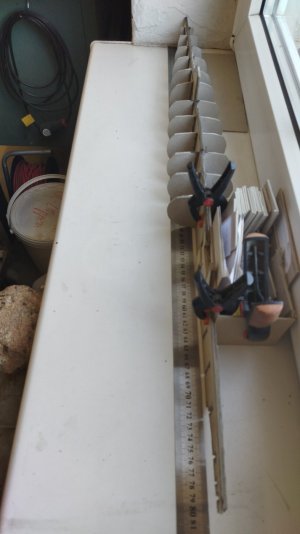
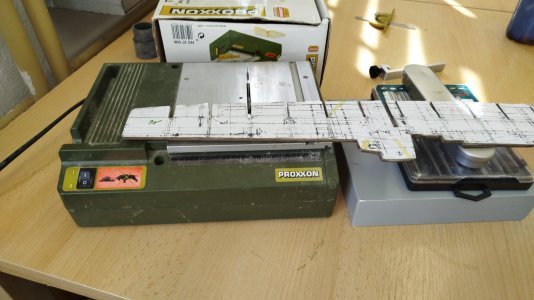
I do show how different the size of the filling pices is by putting them into a pile (and built a box to store them untill next week).
IMG_20260226_120111_957.jpg
IMG_20260226_122426_269.jpg
Best wishes from Berlin Card Yard, Chris
 
Last edited:
Dear colleauges of the scale!

Back to the roots...
IMG-20260423-WA0001.jpeg
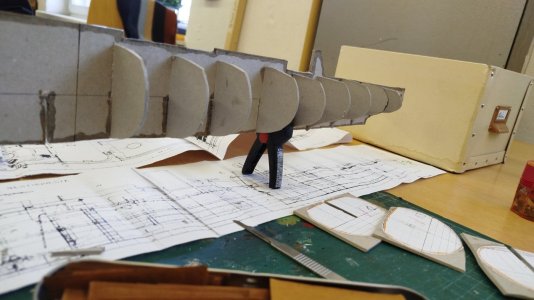
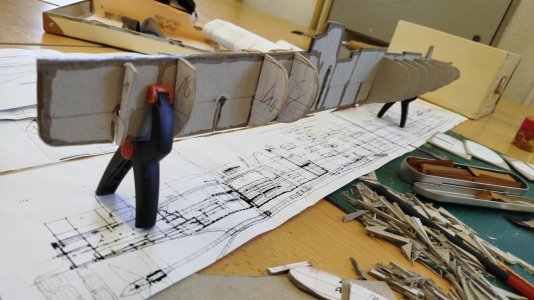
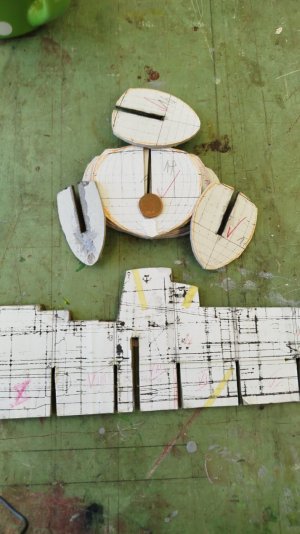
Today I made the first attempts into the horizontal/waterline layers and started with
IMG_20260423_103853_552.jpg
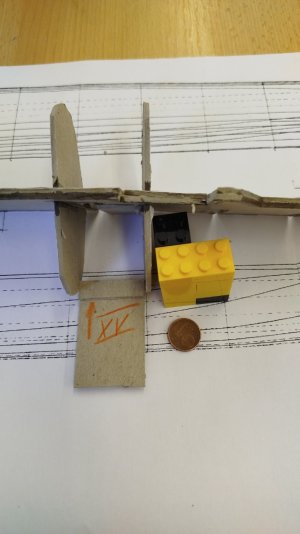
the stern stanchion's slot - this will be made of
IMG_20260423_110238_733.jpg
a three millimeters acryl rod and will take the real wight - while the cardboard Art Noveau stand is only for optics.
IMG_20260423_111918_786.jpg
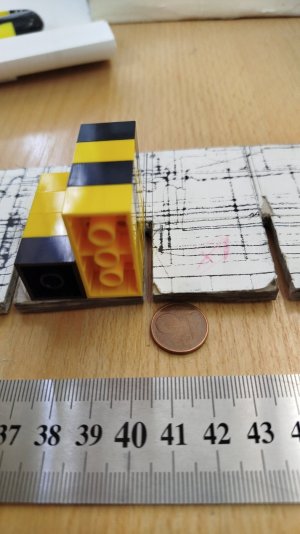
The lego blocks do make a great three dimensional right angles.
IMG_20260423_105500_344.jpg

So I will cut out the CWL with some two millimeters as the processing allowness.
IMG-20260423-WA0003.jpegIMG-20260423-WA0003.jpeg
IMG_20260423_111918_786.jpg
But this is the story for next week's progress.

Best wishes from Berlin Card Yard, Chris
 
Back
Top