• SUBSCRIBE TO SHIPS IN SCALE TODAY!

    The beloved Ships in Scale Magazine is back and charting a new course for 2026!
    Discover new skills, new techniques, and new inspirations in every issue.

    NOTE THAT OUR NEXT ISSUE WILL BE MARCH/APRIL 2026
  • Win a Free Custom Engraved Brass Coin!!!
    As a way to introduce our brass coins to the community, we will raffle off a free coin during the month of August. Follow link ABOVE for instructions for entering.

Artesania Latina Anatomy of Lord Nelson’s HMS Victory Trafalgar 1805

I really liked how tight your inner hull planking is. I’m glad mine can’t be see. Those little hinges on all the doors are a pile of fun. I do like how they look however. Looking good.

 
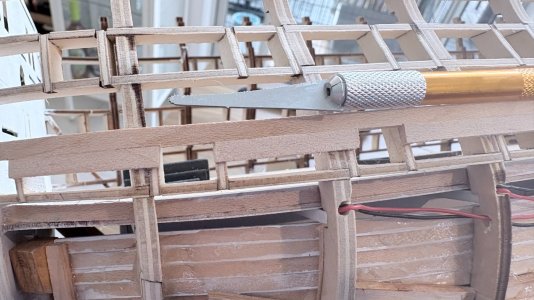
Hi, great job. If I can afford some advice, to create the groove I used the cutter (I have a Proxxon M70), I work faster but above all more precise and clean. What 30 gauge wire is it? Purchased where? Thank you and good work
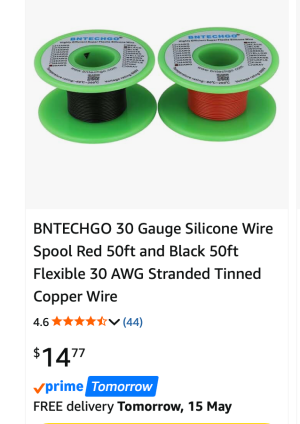
Got the wire from Amazon. It is a little thicker, the AL wire is probably 32 gauge, but it strips easy using your thumb nail.

Screenshot 2026-05-14 at 6.59.10 am.png
 
The only sanding I have done with the hull is; each individual rib etc got a light rub with standard sanding sticks/sponges or the one used by the guy in the videos. When I come to rub down the hull in preparation for planking I will use sanding blocks or maybe an small electric orbital sander and course sanding sticks.
 
Video 14 - (Part 2- Complete)
Well part 14 was a big one to say the least.

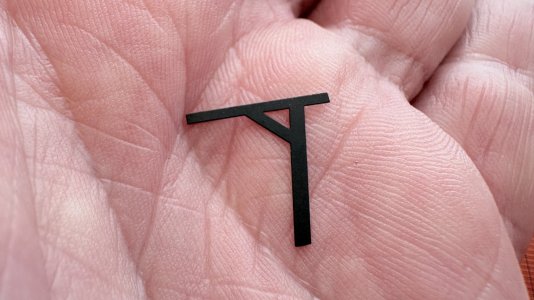
In this part I fit the beam supports and metal brackets. I also carve the remaining posts, paint and fit them.

IMG_6250.JPG
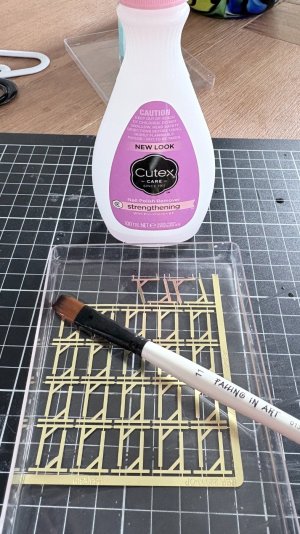
After I has problems with the blackening rubbing off I prepared the PE with a clean of Acetone (nail polish remover).

IMG_6251.JPG
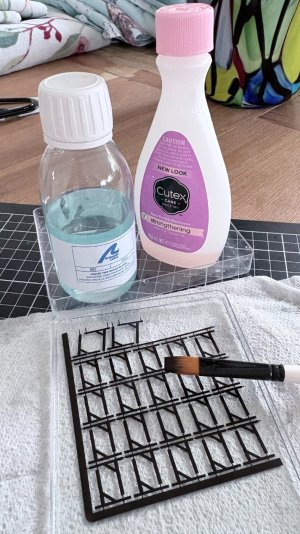
They seemed to blacken really well.

IMG_6253.JPG
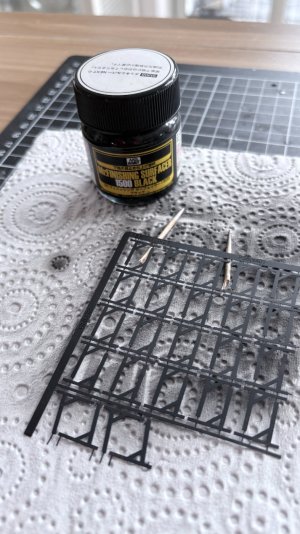
But unfortunately the blackening still dried with a chalky residue. I finally painted them black with Mr Surfacer 1500 which locked everything in.
IMG_6261.JPG

IMG_6258.JPG
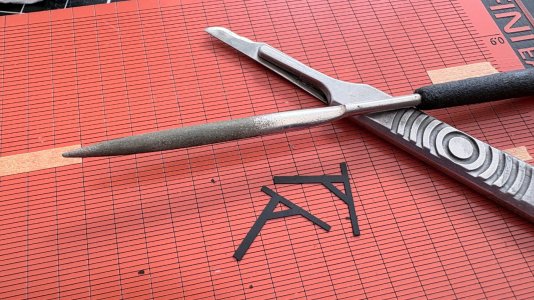
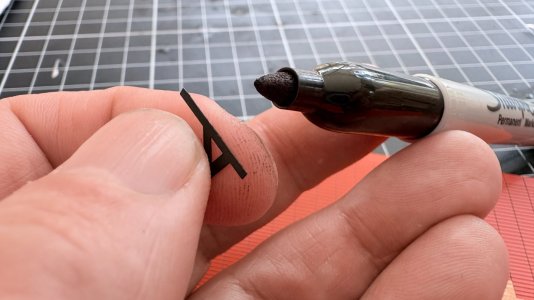
Once removed from the fret I filed off any burrs and touched up any paintwork with a black Sharpie.

IMG_6259.JPG

IMG_6262.JPG
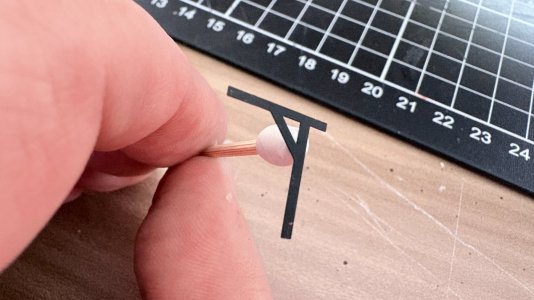
It was quite difficult to glue the brackets in place. It was a bit like hanging a picture the bedroom while standing in the corridor. I used a tooth pick with a small amount of white tac to place the parts.

IMG_6263.JPG

IMG_6264.JPG

IMG_6265.JPG

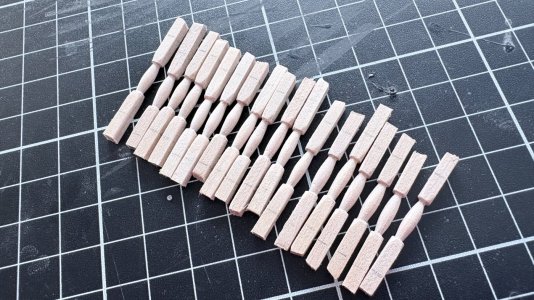
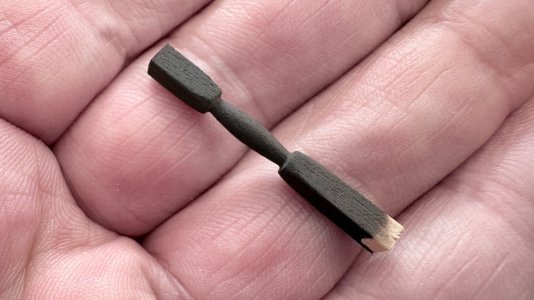
OK the carved posts. I has all intention of using a mini lathe to turn the posts, I had bought one from China very cheap. However I bought it about a year ago and never really looked at it until now. It was now I discovered it was fitted with an American plug. Not to worry I was going shopping with Mrs J later in the day and would pick up an adapter then. But my curiosity got the better of me and I tried to do one freehand. To my complete suprise it was no way near the difficult task I thought it would be. After I did one and thought "That's not bad" I did another. To cut a long story short in about 3 and a half hours all 18 for this deck were done and I felft a quiet sense of achievement.

IMG_6275.JPG
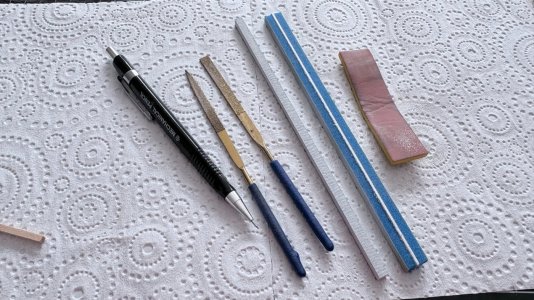
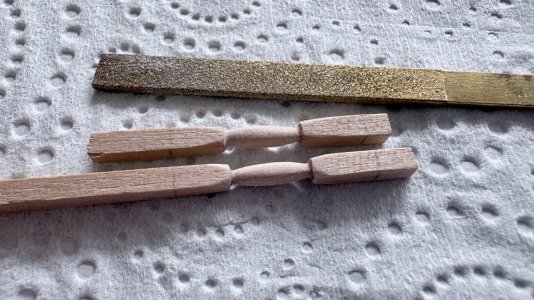
The tools I used.

IMG_6282.JPG
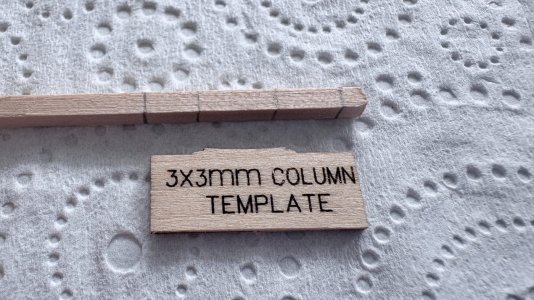
There's a handy template to help you.

IMG_6278.JPG
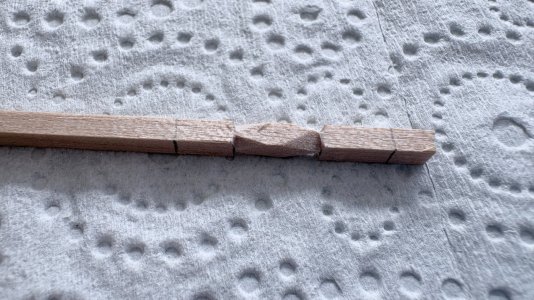
First rough cut using a file.

IMG_6279.JPG
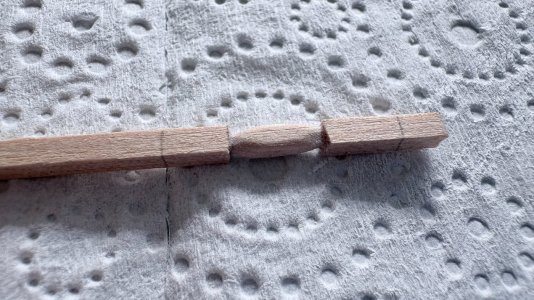
A little more filing.

IMG_6280.JPG
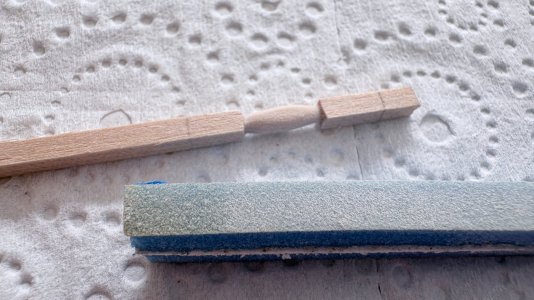
Finished off with a thin sanding sponge.


IMG_6281.JPG
It's OK to get one right, but then you have to repeat the same.

IMG_6288.JPG
The big challenge was to get all 18 the same.

IMG_6302.JPG
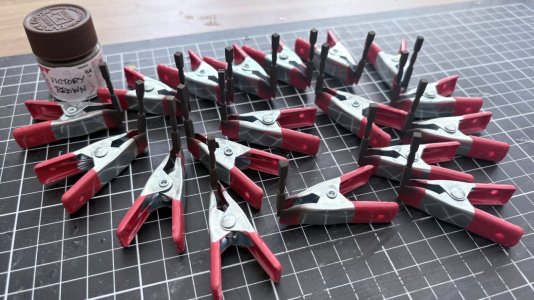
Painted using an airbrush. The Victory Brown was a custom mix of Tamiya XF 64 Red Brown with a few drops of black.

IMG_6303.JPG

IMG_6306.JPG
To finish of Video 14 the posts are glued in place.

IMG_6307.JPG

Thanks for dropping by.
Tony
 
But unfortunately the blackening still dried with a chalky residue.
Good morning Tony. I had this problem too and I found the following solved it rather nicely.
Soak the brass in vinegar for at least 30 min. Put the brass into brass black for around 1min. I found if I leave it in too long it forms a dusty cover and doesn’t buff up nicely.
The real key is to let this dry for a long time. I leave it overnight and then buff the part with a dremel wool buffing fitting. It brings the blackened brass up very nicely. Some smaller parts you may need to brass black twice but not often.

You are building animpressive Victory. Very cool indeed. Cheers Grant
 
Video 15 - (Part 1)
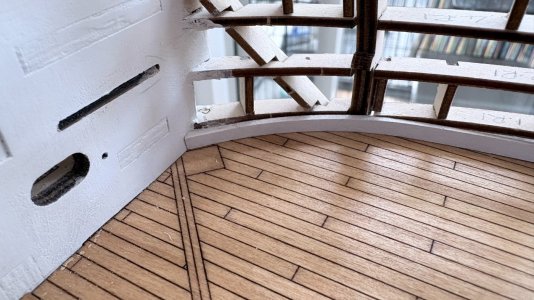
Here I lay the lower gun deck and begin the inner planking (more on this later).

IMG_6232.JPG
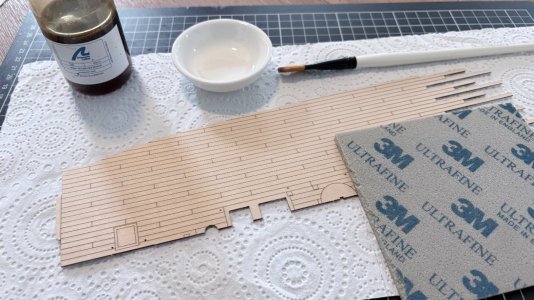
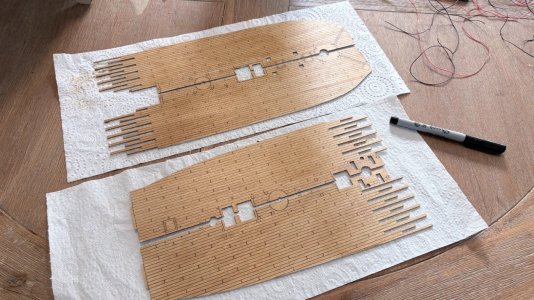
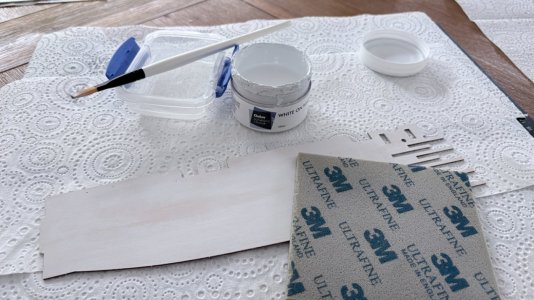
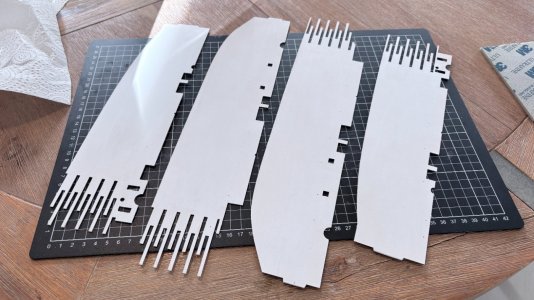
The underside gets one coat of white then a light sand and a second coat.

IMG_6233.JPG

IMG_6234.JPG
Top receives a light sand before one coat of stain.

IMG_6238.JPG

IMG_6312.JPG
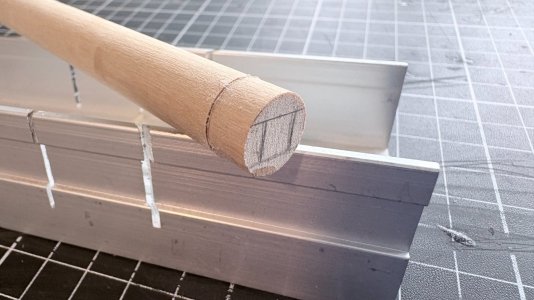
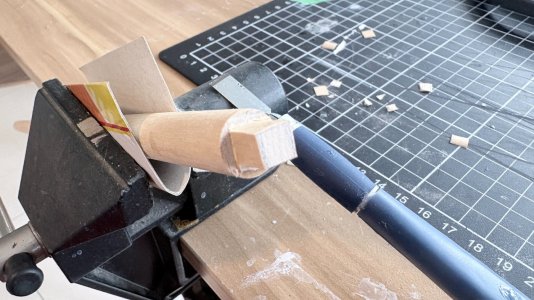
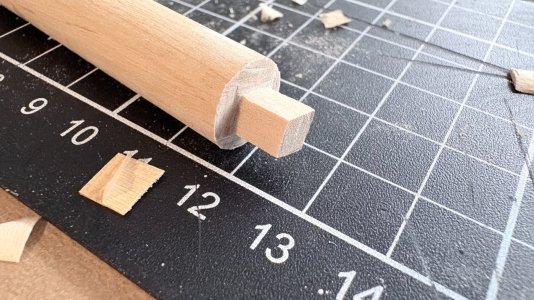
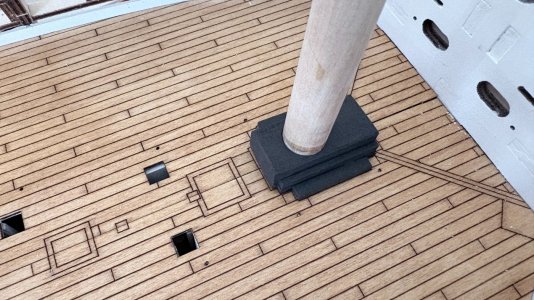
I wanted to test fit the mastsn with the lower deck temporarly in place. But first I prepared the foot of the mast as per the mast instruction sheet. You need to create a 6mm cube. Simply job to chisel the profile.

IMG_6313.JPG

IMG_6314.JPG

IMG_6315.JPG
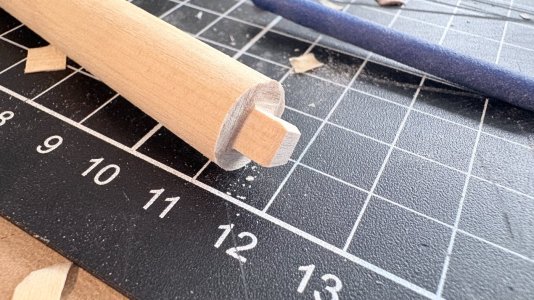
I then got the depth correct and sanded a chamfer to aid the mast locating into the recess in the hold.

IMG_6316.JPG
Perfect! Mmmmmm need to blow some of that dust out!

IMG_6319.JPG
Ok lets get that deck down.

IMG_6320.JPG
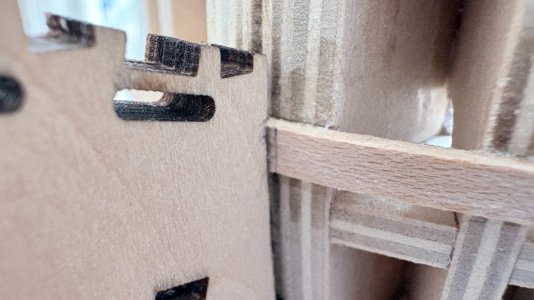
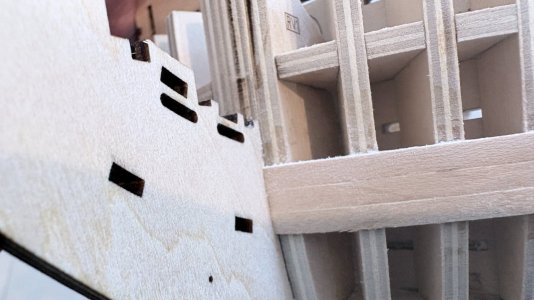
As expected the finger joints didn't want to play ball (as I expected). I once again turned to a technique I call tack gluing. I use this method a lot on my plastic models, especially large area such as the left and right sides of an aircraft fuselage. It basically entails getting only a part of the area to be glue correctly aligned. This is a lot easier than trying to glue the whole finger joint area in one go. Getting all the fingers to sit correctly is difficult.
Above, using a weight I managed to align the fingers near the weight. I made a mix of about 50% PVA to 50% water and ran a loaded brush over the area. Once I had cleaned off any excess and left it for about 30 mins, then I came back and repeated the process. This time I left the glue to set for a few hours. Yes it's slow process but the results are worth it.

IMG_6321.JPG
More useful objects are used to manoeuvre the fingers.

IMG_6328 (1).JPG
I was happy with the fit when done.

IMG_6330.JPG


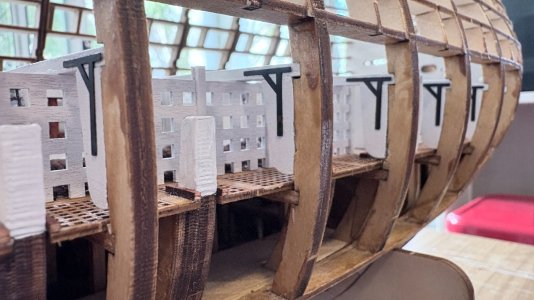
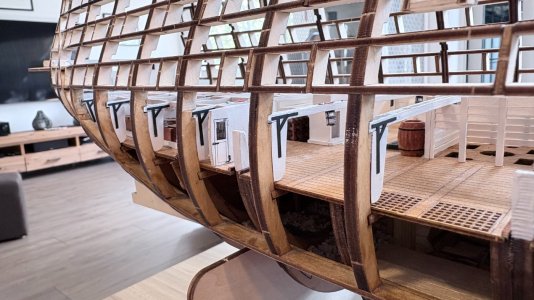
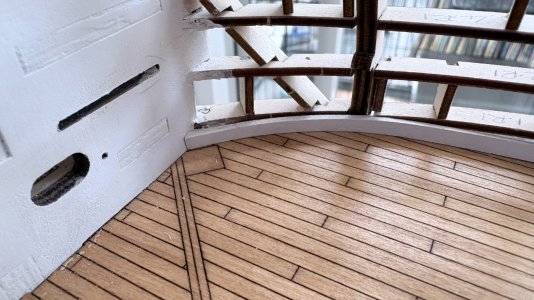
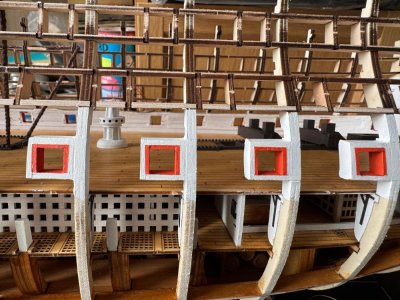
In this image I have laid the first row of the inner planking, but I am going to stop right there. It has been noted by other modellers (AlanOES and Humble Ship Builder) that there is something not quite right in regard to the instructions. The instructions would have you continue the inner planking up to the next level ending planks flush with the gun port. The problem is when you fit the gun port linings they don't sit against the back of the planking which they should do. AlanOES has posted some excellent images highlighting the issue.
The up come of following the instructions is two fold. 1) It causes an issue drilling the holes for the cannon ropes and 2) You are expected (I think) to fill the area where the planking should be with filler. The guy in the video uses a mix od CA glue and talcum powder. This just looks like messy and an awful amount of hard work!
My solution is to fit the gun port linings first, then install the planking flush with lining.

Thanks for dropping by.
Tony
IMG_6328.JPG

IMG_6329.JPG

IMG_6344.JPG

IMG_6345.JPG

In this image I have laid the first row of the inner planking, but I am going to stop right there. It has been noted by other modellers (AlanOES and Humble Ship Builder) that there is something not quite right in regard to the instructions. The instructions would have you continue the inner planking up to the next level ending planks flush with the gun port. The problem is when you fit the gun port linings they don't sit against the back of the planking which they should do. AlanOES has posted some excellent images highlighting the issue.
The up come of following the instructions is two fold. 1) It causes an issue drilling the holes for the cannon ropes and 2) You are expected (I think) to fill the area where the planking should be with filler. The guy in the video uses a mix od CA glue and talcum powder. This just looks like messy and an awful amount of hard work!
My solution is to fit the gun port linings first, then install the planking flush with lining.

Thanks for dropping by.
Tony
 
Last edited:
Video 15 - (Part 2)
Sorry in the previous post I seem to have got double ups of text and images. I tried to edit the post but it does not want to Save the Edit. Strange.
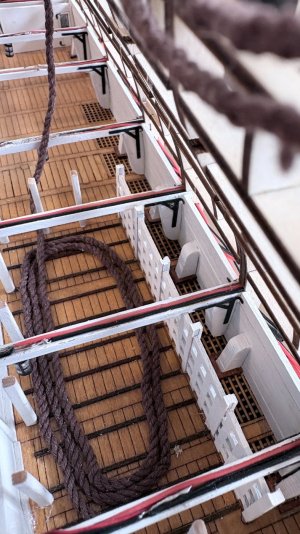
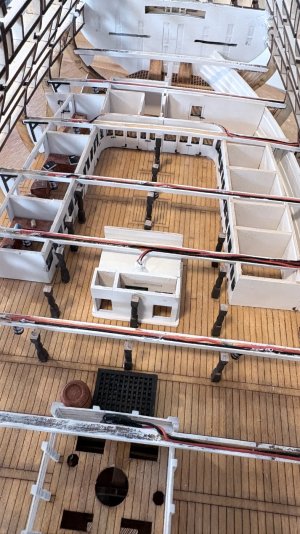
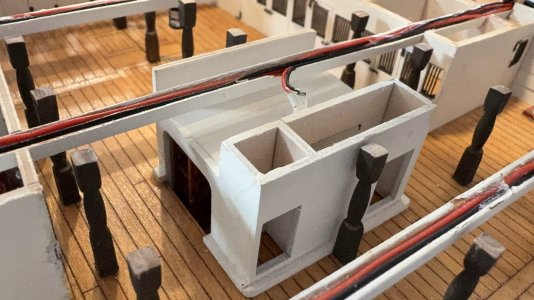
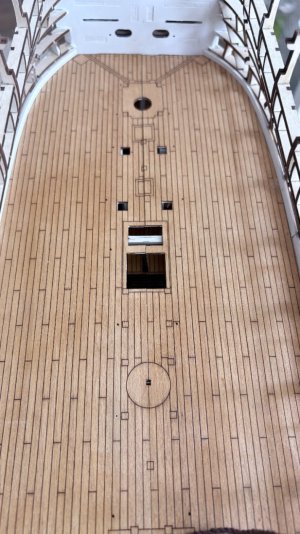
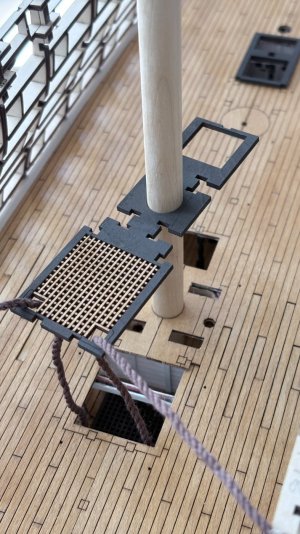
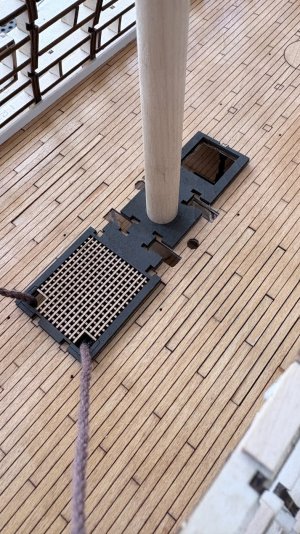
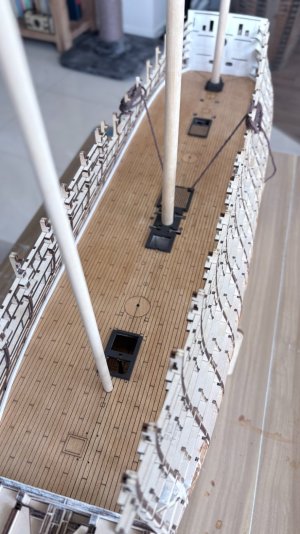
Anyway while I was waiting for glue or paint to dry I moved ahead a bit and painted the deck fittings for this deck. I then though I might as well fit them now.

IMG_6254.JPG
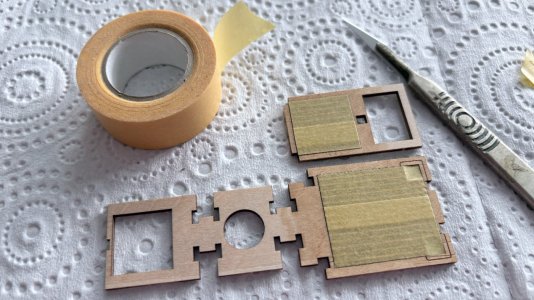
Stained the grating then masked it off.

IMG_6255.JPG
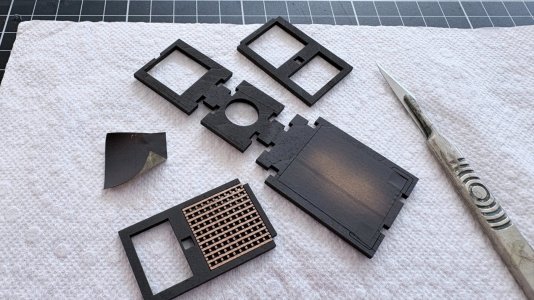
Sprayed the brown.

IMG_6256.JPGIMG_6256.JPG
Removed the masking.

IMG_6257.JPG

IMG_6347.JPG

IMG_6348.JPG
IMG_6349.JPG

IMG_6350.JPG

IMG_6352.JPG
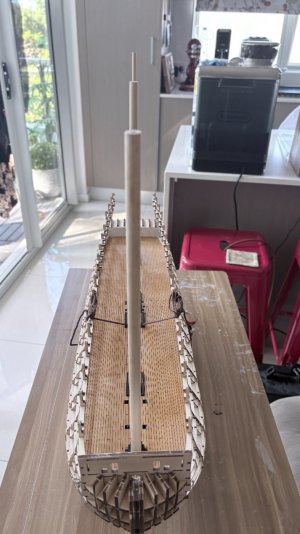
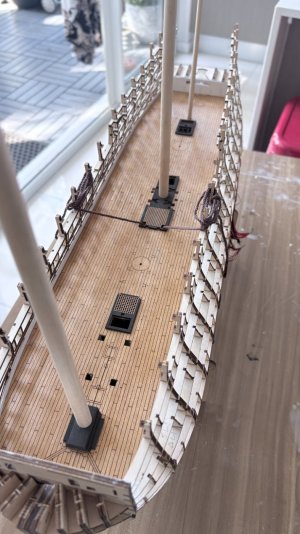
Another check that the masts still aligned.

IMG_6353.JPG

IMG_6354.JPG

Next upo sanding the hull.

Thanks for dropping by.
Tony

IMG_6345.JPG
 
Video 15 - (Part 1)
Here I lay the lower gun deck and begin the inner planking (more on this later).

View attachment 605542
The underside gets one coat of white then a light sand and a second coat.

View attachment 605543

View attachment 605544
Top receives a light sand before one coat of stain.

View attachment 605545

View attachment 605546
I wanted to test fit the mastsn with the lower deck temporarly in place. But first I prepared the foot of the mast as per the mast instruction sheet. You need to create a 6mm cube. Simply job to chisel the profile.

View attachment 605547

View attachment 605548

View attachment 605549
I then got the depth correct and sanded a chamfer to aid the mast locating into the recess in the hold.

View attachment 605550
Perfect! Mmmmmm need to blow some of that dust out!

View attachment 605551
Ok lets get that deck down.

View attachment 605552
As expected the finger joints didn't want to play ball (as I expected). I once again turned to a technique I call tack gluing. I use this method a lot on my plastic models, especially large area such as the left and right sides of an aircraft fuselage. It basically entails getting only a part of the area to be glue correctly aligned. This is a lot easier than trying to glue the whole finger joint area in one go. Getting all the fingers to sit correctly is difficult.
Above, using a weight I managed to align the fingers near the weight. I made a mix of about 50% PVA to 50% water and ran a loaded brush over the area. Once I had cleaned off any excess and left it for about 30 mins, then I came back and repeated the process. This time I left the glue to set for a few hours. Yes it's slow process but the results are worth it.

View attachment 605553
More useful objects are used to manoeuvre the fingers.

View attachment 605554
I was happy with the fit when done.

View attachment 605557


In this image I have laid the first row of the inner planking, but I am going to stop right there. It has been noted by other modellers (AlanOES and Humble Ship Builder) that there is something not quite right in regard to the instructions. The instructions would have you continue the inner planking up to the next level ending planks flush with the gun port. The problem is when you fit the gun port linings they don't sit against the back of the planking which they should do. AlanOES has posted some excellent images highlighting the issue.
The up come of following the instructions is two fold. 1) It causes an issue drilling the holes for the cannon ropes and 2) You are expected (I think) to fill the area where the planking should be with filler. The guy in the video uses a mix od CA glue and talcum powder. This just looks like messy and an awful amount of hard work!
My solution is to fit the gun port linings first, then install the planking flush with lining.

Thanks for dropping by.
Tony

View attachment 605555

View attachment 605556

View attachment 605558

View attachment 605559

In this image I have laid the first row of the inner planking, but I am going to stop right there. It has been noted by other modellers (AlanOES and Humble Ship Builder) that there is something not quite right in regard to the instructions. The instructions would have you continue the inner planking up to the next level ending planks flush with the gun port. The problem is when you fit the gun port linings they don't sit against the back of the planking which they should do. AlanOES has posted some excellent images highlighting the issue.
The up come of following the instructions is two fold. 1) It causes an issue drilling the holes for the cannon ropes and 2) You are expected (I think) to fill the area where the planking should be with filler. The guy in the video uses a mix od CA glue and talcum powder. This just looks like messy and an awful amount of hard work!
My solution is to fit the gun port linings first, then install the planking flush with lining.

Thanks for dropping by.
Tony
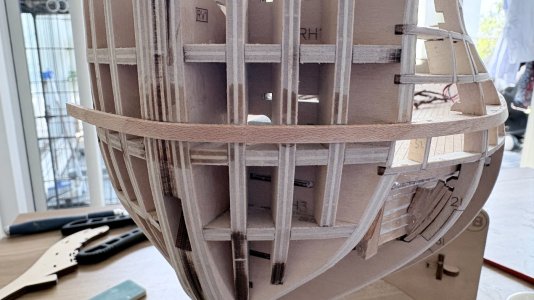
Hi, congratulations, you're doing a great job. I wanted to point out that, on the side where the structural pieces will be cut to leave only the gunwales, the strips won't be placed as shown in the photo of the work I'm doing.

WhatsApp Image 2026-05-21 at 12.36.11.jpeg
 
Columns look great. I remember I didn’t like making them but after getting a few done I figured out the best way for me and started making quality looking columns and fairly quickly.
 
Hi, congratulations, you're doing a great job. I wanted to point out that, on the side where the structural pieces will be cut to leave only the gunwales, the strips won't be placed as shown in the photo of the work I'm doing.

View attachment 605894
:( You are quite right, my mistake, I will pull that row off today. Thanks for the heads up to my error.
 
No, thanks for pointing it out to me. In fact I've just removed the strip without any real damage, just a bit of sanding to do on the ribs. Thank you
Imagine, however we are at the same point of work, I follow you with pleasure and interest
 
Video 16 - (Part 1)
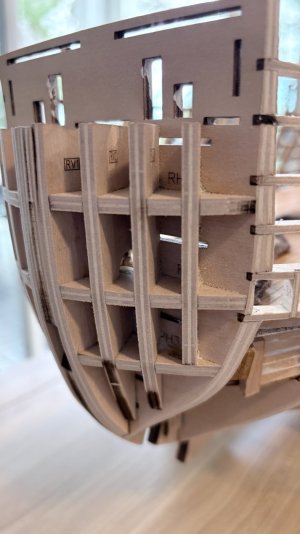
Time for sanding the hull. I intend to take my time here and get the smoothest convex curve I can to lay the planking onto. This was definitely a job to do sitting outside with a few tunes and a couple of beers.

IMG_6355.JPG
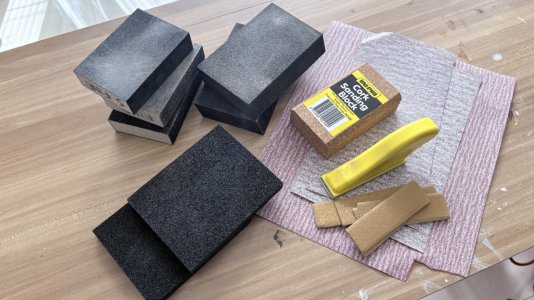
A selection of my sanding tools. In all honesty the vast majority of the hull was sanding using the small yellow hand held sanding block. It has interchangeable sanding pads and fits the hand comfortably.

IMG_6356.JPG
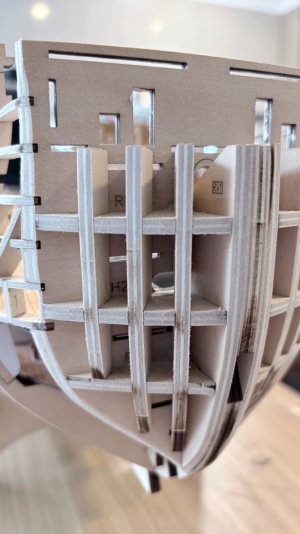
I started with the bow checking the curve regularly with a strip of wood.

IMG_6357.JPG

IMG_6358.JPG
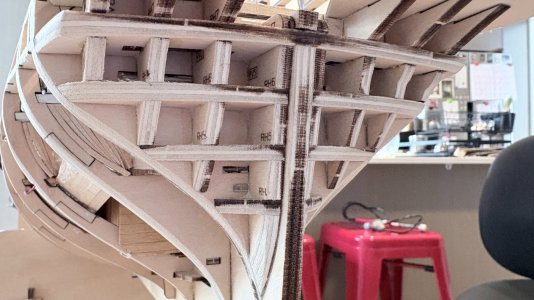
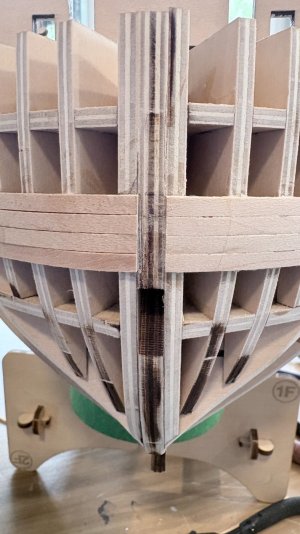
I found the stern to be a little more tricky.

IMG_6364.JPG
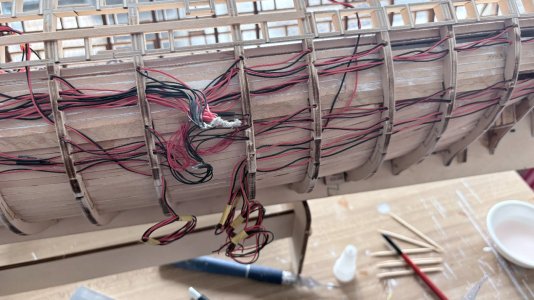
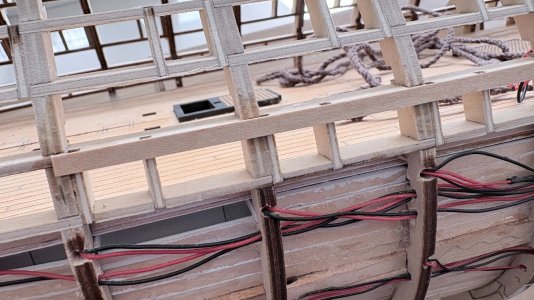
I then ran 4 pairs of wires to each deck above, these will be utilised when I come to add the lights to each deck.

IMG_6365.JPG
First row.

IMG_6366.JPG
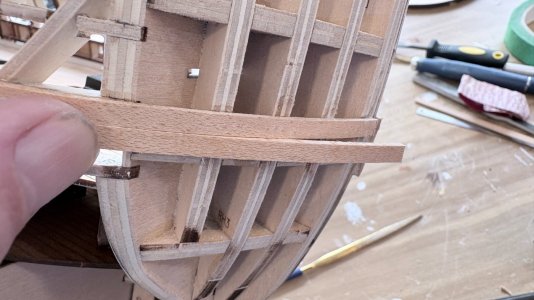
I wasn't sure if I was going to bend the planks with a bending iron or use the Amati bending pliers you can just see in this picture. In the end I adopted neither of these methods. After soaking the plank in water for about 5 mins I simply shaped the plank between my thumb and forefinger. I was surprised how easily each plank conformed to where I bent it. We will see how this goes with more complex areas of the hull but for now it's a winner for me.

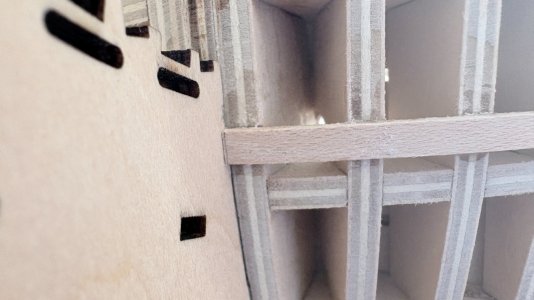
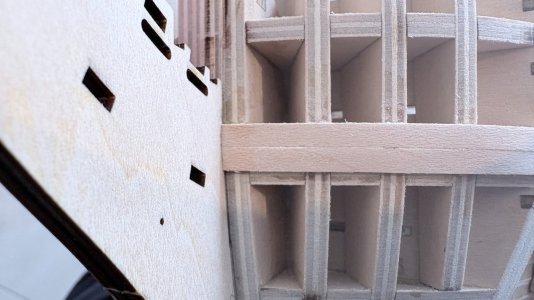
IMG_6367.JPGI regularly fitted the beak to check the plank end point, I wanted it to a snug fit.
IMG_6369.JPG

IMG_6370.JPG

IMG_6371.JPG
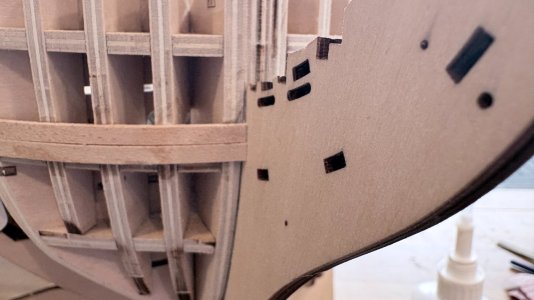
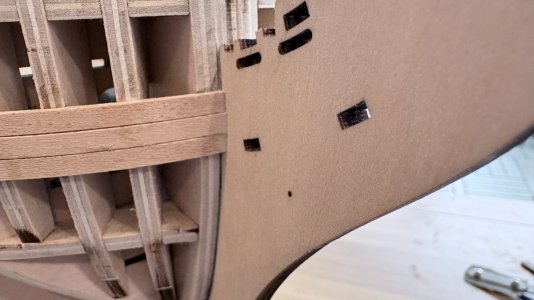
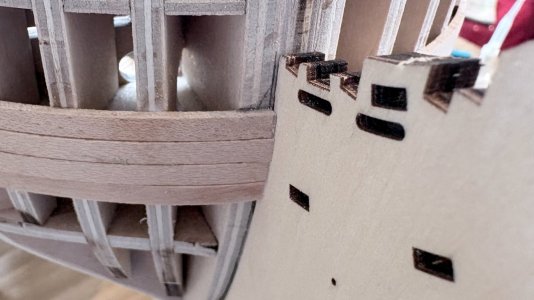
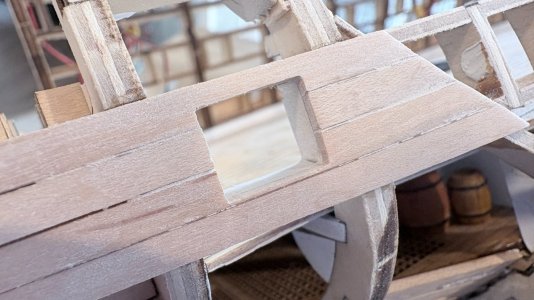
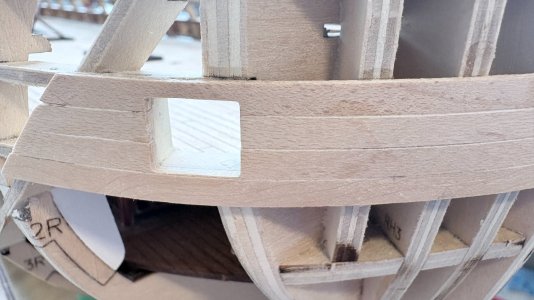
Whilst it's easily accessible I removed a large portion of the gun port with a small saw.

IMG_6374.JPG

IMG_6375.JPG
Happy with that!

IMG_6376.JPG
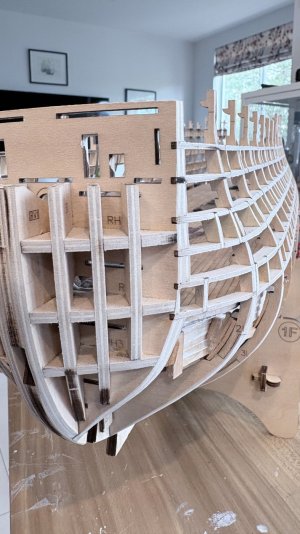
At this point I think I really got the majestic shape of the Victory.

IMG_6377.JPG
The stern was easier to finish. This will be later formed around the rear planking.

IMG_6378.JPG
Repeat on the other side up to the cutout.

IMG_6379.JPG

IMG_6380.JPG

IMG_6381.JPG

IMG_6382.JPG

IMG_6384.JPG

IMG_6385.JPG
There's going to be a few of these gun ports to clear out.

IMG_6386.JPG

Thanks for dropping by
Tony

IMG_6361.JPG
 
Back
Top