• "Thank you for your Donations and Support"
    As we close this Annual Donations Drive, we want to thank you all for your Generosity in Donating to Ships of Scale. It is Greatly Apreciated !!!
    Ships of Scale continues to explore exciting things to offer to the Ship Building Community.
  • SUBSCRIBE TO SHIPS IN SCALE TODAY!

    The beloved Ships in Scale Magazine is back and charting a new course for 2026!
    Discover new skills, new techniques, and new inspirations in every issue.

    NOTE THAT OUR NEXT ISSUE WILL BE MARCH/APRIL 2026
  • Win a Free Custom Engraved Brass Coin!!!
    As a way to introduce our brass coins to the community, we will raffle off a free coin during the month of August. Follow link ABOVE for instructions for entering.

Artesania Latina Anatomy of Lord Nelson’s HMS Victory Trafalgar 1805

Video 16 - (Part 1)
Time for sanding the hull. I intend to take my time here and get the smoothest convex curve I can to lay the planking onto. This was definitely a job to do sitting outside with a few tunes and a couple of beers.

View attachment 606522
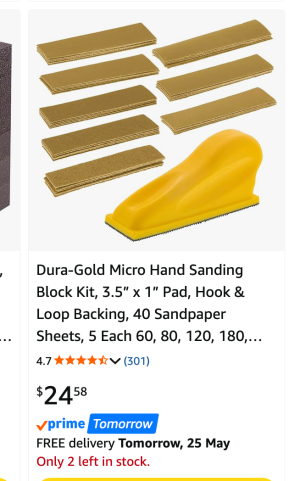
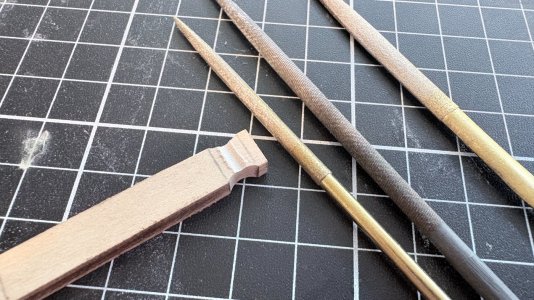
A selection of my sanding tools. In all honesty the vast majority of the hull was sanding using the small yellow hand held sanding block. It has interchangeable sanding pads and fits the hand comfortably.

View attachment 606523
I started with the bow checking the curve regularly with a strip of wood.

View attachment 606524

View attachment 606525
I found the stern to be a little more tricky.

View attachment 606527
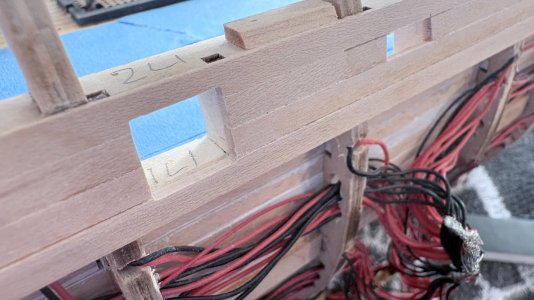
I then ran 4 pairs of wires to each deck above, these will be utilised when I come to add the lights to each deck.

View attachment 606528
First row.

View attachment 606529
I wasn't sure if I was going to bend the planks with a bending iron or use the Amati bending pliers you can just see in this picture. In the end I adopted neither of these methods. After soaking the plank in water for about 5 mins I simply shaped the plank between my thumb and forefinger. I was surprised how easily each plank conformed to where I bent it. We will see how this goes with more complex areas of the hull but for now it's a winner for me.

View attachment 606530I regularly fitted the beak to check the plank end point, I wanted it to a snug fit.

View attachment 606531

View attachment 606532
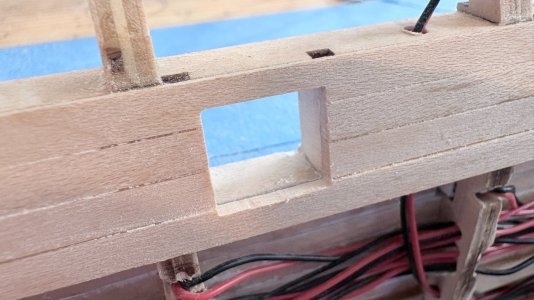
Whilst it's easily accessible I removed a large portion of the gun port with a small saw.

View attachment 606534

View attachment 606535
Happy with that!

View attachment 606536
At this point I think I really got the majestic shape of the Victory.

View attachment 606537
The stern was easier to finish. This will be later formed around the rear planking.

View attachment 606538
Repeat on the other side up to the cutout.

View attachment 606539

View attachment 606540

View attachment 606541

View attachment 606542

View attachment 606543

View attachment 606544
There's going to be a few of these gun ports to clear out.

View attachment 606545

Thanks for dropping by
Great job, excellent sanding, you probably won't have problems laying the slats. The most difficult point is the stern but by wetting the strips they shape well. The small yellow sanding block is also nice, I think it's very comfortable to use, where was it bought? Thank you and good work

 
Video 16 - (Part 1)
Time for sanding the hull. I intend to take my time here and get the smoothest convex curve I can to lay the planking onto. This was definitely a job to do sitting outside with a few tunes and a couple of beers.

View attachment 606522
A selection of my sanding tools. In all honesty the vast majority of the hull was sanding using the small yellow hand held sanding block. It has interchangeable sanding pads and fits the hand comfortably.

View attachment 606523
I started with the bow checking the curve regularly with a strip of wood.

View attachment 606524

View attachment 606525
I found the stern to be a little more tricky.

View attachment 606527
I then ran 4 pairs of wires to each deck above, these will be utilised when I come to add the lights to each deck.

View attachment 606528
First row.

View attachment 606529
I wasn't sure if I was going to bend the planks with a bending iron or use the Amati bending pliers you can just see in this picture. In the end I adopted neither of these methods. After soaking the plank in water for about 5 mins I simply shaped the plank between my thumb and forefinger. I was surprised how easily each plank conformed to where I bent it. We will see how this goes with more complex areas of the hull but for now it's a winner for me.

View attachment 606530I regularly fitted the beak to check the plank end point, I wanted it to a snug fit.

View attachment 606531

View attachment 606532

View attachment 606533
Whilst it's easily accessible I removed a large portion of the gun port with a small saw.

View attachment 606534

View attachment 606535
Happy with that!

View attachment 606536
At this point I think I really got the majestic shape of the Victory.

View attachment 606537
The stern was easier to finish. This will be later formed around the rear planking.

View attachment 606538
Repeat on the other side up to the cutout.

View attachment 606539

View attachment 606540

View attachment 606541

View attachment 606542

View attachment 606543

View attachment 606544
There's going to be a few of these gun ports to clear out.

View attachment 606545

Thanks for dropping by
Tony

View attachment 606526
Great job, excellent sanding, you probably won't have problems laying the slats. The most difficult point is the stern but by wetting the strips they shape well. The small yellow sanding block is also nice, I think it's very comfortable to use, where was it bought? Thanks and good work
 
Video 16 - (Part 1)
Time for sanding the hull. I intend to take my time here and get the smoothest convex curve I can to lay the planking onto. This was definitely a job to do sitting outside with a few tunes and a couple of beers.

View attachment 606522
A selection of my sanding tools. In all honesty the vast majority of the hull was sanding using the small yellow hand held sanding block. It has interchangeable sanding pads and fits the hand comfortably.

View attachment 606523
I started with the bow checking the curve regularly with a strip of wood.

View attachment 606524

View attachment 606525
I found the stern to be a little more tricky.

View attachment 606527
I then ran 4 pairs of wires to each deck above, these will be utilised when I come to add the lights to each deck.

View attachment 606528
First row.

View attachment 606529
I wasn't sure if I was going to bend the planks with a bending iron or use the Amati bending pliers you can just see in this picture. In the end I adopted neither of these methods. After soaking the plank in water for about 5 mins I simply shaped the plank between my thumb and forefinger. I was surprised how easily each plank conformed to where I bent it. We will see how this goes with more complex areas of the hull but for now it's a winner for me.

View attachment 606530I regularly fitted the beak to check the plank end point, I wanted it to a snug fit.

View attachment 606531

View attachment 606532

View attachment 606533
Whilst it's easily accessible I removed a large portion of the gun port with a small saw.

View attachment 606534

View attachment 606535
Happy with that!

View attachment 606536
At this point I think I really got the majestic shape of the Victory.

View attachment 606537
The stern was easier to finish. This will be later formed around the rear planking.

View attachment 606538
Repeat on the other side up to the cutout.

View attachment 606539

View attachment 606540

View attachment 606541

View attachment 606542

View attachment 606543

View attachment 606544
There's going to be a few of these gun ports to clear out.

View attachment 606545

Thanks for dropping by
Tony

View attachment 606526
Great job, excellent sanding, you probably won't have problems laying the slats. The most difficult point is the stern but by wetting the strips they shape well. The small yellow sanding block is also nice, I think it's very comfortable to use, where was it bought? Thank you and good work
 
Great job, excellent sanding, you probably won't have problems laying the slats. The most difficult point is the stern but by wetting the strips they shape well. The small yellow sanding block is also nice, I think it's very comfortable to use, where was it bought? Thank you and good work

Got from Amazon.

Screenshot 2026-05-24 at 4.48.18 pm.png
 
Video 16 - (Part 2 - Complete)
The last bits of video 16. Completing the gun ports cut outs.

IMG_6387.JPG
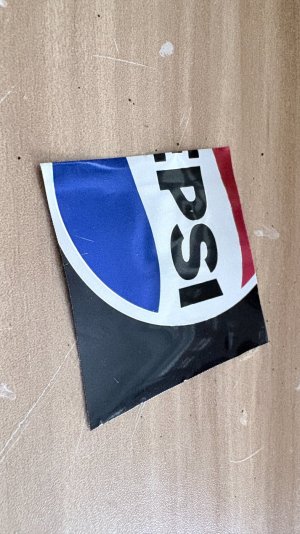
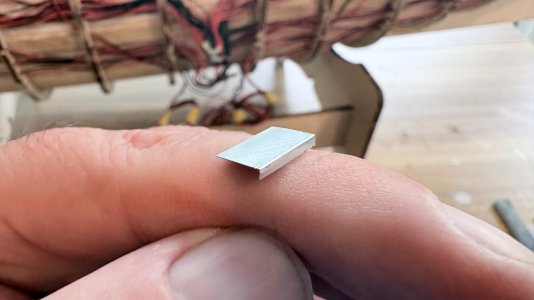
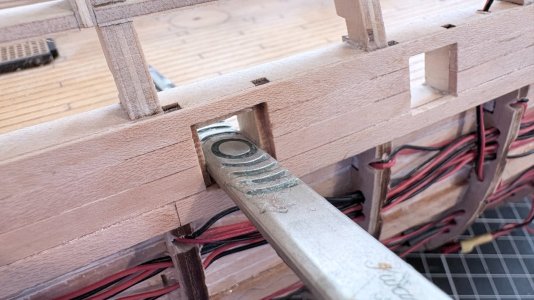
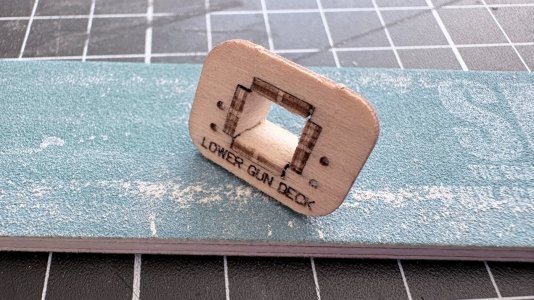
I started on the first of the port side cut outs and came up with an idea to assit the task. I needed to enlist the help of the "MaxiPep 2000 Sanding Protector", well actually I needed a small piece of Aluminium.

IMG_6388.JPG

IMG_6389.JPG
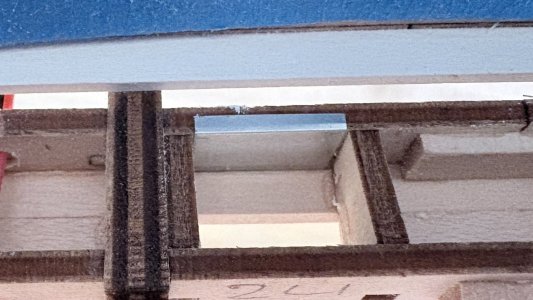
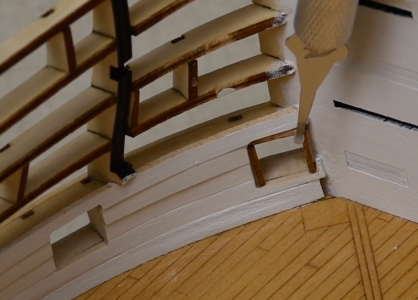
I fashioned a small piece to sit inside the base of the gun ports.

IMG_6390.JPG
Held there with a small piece of double sided tape it provided a protective buffer whilst I sanded away the unwanted material around the port. Worked quite well.

IMG_6391.JPG

IMG_6392.JPG

IMG_6393.JPG
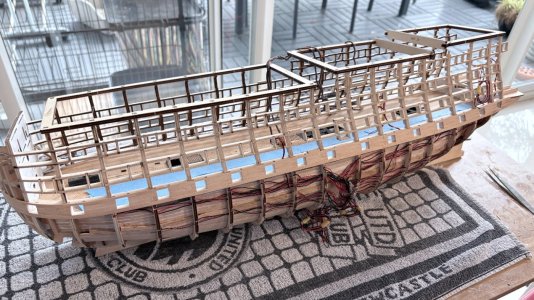
All the port side for the lower gun deck now done.
Video 17 starts with the installation of the linings, once they are fitted and painted I will then go back to Video 15 and complete the installation of the inner walls as I talked about previous.

Thanks for dropping by.
Tony
 
Video 16 - (Part 2 - Complete)
The last bits of video 16. Completing the gun ports cut outs.

View attachment 607118
I started on the first of the port side cut outs and came up with an idea to assit the task. I needed to enlist the help of the "MaxiPep 2000 Sanding Protector", well actually I needed a small piece of Aluminium.

View attachment 607119

View attachment 607120
I fashioned a small piece to sit inside the base of the gun ports.

View attachment 607121
Held there with a small piece of double sided tape it provided a protective buffer whilst I sanded away the unwanted material around the port. Worked quite well.

View attachment 607122

View attachment 607123

View attachment 607124
All the port side for the lower gun deck now done.
Video 17 starts with the installation of the linings, once they are fitted and painted I will then go back to Video 15 and complete the installation of the inner walls as I talked about previous.

Thanks for dropping by.
Tony
Hello, great job, especially a beautiful solution to use a small piece of aluminum but I didn't understand how you used it and in what position you put it to shape the slats.
 
Hello, great job, especially a beautiful solution to use a small piece of aluminum but I didn't understand how you used it and in what position you put it to shape the slats.
It had nothing to do with shaping the planks. It was purely to protect the inside of the gun port from oversanding. I placed it on both the bottom and top of the gun port.
 
Interesting, how did you position these pieces of aluminum? With a photo it would be easier to understand. Thanks
 
Video 16 - (Part 3)
I was never happy with the method shown in the instructions in regard to where the inner planking ended leaving a lot of filling. The guy in the video used a mix of CA and talc to make a quick drying filler. I decided to place the linings first then add the planks covering the ends of the linings thus avoiding the need to fill at all.

Screenshot 2026-05-28 at 4.39.35 pm.png
This is how the instructions have you end the planking (NOT covering the lining) leaving a lot of filling.

IMG_6404.JPG
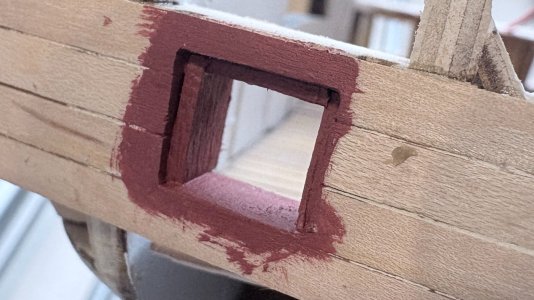
This is how I approached the task. Installed and painted the linings first, then fitting the planks covering the lining ends. NO FILLER)!

IMG_6440.JPG
This seemed a better approach.

IMG_6441.JPG

IMG_6439.JPG

IMG_6438.JPG

Thanks for dropping by
T
 
Video #17 - Part 1
Little bit out of order here due to the fact I installed the linings before doing the inner planking. Here I start the linings.

IMG_6231.JPG
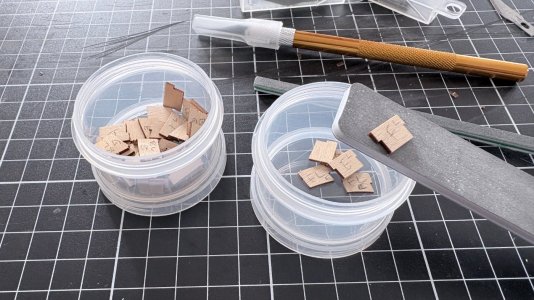
Make sure you number the parts, they look the same but they are all slightly different.

IMG_6394.JPG
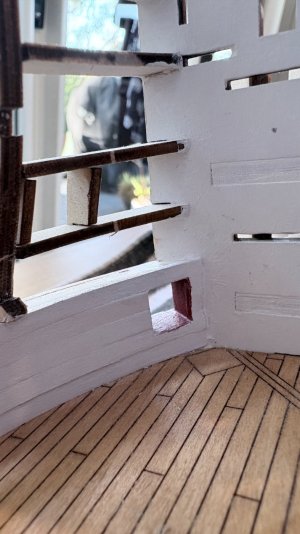
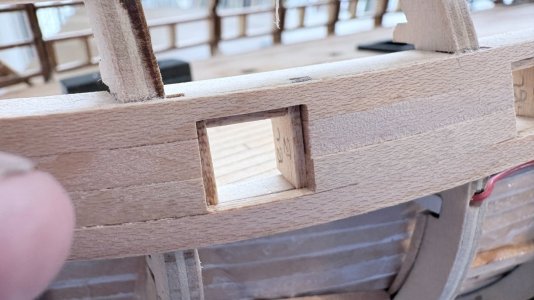
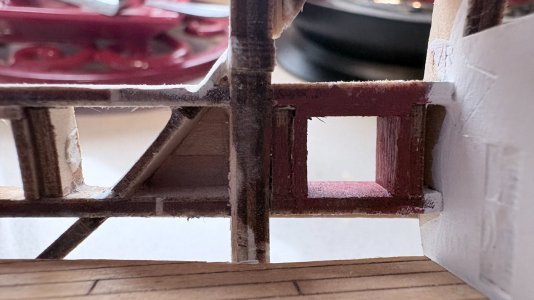
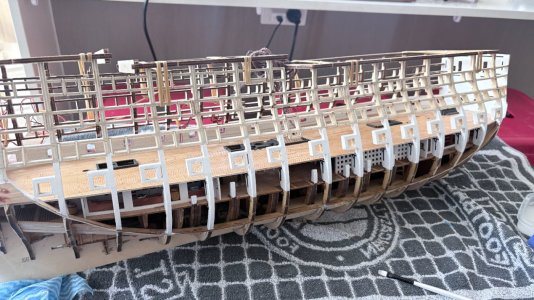
The liner on the inside is later sanded flush with the inside framework.

IMG_6395.JPG
Some parts needed some gentle persuasion to lock them in. I found a scalpel handle did the job.

IMG_6399.JPG
The lining here is sanded flush with the framework and painted red.
IMG_6403.JPG

Thanks for dropping by.
T
 
Video #17 - Part 1
Little bit out of order here due to the fact I installed the linings before doing the inner planking. Here I start the linings.

View attachment 608761
Make sure you number the parts, they look the same but they are all slightly different.

View attachment 608757
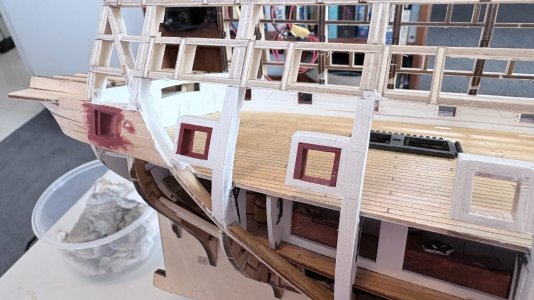
The liner on the inside is later sanded flush with the inside framework.

View attachment 608758
Some parts needed some gentle persuasion to lock them in. I found a scalpel handle did the job.

View attachment 608759
The lining here is sanded flush with the framework and painted red.
View attachment 608760

Thanks for dropping by.
T
Congratulations, they are perfectly and precisely framed. How did you do it? They don't come out like this for me, I always get the angles wrong.
 
Thank you. Patience. Make sure you number the parts, they are not exactly the same. Use wood glue not CA glue it gives you more time to adjust their position.
Hi, I do the same, in particular I was referring to the perfect cut of the edge of the strips of the external coating
 
Video #17 - Part 2 - Complete
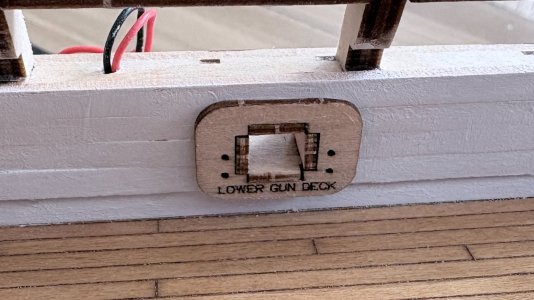
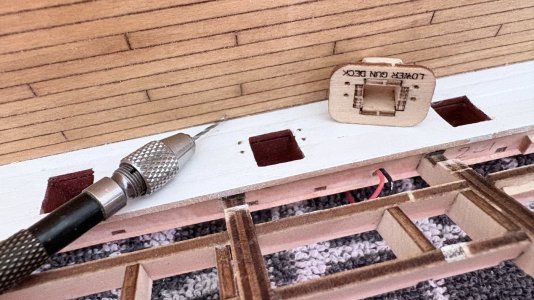
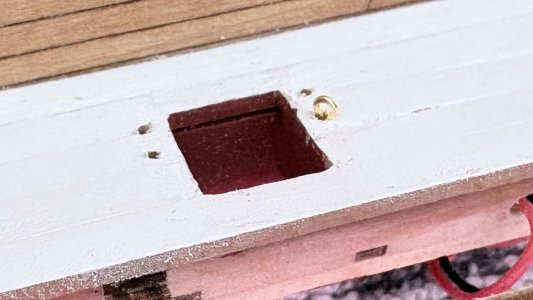
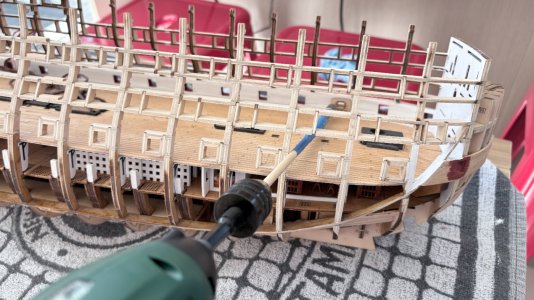
I finish off the painting of the cannon ports and drill the holes for the cannon rigging.

IMG_6445.JPG
To align the holes for the eyebolts AL provide this jig which you make up.

IMG_6446.JPG

IMG_6449.JPG
Quite clever really, well done AL.

IMG_6450.JPG
The only problem is it is very difficult to get a pin vice in and to get enough pressure to drill the hole, I did try and got one done.

IMG_6451.JPG

IMG_6460.JPG
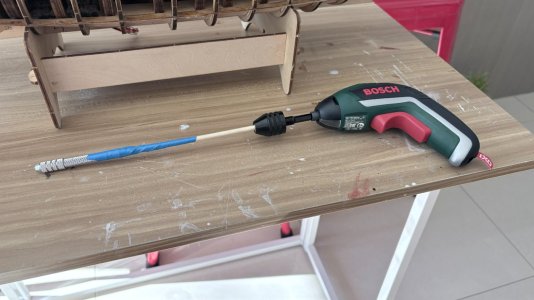
I copied the guy in the video instructions and cobbled together a similar tool. A few people have asked on forums where to get the extension tool the guy uses and I don't think there has been an answer. However if you look very closely at the video I think that the extension is only a length of transparent plastic tube shoved over the end of a pin vice (I may be wrong).
My extension is a length of 6mm dowel held on with some electrical tape. Very crude but it worked!

IMG_6461.JPG

IMG_6523.JPG
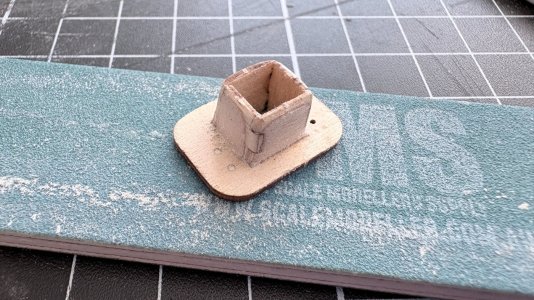
The gun ports cut from their frame and painted white

IMG_6548.JPG
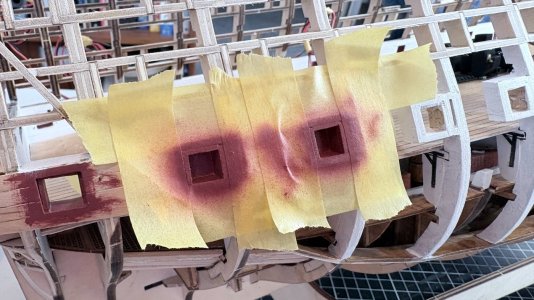
I decided to airbrush the linings so time for some masking.

IMG_6549.JPG
Only another 14 to go and I'm done with Video 17.

Thanks for dropping by.
T

IMG_6447.JPG
 
Video 18 - (Part 1)
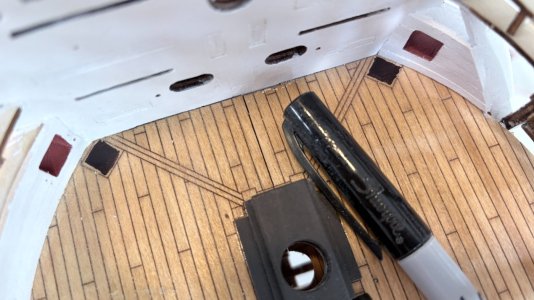
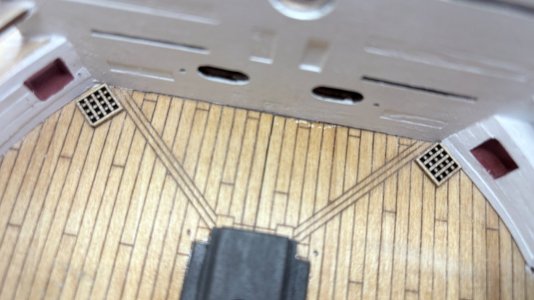
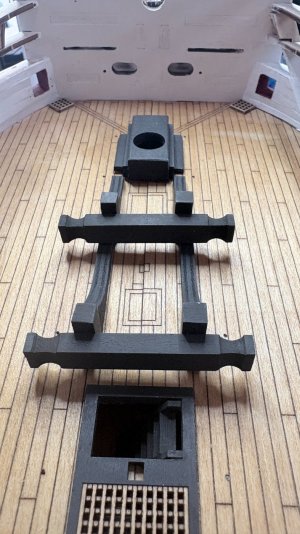
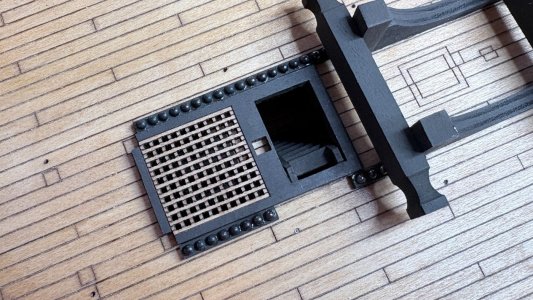
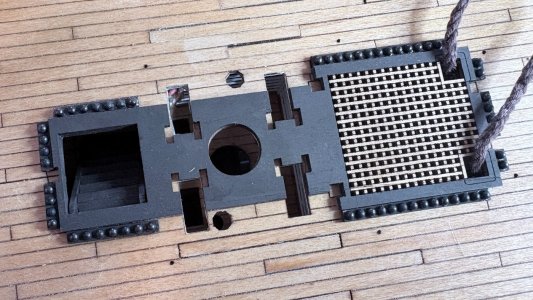
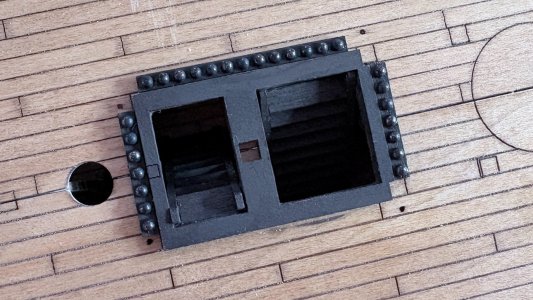
I had already fitted some of the deck parts in a previous video so lets continue with the rest.

IMG_6266.JPG

IMG_6267.JPG

IMG_6268.JPG

IMG_6269.JPG

IMG_6270.JPG

IMG_6271.JPG

IMG_6273.JPG

IMG_6274.JPG
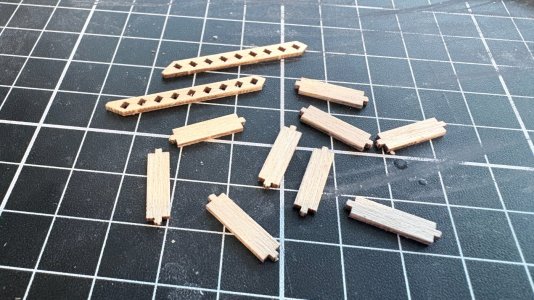
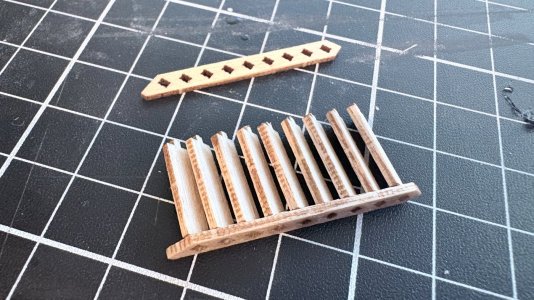
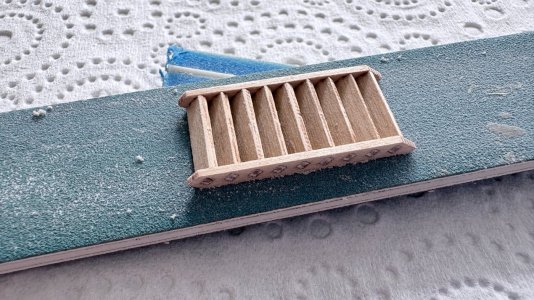
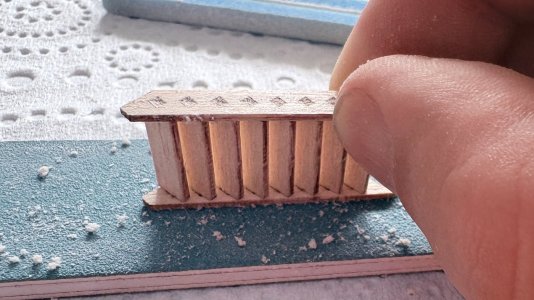
The ladders are quite a challenge to put together, I found getting one side in using wood glue then laying it down helped get the other side in.

IMG_6283.JPG

IMG_6287.JPG

IMG_6453.JPG
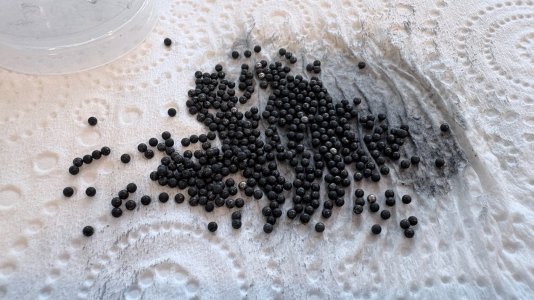
Ball blackening!

IMG_6482.JPG

IMG_6486.JPG
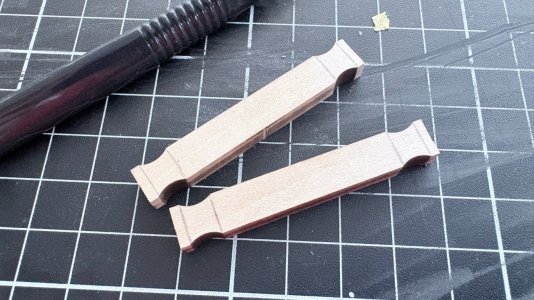
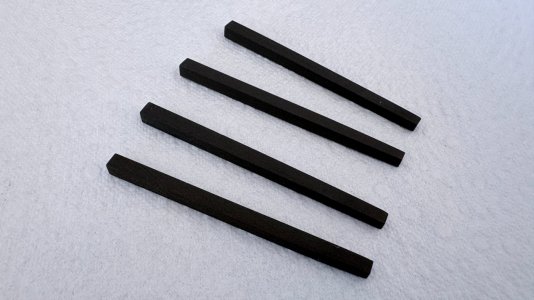
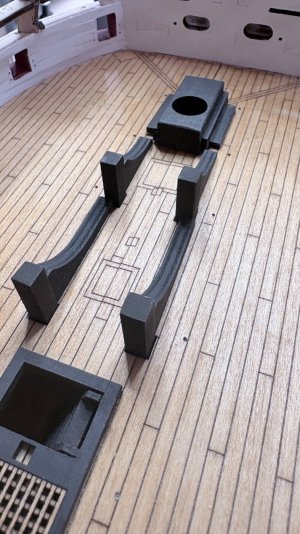
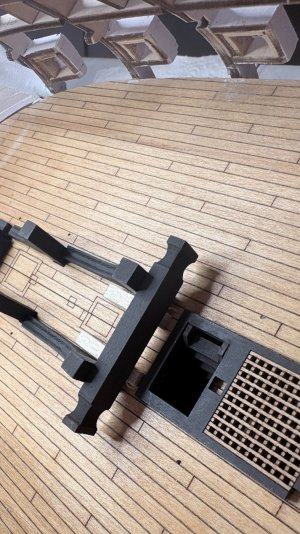
The Riding Bits.

IMG_6495.JPG
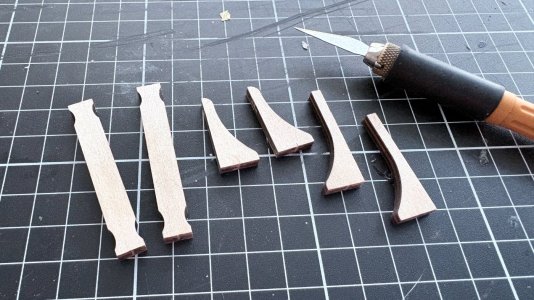
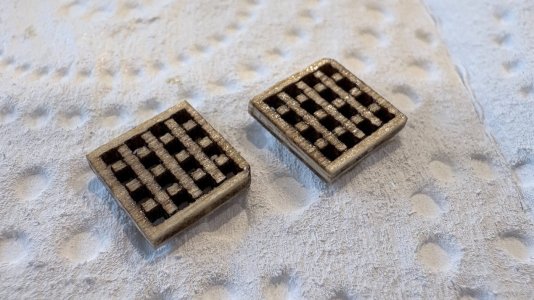
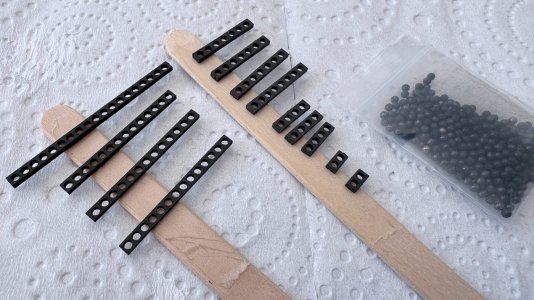
Cannon ball racks.

IMG_6532.JPG

IMG_6524.JPG
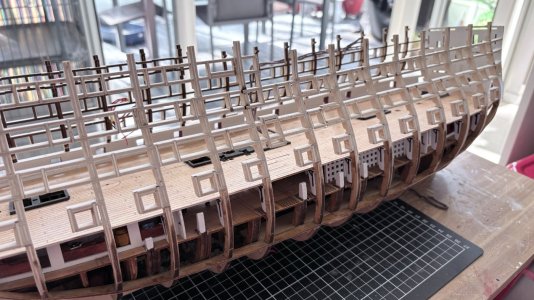
Ladders installed.

IMG_6525.JPG

IMG_6526.JPG

IMG_6527.JPG

IMG_6528.JPG

IMG_6529.JPG

IMG_6530.JPG

IMG_6531.JPG

I will complete this video in part 2.

Thanks for dropping by.
T
 
Back
Top