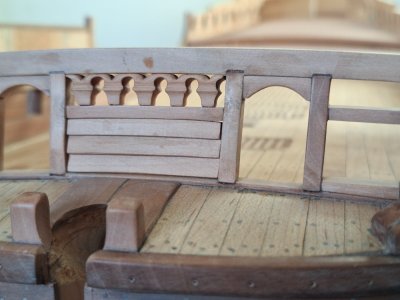
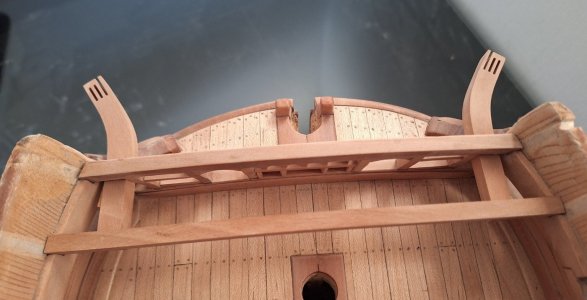
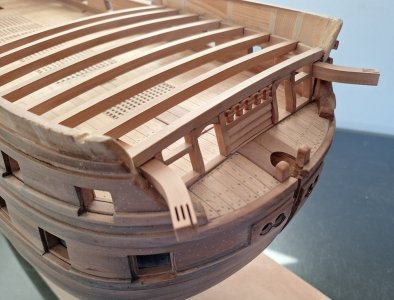
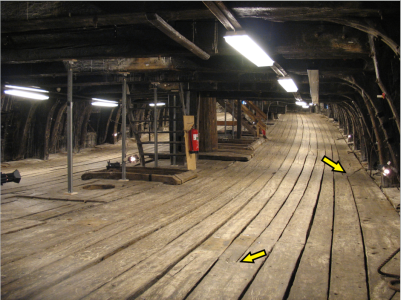
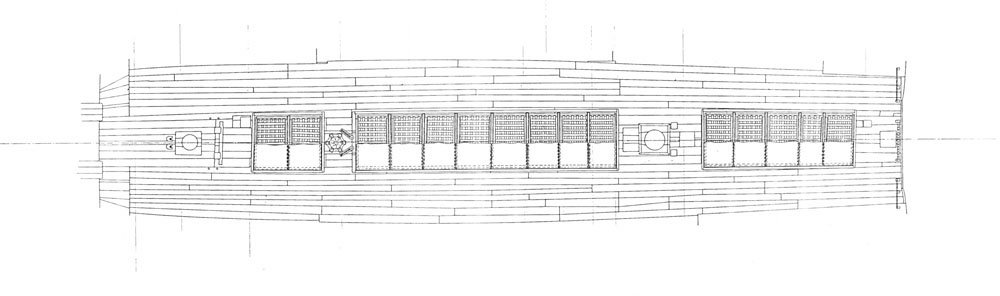
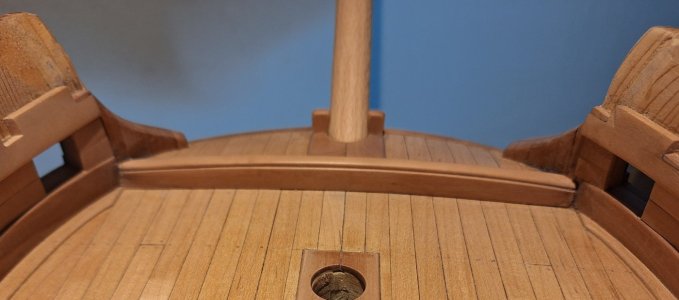
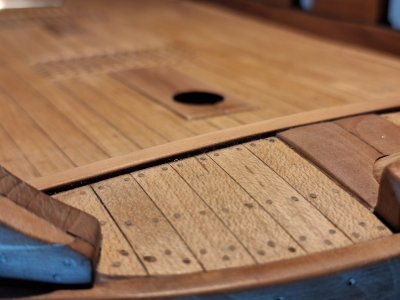
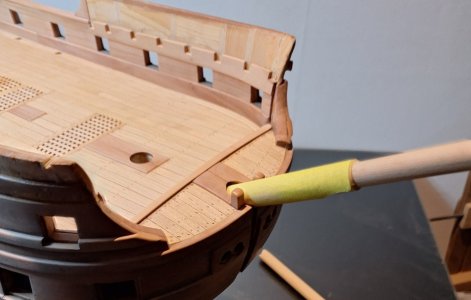
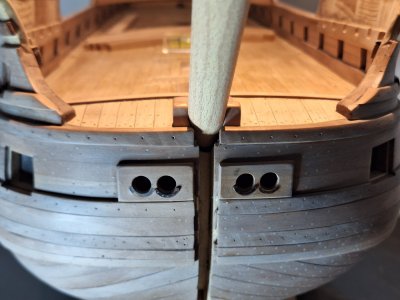
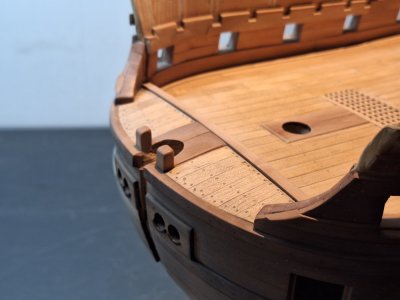
Deck planking may have been laid in accordance with whatever lumber was available, but the largest structural elements were set with precision, despite some asymmetry. What this allows is for leeway for us model builders when it comes to making perfectly symmetrical hull planking strakes and deck planking of varying widths and lengths. For many of us, the mistakes we make in these areas can often be actually historically accurate as a result. We may end up with an additional drop plank or stealer on one side off the hull, or one extra strake of planking on one side. Look at the pictures of Vasa's lower gun deck for how the deck planks appear as an example.
Unconventional deck joints made to get the most use out of available timbers on Vasa's lower gun deck:
View attachment 563908
Vasa's deck planking pattern was opportunistic based on available wood, not set to a strictly followed pattern:
View attachment 563907











 !
!


 .
.