• Win a Free Custom Engraved Brass Coin!!!
    As a way to introduce our brass coins to the community, we will raffle off a free coin during the month of August. Follow link ABOVE for instructions for entering.
  • PRE-ORDER SHIPS IN SCALE TODAY!

    The beloved Ships in Scale Magazine is back and charting a new course for 2026!
    Discover new skills, new techniques, and new inspirations in every issue.

    NOTE THAT OUR FIRST ISSUE WILL BE JAN/FEB 2026

Harold Hahn

What Harold meant when he said options for introducing detail is his plans are designed so a builder can alter the framing without having to change the framing system or redrawing frames.
As an example using the Oliver Cromwell framing, the plan is drawn to the stylized modeling practice of equal room and space. With each model Harold provided a historical back round so a builder can continue the research. and if information is found that changes framing the model can be altered accordingly. Double sistered frame construction was a common practice which Harold used in the models.

oliver130.jpg

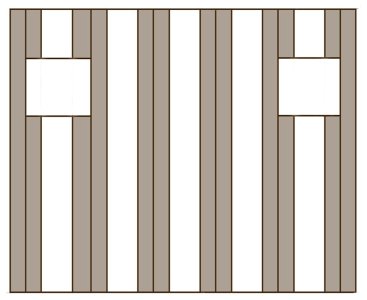
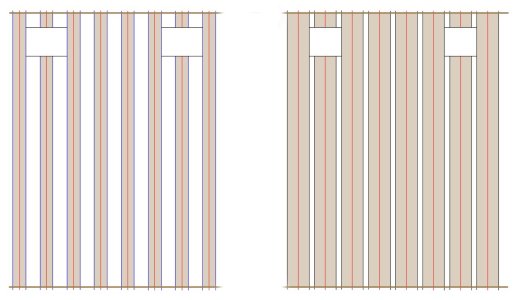
first drawing is the original plan, this framing gives the model the open equal spaces airy appearance of the admiralty type model.

oliver f org.jpg

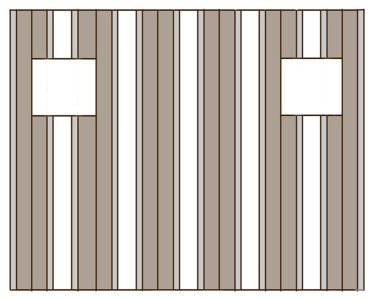
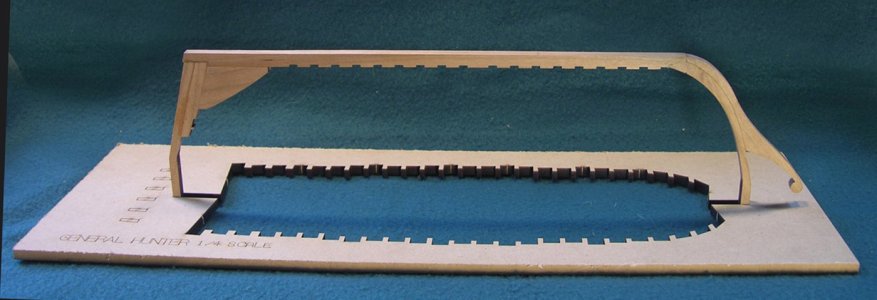
a builder can frame the model with the equal room and space or heavier framing without changing anything except for the thickness of the framing stock. If the frames are built of heavier stock the keel notches are expanded by sanding them and the legs of the frames where they fit into the jig are sanded smaller to fit the jig notch.

oliver f wi.jpg

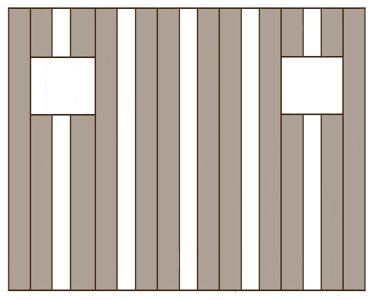
From the same set of plans and frame drawings you can change the appearance

oliverwi.jpg.
 
I did ask him if he had all the research material why he would build a model "his way" rather than stick to the historical facts. The model of the Chaleur really demonstrates what he was thinking. In the early years of ship modeling few people if anyone in the ship modeling community knew of Harold's artistic work other than the ship models. Naturally ship modelers would question why he used stylized forms of framing rather than staying true to model ship buildings purpose of creating true historical models. If we step over the line and into the world of art we can see the work from a different perspective. Taking a look at the original plan of the Chaleur the frame scantlings and masting was recorded on the plan, what was not recorded was the spacing of the frames. The first thought that comes to mind is the frame spacing was not mentioned because the frames were random. The hull could have been framed on ribbons so the mold frames could be spaced anywhere from 4 to 6 feet apart and filler pieces placed randomly between the sistered mold frames. This would be logical except for a note from Howard Chapelle suggesting the Chaleur was not a colonial American built schooner but rather a French Vessel. The French did not build their hulls with loose random filler tinber, the frames were all sistered frames. If the Chaleur was indeed a French vessel and the frames placed on 24 inch centers then you would have frames 18 inches with a 6 inch space like the first drawing. This is quite possible as shipwreck data confirms such an arrangement. If Harold used the equal frame and spacing using 9 inch frame futtocks then you would have 18 inch frames and an 18 in space, a very unlikely arrangement. With no definitive answer to how the Chaleur was framed he had artistic freedom to design the model anyway he wanted. From the perspective of ship modeling this approach was unacceptable, you would go with the most likely framing which is drawing 1 and not make something up like drawing 3. According to Harold when he went about designing the framing for a model he would established dimensions for the frames based on the size of the ship so they will be in suitable proportion even though not duplicating actual framing practices of the period. Then he would position the frames to accommodate gun ports making the ports an integral part of the structure so as a whole the structure would be in harmony and also to simplify the construction of the model

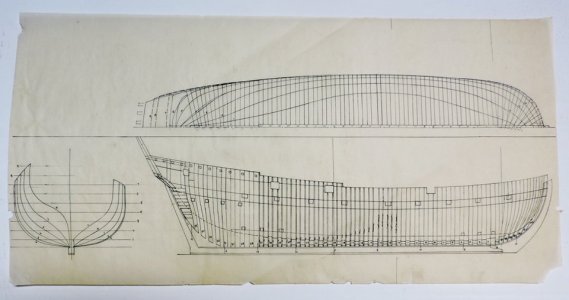
Here we see the original ink on tissue paper frame drawing of the Chaleur.


orig chaleur.jpg

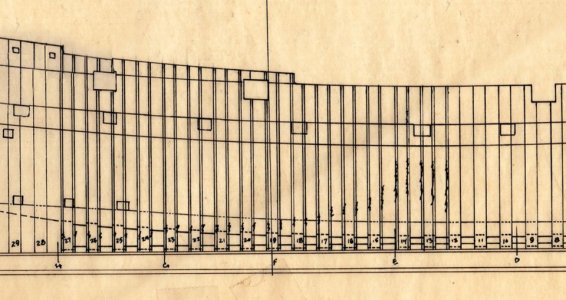
When looking closer we can see the engineer in Harold working out a framing system. There are double lines as well as lines scribbled out. Also the gun port at the F location is not falling on a frame. This just goes to show Harold took time and put a lot of thought behind the framing used in each of his models.

chaleur orig close.jpg

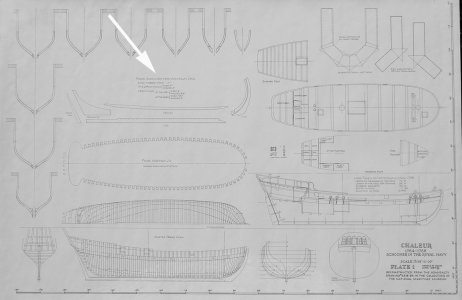
On the final plan Harold included the original scantlings for the frames just incase you want to build your way, right where the arrow is pointing.

final chaleur plan hi res.jpg
 
A common comment when Harold introduced his plans to the ship modeling community.

I understand that he wasn't trying to duplicate actual framing practice, but I just wish Mr. Hahn had drawn his frames a bit thicker, since in real life, there was more wood than space along the side of the hull, especially with a warship, but the opposite is true with Hahn's otherwise beautiful models.

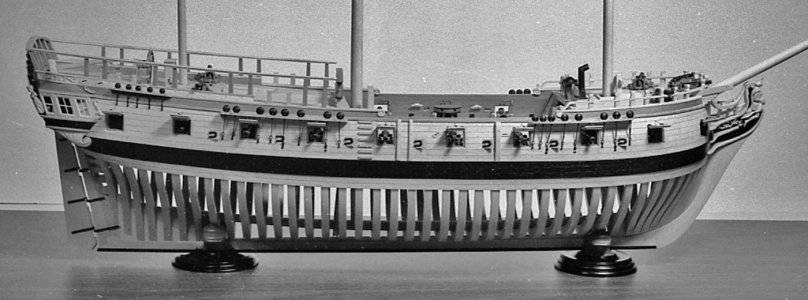
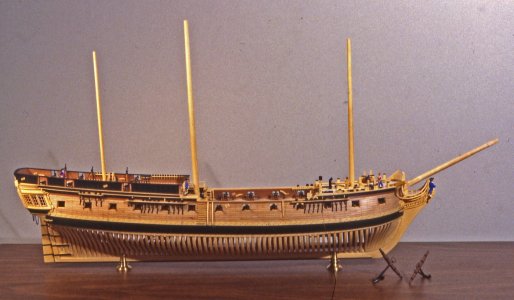
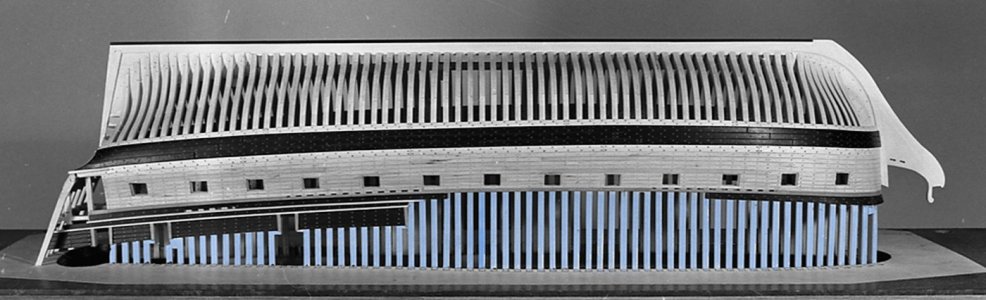
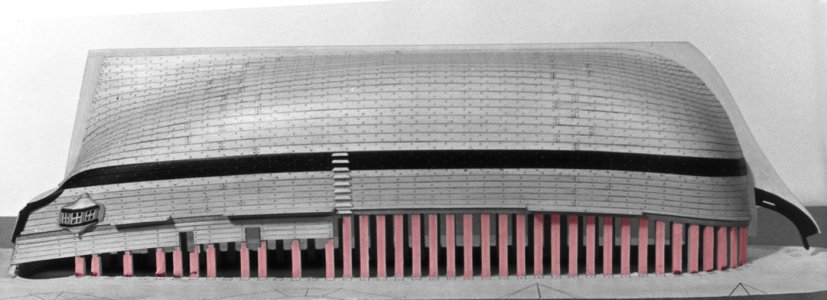
That is exactly what art should do is to stir and provoke the viewer. You say I like it another will say they don't some will wonder why he did that? or what was he thinking some get it some don't. As you said there was more wood than space in American warships and that is true. Lets take a look at an American built warship from the collection. Here we are looking at the Hancock which Harold built as an art piece for viewing by the general public. In general the public has no idea how the Hancock was actually framed as a matter of fact even the experts can only guess how it was framed. Framing is not the point showing the form and shape of the hull is the focus and the overall balance of the model is the point. I knew Harold well enough if you made that comment to him about drawing the frames thicker, he would graciously listen and not say a word, he would just walk away from you.

hancock.jpg

Actually, thicker frames are keyed into the drawings and into the design. Harold Hahn has said it many times his drawings are for the serious and more advanced builders. If you did your research and knew how to read plans you can adjust the framing to match closer to the actual framing that "might" have been used.

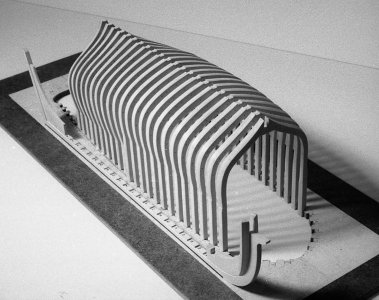
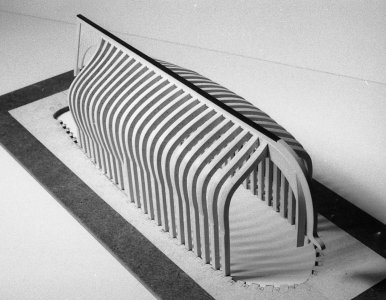
Looking at the hull framing of the Hancock model it is in perfect balance just like the navy board models with equal room and space. If your more historically minded and increase the framing, you're losing the openness of "framing" and seeing a wall of wood.

hancock framing.jpg
 
ZAZ6084 - the NMM plans for Chaleur are taken off plans of a capture and are done in the usual minimum effort style.

The deadflat station was placed at an arbitrary location. The placement had nothing to do with the framing. The other stations were placed at even foot based intervals. The captures that I have lofted have the next station at 10 feet out fore and aft, They also have nothing to do with the actual framing. The plans offer no clues as to the original framing. Based on these plans any reasonable framing choice is as good as any other.

The framing of most, if not all of the RN ships at this time (and later) were almost solid wood at the keel. What space there was was a 1"-2" air space. The sided dimension of the follow-on timbers was reduced. It was less wood and more space the higher up they were. The space was visually significant only above the main wale.

To my eye, it makes no sense to me to go to the bother of building an exact replication and putting the framing on display if it is a solid wall of timber. Planking it would look more pleasing. Doing an exact replication as an engineering demo model would be a valid reason. But how many of those are really needed?

My research has found that both French and North American framing at this time was all bends (sistered frames). A space between each bend that was equal to one frame in width. It was 2/3 room and 1/3 space. This style of framing is worth displaying.
 
Last edited:
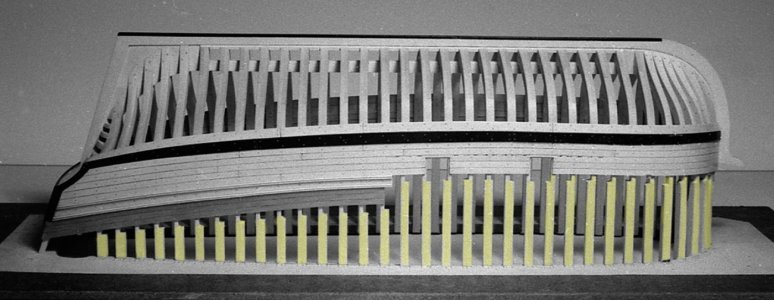
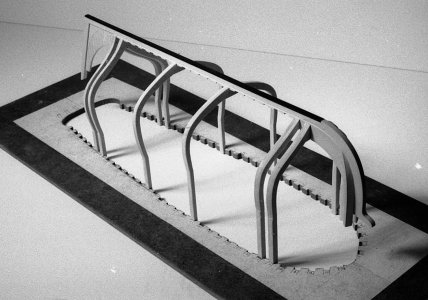
Hahn did use his system to build a different framing system for the British ship of the line Alfred. She has a mix of single and double frames. The single frames might actually be thinner double frames but visually it works.

This demonstrates the flexibility of Hahn’s system.

Roger
 
Back
Top