• Win a Free Custom Engraved Brass Coin!!!
    As a way to introduce our brass coins to the community, we will raffle off a free coin during the month of August. Follow link ABOVE for instructions for entering.
  • PRE-ORDER SHIPS IN SCALE TODAY!

    The beloved Ships in Scale Magazine is back and charting a new course for 2026!
    Discover new skills, new techniques, and new inspirations in every issue.

    NOTE THAT OUR FIRST ISSUE WILL BE JAN/FEB 2026

Harold Hahn

What Harold meant when he said options for introducing detail is his plans are designed so a builder can alter the framing without having to change the framing system or redrawing frames.
As an example using the Oliver Cromwell framing, the plan is drawn to the stylized modeling practice of equal room and space. With each model Harold provided a historical back round so a builder can continue the research. and if information is found that changes framing the model can be altered accordingly. Double sistered frame construction was a common practice which Harold used in the models.

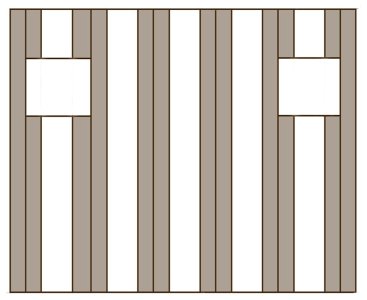
oliver130.jpg

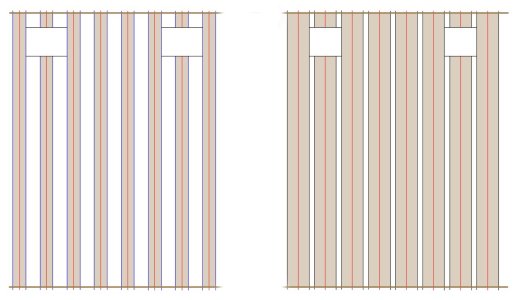
first drawing is the original plan, this framing gives the model the open equal spaces airy appearance of the admiralty type model.

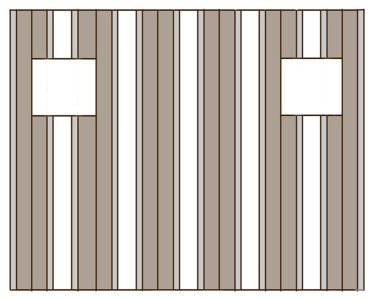
oliver f org.jpg

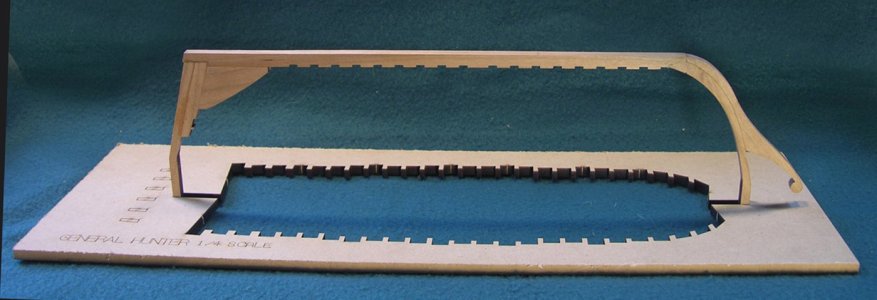
a builder can frame the model with the equal room and space or heavier framing without changing anything except for the thickness of the framing stock. If the frames are built of heavier stock the keel notches are expanded by sanding them and the legs of the frames where they fit into the jig are sanded smaller to fit the jig notch.

oliver f wi.jpg

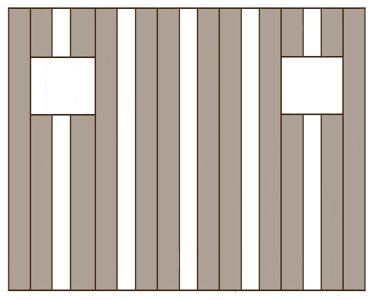
From the same set of plans and frame drawings you can change the appearance

oliverwi.jpg.
 
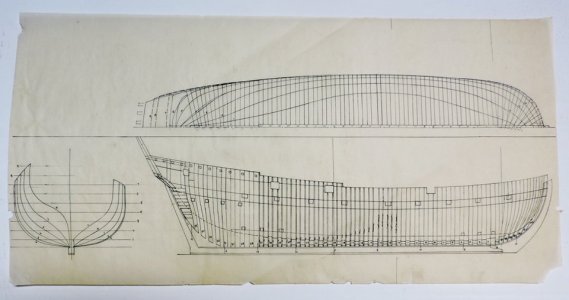
I did ask him if he had all the research material why he would build a model "his way" rather than stick to the historical facts. The model of the Chaleur really demonstrates what he was thinking. In the early years of ship modeling few people if anyone in the ship modeling community knew of Harold's artistic work other than the ship models. Naturally ship modelers would question why he used stylized forms of framing rather than staying true to model ship buildings purpose of creating true historical models. If we step over the line and into the world of art we can see the work from a different perspective. Taking a look at the original plan of the Chaleur the frame scantlings and masting was recorded on the plan, what was not recorded was the spacing of the frames. The first thought that comes to mind is the frame spacing was not mentioned because the frames were random. The hull could have been framed on ribbons so the mold frames could be spaced anywhere from 4 to 6 feet apart and filler pieces placed randomly between the sistered mold frames. This would be logical except for a note from Howard Chapelle suggesting the Chaleur was not a colonial American built schooner but rather a French Vessel. The French did not build their hulls with loose random filler tinber, the frames were all sistered frames. If the Chaleur was indeed a French vessel and the frames placed on 24 inch centers then you would have frames 18 inches with a 6 inch space like the first drawing. This is quite possible as shipwreck data confirms such an arrangement. If Harold used the equal frame and spacing using 9 inch frame futtocks then you would have 18 inch frames and an 18 in space, a very unlikely arrangement. With no definitive answer to how the Chaleur was framed he had artistic freedom to design the model anyway he wanted. From the perspective of ship modeling this approach was unacceptable, you would go with the most likely framing which is drawing 1 and not make something up like drawing 3. According to Harold when he went about designing the framing for a model he would established dimensions for the frames based on the size of the ship so they will be in suitable proportion even though not duplicating actual framing practices of the period. Then he would position the frames to accommodate gun ports making the ports an integral part of the structure so as a whole the structure would be in harmony and also to simplify the construction of the model

Here we see the original ink on tissue paper frame drawing of the Chaleur.


orig chaleur.jpg

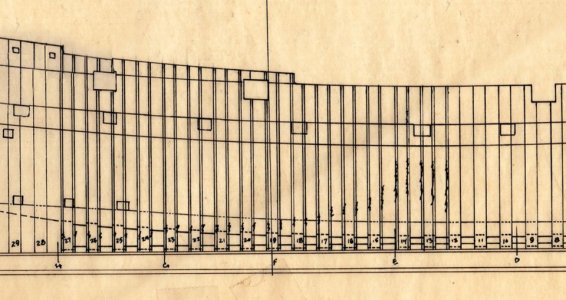
When looking closer we can see the engineer in Harold working out a framing system. There are double lines as well as lines scribbled out. Also the gun port at the F location is not falling on a frame. This just goes to show Harold took time and put a lot of thought behind the framing used in each of his models.

chaleur orig close.jpg

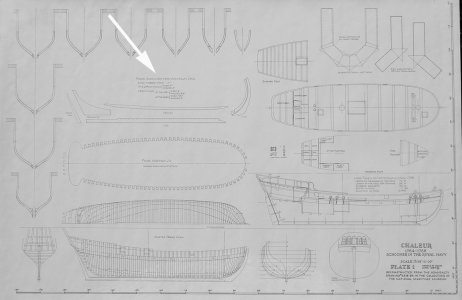
On the final plan Harold included the original scantlings for the frames just incase you want to build your way, right where the arrow is pointing.

final chaleur plan hi res.jpg
 
A common comment when Harold introduced his plans to the ship modeling community.

I understand that he wasn't trying to duplicate actual framing practice, but I just wish Mr. Hahn had drawn his frames a bit thicker, since in real life, there was more wood than space along the side of the hull, especially with a warship, but the opposite is true with Hahn's otherwise beautiful models.

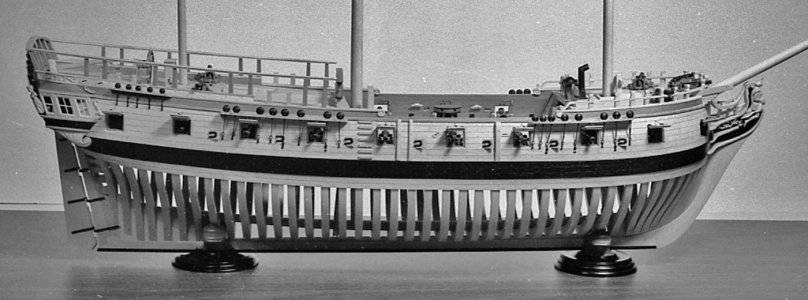
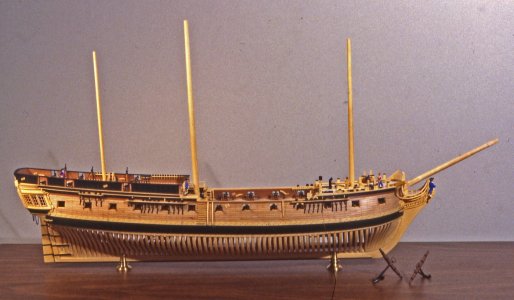
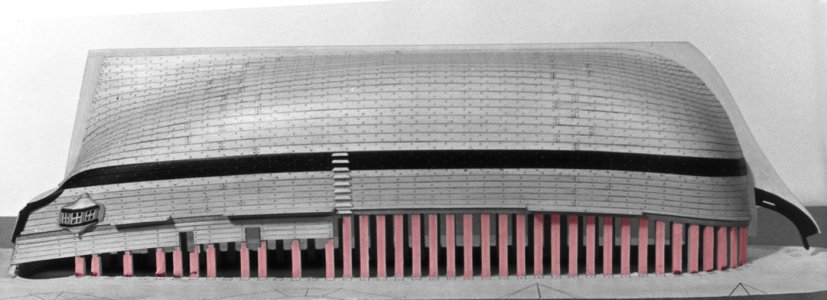
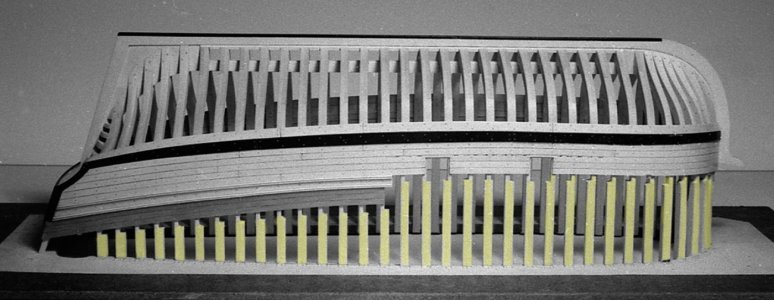
That is exactly what art should do is to stir and provoke the viewer. You say I like it another will say they don't some will wonder why he did that? or what was he thinking some get it some don't. As you said there was more wood than space in American warships and that is true. Lets take a look at an American built warship from the collection. Here we are looking at the Hancock which Harold built as an art piece for viewing by the general public. In general the public has no idea how the Hancock was actually framed as a matter of fact even the experts can only guess how it was framed. Framing is not the point showing the form and shape of the hull is the focus and the overall balance of the model is the point. I knew Harold well enough if you made that comment to him about drawing the frames thicker, he would graciously listen and not say a word, he would just walk away from you.

hancock.jpg

Actually, thicker frames are keyed into the drawings and into the design. Harold Hahn has said it many times his drawings are for the serious and more advanced builders. If you did your research and knew how to read plans you can adjust the framing to match closer to the actual framing that "might" have been used.

Looking at the hull framing of the Hancock model it is in perfect balance just like the navy board models with equal room and space. If your more historically minded and increase the framing, you're losing the openness of "framing" and seeing a wall of wood.

hancock framing.jpg
 
ZAZ6084 - the NMM plans for Chaleur are taken off plans of a capture and are done in the usual minimum effort style.

The deadflat station was placed at an arbitrary location. The placement had nothing to do with the framing. The other stations were placed at even foot based intervals. The captures that I have lofted have the next station at 10 feet out fore and aft, They also have nothing to do with the actual framing. The plans offer no clues as to the original framing. Based on these plans any reasonable framing choice is as good as any other.

The framing of most, if not all of the RN ships at this time (and later) were almost solid wood at the keel. What space there was was a 1"-2" air space. The sided dimension of the follow-on timbers was reduced. It was less wood and more space the higher up they were. The space was visually significant only above the main wale.

To my eye, it makes no sense to me to go to the bother of building an exact replication and putting the framing on display if it is a solid wall of timber. Planking it would look more pleasing. Doing an exact replication as an engineering demo model would be a valid reason. But how many of those are really needed?

My research has found that both French and North American framing at this time was all bends (sistered frames). A space between each bend that was equal to one frame in width. It was 2/3 room and 1/3 space. This style of framing is worth displaying.
 
Last edited:
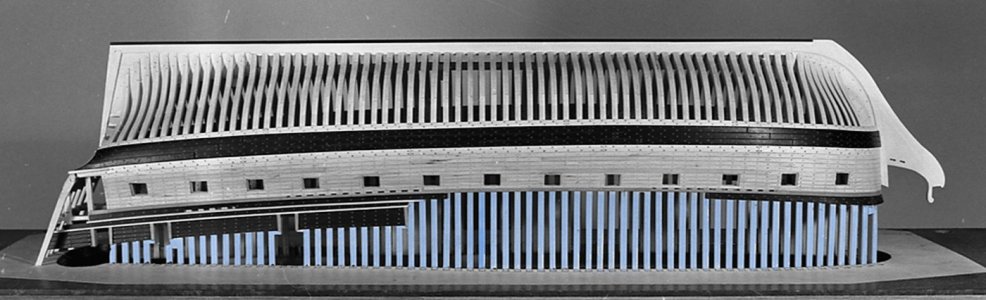
Hahn did use his system to build a different framing system for the British ship of the line Alfred. She has a mix of single and double frames. The single frames might actually be thinner double frames but visually it works.

This demonstrates the flexibility of Hahn’s system.

Roger
 
This demonstrates the flexibility of Hahn’s system.
Roger

it would take an experienced builder to recognize what you can do with the original Hahn plans and change the framing and the look of a model. you could build a model "as drawn" or change it to your personal version.
 
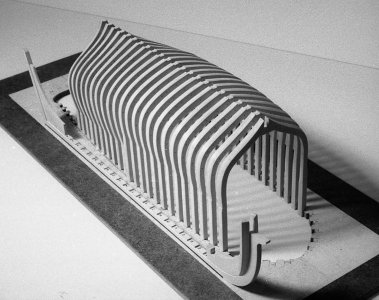
The term “Hahnism” has turned up in a generation of model builders. It refers to the reasons why Harold did the thing he did. Mind you Harold Hahn’s work was never intended to be a study of naval architecture nor a thesis on the principals and practices of 18th century ship building. When Harold began his diorama of the colonial shipyard there were no plank-on frame modelers plans or true plank-on-frame kits, only a commercial ploy to produce a plank on frame kit economically, with no consideration to the modeler.

Harold’s work is an artistic and engineering approach to the subject rendering it “workable” by any builder with the perseverance and serious enough to pursue the craft. As a whole, the body of work offers methods and techniques for a model builder to build on. Model shipbuilding is a personalized endeavor, and everyone their own ideas on what to do and how to do it. At the other extreme is the so called “purest”. These model builders insist on the absolute perfect model in every last detail even if it is unattainable in both research and in the building of the model. Compromise between the engineering and practices of ship construction and the artistic approach to the subject is the common ground to produce a reasonably historically accurate and pleasing work of art.

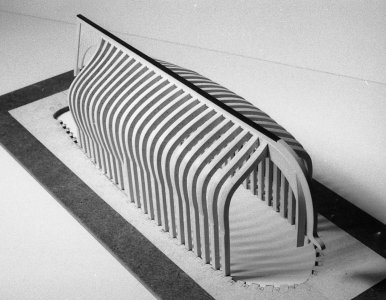
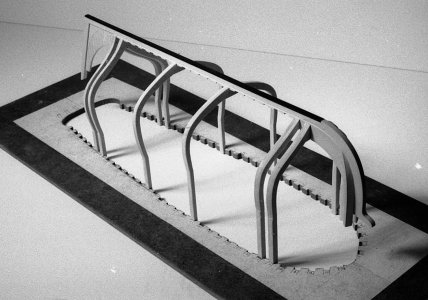
As Harold’s method of building a plank on frame hull spread it became known as the “upside down method” a term Harold thought was belittling and poking fun at the method because model ships should be built starting with the keel and framed right side up. The basis for the technique was to use a jig to provide a solid base and a reference point to take measurements, while keeping the frames square and in place. The idea first appeared in print in the spring of 1972. The first use of the jig was during the construction of the shipyard diorama. The ship hulls were only about seven inches long and Harold needed a way to hold the tiny framing in place while the hull were being worked on. At the completion of the diorama Harold did wonder if the jig idea could be applied to larger scale hulls so he borrowed a set of plans for the Confederacy and tested out the idea. It worked out, and from that time on all his ships were built upside down in a jig.
Harold got quite a backlash from ship modelers for his use of framing blanks and the upside down jig. To this day i get requests for timbering sets without the jig because the builder wanted to build the model right side up and free standing the way it should be done. Another complaint is the building of frame blanks is a huge waste of wood and even more waist is the use of the extended legs.

Harold first used the jig method for the ships in the diorama. The jig proved itself useful in holding the framing of the small scale hulls in place while work was done on the models. These ships were only about seven inches long so the amount of wood wasted was of little concern and the usefulness of the jig far outweighed the amount of extra wood used. In larger ships at larger scale is when the amount of wasted wood became a issue with some model builders. Spending months building frames and assembling the hull the amount of extra wood is well worth it to ensure the hull will not end up distorted. Keep in mind this jig system was designed for the first time plank on frame builder and to increase the odds of success in building the hull. Building a hull right side up with no jig is like a high wire act performed without a safety net, If you have experience you can do it. Personally, for myself i would rather have the jig, i see no point in taking the risk of building right side up free form. Those concerned about the extra cost of wood may have a valid point if your using expensive wood and paying from 20 to 30 dollars a board foot. For first time builders of plank on frame hulls using wood in the cost range of 5 dollars a board foot the added cost is not a big deal. Amount of extra wood also depends on the hull some take less wood than others.


extra wood1.jpgwood use2.jpgwood use3.jpg
 
one problem with Hahn's jig was setting up the framing with the keel separate. This required each frame leg had to be cut perfect or else the frame would sit higher or lower also there was no way to prevent the frame from leaning forward or backward.

hannah2jig.jpg

you have to add frames then place the keel in place to line up each frame as you build
.

hannah22jig.jpg

Harold started out by placing frames spaced out along the keel making sure they did not lean

hannah21jig.jpg

He used a 90 degree to set the control frames in place

squareup.jpg

What i did was to add extensions to the stem and stern post and notched them into the jig

keel jig.jpg

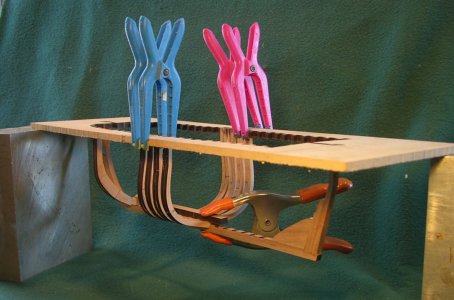
This still used the jig system and the framing was slipped down from the top and sat in the keel notch. One issue might be the shape of the hull where the tumble home is to narrow, and the frames may not be able to fit down into the jig

N9834.jpg
 
Last edited:
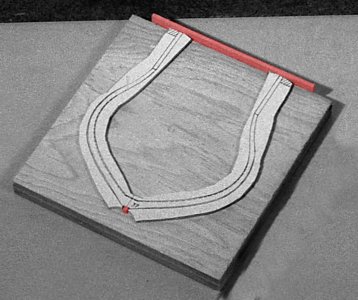
to build frames to fit exactly in a jig you have to build the frames in a jig. The small red piece is the location of the notch in the keel the top piece is the exact location of the jig.

method7.jpg

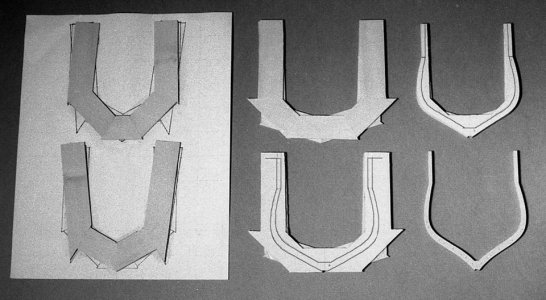
steps in building frames
step 1 building the two halves of the frame blank

step 2 glue the two haves together

step 3 rubber cement the frame pattern to the blank

step 4 rough cut out the frame

step finish the frame


method6.jpg
 
for those concerned about the wood being wasted there are thing you can do to reduce the waste. Harold used 1 inch wide framing stock to build the blanks you can reduce the one inch to half an inch cutting the wood use in half. however by doing this the blanks Harold drew will not work you will have to make your own blank patterns. Also using narrower wood you have to be careful not to have enough width to fit the frame.
Another alternative is to break down the frame patterns and lay out all the frame futtocks on sheet stock. That would be a lot of work. The original idea for the Hahn system is to make building a plank on frame model possible for a first time scratch builder.

frame layout.jpg
 
Last edited:
Another thread taking place in the ship modeling community simultaneously with Hahn’s work was the idea of harvesting and milling your own lumber. There were several articles in the Nautical Research Journal about doing this and others about suitable, overlooked, domestic hardwoods. I still have a nice stash of Pear and some Holly harvested in 1975.

If you could harvest, season, and mill your own lumber, the waste, using Hahn’s method was not a problem.

Roger
 
years ago when builders wanted to do scratch building they posted what kind of wood should be used. The overwhelming answer was Boxwood and Swiss Pearwood those are the traditional woods. In the case of the Hahn system that got way too expensive these woods cost $25.00 to $36.00 a board foot. So blame it on the Hahn system as a waist and expensive method. Why not use Cherry that cost $3.00 a board foot rather than imported Swiss Pearwood at $25.00 a foot the cost of the waist is now minimal and of little concern.
But then you have the question is a model built from expensive materials worth more than if it were built from a common wood? what is a common wood black Cherry does not grow in the southwest so it is a rare wood to find out there. It has to be shipped cross country. But where i live it is used for firewood.

Appalachian Cherry
(Prunus serotina)
Other Common names
Appalachian black cherry
The heartwood of Appalachian cherry varies from rich red to reddish brown and will darken on exposure to light. In contrast the sapwood is creamy white. Cherry can be supplied steamed, to darken sapwood or left unsteamed. The wood has a fine uniform straight grain, smooth texture,

what is the priority? material used, craftsmanship, artistic value, historical accuracy, rarity of the subject
hey man nice model a shame you used cheap wood heck i use that in my fireplace.

well then maybe i should use the sapwood from Phyllogeiton zeyheri it looks like aged ivory. The problem is the sapwood is cut off to lighten the load for shipping, and it is only the hearwood that is sought after. so, i need to find an importer with connections to get logs with the sapwood. Cost well let's say i could buy a nice car for the same cost. But the model would be almost priceless. or would it?

Pink ivory (Phyllogeiton zeyheri), also called red ivory, purple ivory, umnini or umgoloti, is an African hardwood used to make a variety of products (for example: billiard cues and knife handles). The pink ivory tree grows predominantly in Zimbabwe, Mozambique, Northern Botswana and South Africa. The tree is protected and sustainably maintained in South Africa, only felled by very limited permit. The wood is extremely hard, with a density of 990 g/dm3.
Pink ivory was the royal tree of the Zulu people and only members of the royal family were allowed to possess it until the Anglo-Zulu War of 1879. Before the Anglo-Zulu War, the Zulu king (and prior to 1818, Zulu chiefs) would possess a pink ivory knobkerrie (a stick with a knob at one end) and also wear jewelry made from precious pink ivory wood. According to rumor, non-royals who possessed the wood would summarily be put to death.
Pink ivory is often cited as one of the most expensive woods in the world, along with African blackwood, sandalwood, agarwood and ebony.
 
Yes, there are Ships Curves that are different from French Curves. In particular they include several long sweeping curves. They used to be quite expensive. Back in 1962 as a Naval Architecture student I had to buy a set that cost me almost $200. I still have and use them. EBay shoppers will occasionally find used sets on sale. For drawing body plan sections from plotted waterline dimensions as you clearly explain above, inexpensive office store French Curves work fine.

Roger
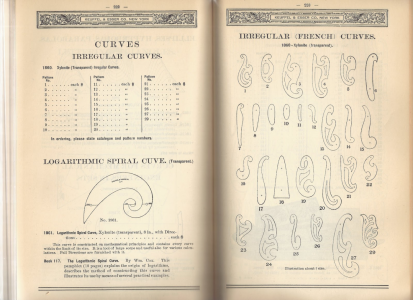
The below is from another post of mine. I have in my manual drafting instrument collection (specialized in Keuffel and Esser Paragon top of the line instruments) all of the K&E curves sets. The "French curve" set is synonymous with what is called the "Burmeister curve set.) These were named for their inventor, German mathematician Ludwig Burmester.
Irregular ("French") curves:

1772593940569.png

Copenhagen Ship's Curves: This set by Keuffel and Esser. Copenhagen Ship's Curves are not to be confused with "French curves," engineer's curves, or "highway" and "railroad" curves. Ship's curves are used for naval architectural drafting. Like other types of curves, they are designed to be used by overlapping at least 2 and preferably 3 points on a curved line drawn previously with the edge of another curve in the set. In this fashion fair curves are drawn notwithstanding their irregular shape. They very occasionally still show up on eBay and similar sites. There are stories of sets being found in thrift stores for legendary low prices, but the "going rate" of recent sales for complete sets (very hard to find) seems to start around $750 and up. Invaluable because they do accurately things that very few, if any, CAD programs can do yet. (Forget scanning the shapes from the old catalogs and "just" cutting them out on a laser cutter. Guys have tried and failed. The main reason given is the very high cost of the laser cutting.) If you find a set in your grandfather's garage, grab it! (If you come across the more common sets of highway and/or railroad curves, which are pure radius curves, grab them, too. They are very handy for generating deck camber curves on models. Highway and railroad curves are shaped the same, but are scaled differently. Highway curves define an arc of a circle, while railroad curves define the chord of a circle.)


1771362762207.png


1771362807979.png


1771363809097.png

Dixon Kemp ship's curves:
From a recent discovery online"

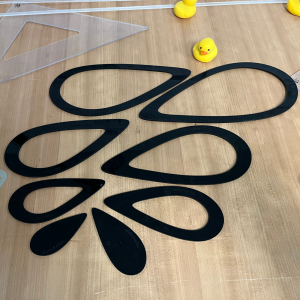
"In 1881 the naval architect Dixon Kemp published his "Practical Boat Building for Amateurs", where he described a set of "pear-shaped curves" that have come to be known as the Dixon Kemp curves. Boat designers use these curves to draw stems, rudders, and other tighter radius curves, in combination with a batten and a set of drafting ducks for the longer sweeps. The Dixon Kemp curves have been occasionally manufactured, but like many tools for pencil and paper boat design, have not been available for many years."

Although I've seen illustrations in old books, Maybe twenty years ago now, I got hooked on collecting the highest quality manual drafting instruments Keuffel and Esser manufactured. I'd spend a bit of time searching eBay for examples in good condition at a time when there was a lot of good stuff on the market as the old manual draftsmen, most having retired or gone over to the Dark Side and converted to CAD, sold off their no longer manufactured instruments for pennies on the dollar compared to what they cost when new (corrected for inflation.) Those were the days when the market was flooded with the stuff, and yet, I've never seen a set of Kemp curves for sale. Just now, however, I discovered somebody has reproduced the Dixon Kemp curves, and I'm tempted to get a set (at $35) just for the sake of "completeness.";) These are the kind of thing about which they'll be saying in five years, "Somebody made some a while back, but I don't think he sold more than twenty or thirty sets and when they were gone, that was it. Kemp's curves stack inside of each other neatly. They'd be perfect for the tight curves on scale model frames. (Note the snazzy drafting "ducks" on the table with the curves below! :D) (See: https://shop.nixiemarine.com/product/dixon-kemp-style-curves/3)

1772594509840.png
 
.​

Probably useful at times for hobbyists with the most nostalgic tendencies, but unfortunately, in stark contrast to the infinitely greater possibilities, efficiency and flexibility offered by CAD software, those traditional curves, like manual drafting in general, are nearly completely useless for analysing preserved period plans and studying old design methods. This would also partly explain the total lack of progress and any successes in this field to date, even by ‘highly respected experts and scholars’. I know something about this because I conduct such investigations myself, and even the most senior scholars in this field attend my presentations.

But if they have collector's value for someone, who can stop the rich :)?

.​
 
.​
Probably useful at times for hobbyists with the most nostalgic tendencies, but unfortunately, in stark contrast to the infinitely greater possibilities, efficiency and flexibility offered by CAD software, those traditional curves, like manual drafting in general, are nearly completely useless for analysing preserved period plans and studying old design methods. This would also partly explain the total lack of progress and any successes in this field to date, even by ‘highly respected experts and scholars’. I know something about this because I conduct such investigations myself, and even the most senior scholars in this field attend my presentations.

But if they have collector's value for someone, who can stop the rich :)?


.​

Quite true! Ships' curves are now-collectable archaic tools for manually drafting fair curves in the course of the design process and never were at all relevant to "period plans" and "old design methods" created and executed prior to the invention of irregular curves templates themselves (which by all indications would be prior to af Chapman's innovations in the last quarter of the eighteenth century.) Prior to the use of curves, and continuing thereafter to the present, fair irregular curves were also generated using battens and weights ("ducks.") Although not my particular area of expertise at all, I believe that the major difficulty "analyzing preserved period plans and studying old design methods" is the lack of information regarding established standards and practices prior to the evolution of scientific naval architecture and engineering. Critically, what we do know is that during those early times we have no historical record of whether or to what extent the plans were followed in the actual construction of the subject vessels because the final construction details were generally left to the master shipwright's determination which in many cases was dictated as much by the compass timbers available as to the drawings which are available to present day researchers and, indeed even as is the case today, modifications to drawn plans made "on the stocks" were not at all unusual. At best, in the majority of cases, it is impossible from the extant historical records to determine if or to what extent the now extant contemporary plans and models accurately represent the "as built" subject vessels. The relatively recent infatuation with "fully framed as built models," technically impressive as they are, often cannot possibly represent the subject vessels "as built" because the intricate, and deeply researched framing and other details are, at the end of the day, only well researched conjecture, "educated guesses" at best, without any accurate record of how the subject vessel was actually built.

Irregular ship's curves are still very useful today to those, particularly scale ship modelers, who have occasion to draw lines from a table of offsets which describe curves in terms of measured points in three-dimensional space. During the period when design was often accomplished through the use of carved half-hull models from which offset tables were generated by measurement, with many famous naval architects and designers such as Nathaniel G. Herreshoff, for example, all there ever was and all we have now is perhaps a surviving half-model or a table of offsets because scaled lines drawings were never drawn, the offsets being used to loft the patterns full size in the first instance. While it is my understanding that CAD programs of sufficient capacity can generate lines drawings based on inputs from a table of offsets, it is often faster in actual practice draw them manually, especially where only limited patterns are required, such as for model building purposes. I also find the long curves in the standard Copenhagen curves set very useful in spiling plank and the radius curves of highway and railroad curves sets useful for generating accurately cambered deck beams on models.
CAD is a quantum leap in accuracy, speed, and usefulness over "tee square and triangle" drafting methods in the case of modern scientific vessel design and construction, but for modeling, manual drafting is often the shortest distance between two points, as it were. I think of manual drafting as a hammer and CAD as a pneumatic nail gun. When all the job demands is driving three or four nails, it's easier to grab the hammer than to set up the compressor, hoses, and nail gun.

Your research regarding "period plans" and "old design methods" using CAD is fascinating. Your sharing some of the recent progress made in that area would be most welcome and helpful to serious scale modelers of period ships. This "old dog" is always interested in "new tricks."
 
back around 1969 1970ish drafting was part of industrial art and design, graphic design and commercial arts we learned to use a T square french curves, Rapidograph pens and a triangle. The term was Mechanical drawing. I did do pen and ink fine art drawing which the term "fine" was not the fineness of your work it was the opposite of mechanical drawing a free form style. Bob worked in the drafting department of a furniture manufacturing company when i would go visit him. I did have the basic understanding of drafting projection of different views etc.

gone over to the Dark Side and converted to CAD
well i guess that depends, CAD was going from a dark art into the light of computer aided drafting. i could do things that took Bob hours to do with exact precision. give the program X Y coordinates using edit spline or polyline and plot a perfect curve.

But here is the thing having been trained in both worlds of drafting i personally believe CAD is harder to use. There is a steep learning curve and years of practice using the software plus the fact you still needed to know basic drafting. The hands on approach needs to be brought back it sounds counter intuitive but old school is easier than new school to learn. I think if someone from the old school of T square and curves held a class here in this school would be of a great benefit to those who do not know CAD or even care to know.
Learning to read and use plans and drafting is the one and only roadblock to scratch building. unless you seek out pre drawn "modeling plans" where the work has been done for you. The term scratch built and scratch built from preexisting plans are two different levels of scratch built.


bob drawing.jpg
 
.​

Once again, it turns out that individual perception of an issue depends most on individual characteristics and needs. So perhaps it is worth trying to clarify my individual imperatives and, at the same time, my views on some aspects touched, if only for comparison.

It so happens that even today's engineering capabilities still do not allow for the production of objects that perfectly match the so-called nominal dimensions of a design. It is clear that there will always be some dimensional deviations (taken into account in today's practice through conscious tolerance of dimensions), just as it is obvious that this phenomenon also occurred in the past, and to an even greater extent, so searching for and confirming this circumstance through dedicated research would be an obvious waste of time, all the more so in the light of the preserved accounts that describe it directly. The point is something else, namely, in short, to find the design intentions, or more precisely, to find the specific methods that the designers of the time employed to realise their intentions (indeed, more or less successfully). From this point of view, the example of carpenters being unable to find timber of the right shape or size during construction is actually a quite separate issue, one of a manufacturing nature, as opposed to strictly design-related.

In none of the numerous works on ship architecture from the 16th, 17th and 18th centuries have I ever come across a method or advice that would be in any way similar to this: ‘take a piece of wood and carve it until satisfied, then take the lines from this carved piece for the ship you intend to build’. On the contrary, the design methods described are always geometric in nature, not woodworking-related. It is worth to remember that only graphic methods made it possible to perform even the most elementary hydrostatic calculations, which became common, if not mandatory, in professional design from around the mid-18th century onwards. If the calculations proved unfavourable, the graphic design was modified still on paper, but how could wooden half-models be modified, carving new variants until the desired result was achieved?

Therefore, personally, generally speaking, I see the use of half-models in the ship design process more as an aid than as the (most important) basis for obtaining hull shapes, at least in the context of fully professional design centres (just as today, 3D models of designed objects are made as an aid to verify certain features or simply to facilitate certain design processes). Furthermore, I see no reason to view 19th-century American practices as in any way less advanced than those of other centres of this kind, maybe except in the case of semi-professional shipyards and/or less demanding projects, for which it was not worth engaging fully professional, advanced design procedures.

The analysis of old designs preserved in graphic form actually never involves drawing a single line or, even less so, a larger set of lines that immediately fit together. On the contrary, it is almost always a ‘never-ending’ attempt to find a complete and coherent geometric structure, usually quite complex due to complicated shapes, and involving the process of repeatedly drawing the same lines, only in a different way, counted in tens, and in extreme cases hundreds of times per line. In such an analytical process, an effective tool such as CAD software (and not all of them are suitable indeed) is crucial, and in fact it is an absolute sine qua non. Unfortunately, a simple ‘hammer’ is definitely not enough for these specific applications.

Similarly, I am also not sure whether the tempting recipe for ‘quick’ line drawing is always effective in the long run, because in practice it turns out that model makers have notorious problems with sloppy plans, which they quite often complain about, and these are usually the results of manual drafting and in a hurry. As a result, they are faced with a need of correcting these errors in a woodworking way, often quite troublesome and time-consuming, and not always yielding satisfactory outcome, which calls into question the apparent economy applied at the stage of drafting the modelling documentation. They may simply give up on these corrections, but are left with quite noticeable, sloppy shapes of their model hulls, or they correct them at the woodworking stage of model construction, aiming at least to achieve fairness, but such operations are inevitably carried out at the expense of shape consistency, i.e. the final shape of the model hull drifts towards a more or less ‘random’ entity. While indeed this is probably not something that keeps too many hobbyists awake at night, but it is at least worth being aware of such consequences, if it matters to anyone :).

.​
 
QUESTION

a set of ship curves may be hard to find but if you Google ship curves and you get an image of a set could you use that image and make a setcut out of plastic or wood?
 
Curves vs Splines: I learned how to draw a lines from a table of offsets before the development of CAD. Ship curves did not replace splines and ducks. Both were used. Splines and ducks were used for the very long curves of the waterlines.

Geometric Hull Shapes: A beam deflects elasticity in accordance with a cubic function. A spline is a beam. Therefore, curves generated by a spline are cubic. Likewise, very old vessels built “shell first” without drawings have cubic hull lines. Prime example: Viking Ships.

I agree that during the Renaissance and up to the end of the Eighteenth century there was a movement to build ships using geometric curves. Although there were some attempts also during the mid Nineteenth century (Russell’s Waveline theory), the great Clippers and Downeasters were designed empirically; try something and see if it works. Donald McKay’s ships were each quite different, William H. Webb were more standardized, and Alexander Hall’s Aberdeen Bow was an attempt to “cheat” British tonnage rules. William Froude’s rationalization of the dual nature of hull resistance, frictional and wave making, provided the basis for testing models in towing tanks but didn’t provide a basis for predicting how a design drawn on paper would perform.

When I studied Naval Architecture in the 1960’s there was no attempt to try base a ship’s performance on any sort of geometric function. There WAS a visiting professor from Japan who was testing models based on trigonometric functions in the University’s large towing tank. These hull forms were very narrow; by no means practical.

Half Models: Half models were the principal and often the only design tool used by many shipbuilders during the Nineteenth century in the USA and in parts of Great Britain. This excludes vessels designed for naval service by government bureaucracies where lines drawings were made. Offsets were measured from the models and sent to the mould loft floor where the design was refined. This practice was still used here on the American Great Lakes into the first quarter of the twentieth century. As Bob mentions Nathaniel Herreshoff refined this process with the invention of a specially designed machine using dial indicators to measure offsets. Many lines drawings available to ship model builders have been drawn from existing half models and sometimes tables of offsets. They (the drawings) were not used to build the ship.

Roger
 
Back
Top