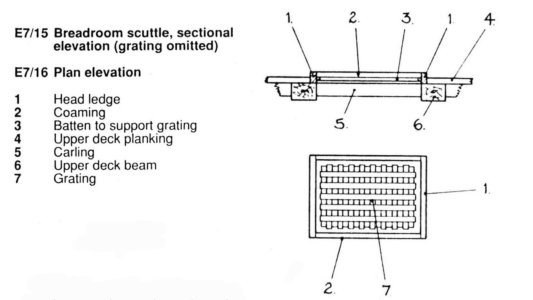
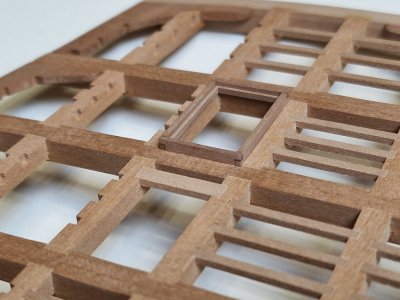
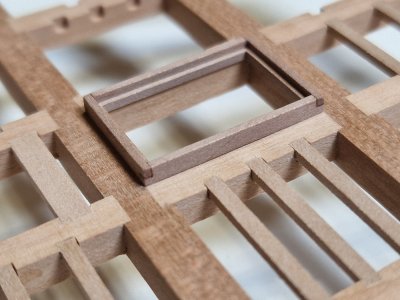
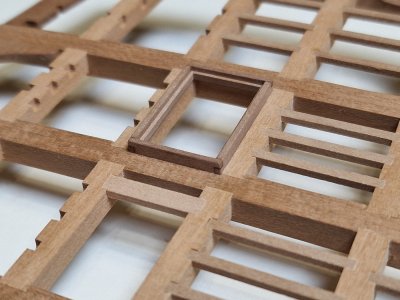
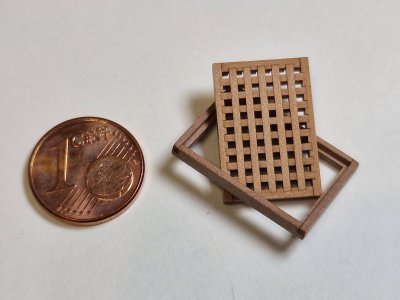
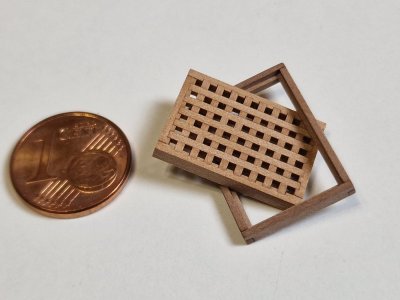
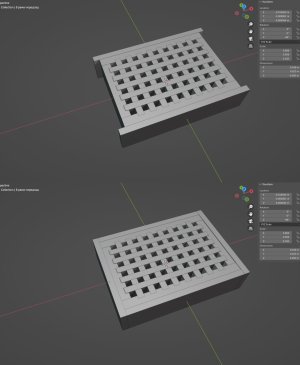
Rear Grating.
2/3
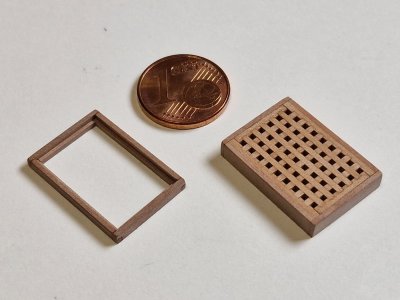
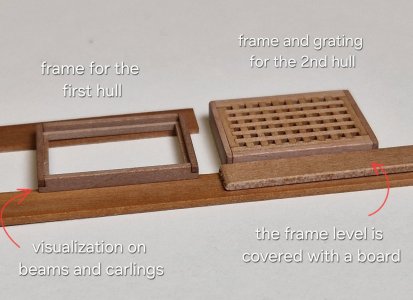
The frame for the first hull is ready; now it's time to make the grating and frame for the second hull.
All work was done on a Proxxon MF 70 milling machine.
I filmed a short tutorial; I hope someone finds it useful.
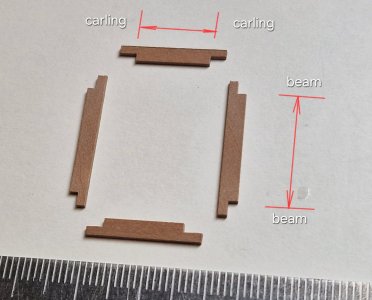
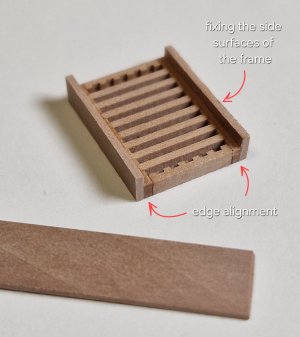
Since the grating is not simple and has complex side sections, we need to start with those.
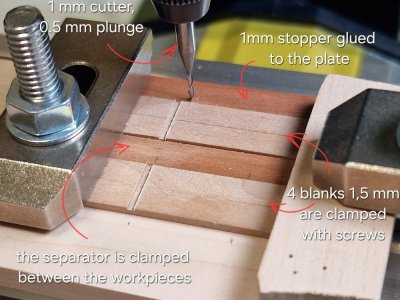
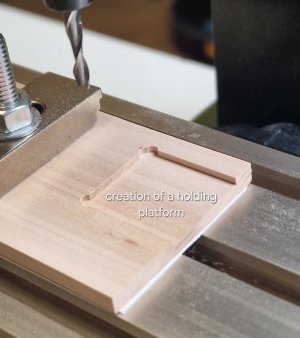
I secured both pairs of these pieces against the glued-on strip, and placed another strip between the pairs to separate one pair from the other.
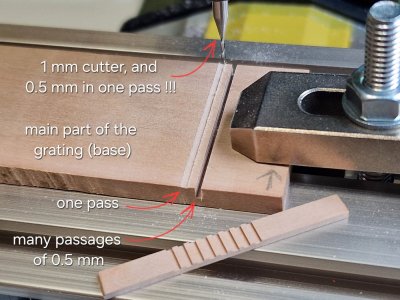
A 1 mm router bit is the width of the strip and the width of the gap between them.
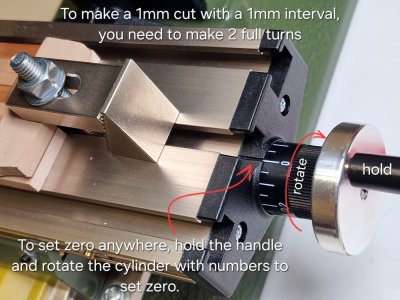
For beginners, it's important to set the zero. This will allow you to make two full turns to move the dial by 1 mm. Without setting the zero, it will be difficult to maintain consistent movement. To set the zero anywhere, hold the handle and rotate the black cylinder with the numbers to zero.
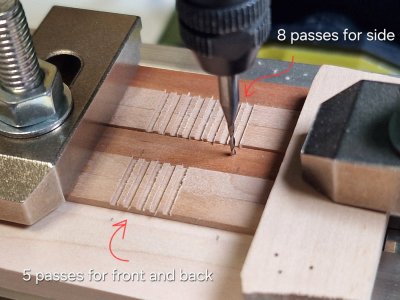
For my grating, I needed to make 5 and 8 passes.
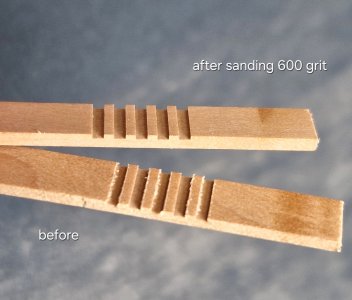
Then sand the lint off with 600-grit sandpaper.
Passes in the main part (base) must be made gradually (preferably 0.5 mm per pass to avoid breaking the cutter).
To create a complex grating, you need to understand the principle of the sequence of work.
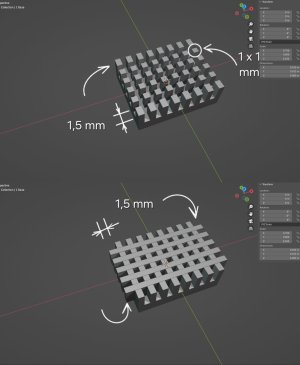
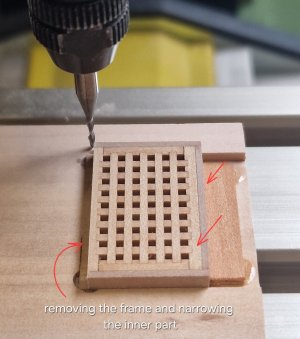
The idea is to leave 1.5 mm strips along the edges so that 0.5 mm of them fit into the side pieces. This needs to be taken into account when milling the grooves.
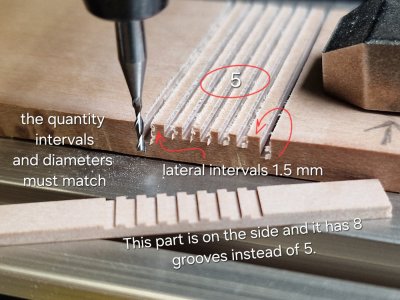
This is one of the most important points. I recommend studying all the material before your first attempts.
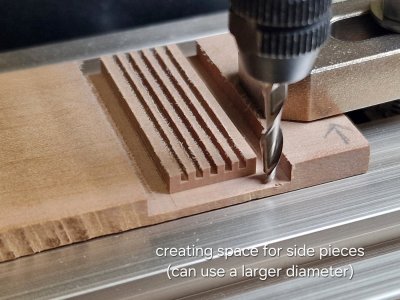
For future fixing of the side parts, I made free space around the perimeter.
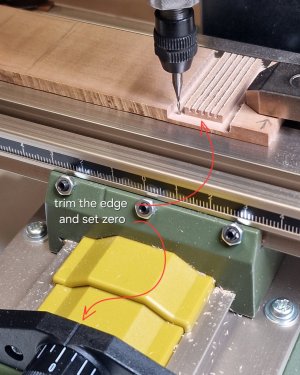
Before milling perpendicularly, you need to fix the zero again by running the milling cutter along the edge.
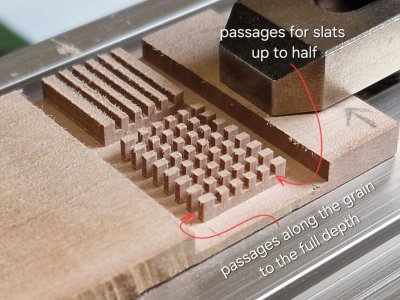
I first go across the grain halfway for the longitudinal slats, and then along the grain the entire depth. And again, at 0.5 mm per pass, so that not a single tooth breaks off.
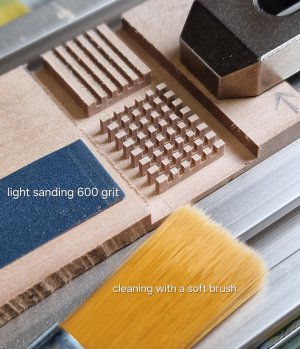
At the end, you can carefully remove lint and dust.
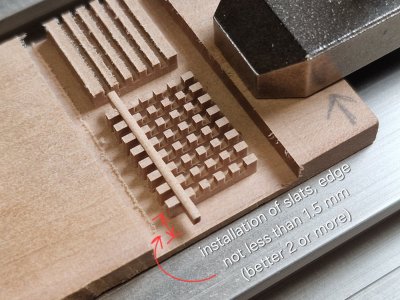
After this, you can glue the slats, leaving more than 2 mm at the edges.
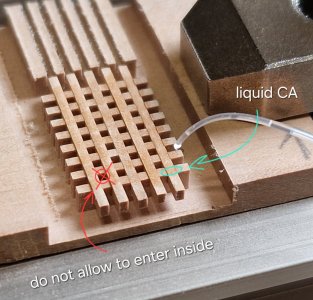
I use very thin CA, not PVA. I like that it penetrates by capillary action and bonds parts that are already firmly in place. It also creates a thin, fine line of glue to visualize the joint.
But be sure to apply the glue only to joints and areas that will be sanded, and avoid surfaces that can't be cleaned.
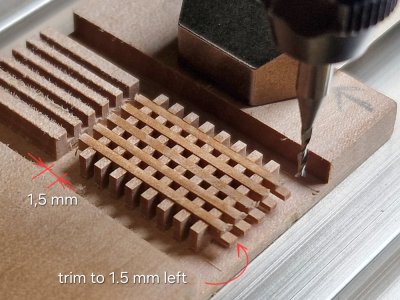
Then I cut the ends of the glued slats so that 1.5 mm remained.
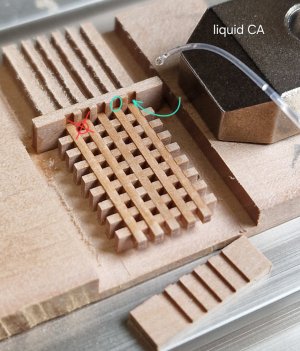
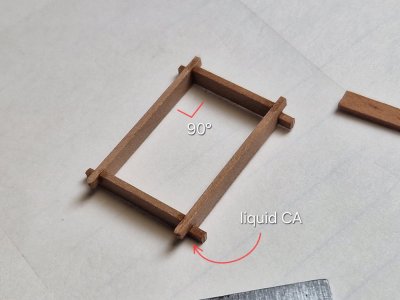
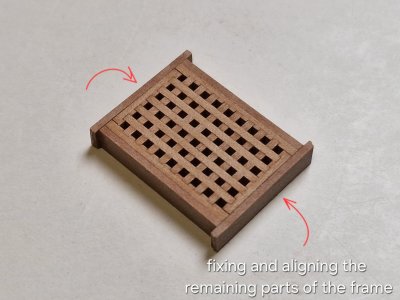
And I glued the front and back parts to these edges with liquid CA at the joints.
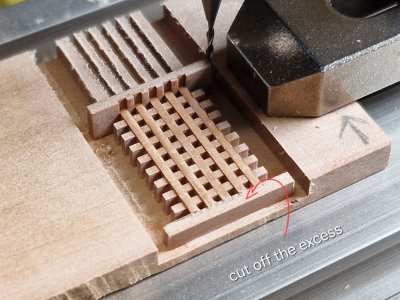
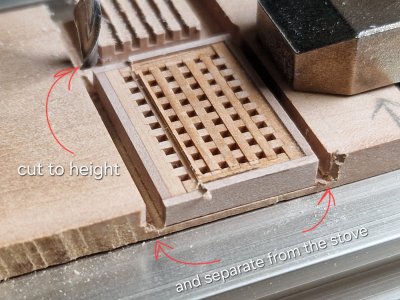
I cut off the excess height.
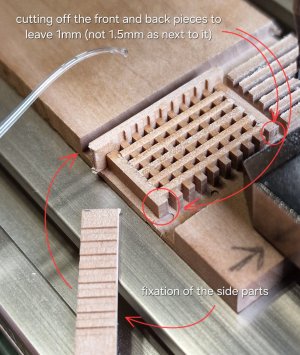
Before fixing the side pieces, you need to pre-cut the edges of the front and back so that 1 mm remains (but later I noticed that you need to leave 1.1 mm).
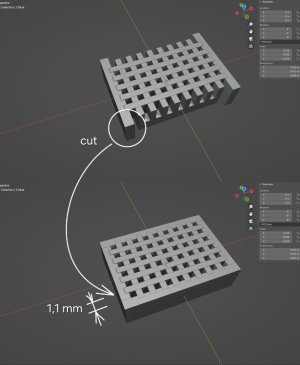
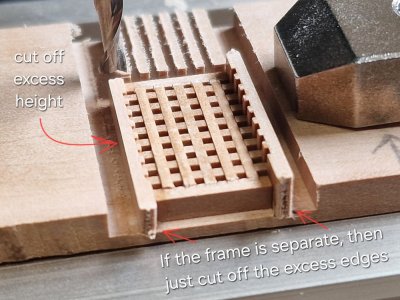
Afterwards, you need to trim off the excess material from the top and sides to level it.
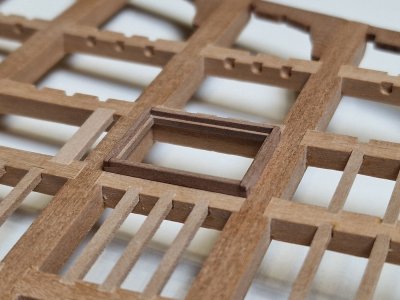
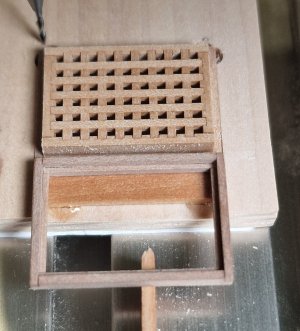
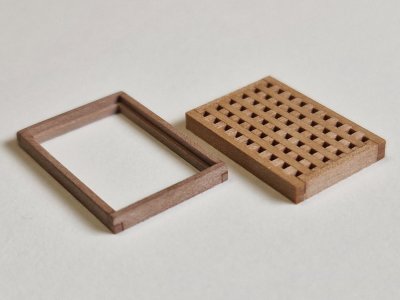
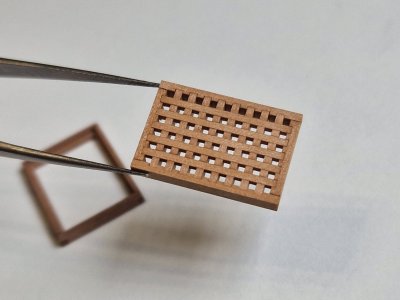
This completes the grille (I'll show the result in Part 3).
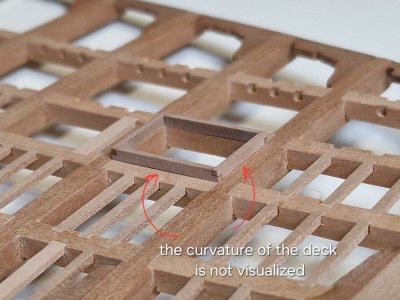
But this particular grille has a thin frame and can be installed right away.
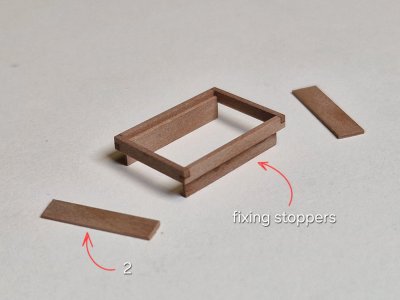
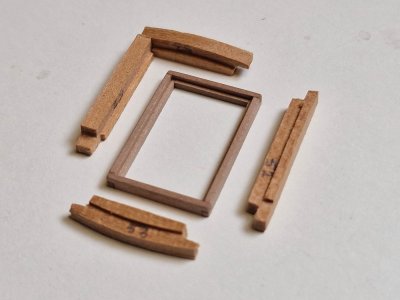
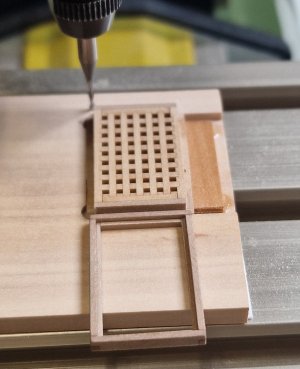
First, I glued the side frame pieces...
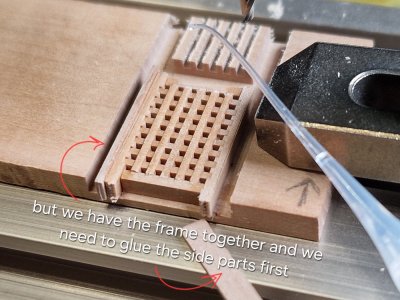
cut to length...
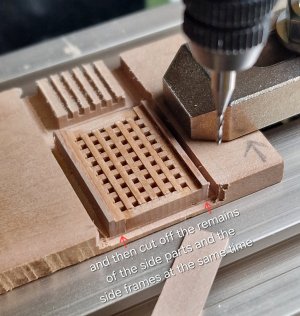
and glued the front and back parts of the frame and cut them to length.
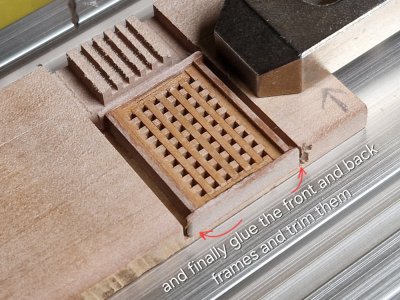
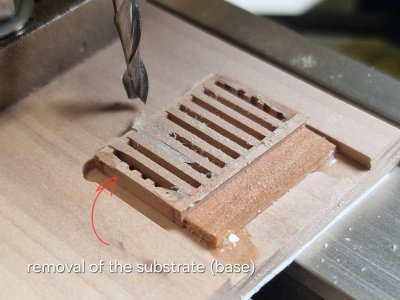
Finally, I smoothed the top surface with a face mill and separated it from the base...
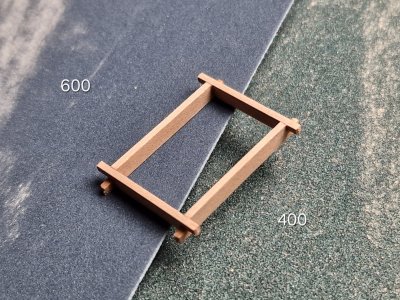
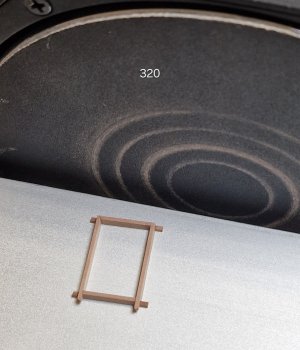
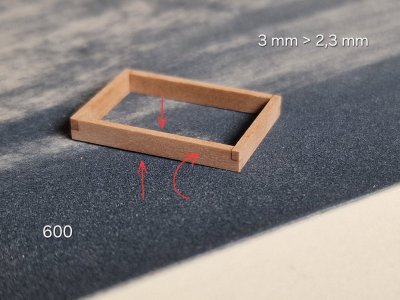
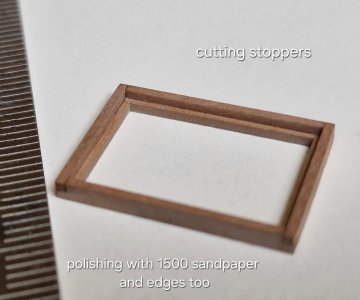
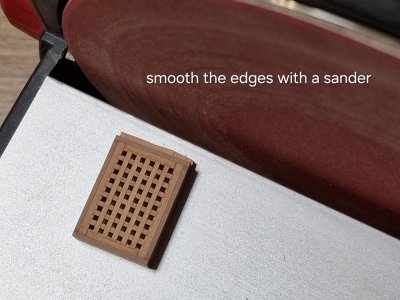
... sanded the edges with a sander.
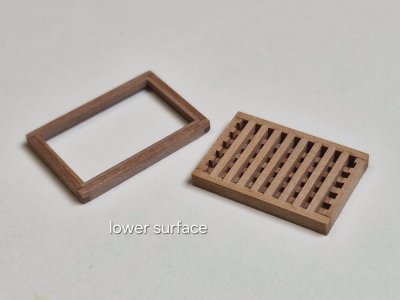
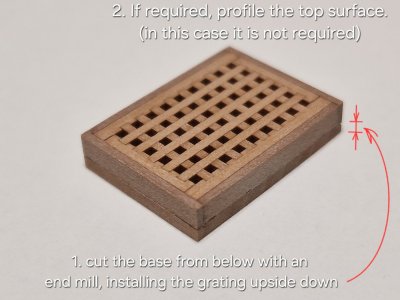
Finally, you need to cut off the base (the lower surface) and profile the upper surface if necessary. In this particular case, the grating is almost flat.
 Continued in the next post.







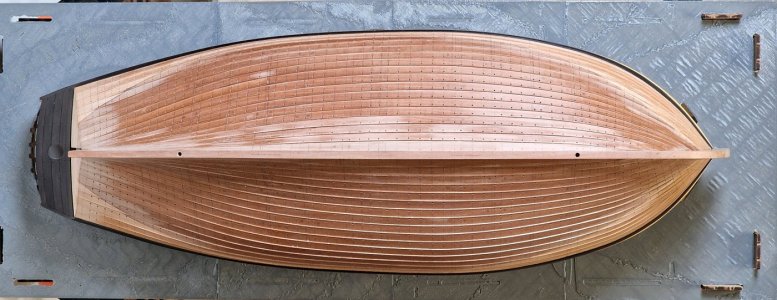
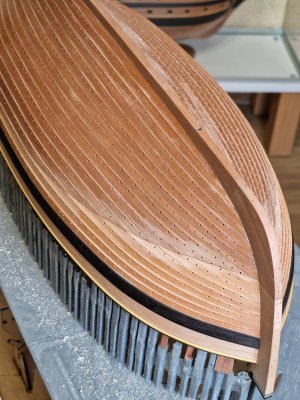
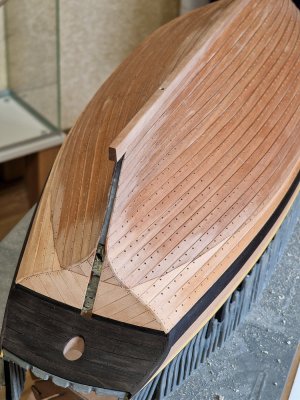
 , and now it's time to polish everything and get back to work.