



• Win a Free Custom Engraved Brass Coin!!!
    As a way to introduce our brass coins to the community, we will raffle off a free coin during the month of August. Follow link ABOVE for instructions for entering.
  • PRE-ORDER SHIPS IN SCALE TODAY!

    The beloved Ships in Scale Magazine is back and charting a new course for 2026!
    Discover new skills, new techniques, and new inspirations in every issue.

    NOTE THAT OUR FIRST ISSUE WILL BE JAN/FEB 2026

Juan Sebastian Elcano / The Moshulu Build Log

Joined
Dec 26, 2025
Messages
59
Points
58

Build Log 1:
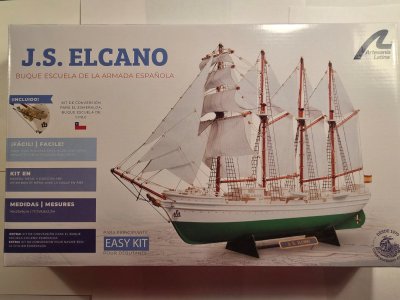
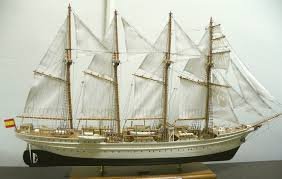
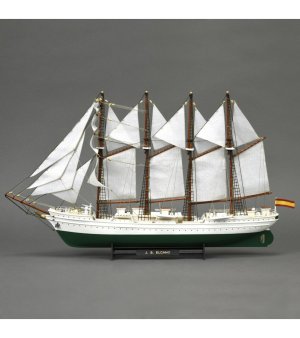
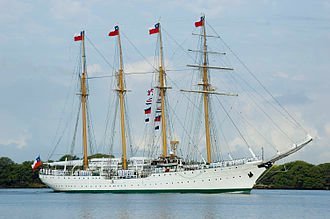
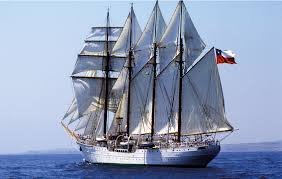
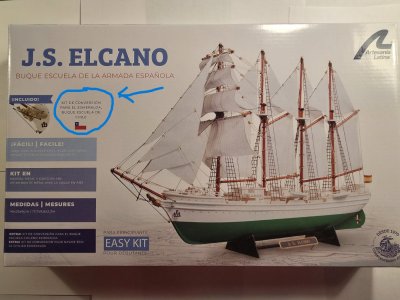
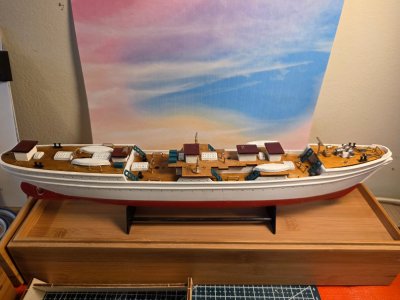
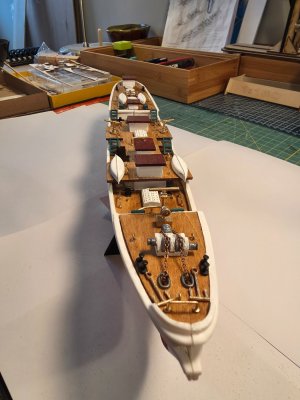
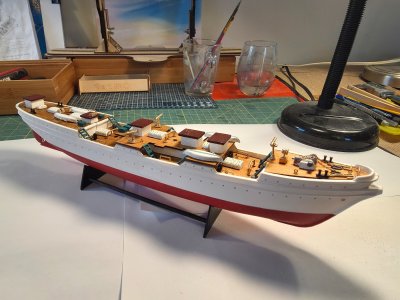
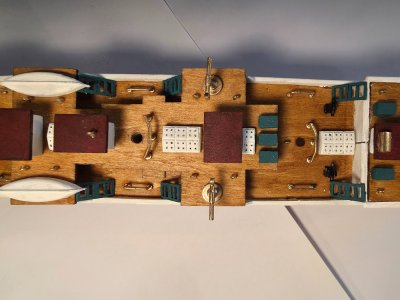
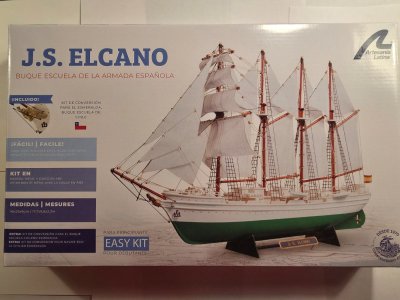
Starting my new project today - A build log of the Juan Sebastian Elcano model kit from Artesiana Latina.

The Plan: To build the Juan Sebastian Elcano (a four-masted barquentine) "as" the Moshulu (a four-masted barque). The Moshulu is part of my model club's project to build ships representing the "Philadelphia Navy," or all the ships that call Philadelphia Pennsylvania (US) home. These include the U.S.S. New Jersey battleship, the U.S.S. Becuna submarine, the U.S.S. Olympia battle cruiser, and other vessels in my neighborhood. See my signature page below.

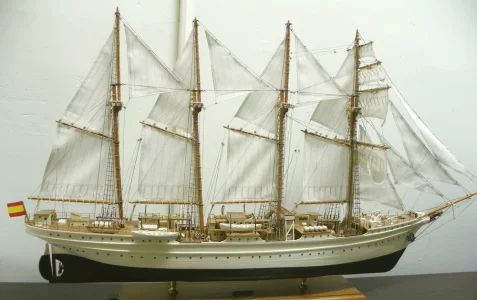
The Challenge: To convert the kit for the Juan Sebastian Elcano into the Moshulu build as originally constructed as the "Kurt" for the German merchant marine industry. This will include (1) changing the mast plan for the J.S. Elcano (1 square rigged Foremast followed by 3 fore and aft masts) into the mast plan for the Moshulu (square-rigged Foremast, Mainmast, Mizzenmast, and fore and aft Jiggermast), (2) matching the original hull painting of the Moshulu (black, white and red) instead of the green/white color scheme of the J.S. Elcano, and (3) upgrading the deck furnishings by matching the colors of the original Moshulu deck furnishings (the J.S. Elcano kit furnishings are largely white or unpainted).

Research & Preparation: I have spent a few weeks doing a deep dive into the fascinating history of the Moshulu -- including its humble beginnings as a German merchant vessel known as the Kurt, to its seizure and impoundment during World War I, to its repurposed role in the "Great Grain Races" from Australia to England, to the time it went into disrepair and vandalism, and finally, to it's second repurposed role as a popular museum/restaurant docked for 20 years at the Independence Seaport Museum on the Philly waterfront.

Building the Moshulu to it's original specifications and mast/rigging plans is important because the vessel has had a "Show Rig" setup since 1995 to reduce crew maintenance and danger of falling spars and rigging in the upper decks. I want the build to have exactly the same look and feel as the 1904 original sailing out of its home port of Glasgow, Scotland.

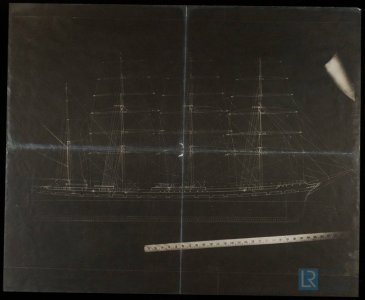
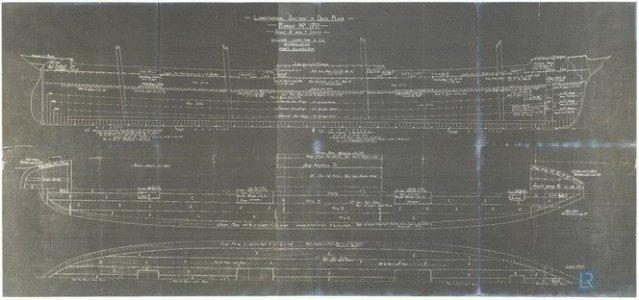
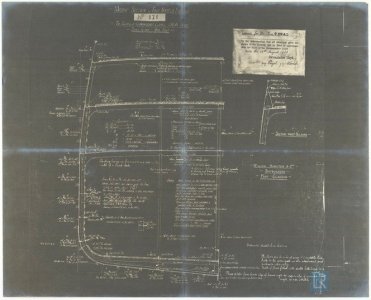
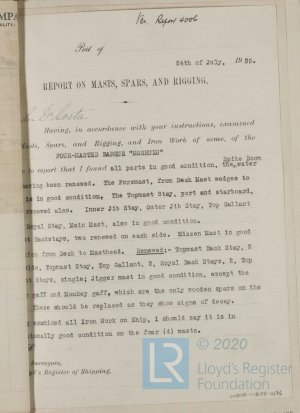
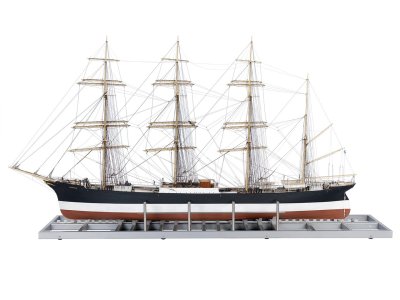
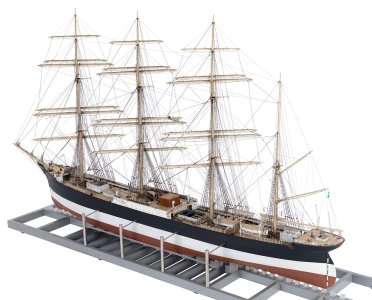
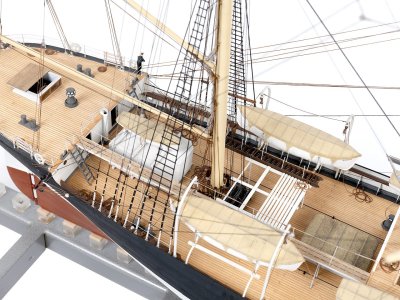
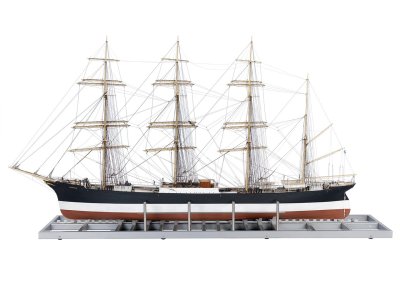
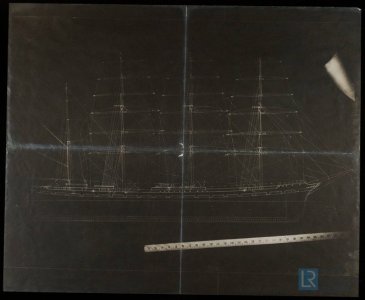
Other key resources include: The original ship designer's blueprints from 1902-1904, found on the Lloyd's Register, letters of classification surveys of the ship from 1904 through 1935, an incredible model of the Moshulu as originally setup at the Royal Maritime Museum in Greenwich, detailed accounts of the stem-to-stern rehabilitation of the ship to prepare it for life as a museum/restaurant, and other online resources. I was lucky to find a first-hand account of life on the Moshulu when it won the last Grain Race (see hilarious and fascinating "The Last Grain Race" (1956) by Eric Newby), as well as Eric Newby's book of pictures of the Moshulu called "Learning the Ropes: An Apprentice in the Last of the Windjammers" (1999).

Frame of Reference Ships: In addition to the fine model of the Moshulu at the Royal Museum Greenwich, I will be using other vessels to help with period details of other large sail powered steel-hulled cargo or training ships:

The Pommern - A German / Norwegian four-masted barque with same masting/rigging layout as the Moshulu.
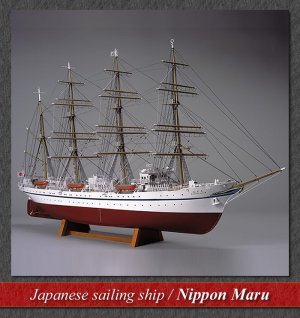
The Nippon Maru - A Japanese naval training ship that is also a four-masted barque with a Jiggermast. Similar lines and dimensions as the Moshulu.
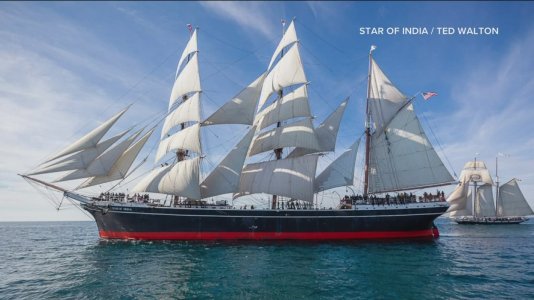
The Star of India - The largest of the steel-hulled cargo ships built as a 3-masted barque. In addition to the Build Logs of the Star of India on this site, there are several videos of the Star of India underway at sea on YouTube to get a sense for the look and feel of deck furnishings.
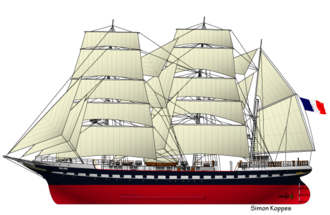
The Belem -- Another 3-masted barque with similar hull color and lines. NOT the A/L wood kit "Belem" which also suffers from having many of its deck furnishings in white or unpainted like the J.S. Elcano.

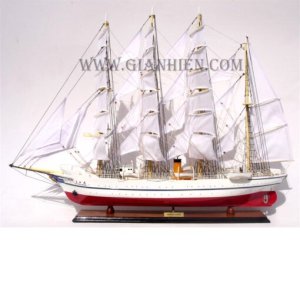
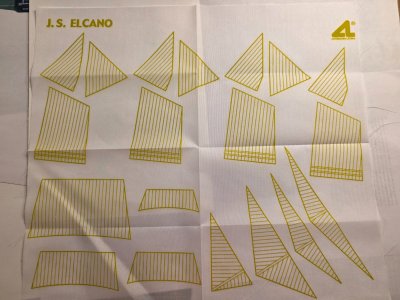
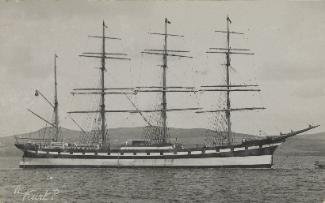
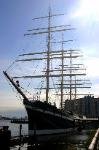
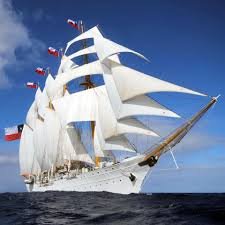
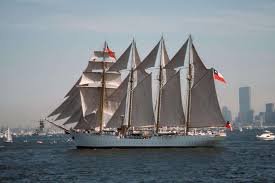
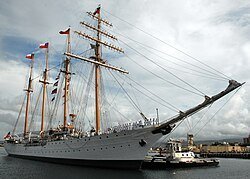
While the kit from A/L is one of their "Easy" builds (includes an ABS plastic hull), I think the challenge will be to fabricate the Mainmast and Mizzenmast as square-rigged, and to fabricate new sails because the J.S. Elcano build comes with Spanish-specific sail markings. Attaching pictures of the J.S. Elcano, the Moshulu, the Star of India, the Nippon Maru, and the Belem.

I'm excited to start this new Build Log and to build this ship as one of Philadelphia's most historic tall ships!
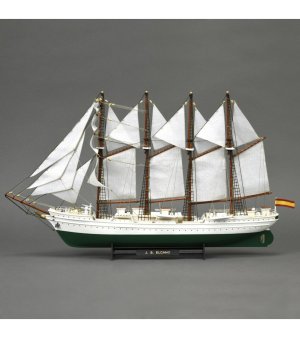
JSE 2.jpg

Moshulu 1.jpg

Star of India.jpg

Nippon Maru.jpg

Belem 2.png
 
Last edited:
2. Opening the box.

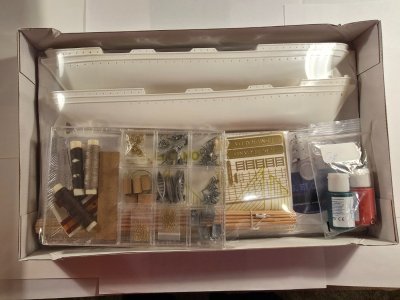
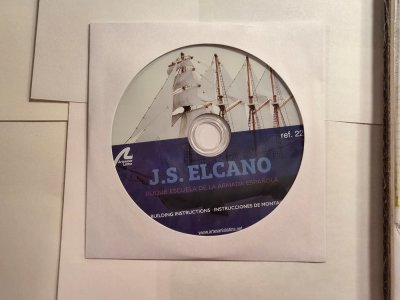
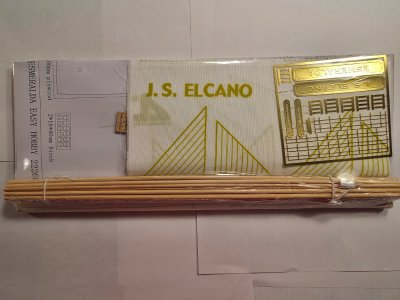
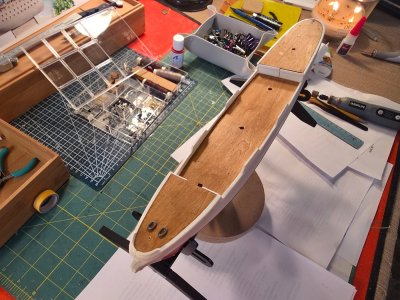
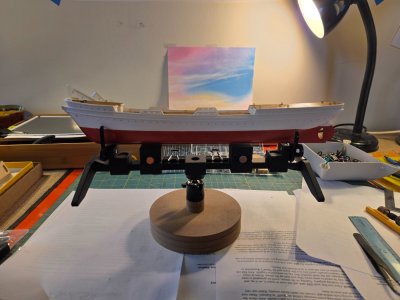
Instead of printed plans the Juan Sebastian Elcano kit comes with a CD-rom that includes 28 short videos on how to construct the model. The kit would be useful if my laptop had a CD disk drive (does anyone use CD drives anymore?) I have watched the first 22 of the 28 videos on Youtube at Artesiana Latina's channel and it is "show but don't tell" minimal narration so they work for at least English, French, and German. Otherwise just elevator music.

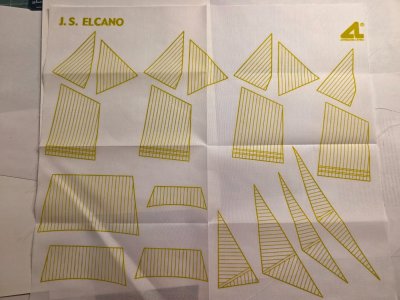
The sails will need to be completely replaced, as the sails that come with the kit are all lined with a gold pattern that doe not show on the any pictures of the A/L kit. Luckily, I have plenty of raw sail canvas left over from my hull-only build of the HMS Victory.

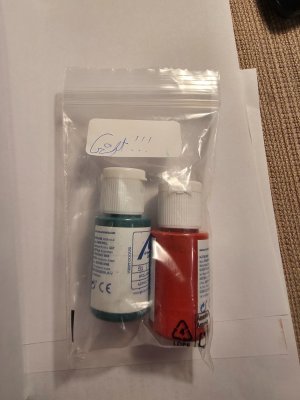
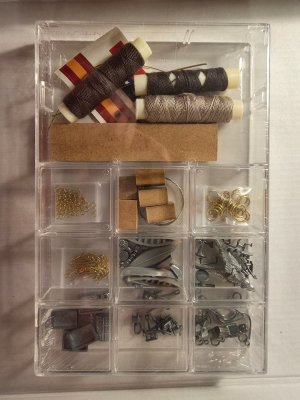
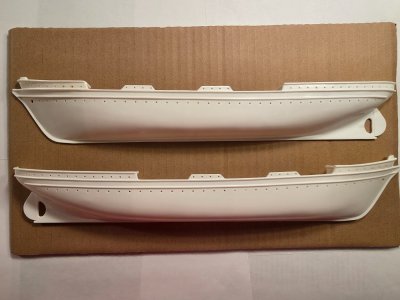
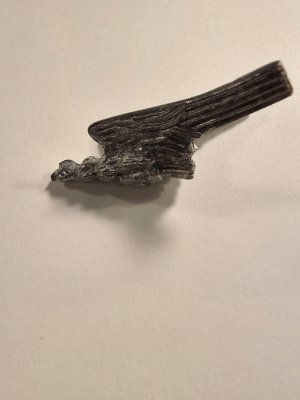
The package was neatly packed and all parts are accounted for. It would have been nice if A/L included at least one scale drawing of the ship as built, but this is an "Easy" build, so they were most likely trying to keep costs down. They did include as a "gift" two vials of acrylic paint in green for the hull and red for some furnishings, but I will go off plan and follow the color scheme of The Moshulu model hull and fittings.

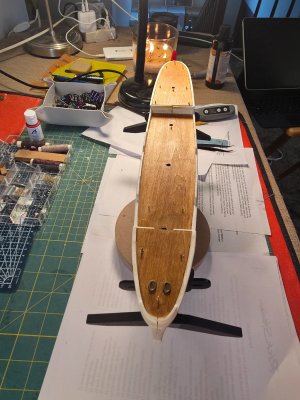
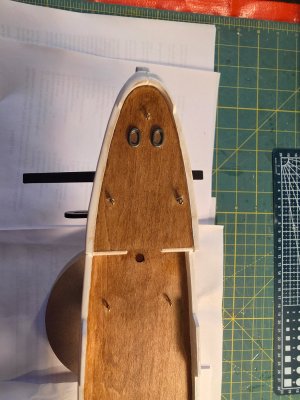
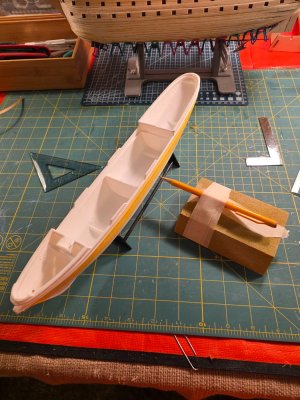
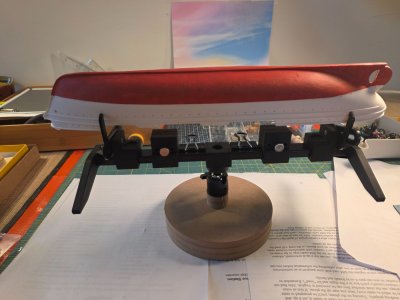
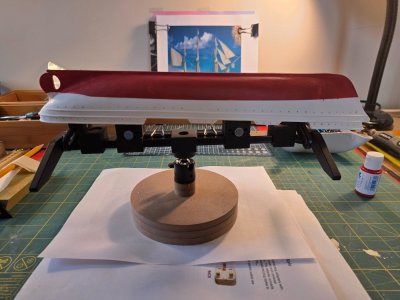
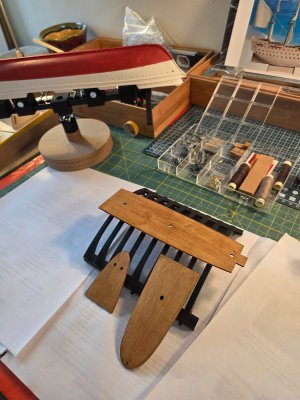
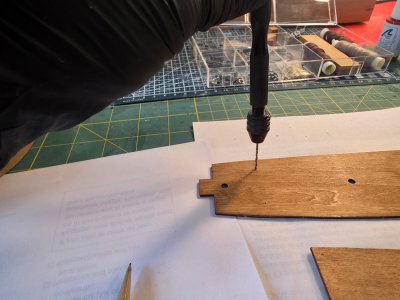
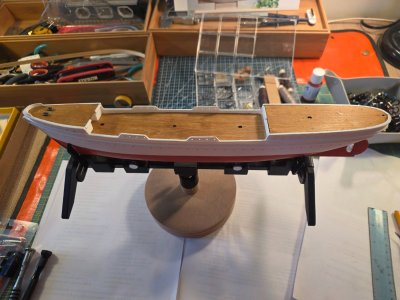
Following the videos, I will start by making the stand and assembling the hull first, then the decks and furnishings.

QUESTION FOR SOS: Would it be easier to paint the plastic hull with The Moshulu colors before adding the top decks, masts and rigging, of if I should just prime the hull and finish painting the hull towards the end of the build? I will scribe the hull lines / water lines according to the original Moshulu plans or the Greenwich Museum model.

20260217_212259.jpg

1000011322.jpg

1000011324.jpg

1000011326.jpg

1000011328.jpg

1000011330.jpg

1000011333.jpg

1000011344.jpg

JSE 1.jpg

JSE 2.jpg

JuanSebastianElcano.webp

20260217_214132.jpg
 
Last edited:
3. Some research on the Moshulu (ex. Kurt).

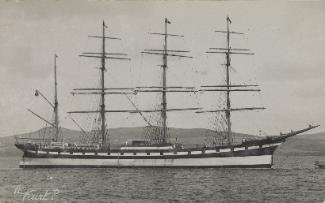
Many will notice that the J.S. Elcano is shorter and "stubbier" than the Moshulu. An overall difference in length by 8 meters (26 feet) or 6% in real life. So yes, this will not be an exact copy of the original Kurt / Moshulu, but it was important to find a steel-hull, 4-mast ship model in my price range and the J.S. Elcano fit the bill. There are several fine plastic models of the Nippon Maru, which may have been a better match, but I'm trying to tackle models now with mast and rigging construction to build my skill set for more advanced tall ship builds.

17714541676714254905504657871675.jpg

17714542283755737948600897892377.jpg

17714543604053587638936978676850.jpg

Kurt-325x203.jpg

Moshulu_at_philadelphia-99x150.jpg

17714544571671899930276239731500.jpg


Moshulu 1.jpg

Moshulu 2.jpg

Moshulu 3.jpg

Moshulu mast plan.jpg
 

Attachments

Last edited:
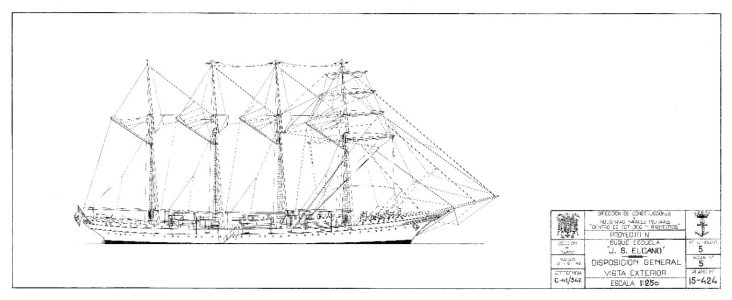
4. Special thanks to SoS member Crisjaca for sharing the Spanish Ministry of Defense Digital Maritime Library, which had several original design drawings for the Juan Sebastian Elcano. A side-by-side comparison shows the similarities between the original J.S. Elcano and original Moshulu (ex. Kurt) in trim and water lines. Also, shows that the original Moshulu (ex. Kurt) as a 4-masted barque with square-rigged Foremast, Mainmast, and Mizzenmast and a fore-and-aft Jiggermast, while the J.S. Elcano is a 4-masted barquentine with a square-rigged Foremast and 3 fore-and-aft masts to follow. Here's the link to the Spanish Digital Maritime Library for those interested (page allows translation to English).


Kurt-325x203.jpg

JS Elcano Full View design file.jpg
 
Last edited:
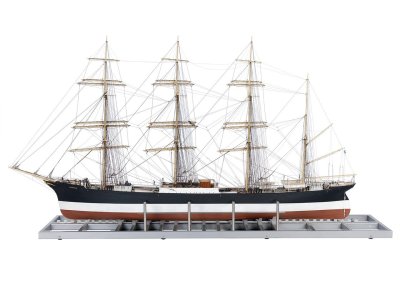
Many will notice that the J.S. Elcano is shorter and "stubbier" than the Moshulu. An overall difference in length by 8 meters (35 feet) or 6% in real life.
So, will you adjust the size of the rig, etc. to be in proportion to the length of the hull by making things 6% smaller? BTW 8 meters converts to 26 feet. Fair winds!
 
So, will you adjust the size of the rig, etc. to be in proportion to the length of the hull by making things 6% smaller? BTW 8 meters converts to 26 feet. Fair winds!
Thanks for the heads up, Andy, correction made! So since is my first tall ship build, how would I go about making the 6% adjustments? Is it a matter of just shortening the masts and yards or would it also entail making the deck furnishings smaller as well? I'm interested in making the build as "real" as possible so I'd like to learn how.
 
Thanks for the heads up, Andy, correction made! So since is my first tall ship build, how would I go about making the 6% adjustments? Is it a matter of just shortening the masts and yards or would it also entail making the deck furnishings smaller as well? I'm interested in making the build as "real" as possible so I'd like to learn how.
I'd say that since the hull isn't accurate to start it's not worth trying to change any existing parts that are "close enough" to use. However, anything that you're making from scratch, including deck houses and spars, can just as easily be made to proper scale. Fair winds!
 
I'd say that since the hull isn't accurate to start it's not worth trying to change any existing parts that are "close enough" to use. However, anything that you're making from scratch, including deck houses and spars, can just as easily be made to proper scale. Fair winds!
That makes sense, Andy. Will go for "close enough" on this build and will go for right proportions, more realistic, and true to the original ship design plans in my next build...which looks like its going to be the wooden Nippon Maru 4-masted barque, 1/160 scale build from Woody Joe. I've never heard of this model company before. Anyone have good or bad reviews for Woody Joe?
 
Sorry, but the hull of your Spanish training ship bears no resemblance to Moshulu. In addition to the wrong shape of the bow and stern, these very large German built sailing vessels exude grace and power lacking in the plastic hull that you intend to use.

You have taken them trouble to find accurate design information for Moshula. Buy some clear lumber yard pine and carve a correctly shaped hull. Probably easier than trying to make the hull that you have look like something that it’s not.

Roger
 
Sorry, but the hull of your Spanish training ship bears no resemblance to Moshulu. In addition to the wrong shape of the bow and stern, these very large German built sailing vessels exude grace and power lacking in the plastic hull that you intend to use.

You have taken them trouble to find accurate design information for Moshula. Buy some clear lumber yard pine and carve a correctly shaped hull. Probably easier than trying to make the hull that you have look like something that it’s not.

Roger
Roger - Thanks for the advice on my choice of models. As I am completely new to building wooden boats -- 6 months in, I don't have the skill set (yet, but hopefully someday) to scratch build the Moshulu from the original design drawings of the Kurt. Perhaps making a boat one wants from a kit for a different boat doesn't make sense now. So I will build the Juan Sebastian Elcano "as" the Juan Sebastian Elcano, instead of building her "as" the Moshulu.

Question:
What are some resources out there (books, blogs, videos) that will help me to scratch build a ship just from the original design drawings? I am watching some online woodworking videos and I may volunteer at the ship modelers space at the Independence Seaport Museum this spring to see how other more experienced model makers do their work. But I want to learn the basic skills first.

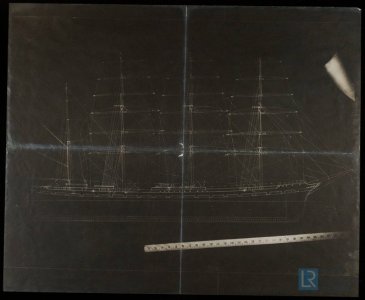
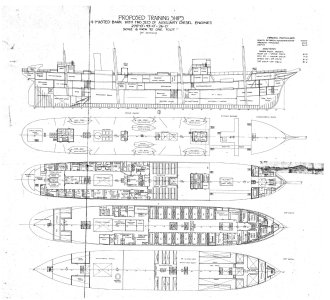
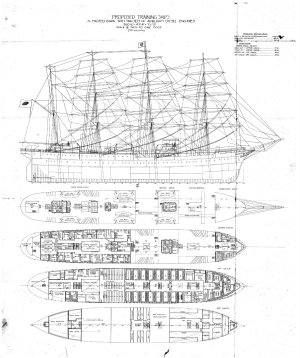
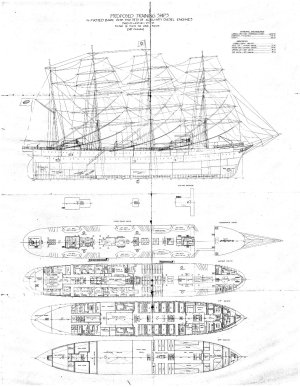
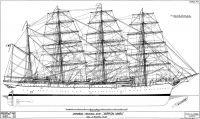
I see that the original 1935 design plans for the Nippon Maru are available for sale from Brown Son & Ferguson at a fair price. The drawings are on white paper and seem clearer to follow. Perhaps that might be a preferable first scratch build as the 1904 blueprints for the original Moshulu (ex. Kurt) are black and hard to decipher. See attached.

But of course, I would be building the Nippon Maru "as" the Nippon Maru, and not "as" the Moshulu, since the Nippon Maru is even shorter in length, beam and draft than the J.S. Elcano.

Thanks again for your helpful suggestions.

item-00531 (1).jpg

17714541676714254905504657871675.jpg

l_js-nippon-maru-160_20211015003808.jpg

Moshulu 1.jpg
 
Last edited:
Where to start? Most forum members will recommend first buying and building a simple kit. I personally don’t recommend this. Why? Almost all kits today use these Plank on Bulkhead method of construction(POB). You will find many examples of this here on the forum. You will also notice that many beginners make a complete hash of planking the skeleton that they have assembled or that they give up in frustration. Those who persevere have learned one method of building ship models and go on to build and buy more kits.

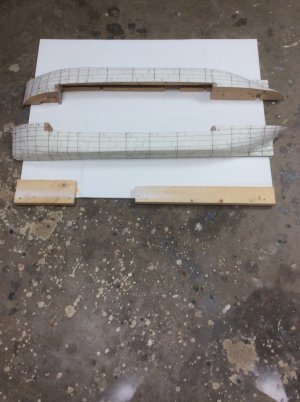
If it is your ambition to build one of these magnificent steel hulled sailing vessels that ended the age of sail, then I suggest that you build what’s known here on the forum as a “solid hull” model. I build mine from inexpensive lumberyard pine and sculpting one of these hulls is a real joy. I typically build a pair of half models that aren’t later pinned together.

Regardless of the method that you intended to use, I would start by buying drawings now. If Nippon Mari is your choice that’s fine. In any case the starting point is a “lines drawing.” This is a three view, side, top, and end view, drawing that shows the hull’s contours. Without this you can’t build a model. Spend time getting acquainted with the drawing before jumping into another build. See example of one of my carved hulls below.

BTW British Master Modeler Malcolm Darch has built a spectacular model of Moshulu. You may be able to find it on the web.

Roger

IMG_0551.jpeg
 
Roger -- Your suggestion about beginning with learning how to carve a wooden sold-hull is intriguing to me.

The ships that I am most interested in at the moment -- the Moshulu, the Nippon Maru, the Star of India, the Pommern, the Belem, and of course, the Juan Sebastian Elcano -- are all steel hulled sailing ships with 3, 4 or 5 masts (barques or barquentines). They were all built within a 40-50 year period from the 1880's until the 1930's (except for the rebuilt Moshulu (1995) and the rebuilt Nippon Maru (1984)) and most of them have existing drawings that can be found online. So I would really like to learn the skill of carving wooden hulls for these steel-hulled ships because they would not need to be built as "Plank on Frame" models.

Doing all this research into the Moshulu and the Nippon Maru has gotten me very interested in the Japanese age of sailing vessels and I may go down this rabbit hole eventually and build a Japanese sailing ship navy that would include the San Juan Bautista (Japan's first western-style tall ship from 1614), the Kaiwo Maru (sister ship to the Nippon Maru), the Kaisei brigantine/schooner (18th century trading ship), the Naniwa Maru (a 17th century cargo ship), and the Meiji Maru (a steel hulled Imperial yacht). There was also a tradition of Japanese merchant marine ships called "Red Seal Ships" that operated for about 50 years in the 1600's before Japan prohibited overseas trade and there are many examples of Japanese Red Seal ships in museums in Japan and elsewhere.

So now I am going to alter my project a bit:
1. Build the Juan Sebastian Elcano "as is" and continue my Build Log for the JSE. I am NOT going to build the J.S. Elcano as the Moshulu.

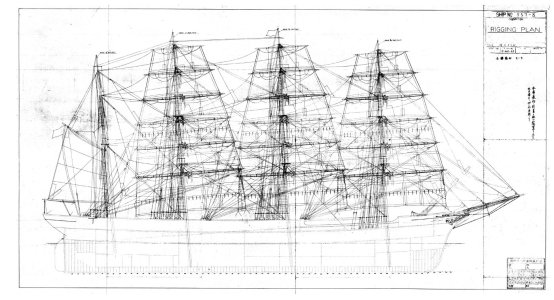
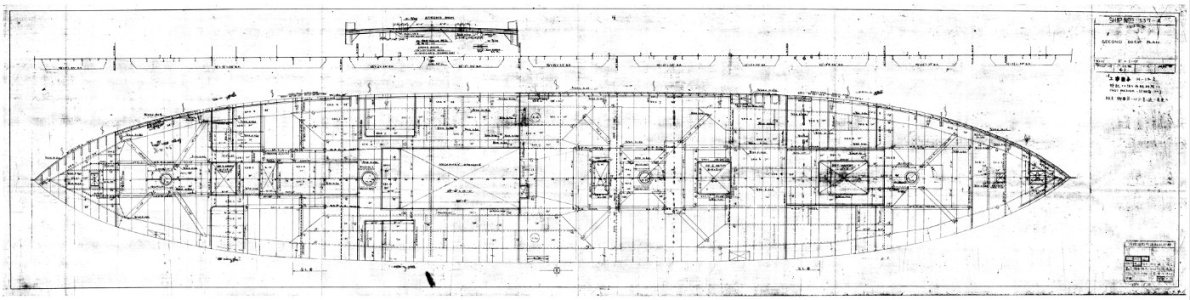
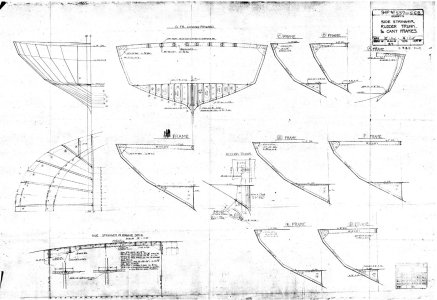
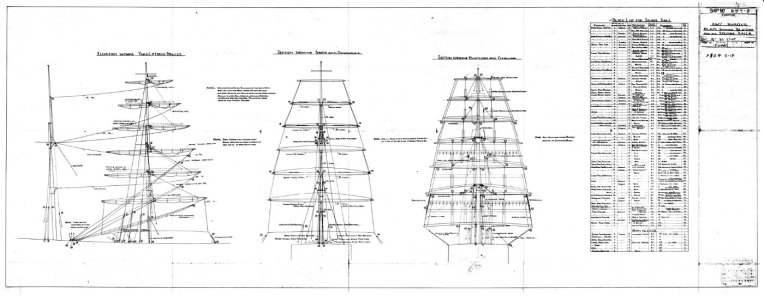
2. Learn how to carve a solid-wood hull using the design drawings of the Nippon Maru (attached) that I downloaded from the Japanese Ministry of Naval Architects & Ocean Engineers. I will also rely on the posts, logs and guidance for such a build using the resources here on SOS. This will be a separate project and I will probably do a build log while I start to learn this skill. Your photo of a solid wood hull in two halves would be what I'm striving for.

3. After #2, decide whether to scratch-build the Moshulu using a carved wooden hull as above and base it on either the Nippon Maru design drawings which are much closer to the Moshulu plans than the J.S. Elcano, or base my Moshulu model on the original Moshulu design plans, but they are a bit difficult to decipher since they are all on black design paper. I may also build a plastic 1/150 scale model of the Nippon Maru from Aoshima to help with understanding the "look and feel" for the Nippon Maru as I scratch build the hull.

After I finish building the J.S. Elcano in a week to two weeks, I'll do a deep dive into carving wooden hulls and start another thread for that project.

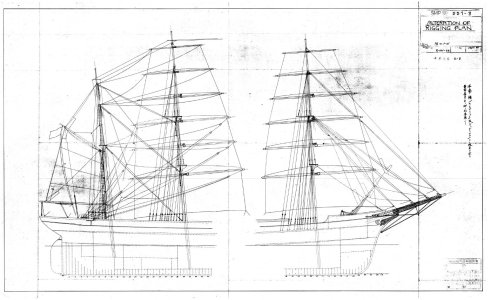
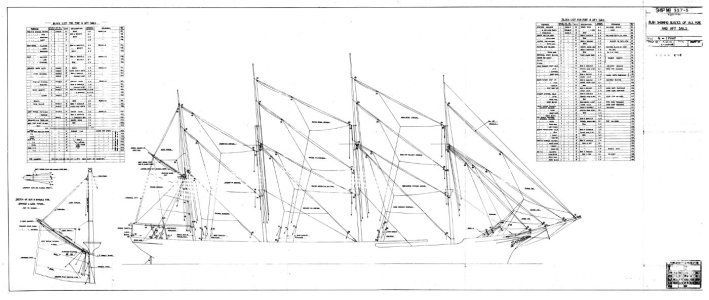
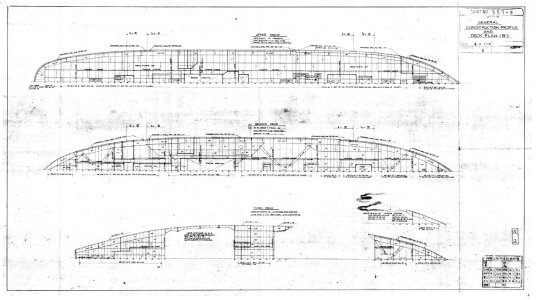
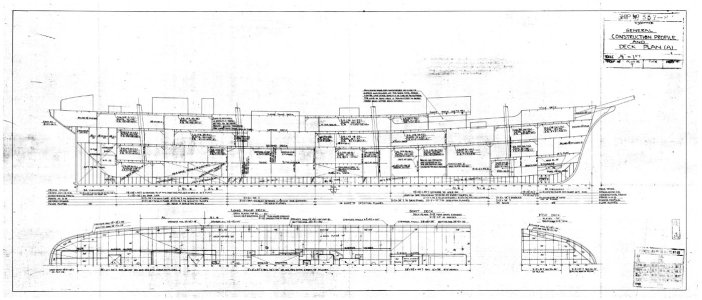
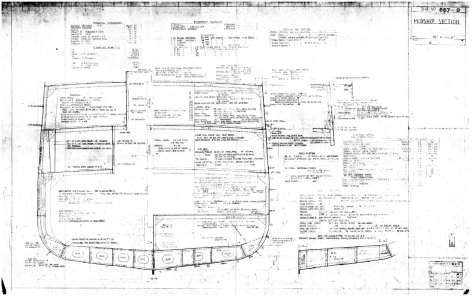
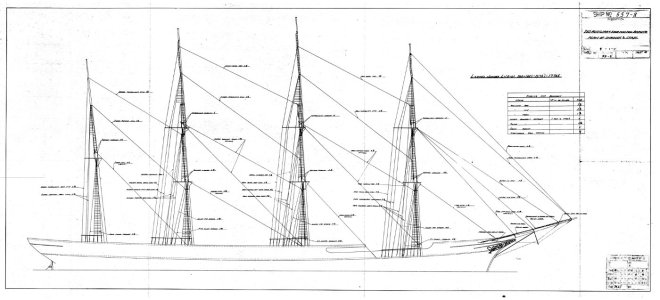
As far as the Nippon Maru design drawings, I hit the jackpot and found dozens of design drawings for the Nippon Maru and her sister ship the Kaiwo Maru (built 50 days apart) on the website for the Japanese Ministry of Naval Architects and Ocean Engineers called, the "Digital Shipbuilding Museum." Both ships used the same design drawings for a project called "Training Ships." Here's the link:


Attaching the first 13 drawings and leaving out the drawing on electrical systems, propulsion, and communications systems.

Many thanks to all of the SoS members who have given constructive feedback on my builds so far!

I'm still in the first 6 months of this tremendous hobby, so wish me "Fair Winds and Following Seas..."!

Nippon Maru Alteration of Rigging Plan.jpg

Nippon Maru Design Drawings 1 (Side_Top View).jpg

Nippon Maru Design Drawings 2.jpg

Nippon Maru Design Drawings 3.jpg

Nippon Maru Fore and Aft Sale Plan.jpg

Nippon Maru General Construction and Deck Plan.jpg

Nippon Maru General Construction Drawing.jpg

Nippon Maru Midship Section Plan.jpg

Nippon Maru Plans for Shrouds and Stays.jpg

Nippon Maru Rigging Plan.jpg

Nippon Maru Second Deck Plan.jpg

Nippon Maru Side String Rudder Trunk and Cant Frames Design.jpg

Nippon Maru Square Sail Design Plan.jpg
 
Last edited:

Back
Top