• Win a Free Custom Engraved Brass Coin!!!
    As a way to introduce our brass coins to the community, we will raffle off a free coin during the month of August. Follow link ABOVE for instructions for entering.
  • SUBSCRIBE TO SHIPS IN SCALE TODAY!

    The beloved Ships in Scale Magazine is back and charting a new course for 2026!
    Discover new skills, new techniques, and new inspirations in every issue.

    NOTE THAT OUR NEXT ISSUE WILL BE MARCH/APRIL 2026

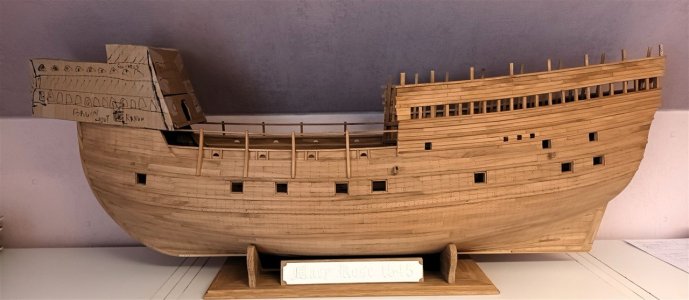
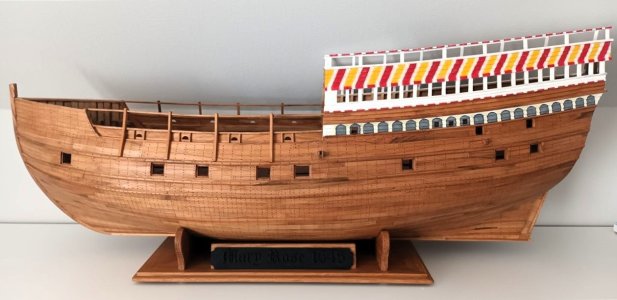
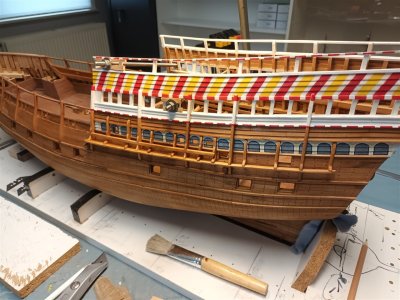
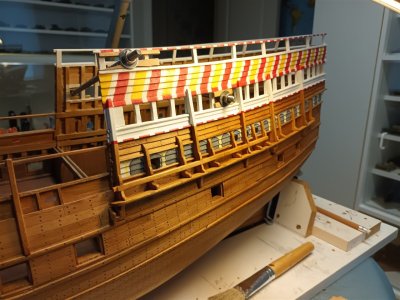
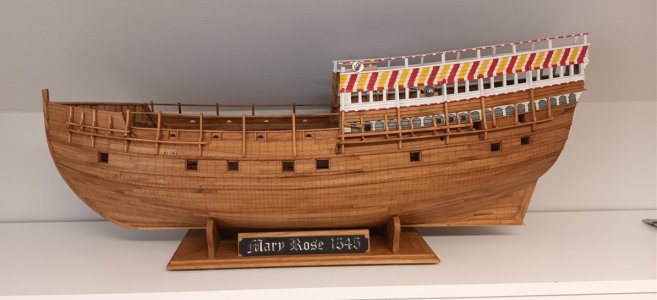
Mary Rose "Your Noblest Shippe" 1545 scale 1/50

Sharp Bow: it’s interesting that paintings of these old ships, often those made in the Nineteenth Century, and older ship model kits represent these Sixteenth Century warships with bluff bows and very full hull forms. Maritime archeology studies of actual vessels shows fine lined sharp bow hull forms. Examples include Mary Rose, the Newport ship and the Red Bay Galleon. Two out of three of these examples are of Basque construction. This puts the Spanish Armada stereotype of lumbering tubs to doubt. Actually what appears is a “boat like” lower hull form with massive upper works added on.

Examination of her hull form also sheds light on her catastrophic loss. Initial stability is an exponential function of the area of the vessel’s water plane. (The area enclosed by the waterline at which she floats). Vessels with poor initial stability heel easily until the change in water plane area stops it. They, therefore, do not necessarily capsize. Mary Rose, however, was apparently sailing with open gunports, and when she heeled to the point where she exposed one of these then loss of buoyancy and the effect of water sloshing back and forth in her lower hull caused her to capsize and sink.

It would seem that the blame lies with dockyard officials who decided to add gunports low in the hull that were necessary for large bore guns to a hull not originally intended to carry them. In their defense the concept of initial stability would not be known for another two hundred years.

Roger
 
Sharp Bow: it’s interesting that paintings of these old ships, often those made in the Nineteenth Century, and older ship model kits represent these Sixteenth Century warships with bluff bows and very full hull forms. Maritime archeology studies of actual vessels shows fine lined sharp bow hull forms. Examples include Mary Rose, the Newport ship and the Red Bay Galleon. Two out of three of these examples are of Basque construction. This puts the Spanish Armada stereotype of lumbering tubs to doubt. Actually what appears is a “boat like” lower hull form with massive upper works added on.

Examination of her hull form also sheds light on her catastrophic loss. Initial stability is an exponential function of the area of the vessel’s water plane. (The area enclosed by the waterline at which she floats). Vessels with poor initial stability heel easily until the change in water plane area stops it. They, therefore, do not necessarily capsize. Mary Rose, however, was apparently sailing with open gunports, and when she heeled to the point where she exposed one of these then loss of buoyancy and the effect of water sloshing back and forth in her lower hull caused her to capsize and sink.

It would seem that the blame lies with dockyard officials who decided to add gunports low in the hull that were necessary for large bore guns to a hull not originally intended to carry them. In their defense the concept of initial stability would not be known for another two hundred years.

Roger
Thanks Roger, this explanation saves me a lot of Google Translate work.

Also, don't forget that the gun ports were not operated by the cannon crew themselves, but by someone on the deck above.
Communication was done by shouting through openings in the deck...
 
Further with the build log restoration
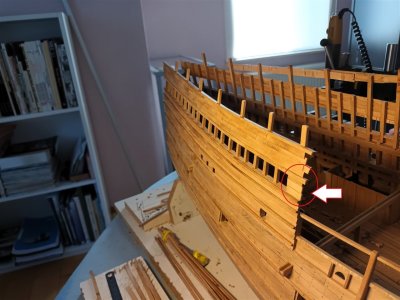
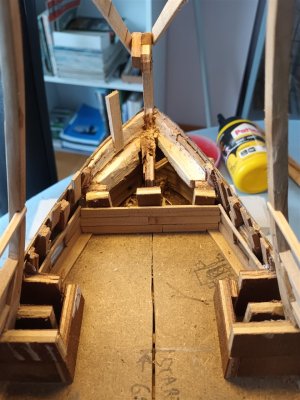
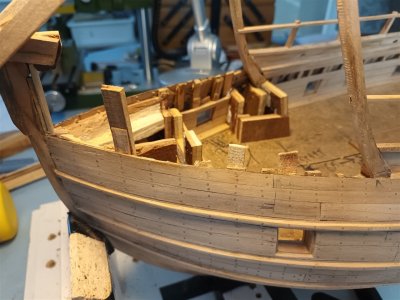
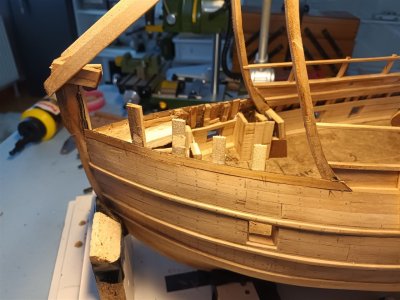
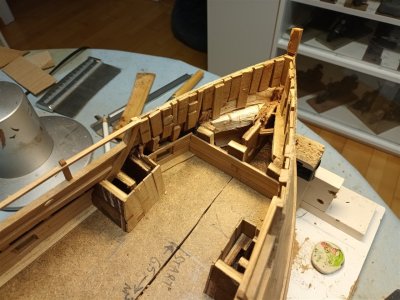
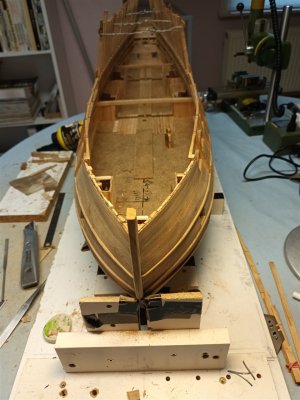
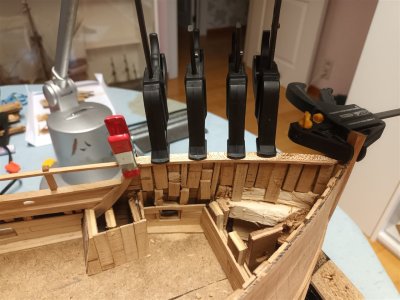
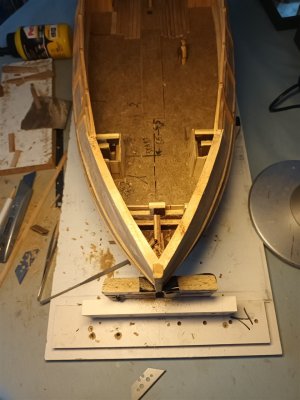
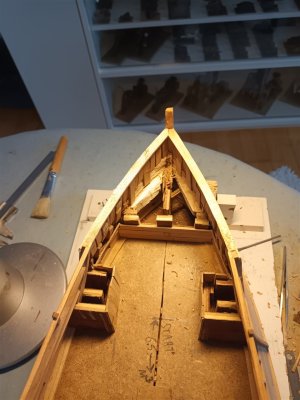
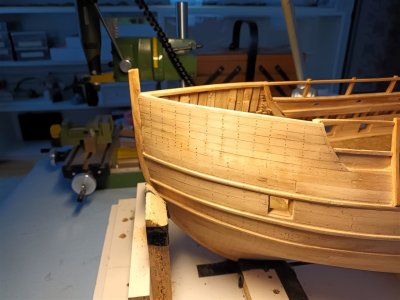
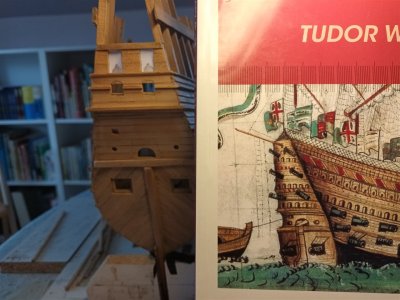
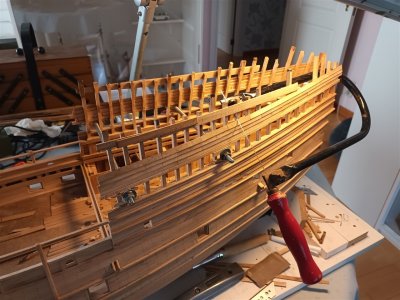
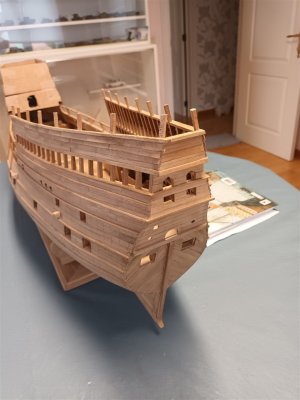
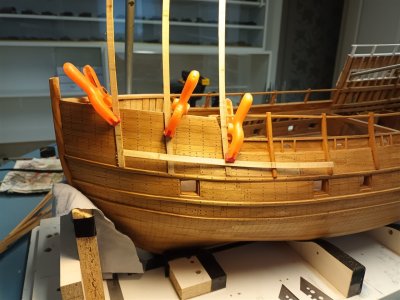
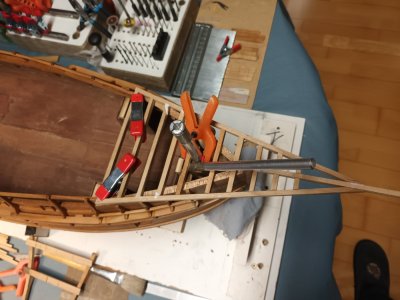
Planking the bow.
Purely speculative. The planking here is horizontal; on many carracks it is curved vertical, but at the time of the sinking of the Mary Rose this seems to be becoming somewhat old-fashioned. Most drawings then show horizontal planking.

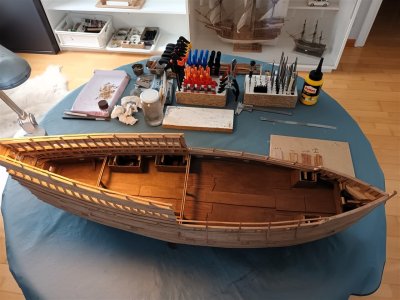
First " a clean up" of the inside
20240505_112213_1280.jpg


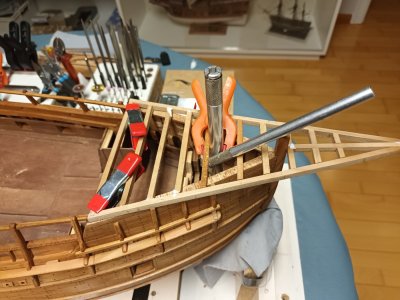
And step by step, the bow is being built up.
20240505_112223_1280.jpg


20240506_150921_1280.jpg


20240517_192235_1280.jpg


20240517_192250_1280.jpg


20240517_195815_1280.jpg


20240520_082311_1280.jpg


20240520_082322_1280.jpg


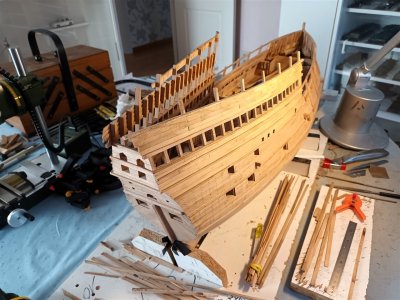
The planking of the bow is finished. It is not clearly visible in the photos, but there are still some dips and dips in the shape here and there. However, the planks are thick enough to sand away these irregularities.
So still sanding, inserting treenails into the planks, etc. to do.

Not happy with the blunders on the right, but fortunately we won't see any of that later. And still needs further sanding (left).
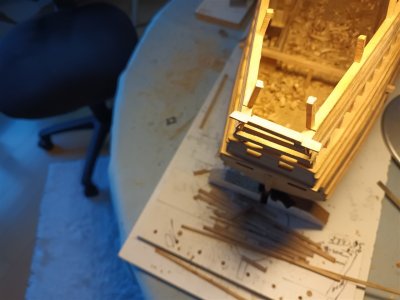
20240520_082348_1280.jpg


With the cardboard front castle. In this new setup, the height of this castle has already decreased by 1.5 cm.
20240520_084425_1280.jpg
 
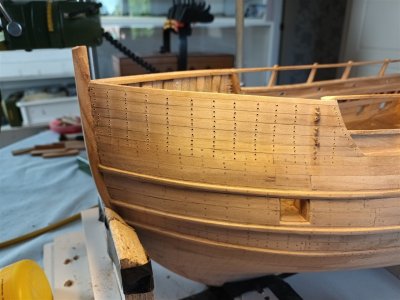
The planking at the bow has been further sanded and fitted with treenails.
20240523_190250_1280.jpg


20240529_073253_1280.jpg


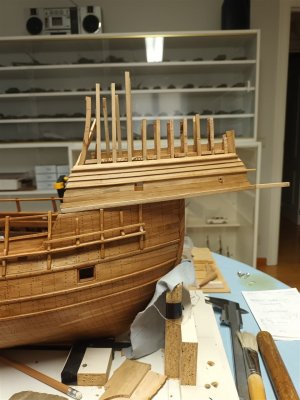
Back to the rear castle.
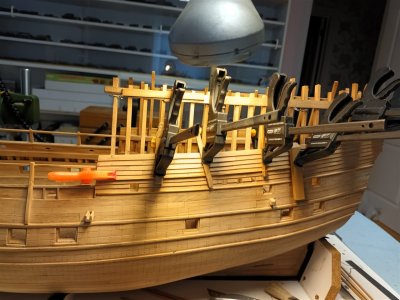
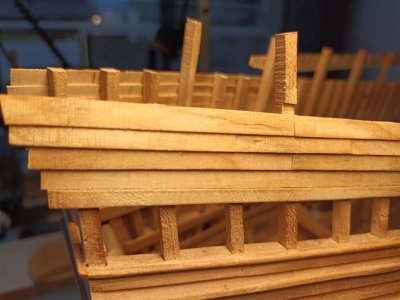
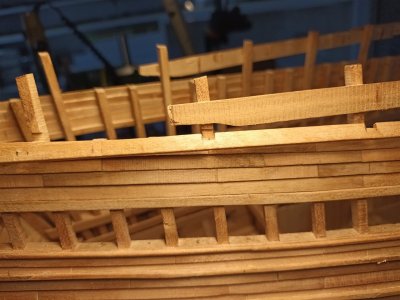
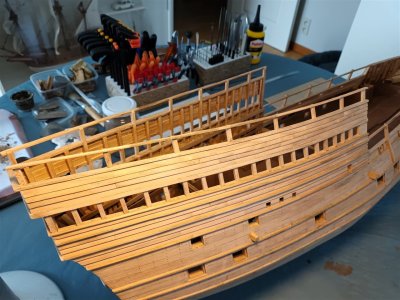
Smallerwales are placed on the clinker planking. Naturally, none of these have the same dimensions.
The drawings and photos are consulted partly to determine the "correct" position. The spacing between the wales was also already taken into account for future painting work.
20240528_201640_1280.jpg


All wales are installed on the clinker-built planking.
20240603_191535_1280.jpg


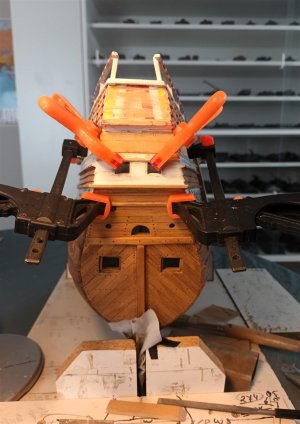
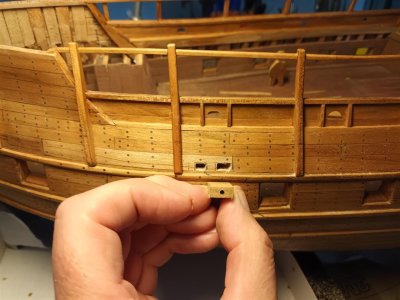
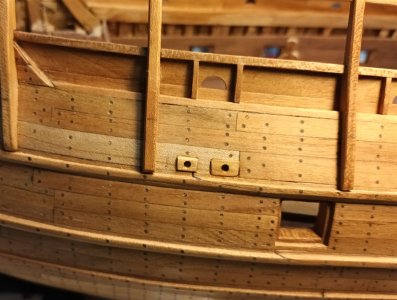
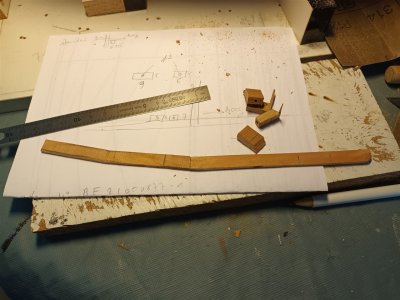
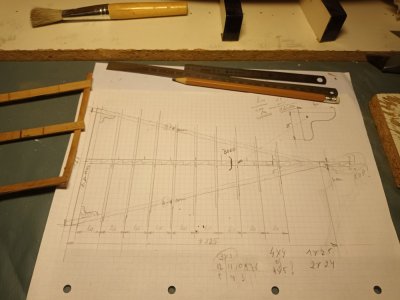
On the starboard side, the beam has been replicated on which the swivel cannons will later be mounted.
20240603_191513_1280.jpg


And the frames are to thick, they must be thinned
First a pencil line.
20240603_184350_1280.jpg


Then "heavy material" deployed cautiously, of course.
20240603_184516_1280.jpg


One side is reduced from 6 to 5 mm; the intention is to later make the frames above the beam of the pivot bearings even thinner to 4 or, if possible, 3 mm.
20240605_095738_1280.jpg
 
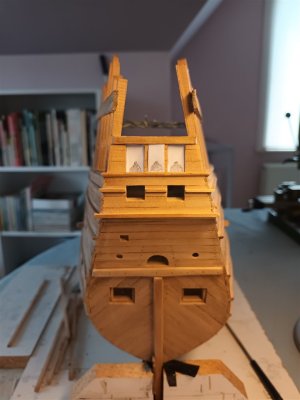
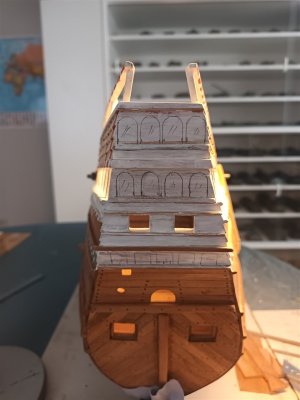
With the beam for the port side swivels also installed and the frames thinned, it is time to continue working on the transom.
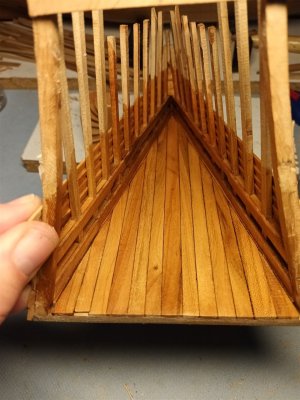
The clinkerplanking that was installed initially has been removed.
20240610_162150_1280.jpg


The intention is to install two cannons here; the openings of the "swivels" will then remain empty.
Installing the same number of cannons as the Anthony drawing is not feasible. It is a beautiful drawing to show to a king, but in reality, this is not a practical design.
Various attempts...
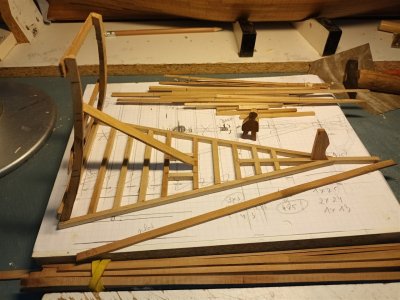
20240612_154155_1280.jpg


20240612_160922_1280.jpg


20240612_160611_1280.jpg


And in the end, this is what it turned out to be (so attempt 3).
20240614_075816_1280.jpg


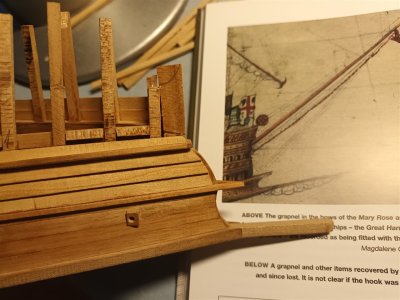
Then finish the holes for the struts on the port and starboard sides with a beam at the top.
First, grooves are made.
20240612_163935_1280.jpg


20240612_163947_1280.jpg


This is more work, but positioning the beam correctly becomes much easier.
And above this, clinker planking returns. This will provide more strength to the structure when the frames are made thinner later.
20240614_080016_1280.jpg


20240614_095739_1280.jpg

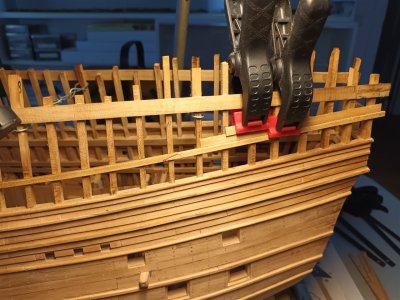
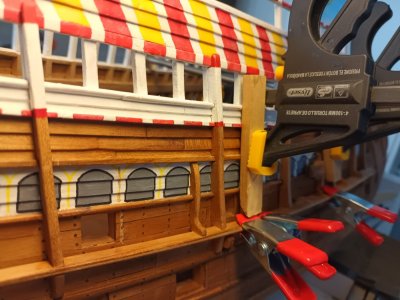
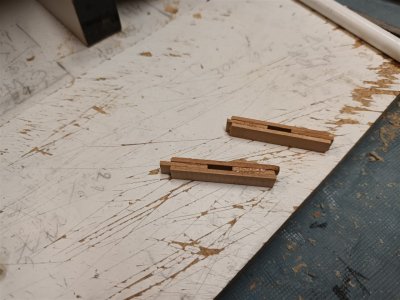
Small piece of wood clamped in place and the clamp is now blocked (silly me...)
20240616_085343.jpg

And the iron wire, which kept the walls of the rear castle at the correct width, and on which I have already cut my fingers a few times, has been replaced by a couple of threaded rods. (the castle was to wide at this moment)
20240616_104611.jpg
 
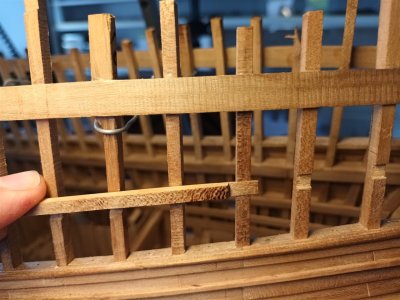
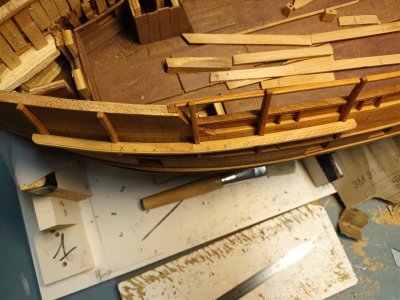
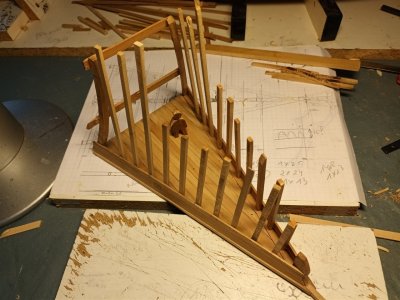
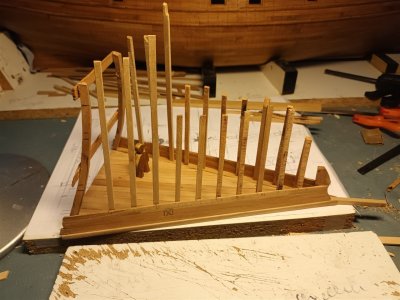
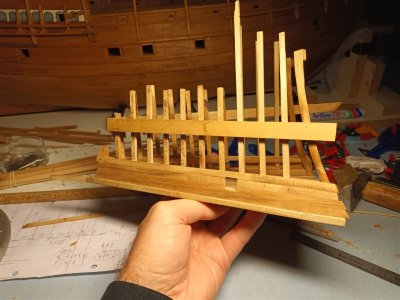
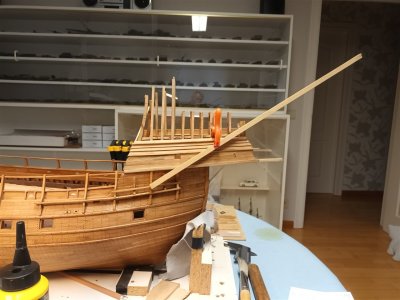
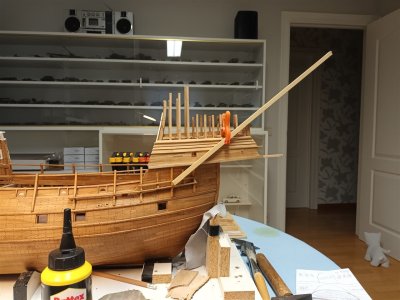
The frames of the upper deck.

Logically seen and thinking.
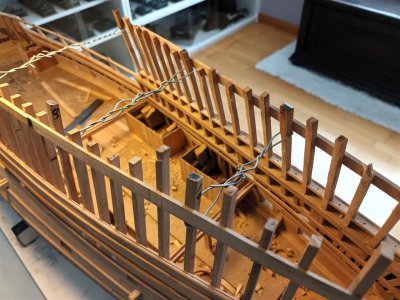
This bulwark is constructed with a section of planking and a section of shields. In accordance with the mid-deck, which also has partial shields, why should all the frames extend all the way to the top? If their sole purpose is to hold up a beam from which shields hang?
Therefore, the height of the majority of the frames extends only to the planking. And a few go higher; the distance between these frames is approximately in accordance with that of the mid-deck.

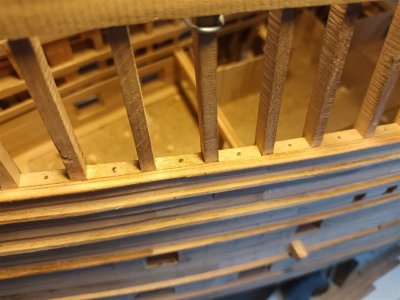
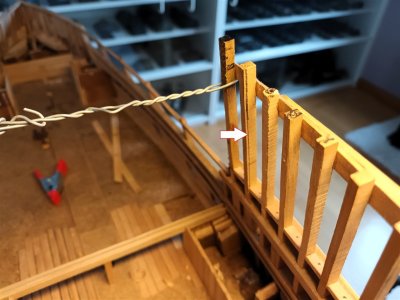
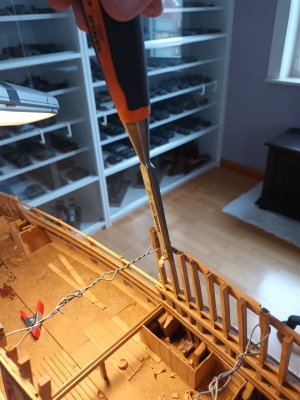
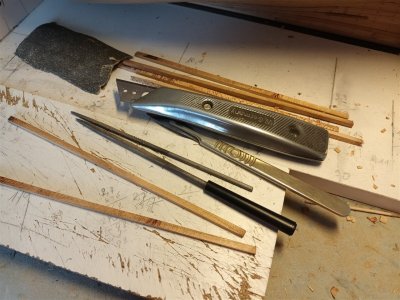
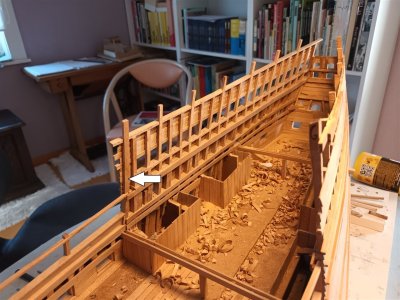
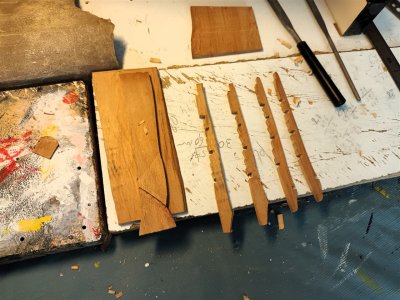
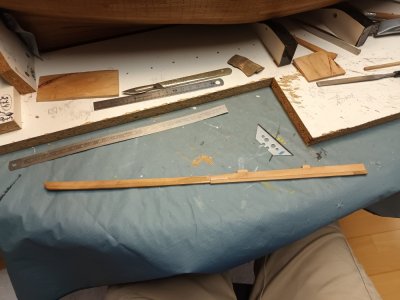
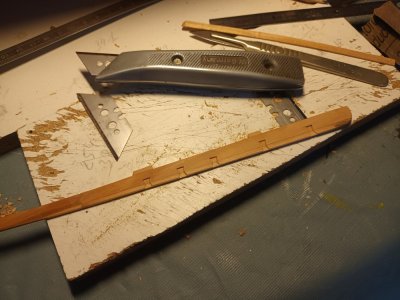
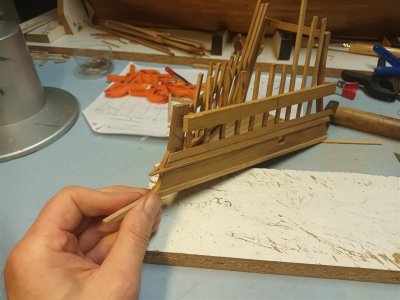
Saw off the rafters to height and then narrow them to 3mm with a chisel and rasp.
20240619_191350_1280.jpg


20240621_184102_1280.jpg


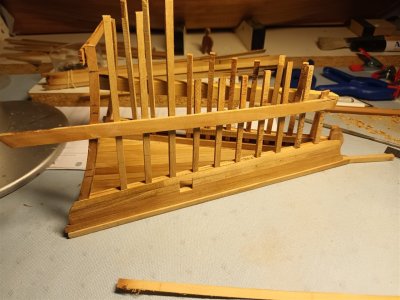
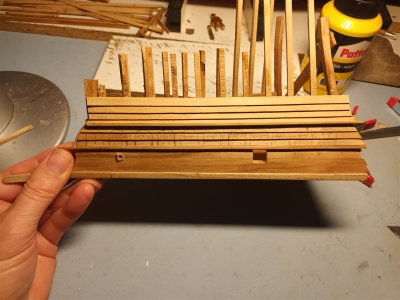
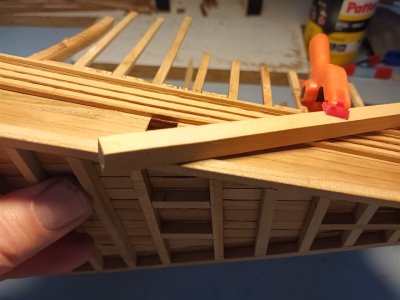
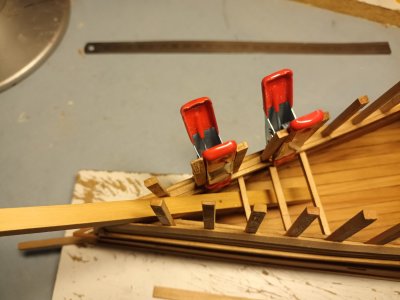
A beam is glued above the overlapping planking. The connections are solely to maintain sufficient strength on the model.
20240621_190535_1280.jpg


20240621_192222_1280.jpg


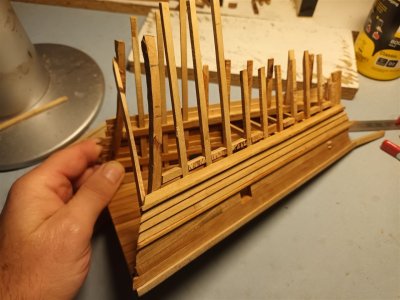
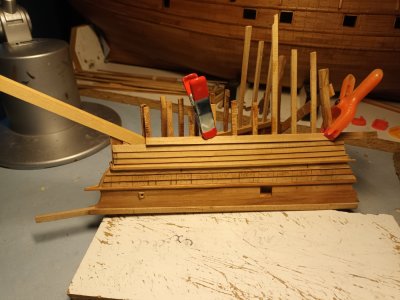
Then the longest frames are narrowed and brought up to height. This height is speculative; the shortest frame was the measure (little other choice).
20240628_193314_1280.jpg


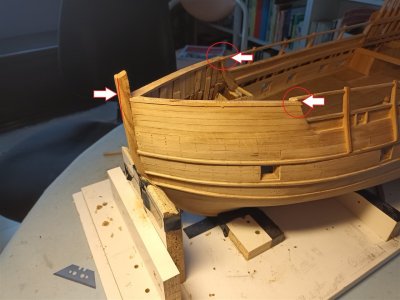
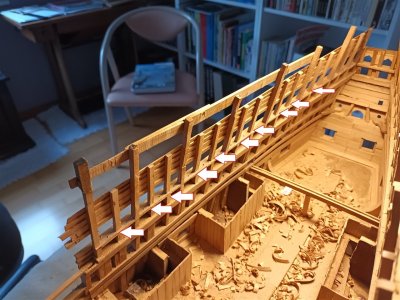
Starboard is finished, only a small beam remains to be attached at the top, and a little extra planking has been added (arrow).
20240628_193347_1280.jpg


20240628_193404_1280.jpg

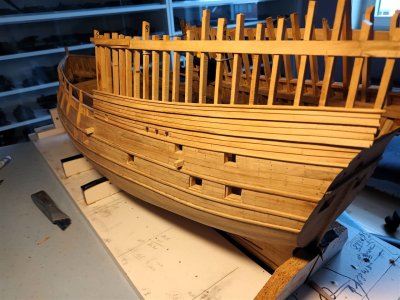
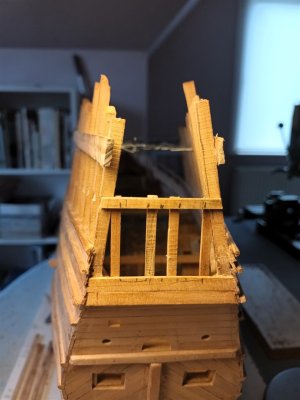
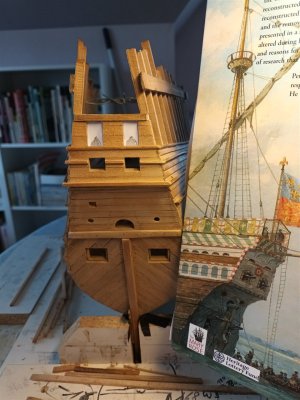
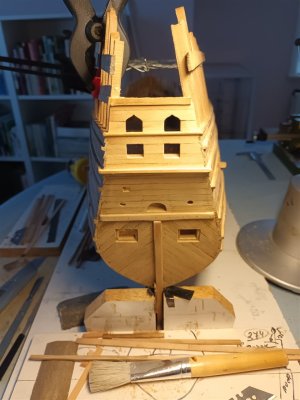
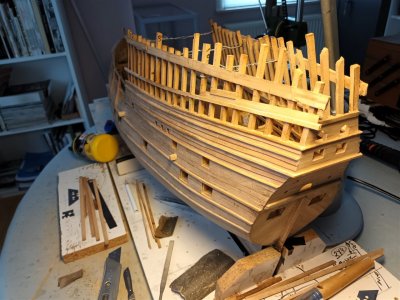
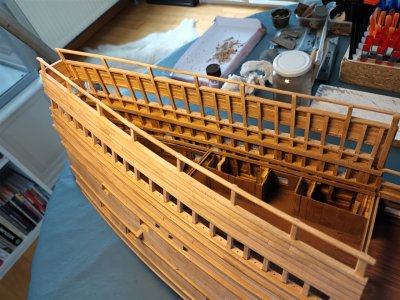
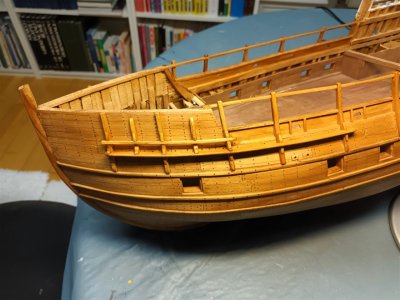
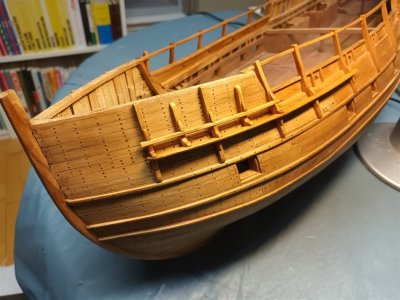
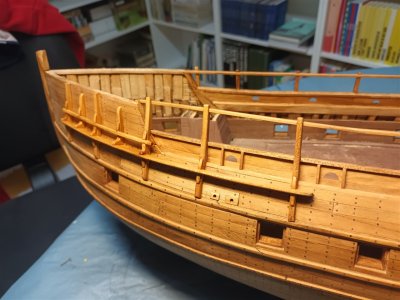
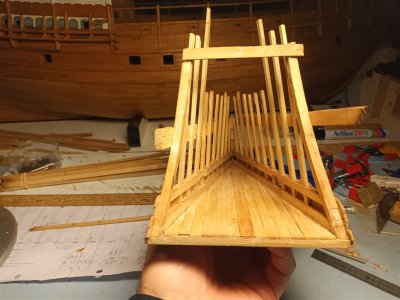
With all the frames thinned and the last planks attached to the transom, the rough shape of the hull and the aftcastle is largely complete.
20240701_205752_1280.jpg


20240702_191101_1280.jpg

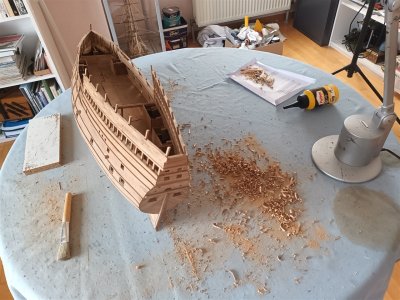
A whole lot of wood chips. And the first pot of PVA glue is empty.
The workbench has been cleared for a moment. With paint cans visible in the background, it is time for some freshening up of the hobby room first.
20240702_164337_1280.jpg


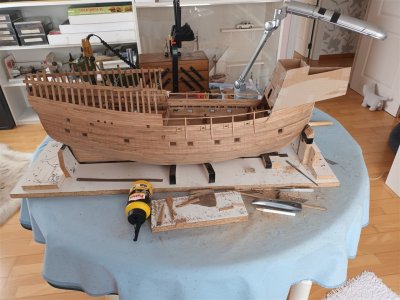
status with a cardboard fortress
20240702_191045_1280.jpg


20240702_191228_1280.jpg
 
Mary Rose was then a little time on hold.
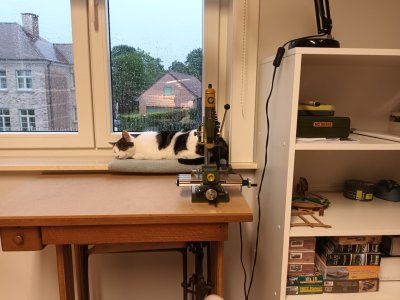
Repainted and reorganished the hobby room. Now also with a small stereo that produces a truly old-fashioned sound. 40 years old...
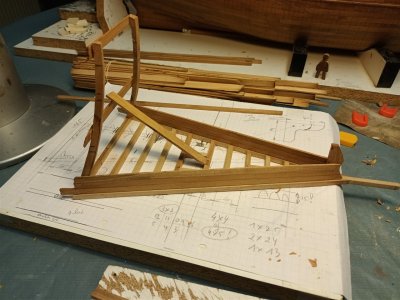
20240717_185003.jpg


20240717_185028.jpg


Everything in order, no more searching for tools
20240717_185503.jpg


And cleaning of the military collection. About 1450 models...
20240717_185349.jpg
 
With the room completely cleaned, repainted, and reorganized, and a clean military collection. There was time for Mary again.

The gun deck is fitted with planks where the stairs will go. And it has received a coat of diluted and polished Tamya paint.
Later, little or nothing of all this will be visible.
20240730_152300_1280.jpg


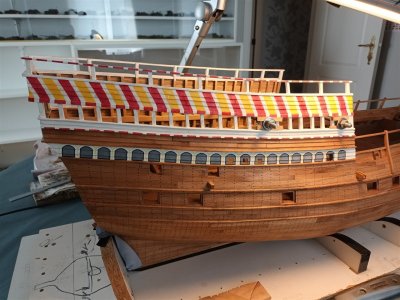
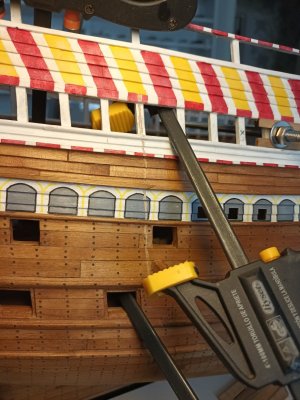
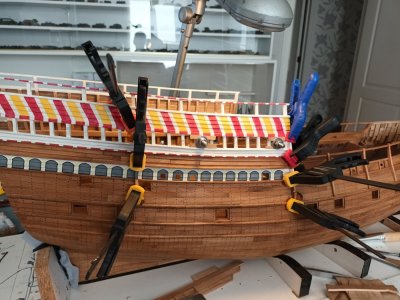
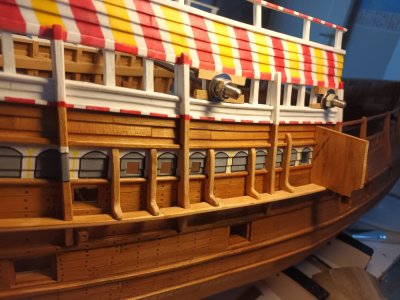
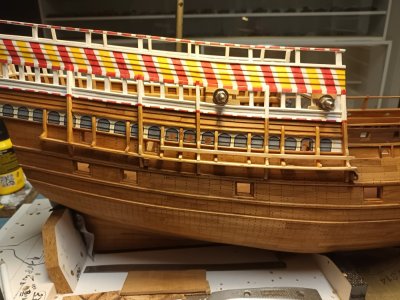
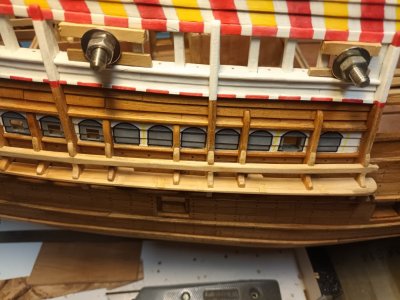
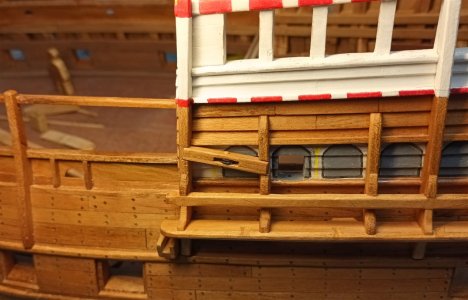
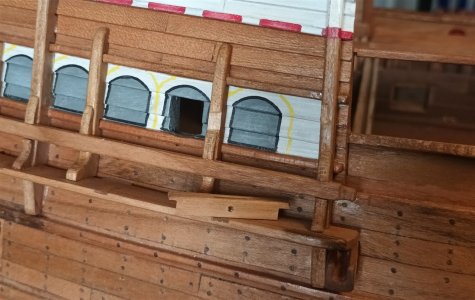
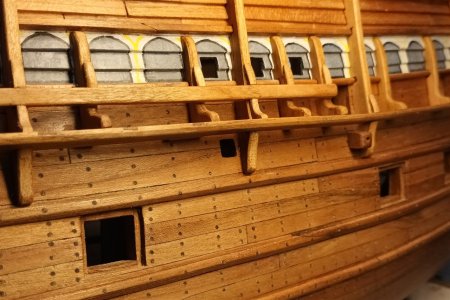
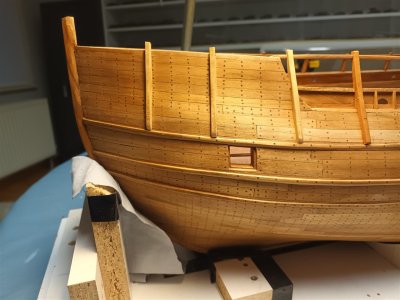
The railing of the top deck is finished.
20240730_152326_1280.jpg


20240730_152336_1280.jpg


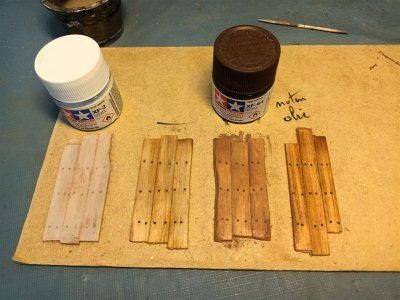
Color test for the hull.
It is not known for certain whether the original ship was white below the waterline. It is possible, but it has never been investigated further.
To get the maximum effect from the treenails, oil will be applied to the hull. I had some walnut oil left over as a test. Much better than the very diluted Tamya paints.
Walnut oil gives a beautiful result on wood, but you have to finish and repeat the treatment.
So it will be Danish oil
20240729_133546_1280.jpg


No comment
20240820_193553_1280.jpg


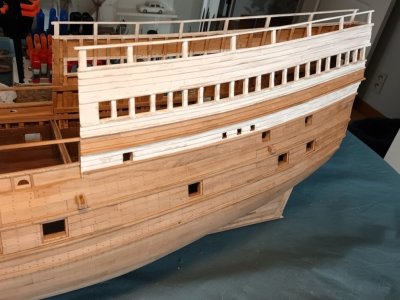
Applying masking tape to overlapping planking is not practical.
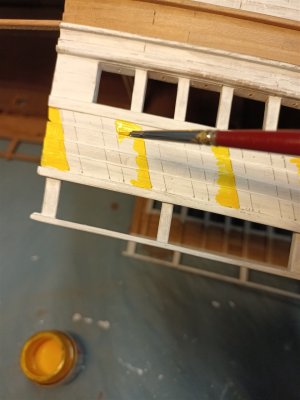
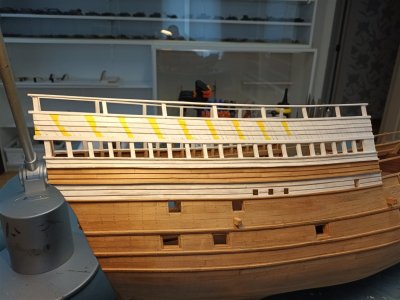
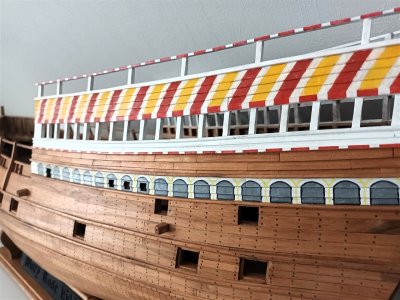
And, they didn't have masking tape back then in the 16th century either... So everything is marked out and painted "freehand".

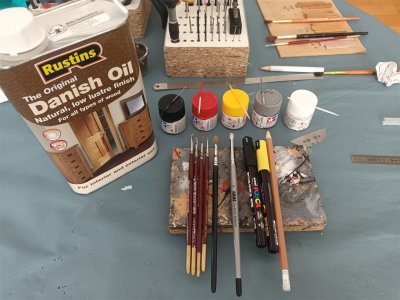
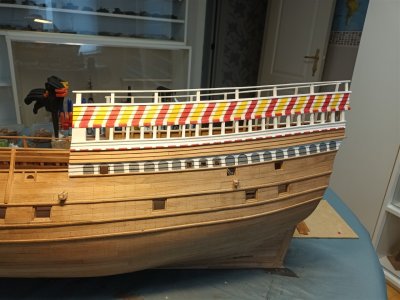
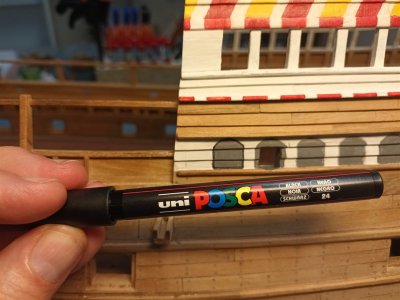
Materials used: Tamiya paint, paint markers, and Danish oil.
20240825_130449_1280.jpg


If you are right-handed, it is easiest to always paint the left line.
20240801_112645_1280.jpg


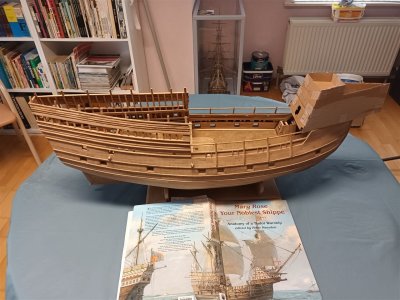
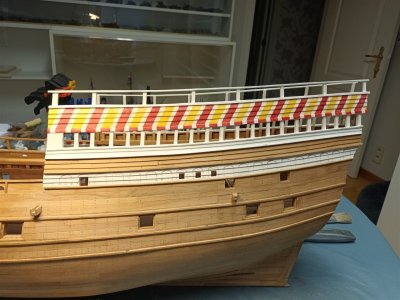
The colors are applied step by step. The book cover serves as a guide, but was not followed completely.
Port serves as the test side. So starboard still needs to be done.
20240731_115114_1280.jpg


20240821_204705_1280.jpg


20240823_125635_1280.jpg


20240823_125846_1280.jpg


20240825_130607_1280.jpg

All "untreated" wood parts are finished with a layer of Danish oil.
No white below the waterline.
The original may have been painted white, or not.
Not a single ship on the Antony roll has a white underside.
This way, the treenails are most visible.
20240825_130654_1280.jpg
 
The starboard side is painted.
20240830_142457_1280.jpg


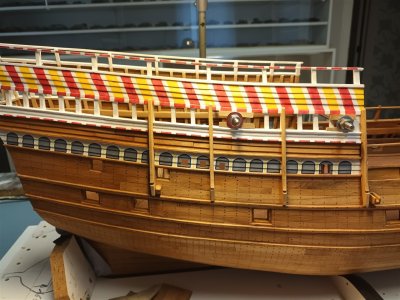
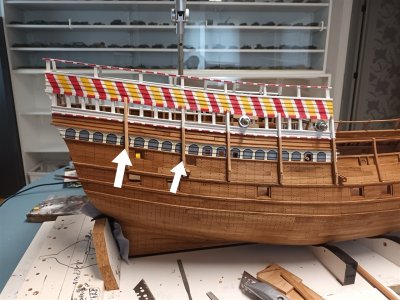
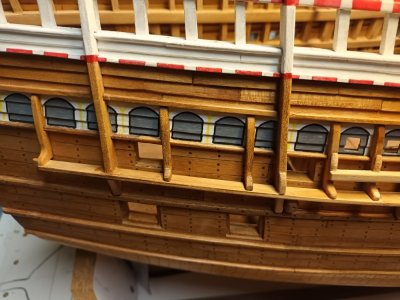
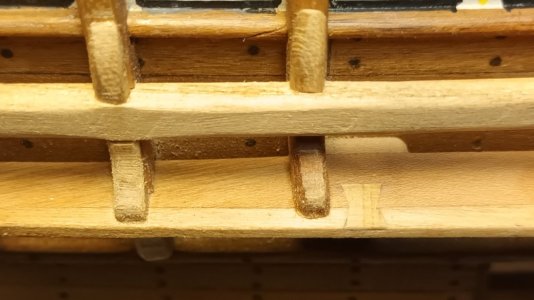
Now for the outer standards (a sort of extra frames as additional support for the rearcastle), quite a job of fitting and measuring...
20240901_093653_1280.jpg


dry fit
20240901_193341_1280.jpg


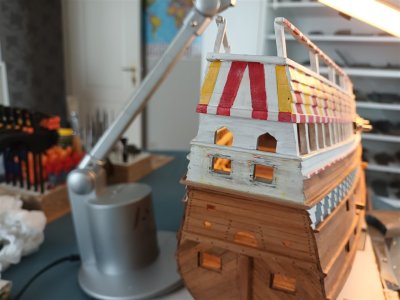
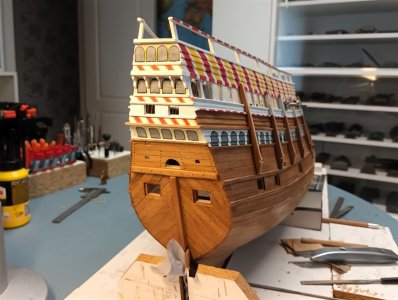
The color scheme on the transom just isn't working out. After 3 different schemes that didn't work.
A new start, with a schedule that will resemble the Anthony Roll more.
20240830_142512_1280.jpg


20240902_152111_1280.jpg


The fourth attempt will be better...
After adding some extra wale, a sketch was made first.
20240903_093812_1280.jpg


And this is the result, pretty okay I think, after 4 attempts...
20240906_124714_1280.jpg
 
Back
Top