• SUBSCRIBE TO SHIPS IN SCALE TODAY!

    The beloved Ships in Scale Magazine is back and charting a new course for 2026!
    Discover new skills, new techniques, and new inspirations in every issue.

    NOTE THAT OUR NEXT ISSUE WILL BE MARCH/APRIL 2026
  • Win a Free Custom Engraved Brass Coin!!!
    As a way to introduce our brass coins to the community, we will raffle off a free coin during the month of August. Follow link ABOVE for instructions for entering.

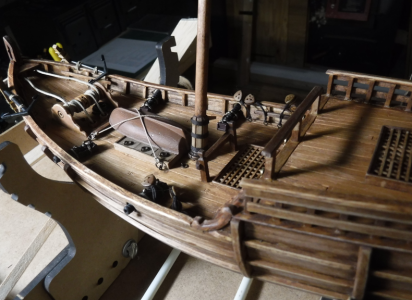
Pinta Caravel 1:65 by Amati - an End of Build Log

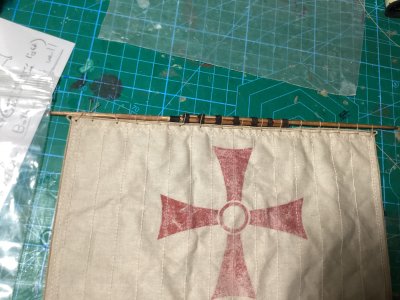
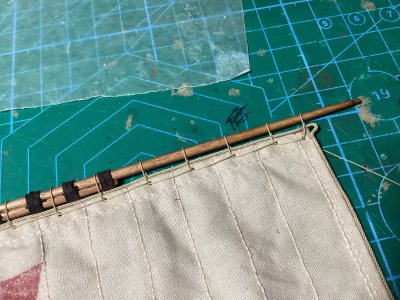
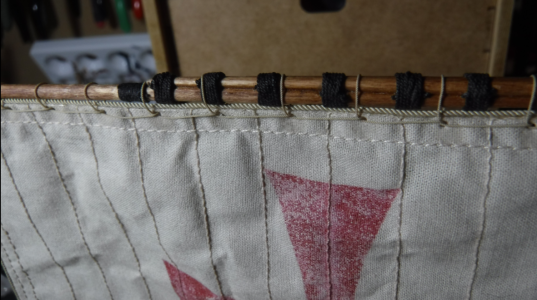
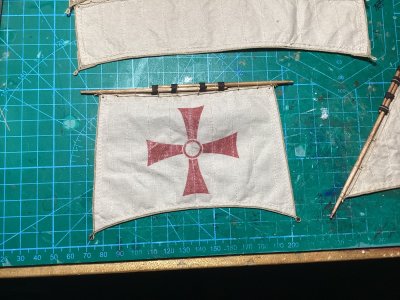
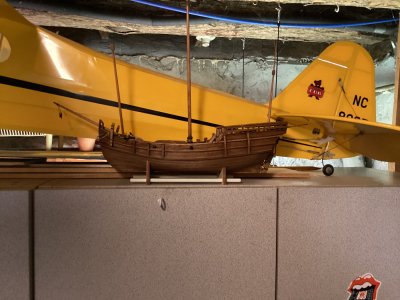
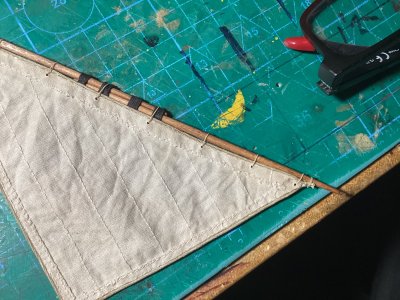
Ok - finished roping the foresail (spar shown for reference) ...
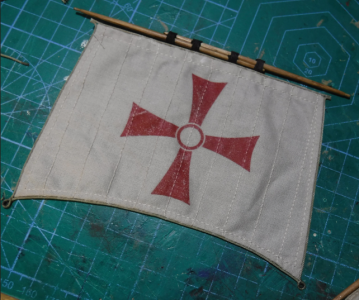
1778769738604.png

Working out how to make the main sails now - no instructions.

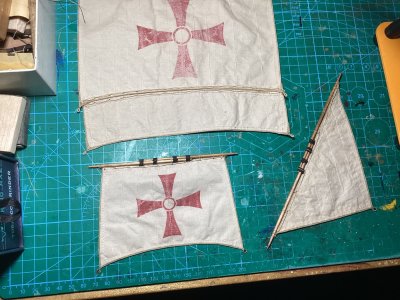
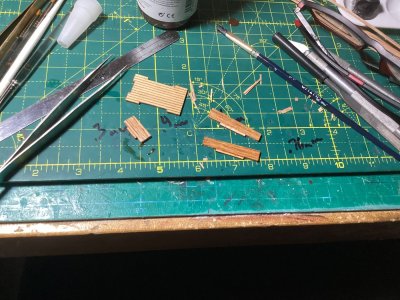
Here's the plan. With no reference to there being 2 mainsails.
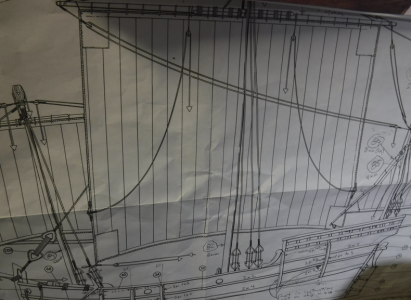
1778769833113.png


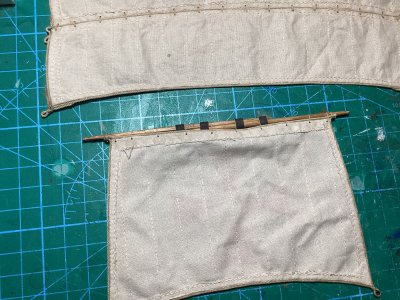
Here's the kit mainsail on the left - showing a line drawn where the 2 mainsails would meet up. And on the right, the 2 new mainsails.
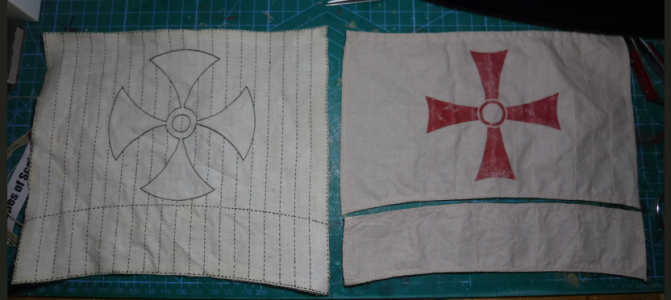
1778769864244.png

What I need to determine, is how to mate up the 2 pieces of the mainsails?
  1. Glue the mating edges together.
  2. Stitch the mating edges together.
  3. Glue ropes to the mating edges and glue the mating ropes together
  4. Glue ropes to the mating edges and stitch the mating ropes together
  5. Glue ropes to the mating edges while also putting thimbles in the mating corners - and stitch the mating edges together while also strapping the thimbles to each other at the 2 mating corners.
Favoring #s 3 and 4. Likely gonna be 4, once I find that I can hand stitch the sails in a presentable fashion. I think I can do that.

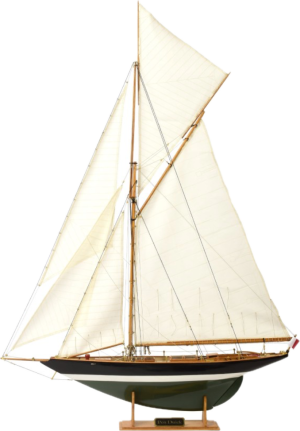
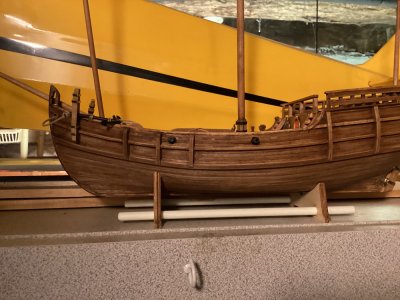
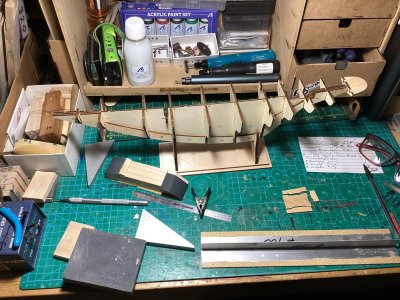
And, a boat pic, just for fun ...
1778769889051.png
Cheers.
 
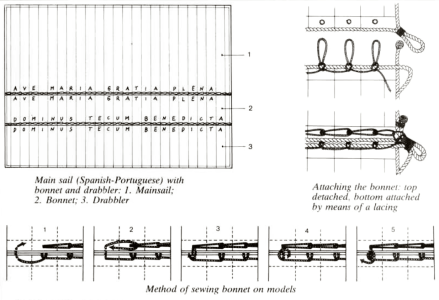
They get stitched together with one long cord, in a way that they can easily be removed. Same as on my Carrack. I'll try to find the info.
 
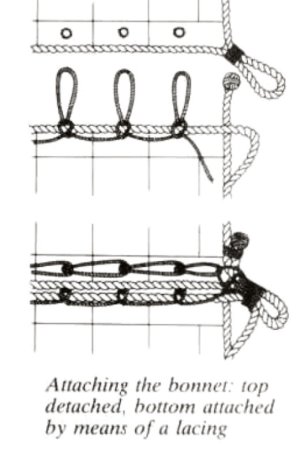
O kay, here's where I did mine on my Ragusian Carrack, and here's the information I used:
View attachment 602948
Thankyou Signet. Was hoping someone would step in. Thx.

And I see that the vertical ropes on each of the sails are knotted to each other as well. So I think I'll put eyes in the vertical ropes at the bottom corners of the mainsail, and knot the vertical rope of the mating lower mainsail into those eyes - almost just like your pics. While stitching the rest of it.
 
Thankyou Signet. Was hoping someone would step in. Thx.

And I see that the vertical ropes on each of the sails are knotted to each other as well. So I think I'll put eyes in the vertical ropes at the bottom corners of the mainsail, and knot the vertical rope of the mating lower mainsail into those eyes - almost just like your pics. While stitching the rest of it.
Yeah, it's a neat stich and detail. Almost a shame it doesn't show up more when done.
 
Whoops - I added a line of text, and half of my thread disappeared - didn't realize it until I'd already pressed save as that part wasn't visible to me- so - since I don't know how to delete a thread - this remains here, until I get over this, and return, and fix it.
 
Last edited:
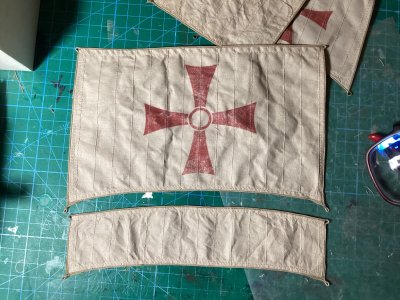
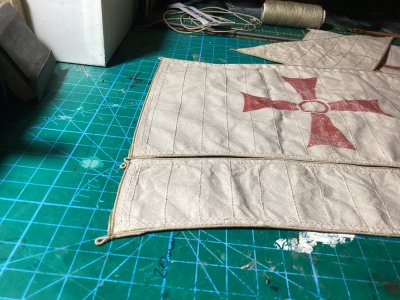
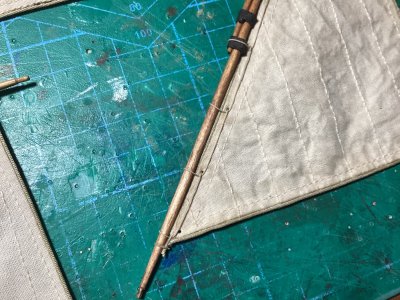
Boltropes finished on mainsail and bonnet, except for mounting the bonnet to the mainsail.

Gluing ropes to the edges of cloth ... was something different. Used undiluted (for the better tack) PVA called Lineco. Dries flexible. The hardest bits were the bottom concave bits ... as tightening one part would pull another bit away from the sail. But it did work. And left hardly any visible glue.

IMG_6815.jpeg
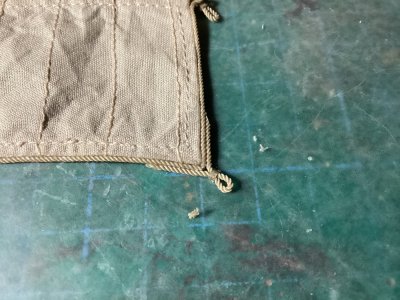
I put earings on the tops, the same way Signet did, and clews on the bottoms.

IMG_6809.jpeg
This rope gluing technique worked well. Looks clean.

IMG_6812.jpeg
The mainsail clews will get pulled through the bonnets earings and lashed.

IMG_6808.jpeg
I seized the clews and then glued em to the boltropes.

Maybe on some future model, I will sew ropes to the sails ... instead of gluing.

Now I need to attach the bonnet to the mainsail. Gonna want some lashings to show for that, wont just glue em together IOW. Maybe do what Signet did.
IMG_6822.jpeg

But likely do something simpler. And maybe something that hangs the bonnet from the mainsail rope, instead of hanging the bonnet from holes in the sailcloth.

I will probably just loop a lashing around both ropes.

Cheers.
 
Last edited:
It was actually easy and fun to do. And accurate, so....
The historical accuracy is appealing. I'm guessing it was done this way, because ... to remove the bonnet, it can be pulled from the mainsail after releasing the final end loop ... which releases the next loop, which releases the next loop, etc. Must be why they did it like this. It can be unzipped, more or less. Should the wind suddenly pick up such that it's putting the mast or rigging at risk. Just pull the bonnet off. Takes some time and effort to mount the bonnet - but there's no hurry when the wind is so low you'd want to mount the bonnet.

I just don't enjoy thinking about the effort it will take to sqeeze each loop tight enough to get it through the tiny holes in the bottom of the mainsail. Or the work to create all those little loops in the bonnet.

Versus spiralling a thread around both ropes from one end to the other. Which although it doesn't provide historical accuracy, using thread instead of glue does provide some historical ambiance. Dunno yet.

Oh geeze ... I think I've seen sacking tied like this as a kid. Where once you got the one end loose, you could just pull it apart.
 
Last edited:
I just don't enjoy thinking about the effort it will take to sqeeze each loop tight enough to get it through the tiny holes in the bottom of the mainsail. Or the work to create all those little loops in the bonnet.
You don't push the loop through the hole. The loop gets created by the stitching. No holes required, just thread on a needle. (Of course the full size sail had holes, probably grommeted, because they did it multiple times). It looks really screwy, and difficult, but taking it a step at a time it's easy. It does/can take a while to figure out, though. ;-)
 
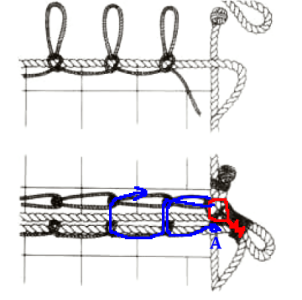
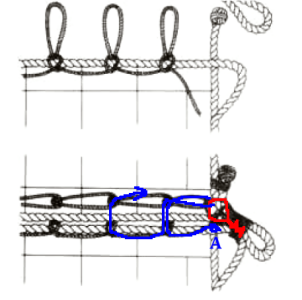
I should clarify:

1779587543135.png

The red loop is made at the corner. On the full size ship, this is easily untied.

Starting at A on the bonnet (lower part) tie the thread, go left and through the bonnet, then up and back into the sail, then over to the right, looping around the red loop, then back left and through the same hole, down to the bonnet and up through the same hole, then to the left, and repeat.

When done, on a MODEL, untying the red loop, disconnecting the rightmost blue loop, disconnects the next, etc. If you pull this all down, you will have the condition shown in the upper image. On a REAL ship, putting it back on would involve putting the loops through the enlarged holes in the sail with grommets, and looping each loop to the loop on the left, then moving right. Feel loopy yet? On a MODEL, this would be very difficult. But it's easy creating it in the first place.

Hope this helps. Either way, time for a stiff drink!Beer
 
Thinking about putting this aside for a bit, for the fourth time, and getting this ... https://artesanialatina.net/usa/en/62507-pen-duick-french-cutter-1-28-wooden-model-ship-kit.html.

1780669302535.png
  • It is at a scale I prefer to work in.
  • The instructions leave nothing out, even showing how to sew sails on.
  • And for rigging, I prefer thorough instructions.
  • Also, this is a true model of a real boat, where the Pinta is an imagined model of a boat about which we really only know the name and general origin. So nobody really knows what goes where.
Likely gonna do this today.

I'll likely return to the Pinta after completing the Pen Duick.

Thx for the help guys.

And yeah - I placed the order.
 
Last edited:
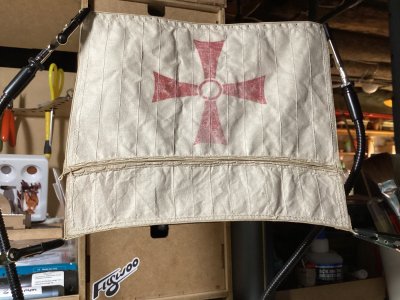
So, while waiting for the new kit, I did some sewing today.

And I punched a bunch of 0.5mm grommet holes in the bonnet and mainsail.

But only after I'd stiffened the sail cloth with some Lineco/water at 75/25, and glued the two sides of the hem together in the process.

After that, I punched those holes.

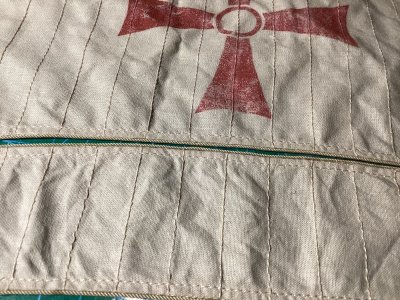
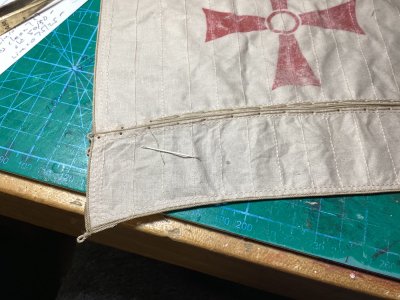
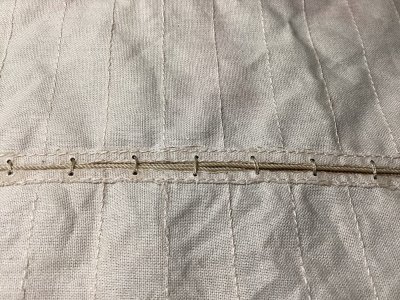
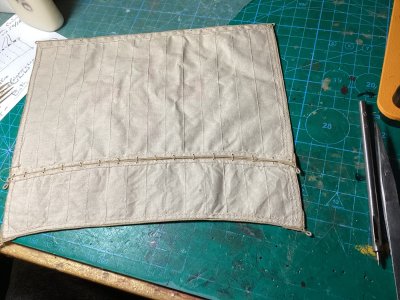
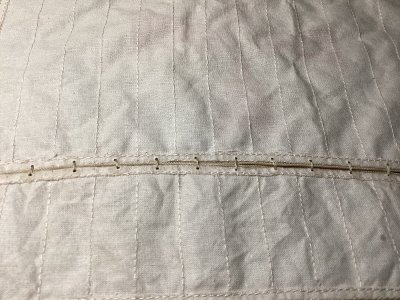
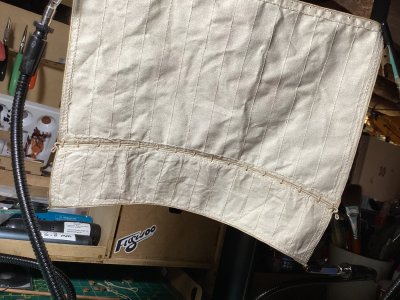
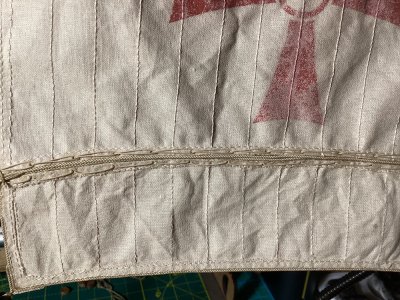
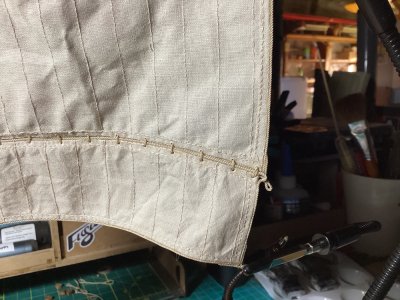
And sewed (most of) the bonnet to the mainsail using Signet's technique.
1780777737485.png

But, I ran out of thread, plus I think a darker and less shiny thread would look better ... so, I am likely gonna rethread it. Wasn't hard, what with all the pre-punched holes.

IMG_6850.jpeg
When one runs out of thread, I suppose one ties more thread on and keeps on sewing. But I am gonna use diff thread so ...

IMG_6852.jpeg
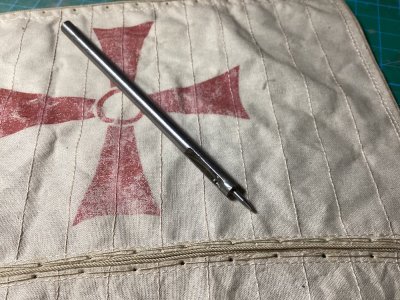
Closeup of the sewing, along with the hole punch I used.

IMG_6854.jpeg
And the other side. Thread looks too shiny in this pic.

And the whole thing, from the other side ...
IMG_6855.jpeg

IMG_6853.jpeg
Cheers.
 
Last edited:
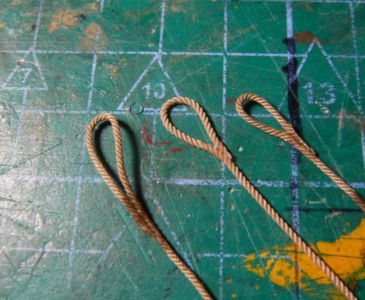
Playing around, trying to see if I could make fake splices, instead of seizing everything.

1780862940797.png

But the process was problematic. As were the results.

Cheers.
 
Back
Top