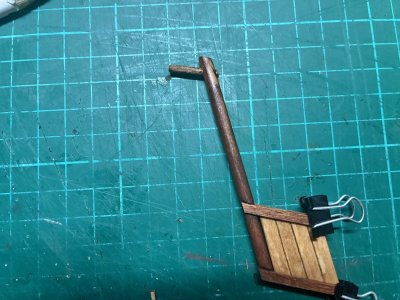
was of the understanding that any finer than 180 would make it more difficult for the wood to absorb the stain, resulting in splotchiness. I did plan to sand further after staining, going to either 320 or 400. Do you suggest I get it down to 320 first, the stain?
Ah, now, the thing is, you need to know what the end result is before you begin. A bit like your scratchbuilding.
‘We’ have been finishing wood (that is -applying a finish to wood) since wood was invented. Even if that finish is just the polish on a well used axe handle brought about by the burnishing and sweat.
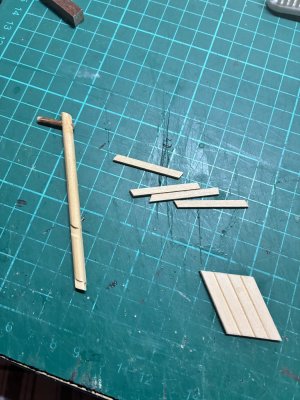
The timber you show has some character brought about by what could be a knot on an adjacent plank we can’t see. If you apply a stain to end grain more soaks in and it looks darker than the same stain on long grain. Uneven absorption is what you describe as ‘blotchy’ it can happen anywhere the grain is rising or falling from the surface, if you saw out a plank rather than using riven straight grain timber then stain will be blotchy. What can we do?
No stain.
Apply paint (or another surface film)
Seal the timber?
From here, I can’t possibly give good advice. If I had this problem, then I would apply a sealing coat of shellac, then use a water based colouring agent (I try to stay with van dyke crystals) you want a colour that is transparent to allow the grain to show.
The clever bit here is that if the colour goes wrong, you can wipe it off, as shellac is a spirit base, and it prevented the stain from staining the wood.
An alternative, depending on what colour you are chasing, is to use a darker shade of shellac - but be sure and do the seal coat in case it has to come off with alcohol.
Incidentally, if you spray a mist of clear alcohol onto unfinished wood it will, for a couple of moments, look approximately like the polished item, or varnished if you are thinking of varnish or lacquer.
Now to the preparation of the substrate. How do you want the surface? Smooth to touch? Glasslike to touch and see your face In the reflection?
Your comment about 180 grit being ‘enough’ is correct.
Correct for an oil or varnish finish, or any other film really. If you are heading for a glass like finish though, then go finer. The thickness of the final layer will be a few thousandth of an inch, so the ‘scratch marks’ left by the last grade of abrasive will telegraph to the surface and continue to show. Your top layer needs to fill those marks in. A lacquer would go on and do the filling whilst thickening the top coat, then you need to abrade the high spots to get an overall flat surface. In essence, you coat the work with a thick film, then rub/cut it back until it is even and glasslike.
Shellac redissolves with alcohol, and the ‘French polishing’ process both applies more to the hollows whilst removing the high spots. You are in control, whereas an acid catalysed lacquer will set permanently, and you are obliged to use abrasives, and polish out the surface, making dust and such.
For myself, if the substrate is a hardwood capable of being polished down to fine grits, I go that way, and apply a transparent film (shellac for me!, though I like oils, though they need many, many coats.)
Conclusion: we’re all right, (correct). and we observers could be all wrong because we are not able to see and feel your timber, and exchange ideas back and forth over a tea, coffee, or around here we might all go to the pub and enjoy a pint and a reet good natter.
As I said up top, first decide what the end should look like and feel like. And make some test pieces to give yourself knowledge of what will happen when you apply stuff to the actual subject. Practice is the key to happiness!
J












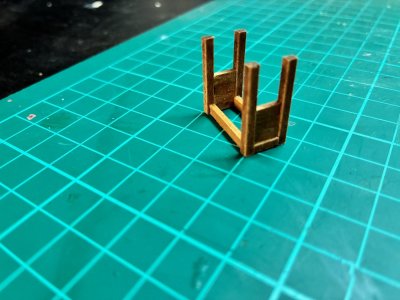
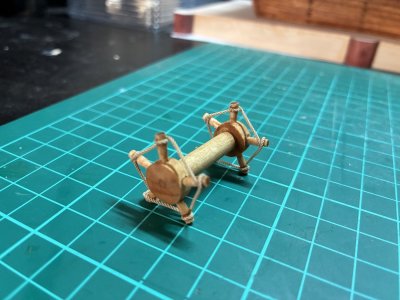
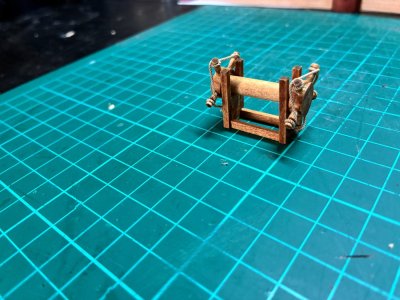






 s away!