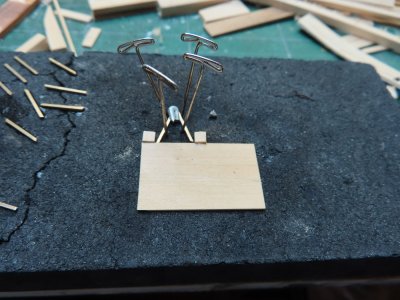
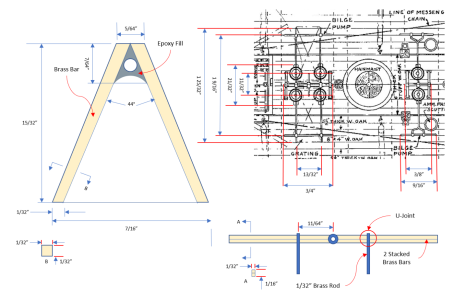
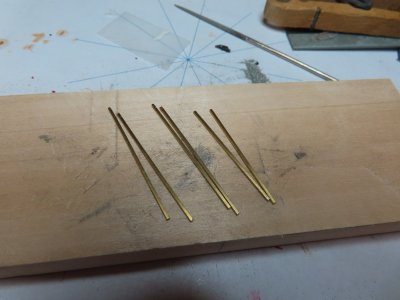
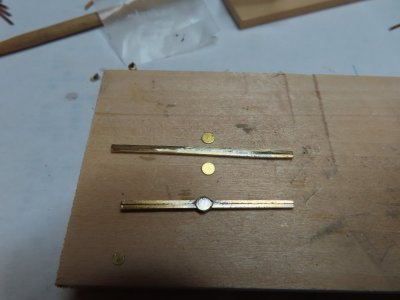
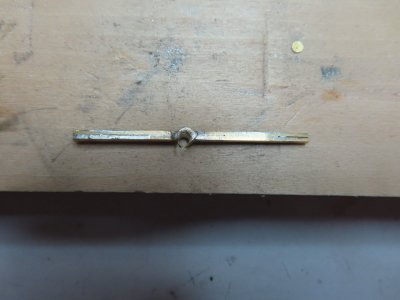
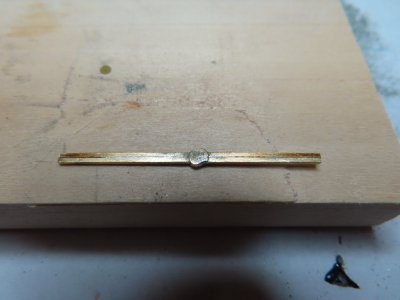
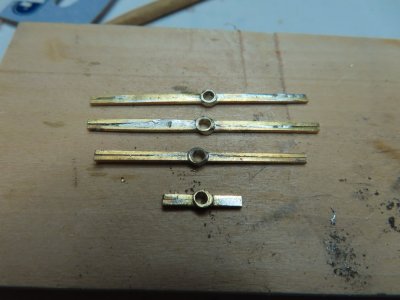
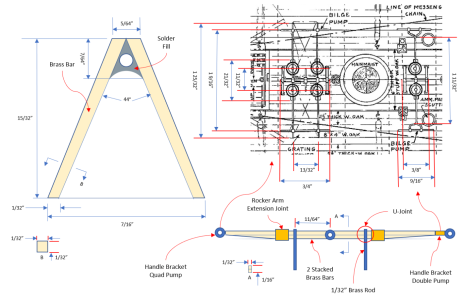
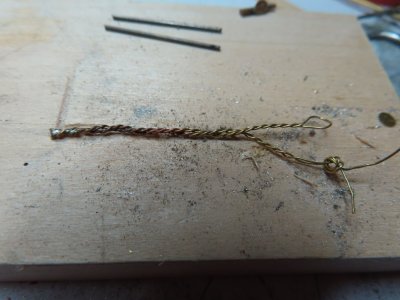
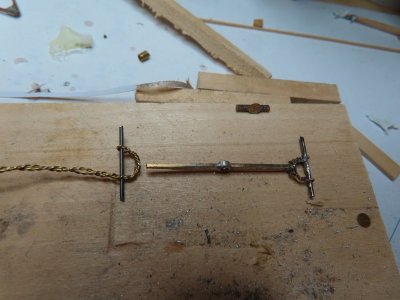
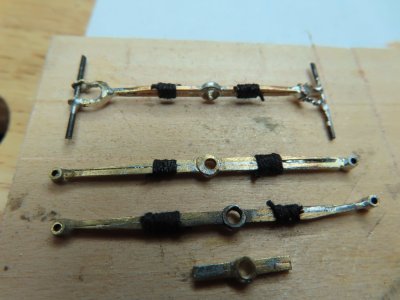
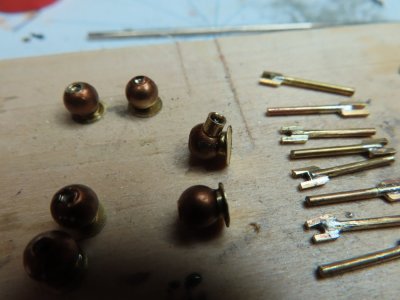
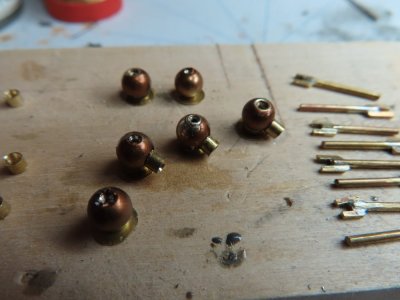
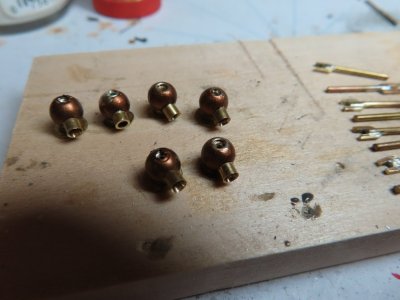
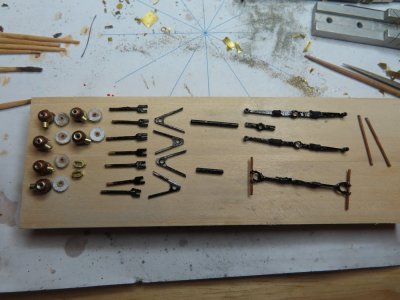
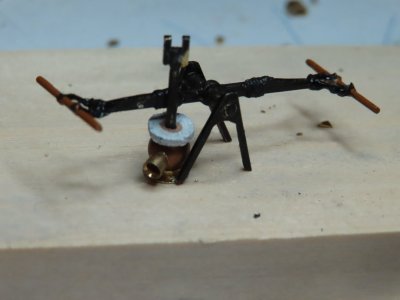
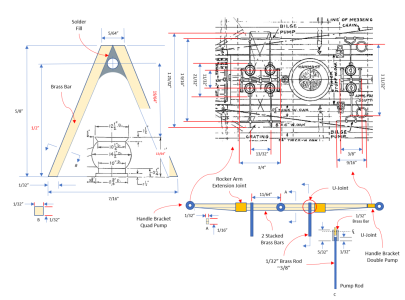
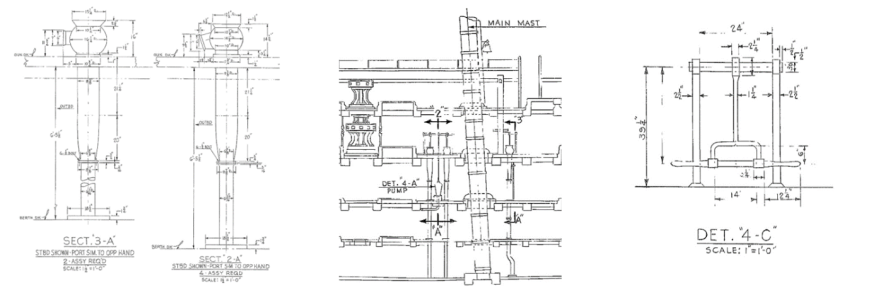
My first attempt using the epoxy method was a failure...not due to my concept but seemingly due to the epoxy. I made a very simple jig which was laid on a piece of wax paper. The wax paper prevented the epoxy from sticking to my work bench surface and it would easily peel off the fastened joint. After the epoxy set after six minutes as indicated by the epoxy instructions, I had expected the epoxy to be rigid. Instead, it was like a slightly flexible hard rubber. The epoxy did not adhere well to the brass pieces. The brass legs were easy to pull apart from the epoxy. Even after four hours, which the instructions stated were needed to cure, the epoxy remained flexible. Maybe I had the wrong type of epoxy.
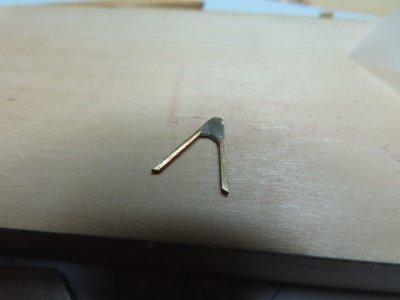
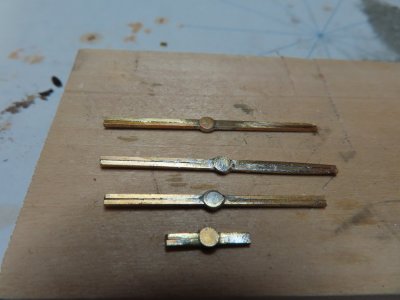
My second attempt was with the glazing putty. This actually work somewhat. However, the putty shrinks as it sets up after about a half hour, so that the web in the A-frame apex had a concave surface and thus additional putty would be required. On the plus side, trimming the excess dry putty was easy and quick.
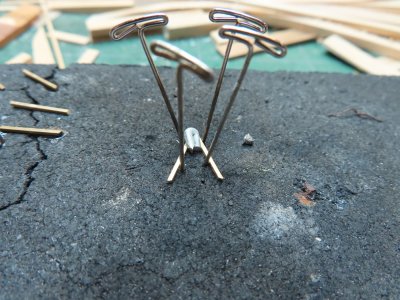
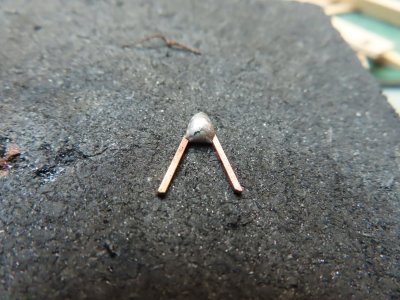
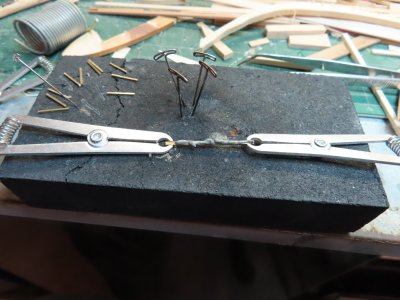
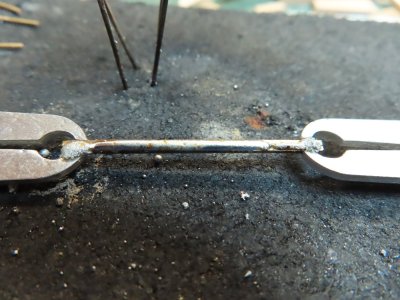
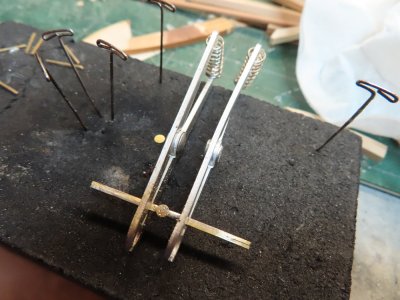
My last attempt was with the silver solder. It worked. I had to condition the bras pieces with acid to clean the surfaces and work off a heat-resistant surface. Trimming the excess solder with a hand file was a bit more tedious. As a bonus, the solder apex web appears to be strong enough to have a hole bored through it for the axial, which I not sure the glazing version could do.
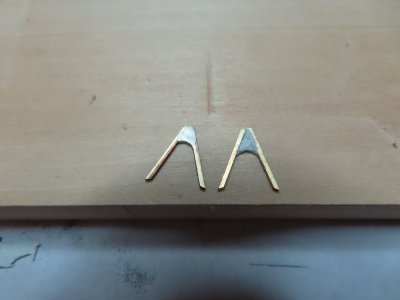
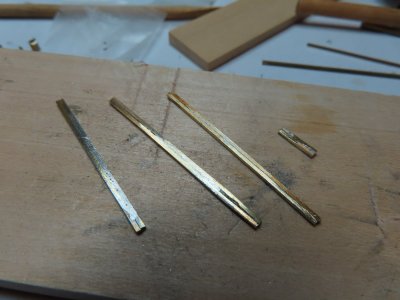
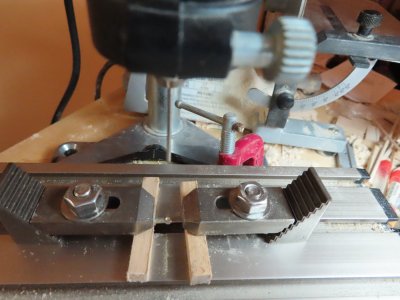
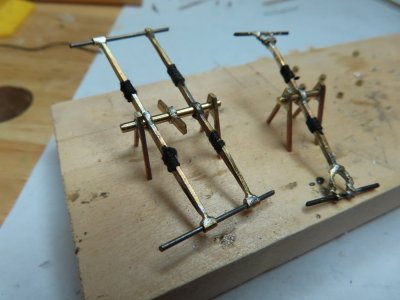
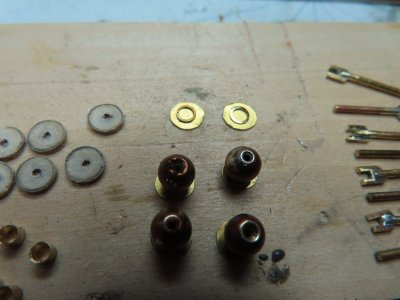
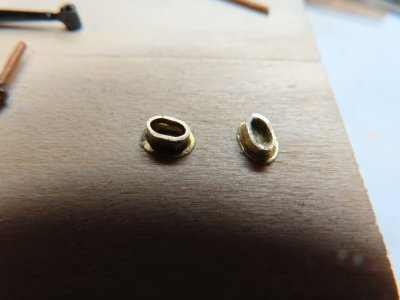
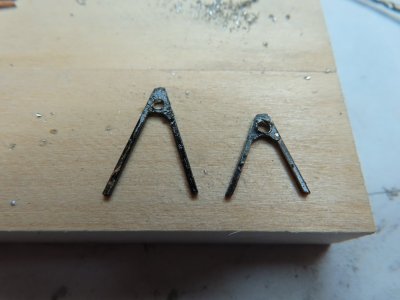
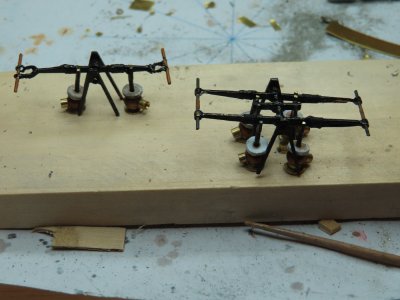
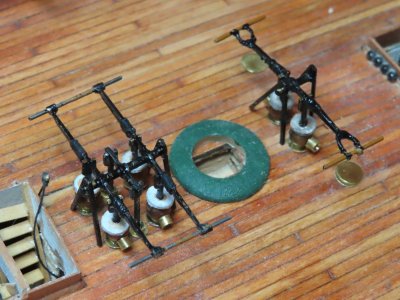
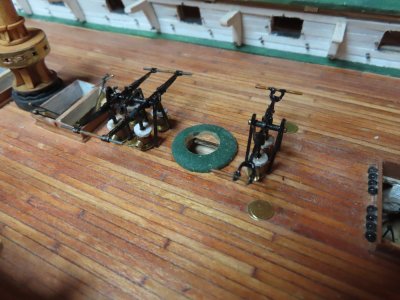
In the photos below, is the set up for the solder process. The wooden jig is removed of course before I hit it with the torch. The last photo shows the comparison between the soldered version and the glazing version after I trimmed off the excess materials. I’ll redo the glazing version with solder. One down, 11 more to do.