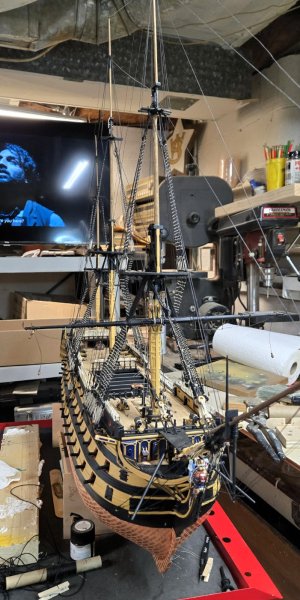
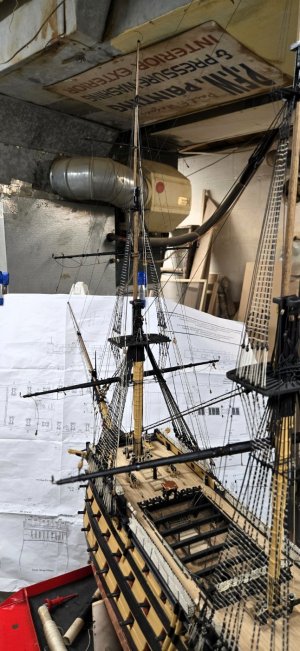
Earlier I had stopped work on the boat to concentrate on make the yards. As posted, it is a very labor intensive, high learning curve task.
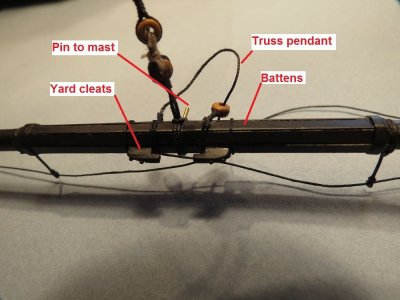
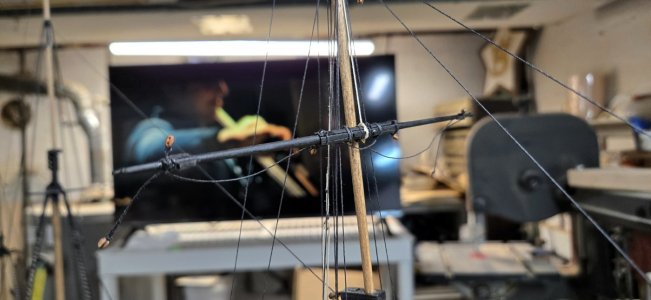
Using my drill to help sand and shape the yards, adding the additional planking to create the octagonal shapes, the supports for the horses, cleats, blocks and more.
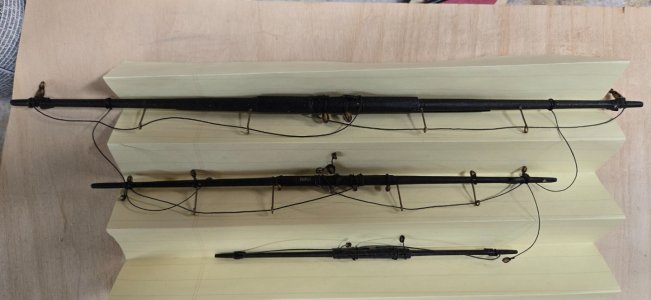
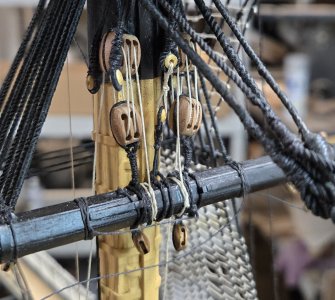
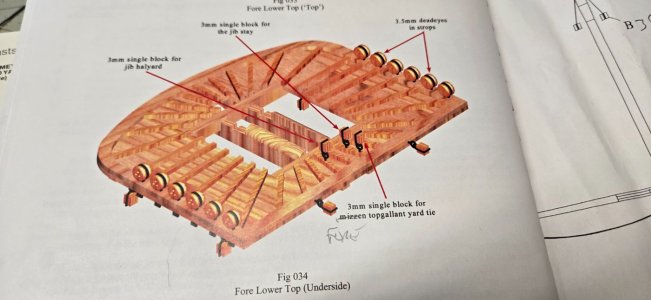
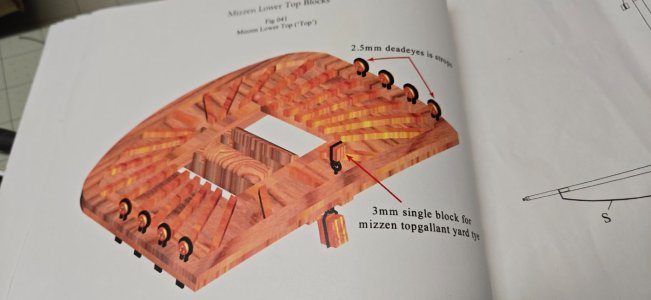
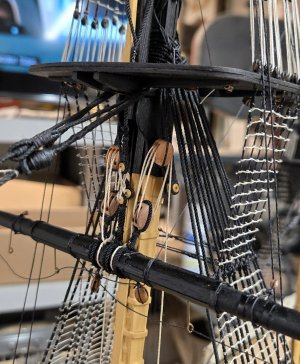
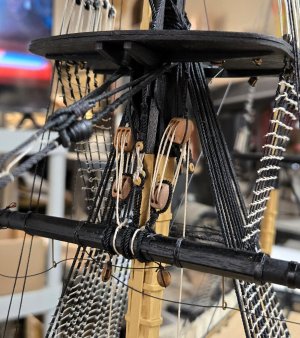
I thought I was done but realize in the steps after doing all of the standing rigging (fore and back stays, etc) there are more blocks and jeers than have to be added that help manipulate the yards once they are rigged to the mast.
All of these blocks are associated with running rigging that would used to adjust sail angles when sailing.
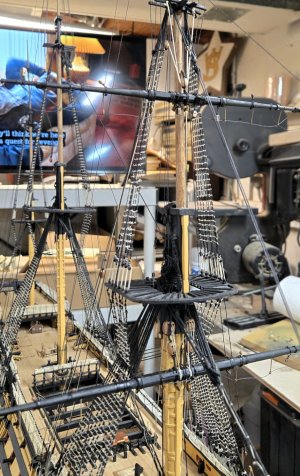
Getting the yards ready is VERY labor intensive. There are so many new blocks that need to be added, you have to create the parrels for the upper yards so they can slide up and down the mast and rig all of this while the standing rigging and shrouds are
IN THE WAY!!!!
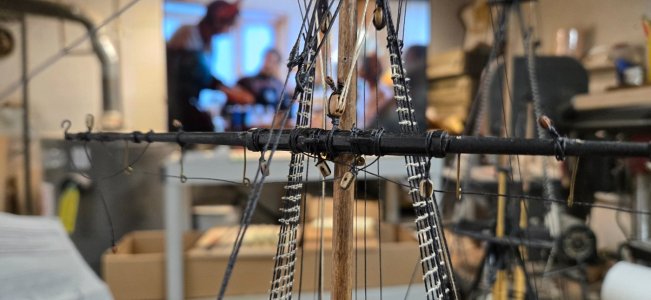
I had finished (as best as I can) the fore main yard and began working on the foretop mast yard (the next in line).
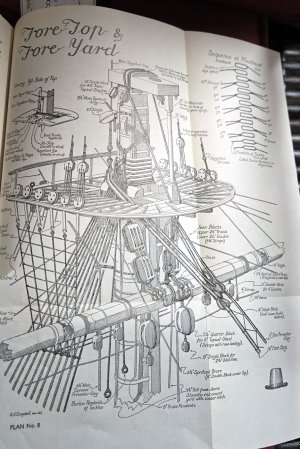
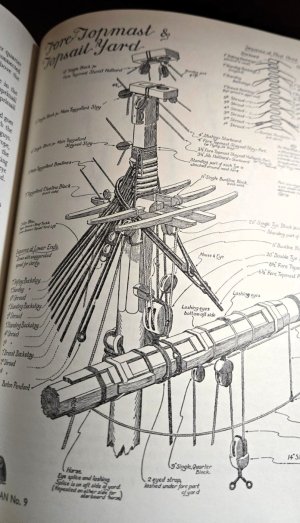
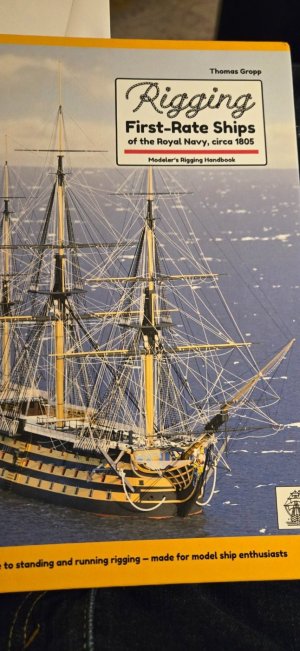
The instructions can be very daunting and I relied heavily on Longridge's diagrams to get an idea of what I need to do.
I also ran out of nice quality 7mm single blocks and was forced to use the clunky square kit ones. I have more on order from Dry Docks. Sadly as a US citizen (NOT in favor of much of our current administration's actions) I was forced to pay duty for the first time. It was only about $10USD on a $50 order and it is what it is, but a sign of the times!
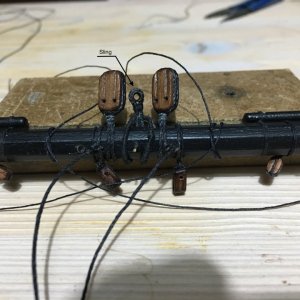
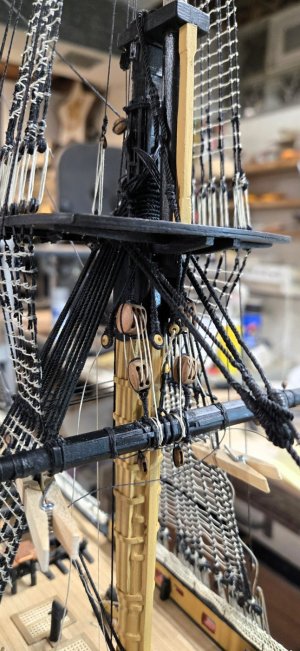
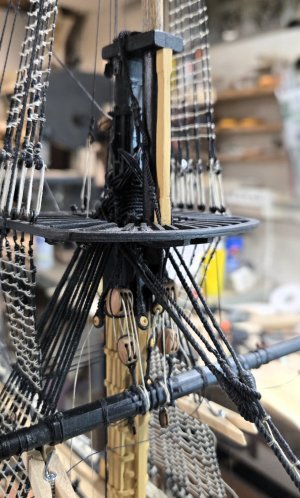
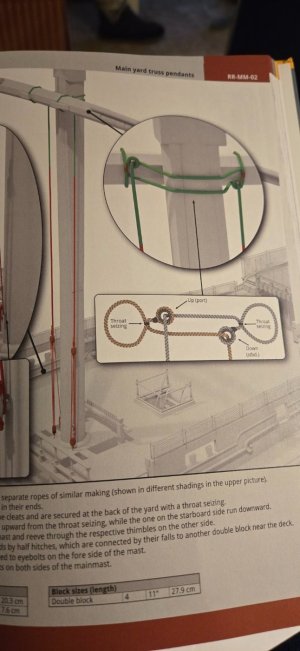
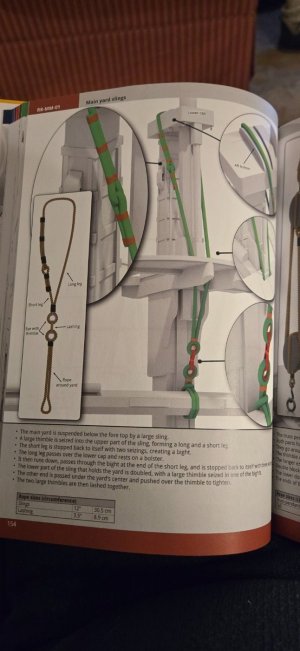
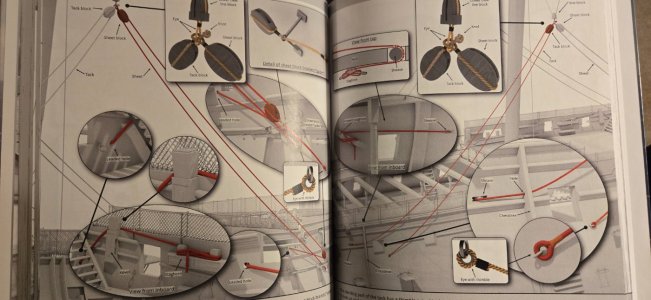
It took a while to sort out just how to rig the slings to the trestle trees, the blocks on the yard and the blocks that secure the tyes to the deck.
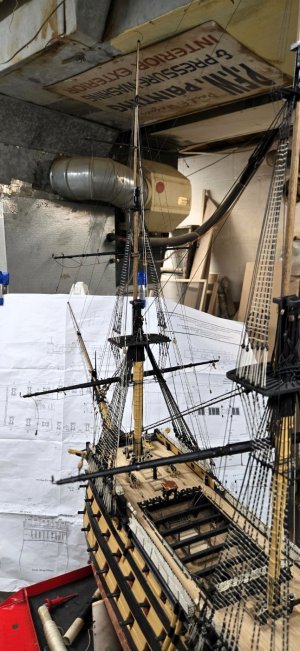
I was forced to lay out three different sets of blueprints to get an idea of what was what.
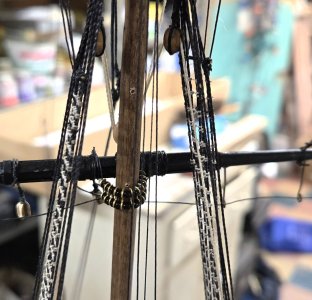
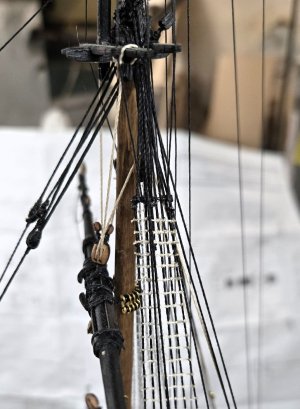
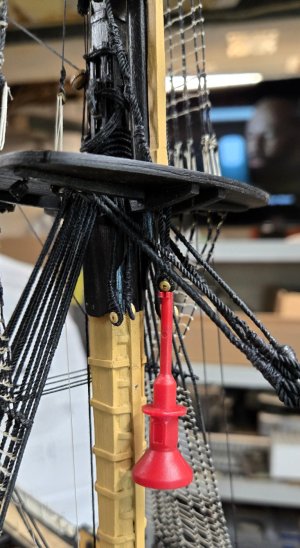
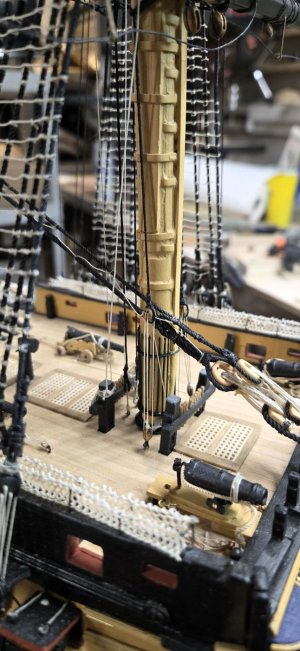
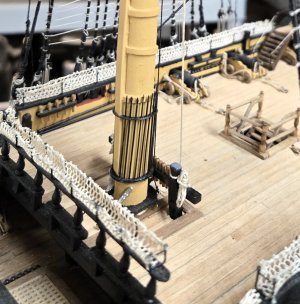
You also have to use the kit's cast pieces for the 'trucks'. These are just tubes that allow the tye to slide up and down using a backstay to hold the truck secure. The problem is I didn't put the trucks in place while installing the backstays. In fact looking at the instructions, there is no mention to do that.
The problem is the cast trucks are round tubes and way too small to cut a slot into them so you can fit lines through them. Also....I lost all but 2 of them!
I had teflon tubing but it was too wide. I ended up using some small brass tubing. It is easy to roll cut with an exacto knife. Then I held it in place with tweezers as I used the knife to saw a slot into it. Once I did that
(BE VERY CAREFUL THE KNIFE DOESN'T SLIP AND CUT YOU) I was able to add the trucks to the backstay. I will add some artificial black thread after to make it look like it's tied to the back stay and paint it black
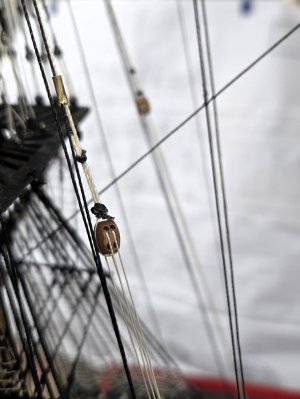
The tyes are natural thread.
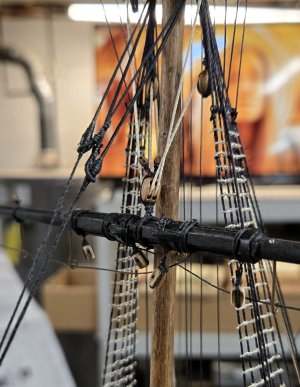
In essence:
- The tye of .75mm natural thread is tied off on the foremast trestletree.
- It goes down to the double block on the yard
- If goes back up to the other side to the single block
- It goes through the truck down to the deck
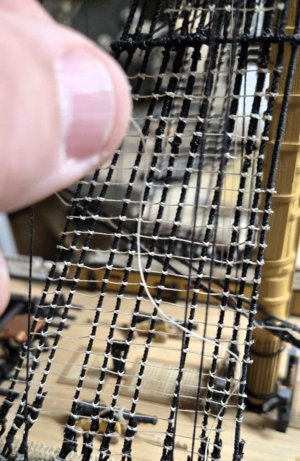
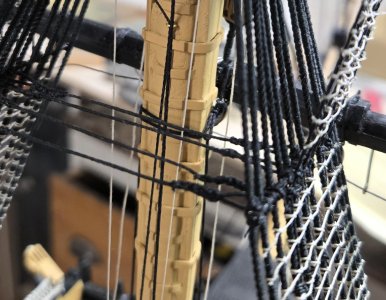
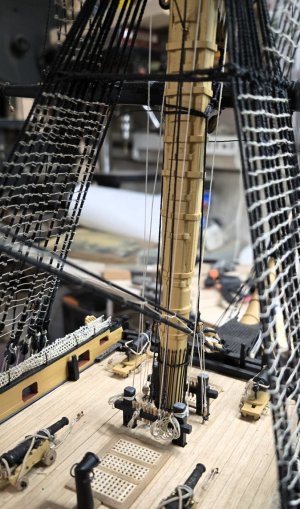
Now, be sure that when you do both that you keep them sorted and clean. I had to redo them a few times so that they weren't tangled up with each other or the other shrouds or backstays. You'll understand that as you do it.
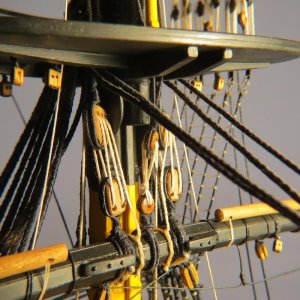
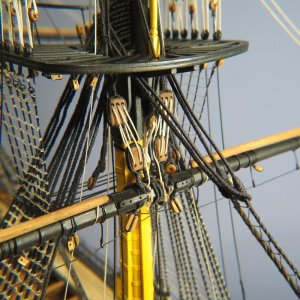
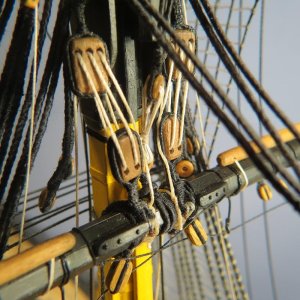
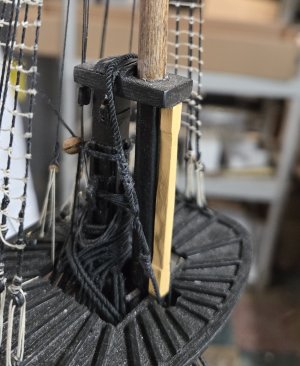
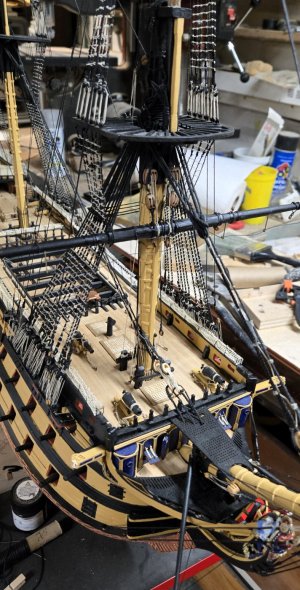
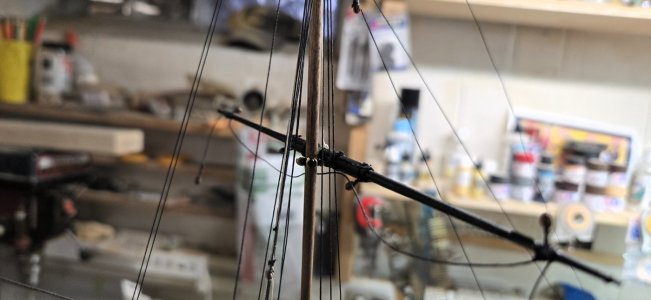
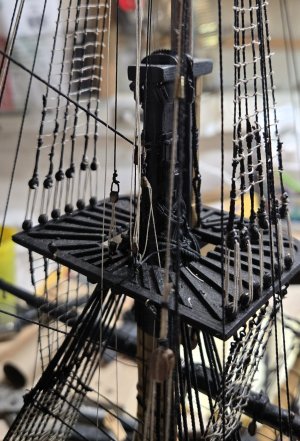
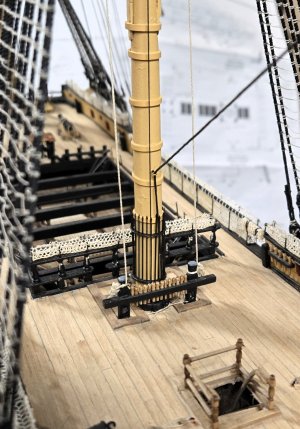
Once done, you have to add a double block to the end of the tye. This would be around the height of the platform...you can kind of see that in the picture above.
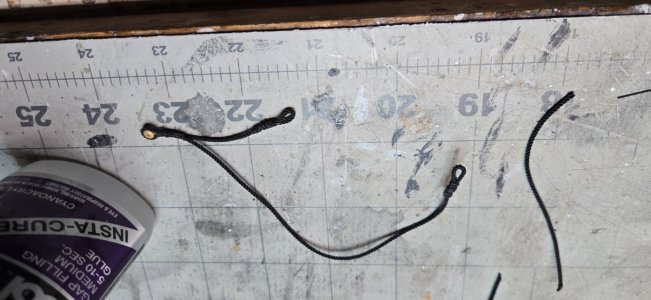
You then make a single block with a black thread to tie to the open eyelet on the channel.
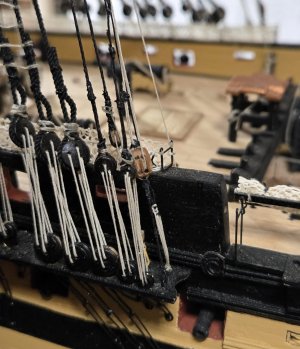
The picture is a bit muddle with all of the rigging. There is an eyelet on the very end. There is a black thread that leads up to a double block....yes, it is supposed to be a single block, I realized it was wrong after I had attached it to the eyelet and was rigging the lashing so I decided to leave it in place. This block also has to have the lashing attached to the end to secure this block to the block at the end of the tye.
When that is all rigged (again, be careful all the lashings are neat and not crossed or tangled), the bitter end will be secured to one of the kevels, listed as b18 on the plans.
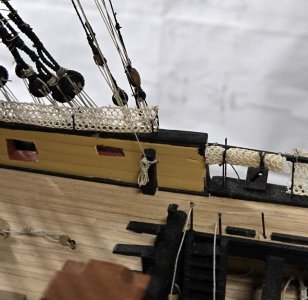
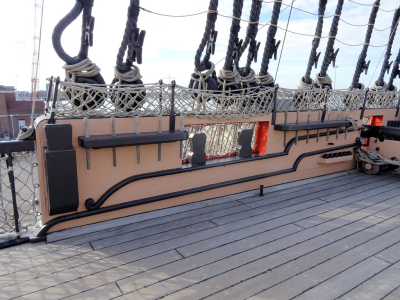
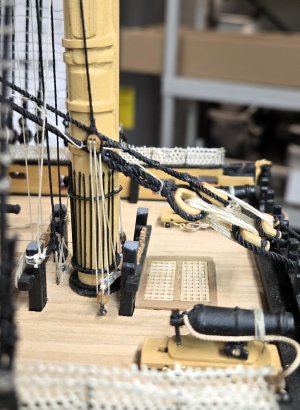
Another flaw in the build, these kevels are glued flatly to the side walls of the deck. There is no space to tie off this line.
So either I did it wrong or I should have sanded the kevel so that there was a space all around it. I was forced to drill a hole from either side to get the line through. That was very hard due to all the other rigging in the way.
After, I made up some coils to glue in front of my work!
Whew!!! That was a lot of work but was actually very rewarding. I mean I still have seven more to go!