• Win a Free Custom Engraved Brass Coin!!!
    As a way to introduce our brass coins to the community, we will raffle off a free coin during the month of August. Follow link ABOVE for instructions for entering.
  • PRE-ORDER SHIPS IN SCALE TODAY!

    The beloved Ships in Scale Magazine is back and charting a new course for 2026!
    Discover new skills, new techniques, and new inspirations in every issue.

    NOTE THAT OUR FIRST ISSUE WILL BE JAN/FEB 2026

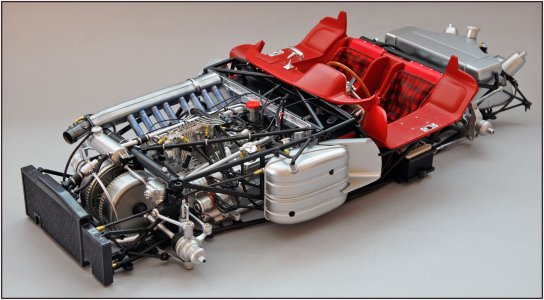
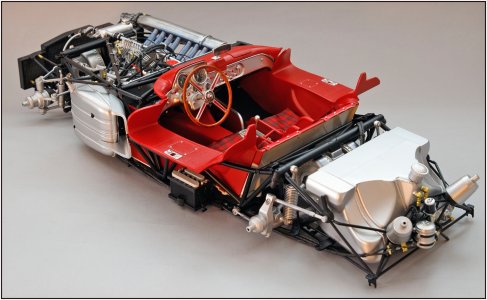
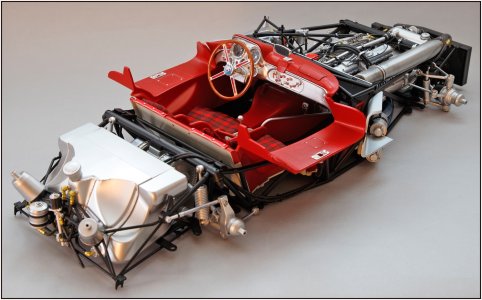
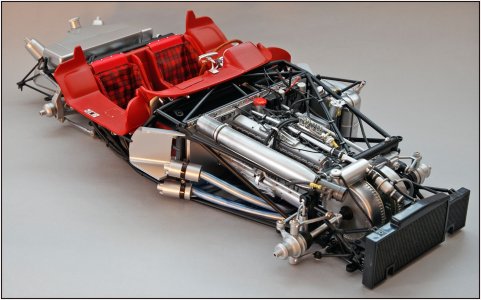
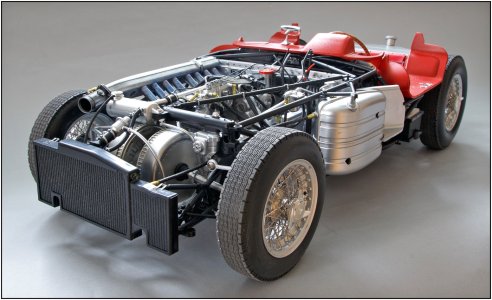
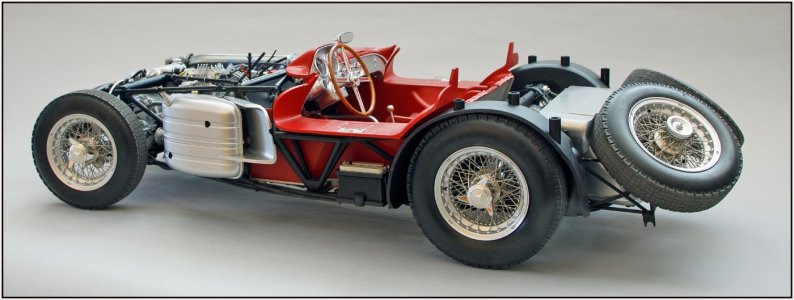
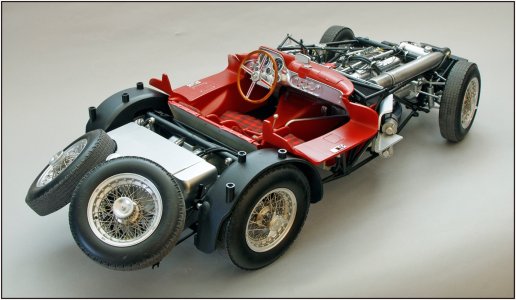
Lemke-LeGrand 1:8 Mercedes-Benz 300SLR Uhlenhaut Coupé GullWing

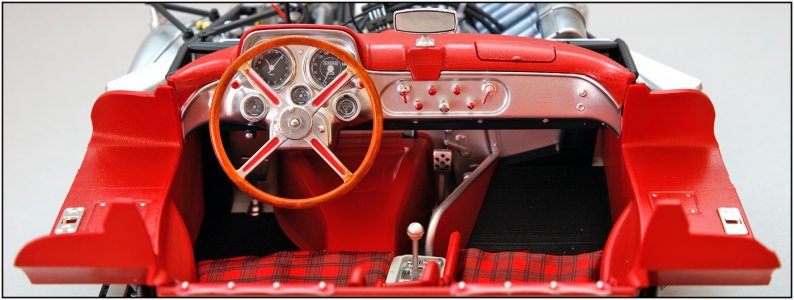
To cover the red parts which simulate leather with real leather.
That’s what also came up in my mind, Maarten. But I don’t know how tight the bodywork will fit around this parts. And there is a lot to be done. Then also the dashboard has to be done.
It's a bit disappointing that Lemke-LeGrand didn't work this out themselves. The older Pocher models did have it to some extent.
Despite all the praise I've given this Lemke-Legrand kit so far, I already have a short list of items in the manual that aren't (completely) correct or that they could have paid more attention to. I contacted them via email about the first one I encountered. I received a somewhat evasive response. That didn't exactly encourage me to share my experience.
It's nice that they've already custom-made the seat upholstery, for example. It's just a bit ‘disappointing’ they didn't properly check the pattern's continuity: the elongated rectangles. It’s twisted crosswise. No, I didn't swap the seats or backrests. The width of the seats and shape of the backrest bolsters are different. If I swap them, the pattern on the left and right seat would still differ by a quarter turn. They themselves have swapped the backrests in the manual of ‘der Blaue’.
Regards, Peter
 
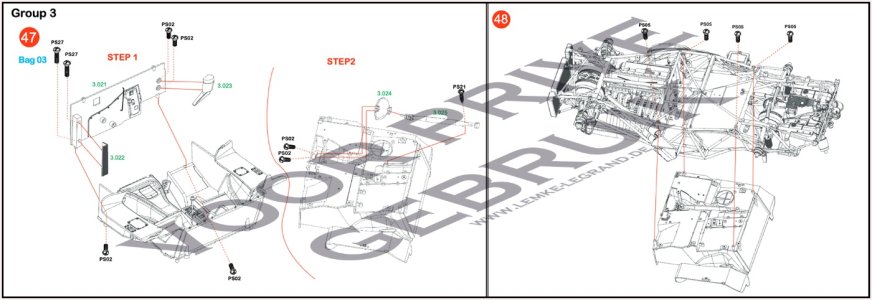
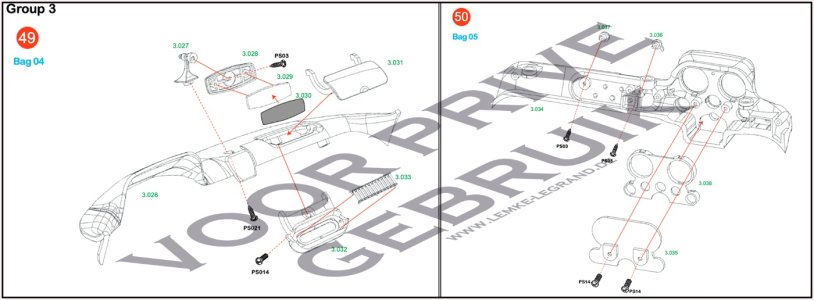
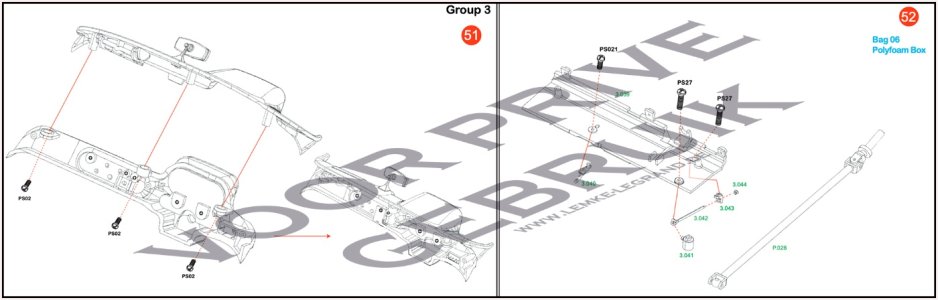
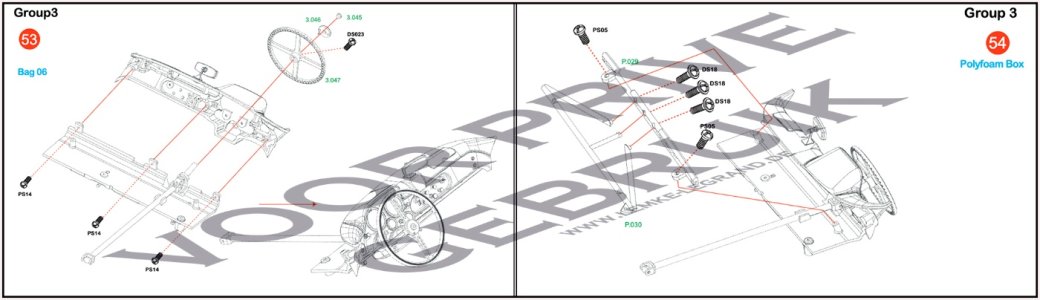
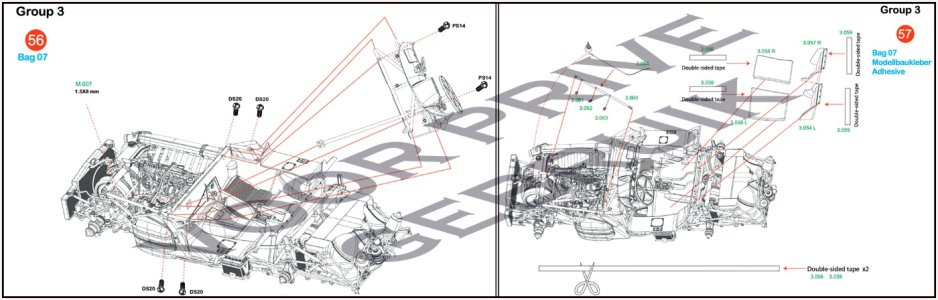
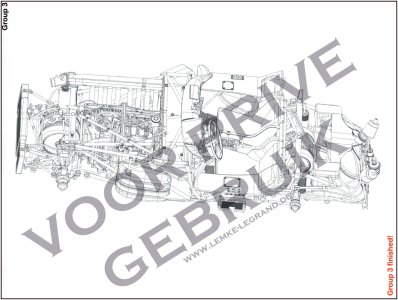
Group 3, steps 47 till 54:
Merging the interior and Dashboard.
091 Group 3, Stap 47+48.jpg
092 Group 3, Stap 49+50.jpg
093 Group 3, Stap 51+52.jpg
094 Group 3, Stap 53+54.jpg

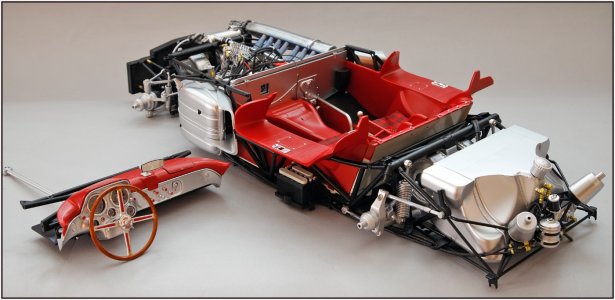
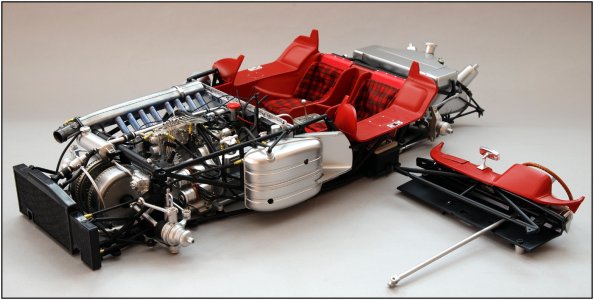
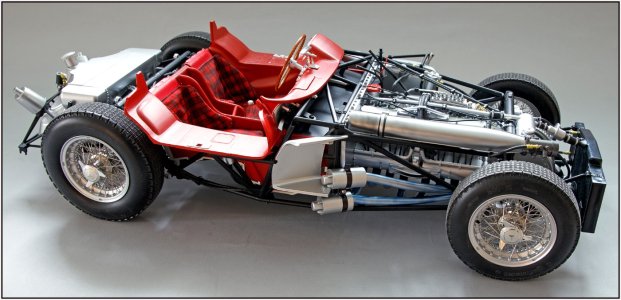
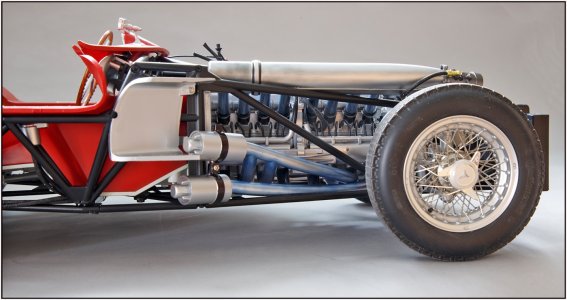
The base of the interior has been placed in the chassis and bolted down:
095 Group 3, Stap 47+54.jpg
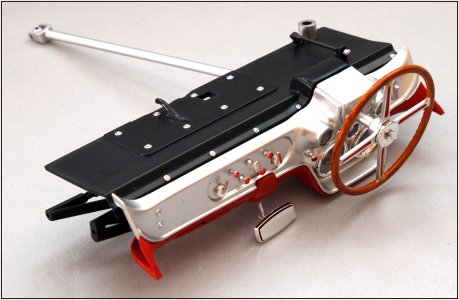
With the modular construction of the dashboard and subframe:
096 Group 3, Stap 47+54.jpg
Where I can't quite follow Lemke-LeGrand's line of reasoning:
097 Group 3, Stap 47+54.jpg
Then they add details to the underside of the dashboard that you'll never see. But I did that myself also with the Duc's too...;) We know it's there .....
Regards, Peter
 
Looks great!
Thanks, Dean.
Pretty cool looking model, Peter! The red will be the perfect foil for the silver.
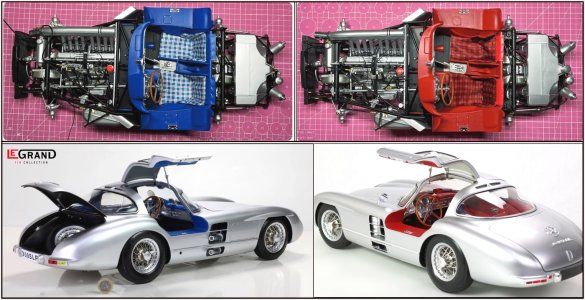
Yes it is, Paul. I liked the red / 'der Rote' more the blue / 'der Blaue'. Her a comparison with some pictures from Lemke-LeGrand:
104 Compare.jpg
Regards, Peter
 
Last edited:
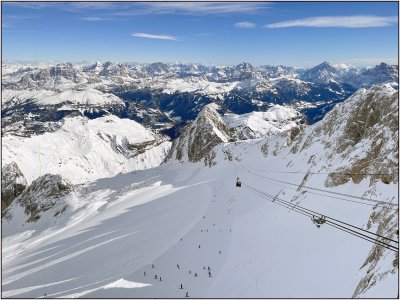
After two weeks in the Italian Dolomites, attending visiting some Olympic competitions and enjoying some skiing, as I showed in my Balder log, I'm still enjoying this view from 3265 meters on the Marmolada:
104a Marmolada.jpg

Back home, not immediately at my work table for the Balder, but cozy with my Admiral at the dining table. She's embroidering, and I'm doing:
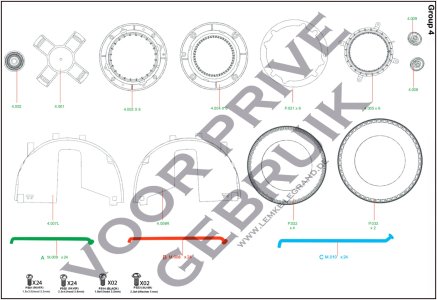
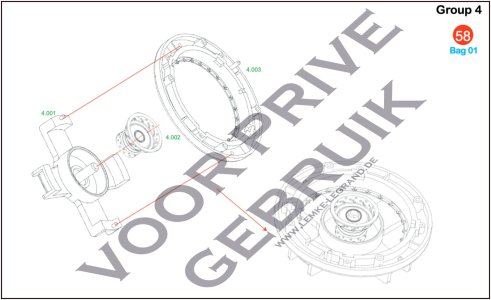
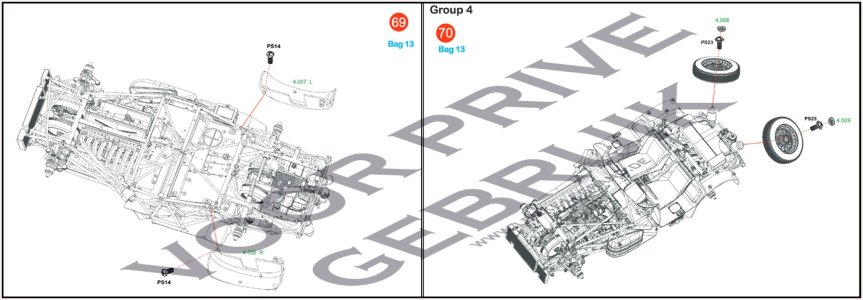
Group 4, step 58:
Spokes for the first wheel. Because this still required quite a bit of study, I took some photos of the intermediate steps.
105 Group 4, step 58.jpg
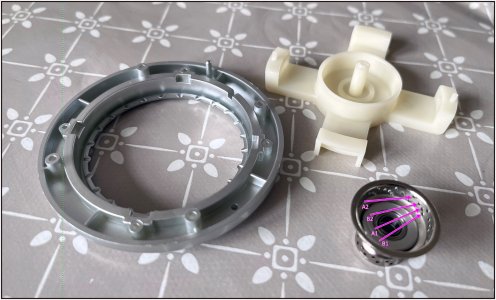
It's a jig on which you attach the first part of the rim and the hub:
106 Group 4, step 58.jpg
On this wide side of the hub, there are 12 rows of 4 holes, diagonally above each other. The first and third will hold the spokes of section B. The second and fourth will hold the spokes of section A.
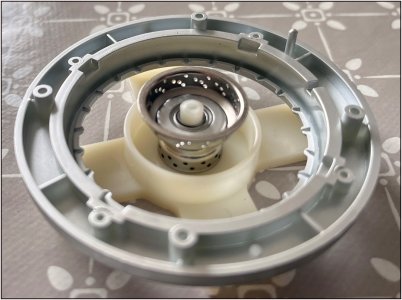
This is what it looks like:
107 Group 4, step 58.jpg
The principle is somewhat similar to that of Pocher's spoke wheels.

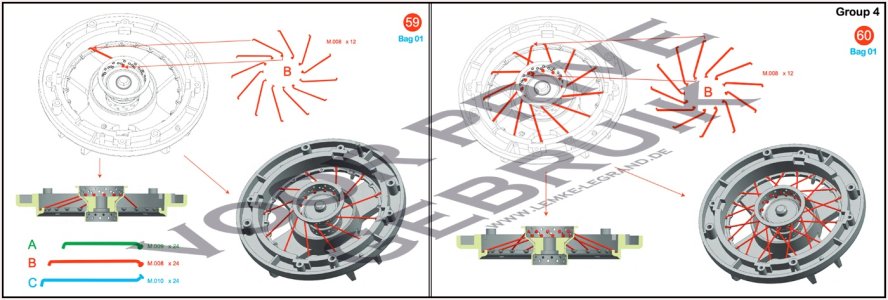
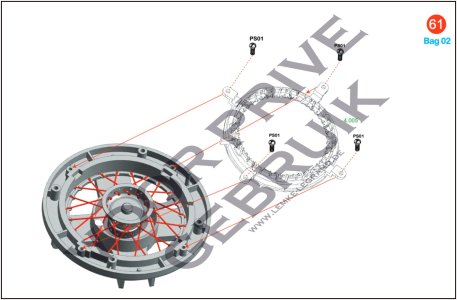
Group 4, steps 59 to 61:
108 Group 4, step 59+60.jpg
109 Group 4, step 61.jpg

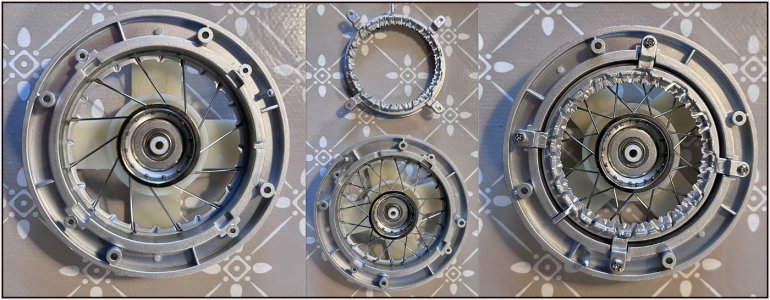
On the left, the first 12 spokes of section B:
110 Group 4, step 59-61.jpg
In the middle, all 24 spokes, and on the right, with the retaining ring.

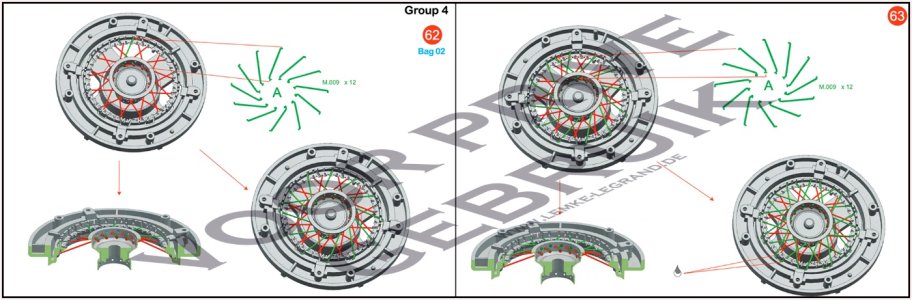
Group 4, steps 62+63:
113 Group 4, step 62+63.jpg
All 24 spokes of section A:
114 Group 4, step 62+63.jpg
The ends of the spokes are loose in the outer rim.

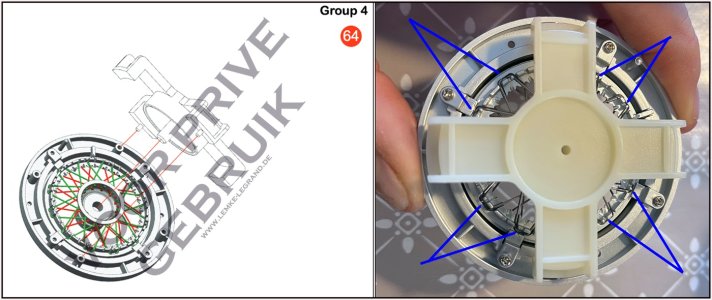
Group 4, step 64:
115 Group 4, step 64.jpg
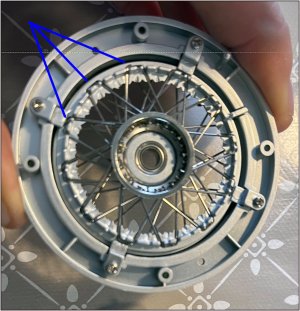
You now have to remove the template from the bottom and place it on top, on the spokes of section A. Then you have to turn the wheel over and continue with the spokes of section C.
When placing those spokes, I noticed that most of the spokes of section A were coming loose, and the spokes became a mess.
So I turned the wheel over again and secured all the ends of the spokes of section A with a bit of CA.
PS: I have no idea why they called the first 24 spokes B and the second 24 spokes A...........

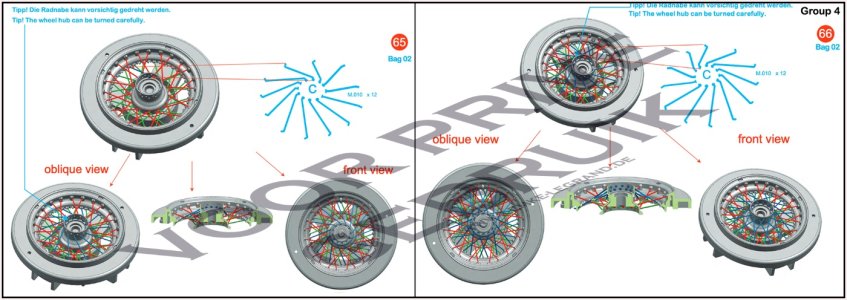
Group 4, steps 65+66:
116 Group 4, step 65+66.jpg
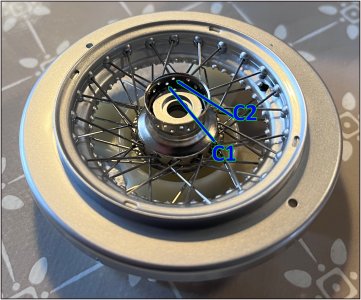
The narrow part of the rim is now on top. It contains 12 rows with two holes diagonally above each other:
117 Group 4, step 65+66.jpg
For the first row of 12 spokes and for the second row of 12 spokes, use section C.

It takes some figuring out and careful study of the Lemke-LeGrand videos, but you have to weave the spokes from the rim through the other spokes so that they end up on the underside of the rim.
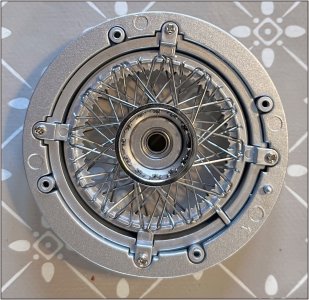
Once you've mastered the weaving pattern and turn the wheel over again after placing the two rows of 12 spokes, you'll get this view:
118 Group 4, step 65+66.jpg
All the ends of 48 spokes on this side are in their recesses.

Group 4, steps 67+68:
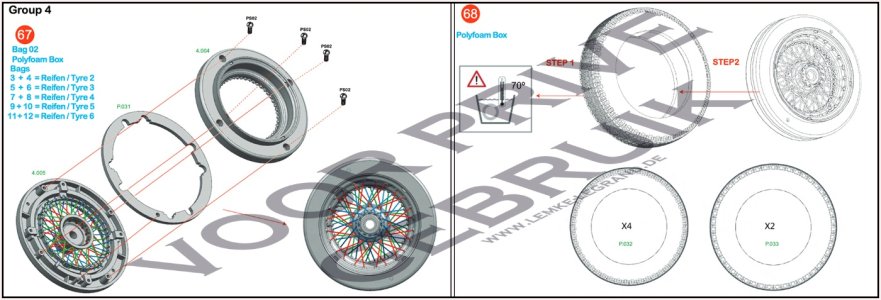
119 Group 4, step 67+68.jpg
The 48 ends are secured with a metal ring and secured to the second part of the rim. I forgot to take a picture of this.
Soak the tire in warm water for a while and tighten it around the rim:
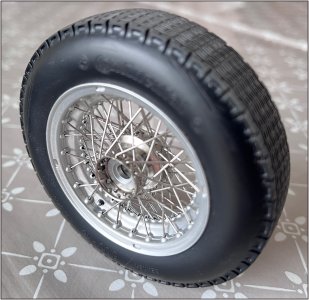
120 Group 4, step 67+68.jpg
The result is impressive.
The narrow part of the rim protrudes slightly beyond the rim flange. I placed the wheel there and turned it. The entire wheel is nice and straight and balanced.:)

Up to 5 other wheels ...... 5x72=360 spokes to go.
Regards, Peter
 
Oh my! That's quite a process. Steady hands needed with the tweezers!
I’m a bit taken aback, and now I’m debating which is more challenging: planking the hull or installing those spokes.
Thanks, Paul and Jim. You have to take your time, patience and study. And don’t hesitate to start again when it doesn’t look good.
Regards, Peter
 
Welcome back Peter,

That was a busy downhill from the Marmolada, nice red slope by the way, it fits your Uhlenhaut interior.
Thanks, Maarten. As we say: ‘Mooi rood is niet lelijk.’ (A beautiful red isn't ugly.)
A well-prepaired red slope is better than a worn-out blue. This red was already in bad condition 11 a.m.:(
Regards, Peter
 
Back
Top