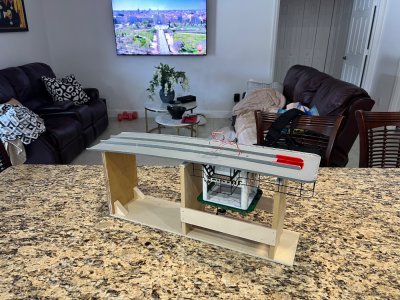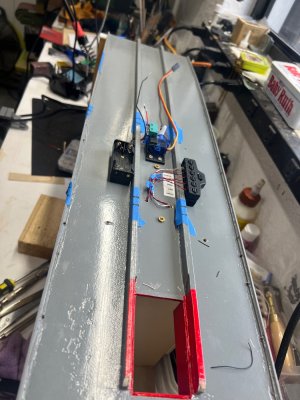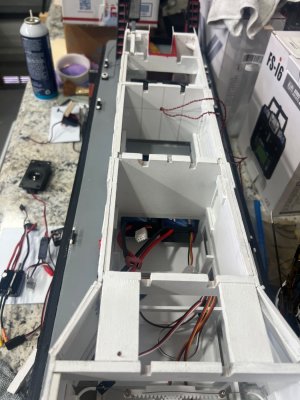
The Pilot House Console
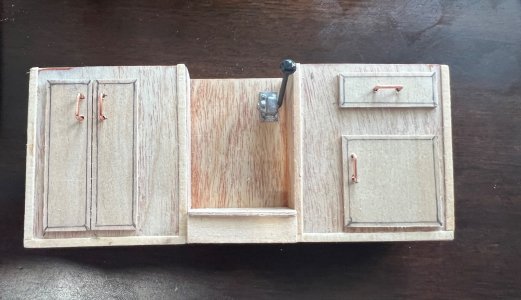
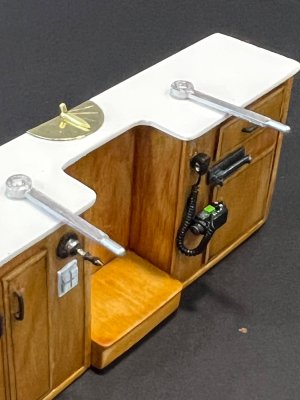
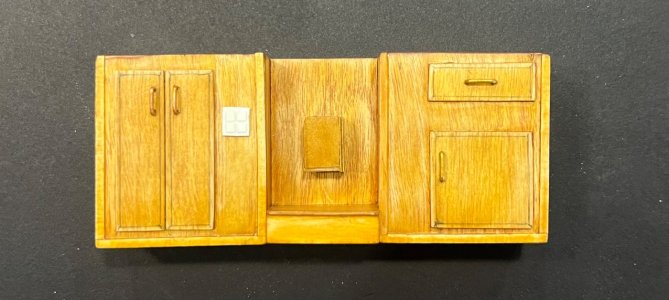
This tiny 4¼-inch-wide console has been the most detailed scratch-built assembly of the entire Juanita project. The challenge was not the woodworking—it was the research. As far as I have been able to determine, there is only one photograph of the actual Juanita pilot house console available on the internet, and it was taken from an angle that hides many of the details.Recreating it became a true detective project. By enlarging the original photograph, studying every shadow, comparing it with modern towboat controls, and using AI to help interpret hidden details, I slowly pieced together what the console must have looked like. Every handle, cabinet door, switch, and fitting had to be designed and fabricated from scratch.
Construction Sequence
- Studied the only known reference photo of the real Juanita console, enlarging it repeatedly to identify every visible feature.
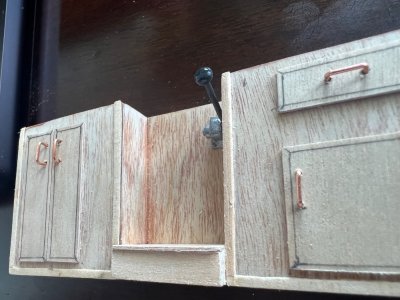
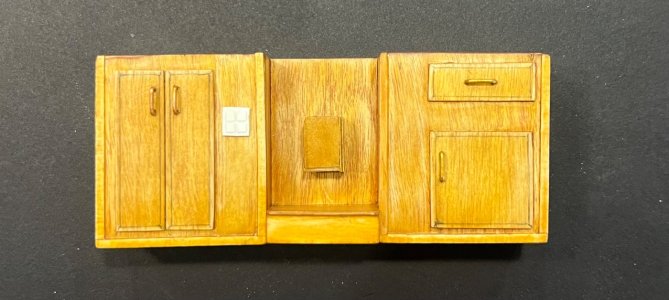
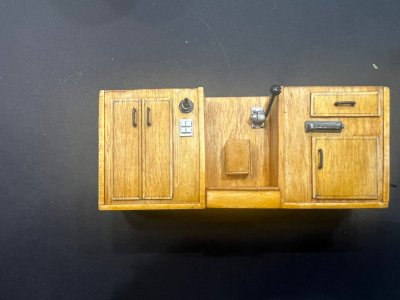
- Designed the cabinet layoutbased on proportions visible in the photograph, including:
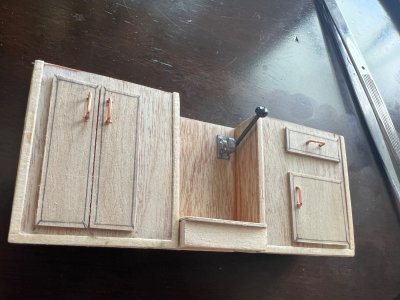
- Port storage cabinet with double doors.
- Starboard drawer and lower cabinet.
- Center opening for the operator.
- Raised footrest beneath the center opening.
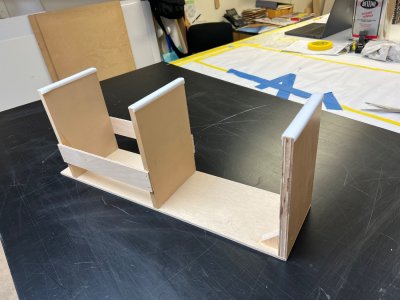
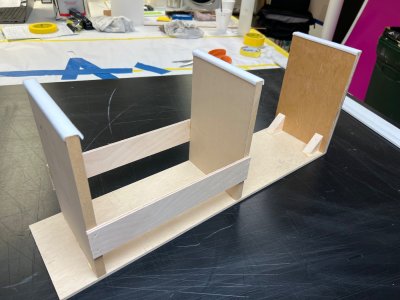
- Scratch-built the entire cabinet from basswood sheet and strip stock.
- Added individually framed doors and drawer fronts to duplicate the recessed panel construction of the original.
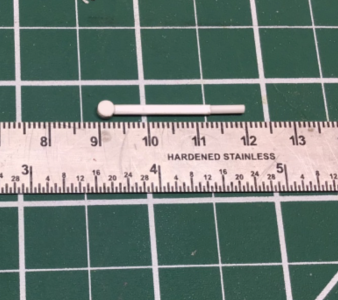
- Installed handmade copper wire door pulls bent to identical shapes.
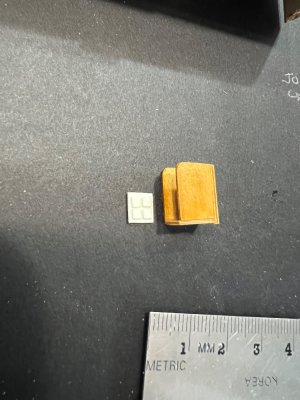
- Built the center document holder mounted on the rear panel.
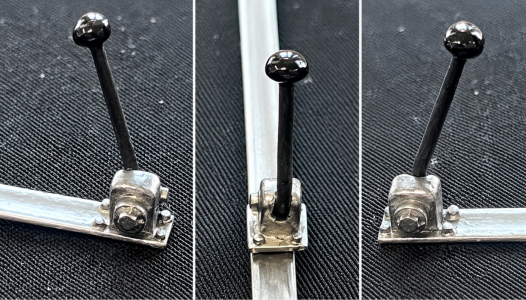
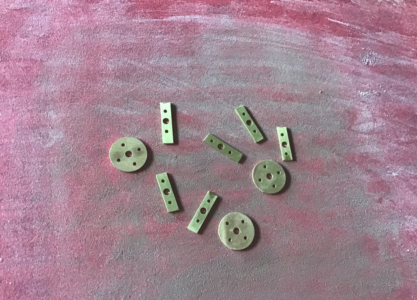
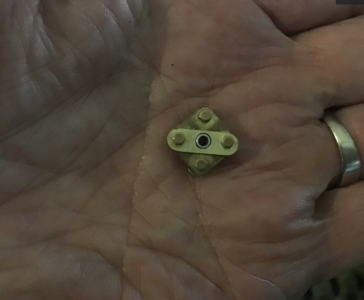
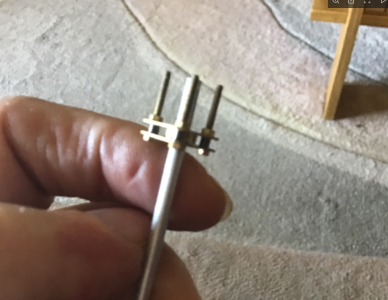
- Designed and fabricated the throttle control assembly, including:
- Cast-looking mounting block.
- Pivot housing.
- Four simulated mounting bolts.
- Pivot bolt detail.
- Black control lever.
- Rounded control knob.
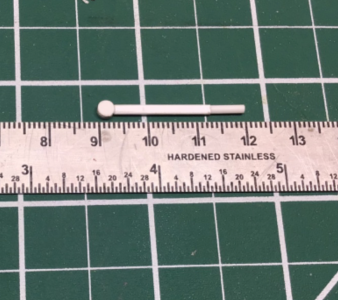
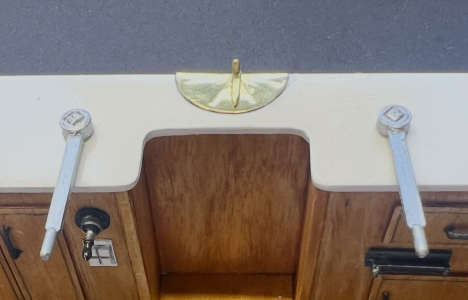
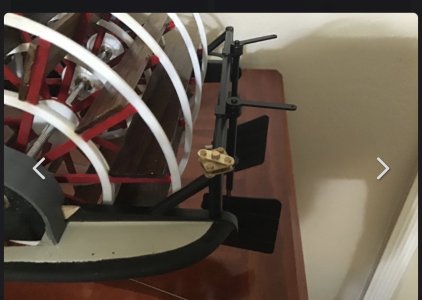
- Scratch-built both steering tiller arms, carefully shaping them to match the profile seen in the original photograph.
- Finished the steering arms in aluminum with weathered metallic highlights.
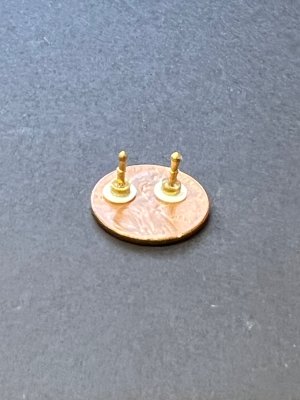
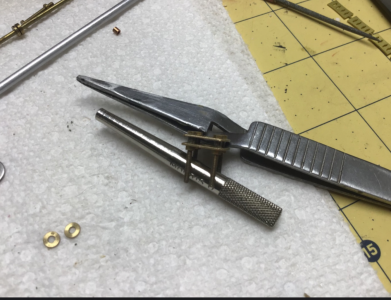
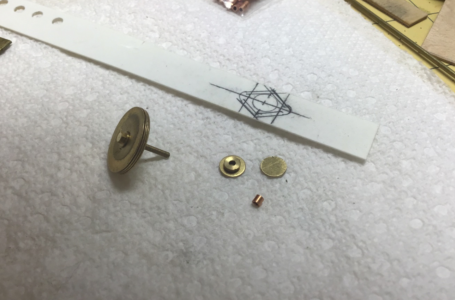
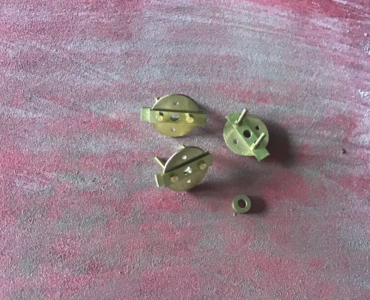
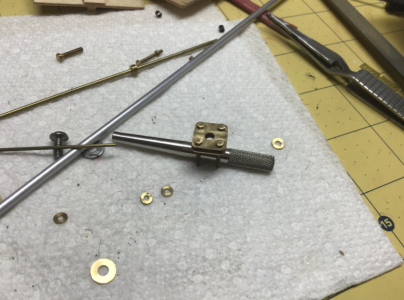
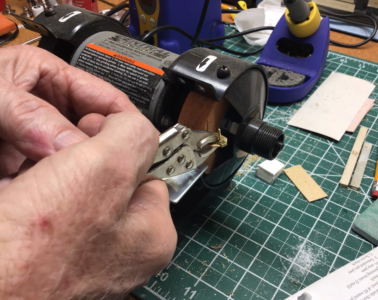
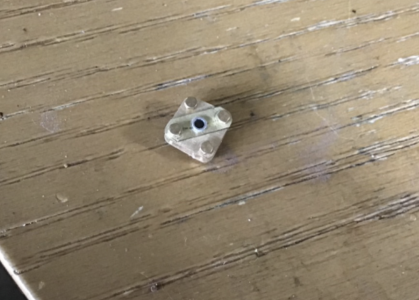
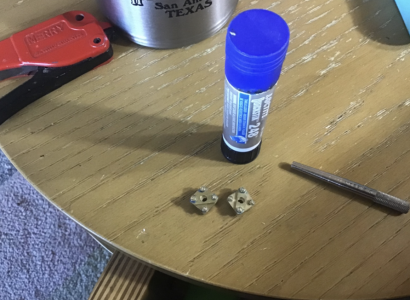
- Turned two miniature brass control knobs for the compass compensator using brass fittings, then mounted them on insulating white bases exactly like the prototype.
- Fabricated the brass compass compensator plate, polishing it to a mirror finish before installation.
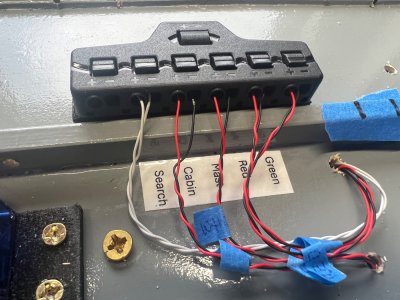
- Installed the electrical switch panel, reproducing the four-button appearance visible in the reference photograph.
- Added the ignition/key switch on the port side of the console.
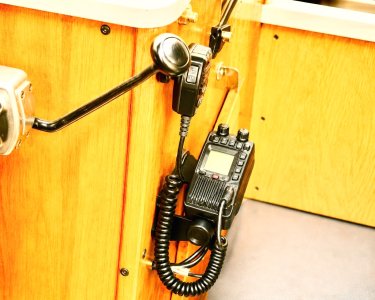
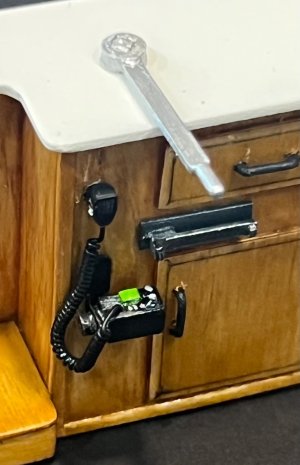
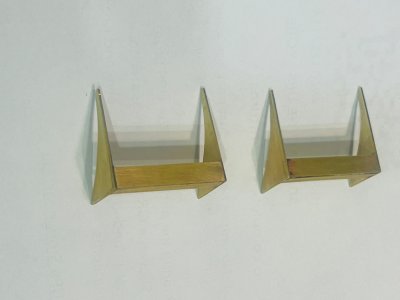
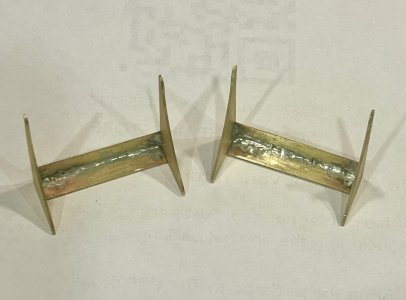
- Built and installed the VHF radio microphone cradle, then added:
- Hand microphone.
- Coiled microphone cord.
- Radio mounting bracket.
- Applied multiple coats of wood stain and clear finish to reproduce the warm varnished appearance of the real pilot house cabinetry.
- Performed repeated test fitting of every individual component before permanent installation to ensure proper spacing and alignment.
Details Worth Mentioning
- The throttle quadrant alone required several separate miniature parts and went through multiple redesigns before I was satisfied with its appearance.
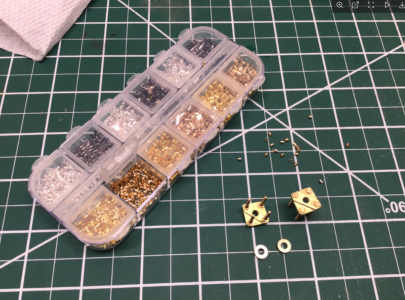
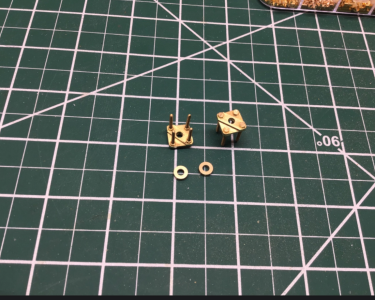
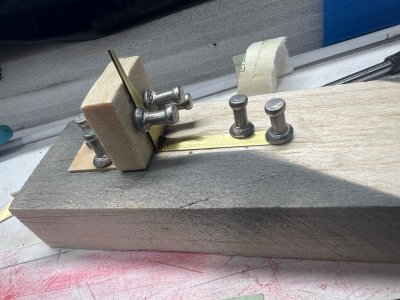
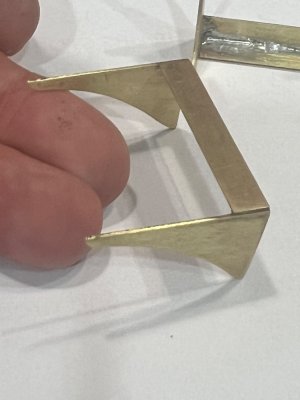
- The brass compensator assembly was made almost entirely from modified brass hardware, proving once again that ordinary materials can become convincing scale fittings with a little imagination.
- The radio microphone and its coiled cord add a surprising amount of realism despite being only a few millimeters in size.
- Every cabinet handle was bent individually from fine copper wire.
Final Thoughts
Although this console measures only 4¼ inches (108 mm) wide, it contains dozens of individually fabricated parts. It became one of those projects where every evening's work produced only a few additional details, yet each one brought the model closer to the character of the real Juanita.Looking back, this little console perfectly captures what this build has become: not simply assembling a kit, but researching, interpreting, and recreating a vessel for which very little documentation exists. Sometimes the smallest assemblies demand the greatest amount of patience, and in this case, the effort was well worth it.
Only thing missing are the gauges and Gravman is helping me creating this tiny wonders.
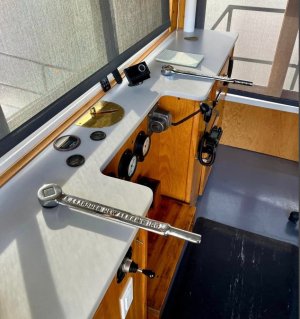
REAL JUANITA CONSOLE
REAL VHF RADIO
SCRATCH BUILT RADIO





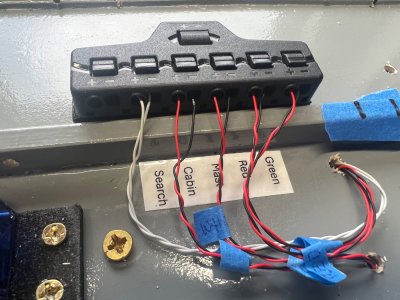
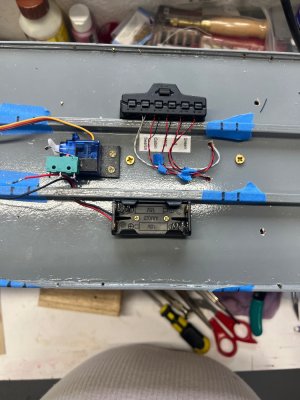
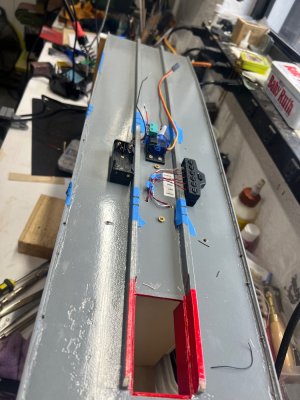
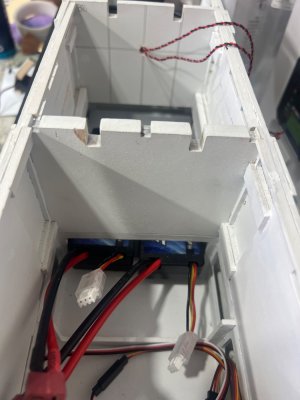
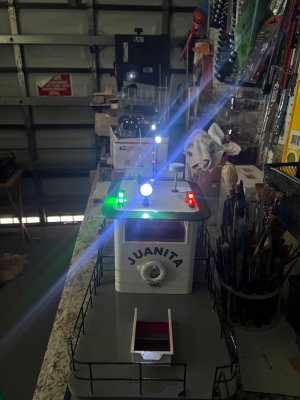
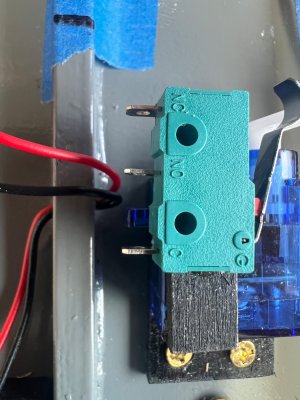
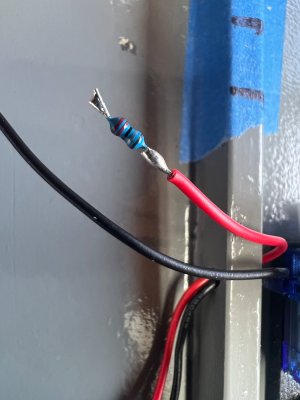
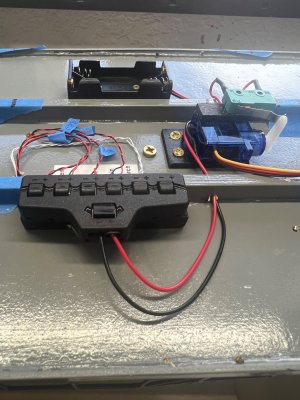
 … now I actually have to connect all of this!”