• Win a Free Custom Engraved Brass Coin!!!
    As a way to introduce our brass coins to the community, we will raffle off a free coin during the month of August. Follow link ABOVE for instructions for entering.
  • SUBSCRIBE TO SHIPS IN SCALE TODAY!

    The beloved Ships in Scale Magazine is back and charting a new course for 2026!
    Discover new skills, new techniques, and new inspirations in every issue.

    NOTE THAT OUR NEXT ISSUE WILL BE MARCH/APRIL 2026

Artesania Latina Anatomy of Lord Nelson’s HMS Victory Trafalgar 1805

Video 8 - (Part 2)
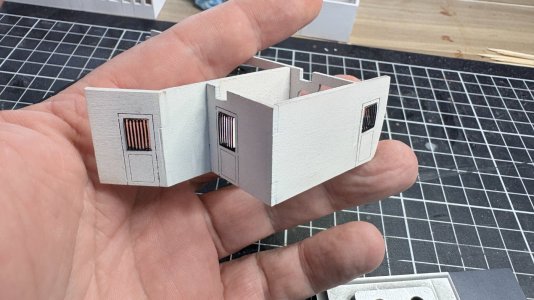
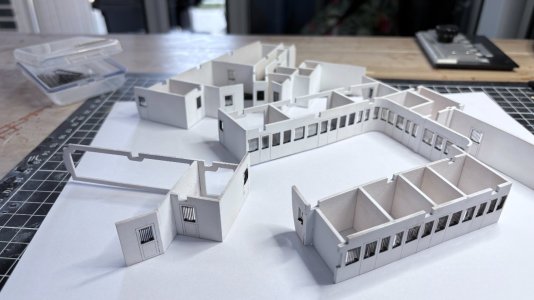
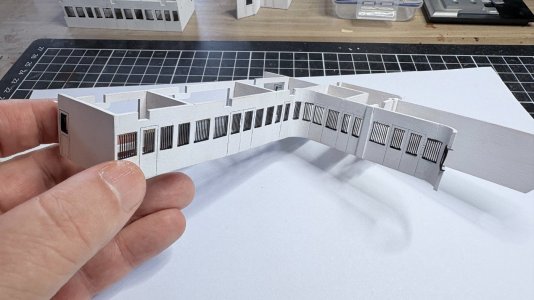
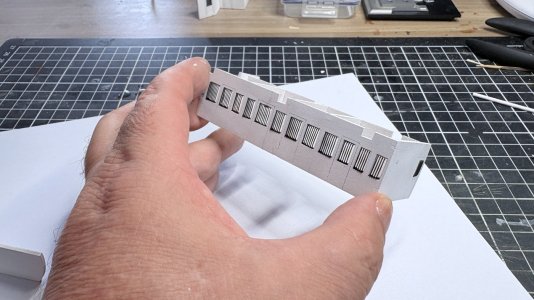
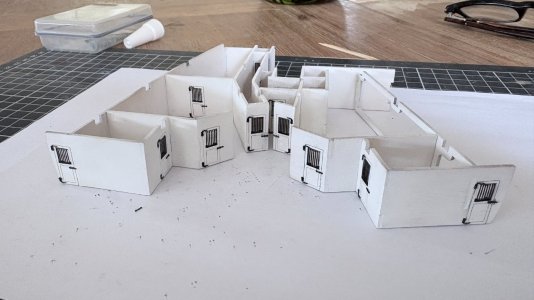
Today I painted the rooms,

View attachment 592051
A couple of coats of white paint which I let dry before a light sand and another coat, applied with an airbrush.

View attachment 592054
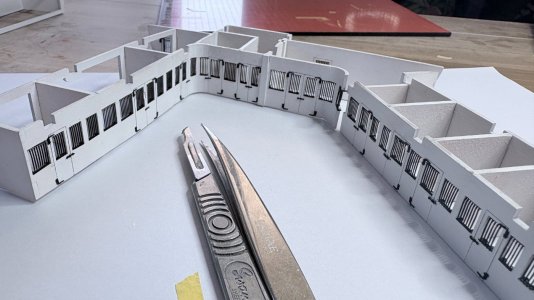
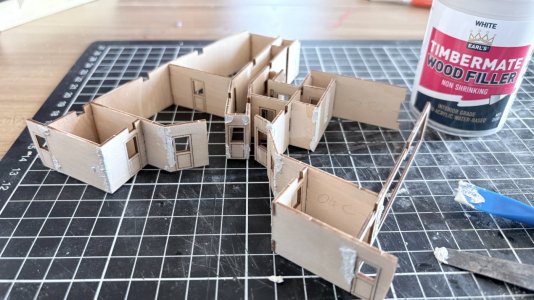
I rescribed the door frames where the paint had filled in the groove and re-puttied a couple of areas that need some attention. Tomorrow when the putty is fully cured I will give everything another light sand and another coat of thinned paint.

View attachment 592055

View attachment 592056

View attachment 592057

View attachment 592058

View attachment 592059

View attachment 592060

View attachment 592052
I blackened the door grills and the hinges and latches with AL's blackening solution. It seemed to work OK but when dry a lot of the black simply rubbed off. I may just go with the greyish colour and give them a light coat of varnish to lock the blackening in.

View attachment 592053

View attachment 592061

Thanks for looking
TJ
Good job Tony, lots of fiddly work there (as I know all too well). Have you tried soaking the parts to be blackened in acetone beforehand ? It removes grease and finger marks etc and helps the blackening to adhere better , you still get some rub off but not so much as before
 
Video #1 - Part 1
Hello to all my fellow modellers.
And so the journey begins. I’ve been looking forward to starting this model since it arrived on my doorstep in February.
But lets get the elephant out of the room straight away; this will only be my second wooden ship model. Now I can already hear some of the seasoned wooden ship builders saying “why would you choose to take on such a long, complicated and challenging project when you don’t have the experience of this side of the modelling genre”. Indeed without question I cannot argue with that point of view.
However I would like to clarify why I’m going to challenge myself and give it my best shot.
My wife and I are returning to my homeland in September as part of a European Holiday. A few days of that holiday we will be spending in Portsmouth visiting a couple of friends, so I thought that it would be interesting to take a look at the Victory in her dockyard home. I started looking at utube clips of the Victory under restoration when Mrs J said, “You need to build a model of that!” I said maybe one day and thought nothing more of it.
Imagine my surprise when the postman delivered a surprise retirement present. I’m absolutely certain she has no idea of the scale of the challenge now in front of me and probably I don’t either.
So I have the kit, I either look at the box for the next few years and I’m now in my sixties or I just give it a go.
Please feel free to correct my nautical terminology when I fail, I’m sure the odd left, right, back and front will slip in. Hey I’ve only just found out the navy don’t use crows nests. Isn’t education a wonderful thing!
Thrusters on full!
As you maybe aware there are no conventional printed instructions with this kit, AL have adopted a 80 plus set of utube videos to follow. I wasn't sure at first but after watching them all at least 3 times, some more! I think they are OK.

View attachment 517778

View attachment 517761
These are the glues I will be using, thin, medium and thick CA and my preferred wood glue.
Notice I have decanted some wood glue into a smaller bottle from the dollar shop as it makes applying a lot easier.

View attachment 517763
As I am using thick CA glue to assemble the keel I took the advice of another modeller and glued the parts on some baking paper.
There was next to no sticking. But I will be using the wood glue when time is not a factor or wood glue is more appropriate.

View attachment 517764
It's probably important to get the keel straight and square at this point so I'm working on a flat MDF board.

View attachment 517765
A long steel rule keeps things straight.

View attachment 517766
I believe that this point in a ships construction is called “laying the keel” and should be celebrated accordingly. Who am I to disagree?
I wanted to celebrate the occasion with an English Ale brewed in Victory’s resting place in Hampshire. But here in Australia English ales are limited somewhat. But I did manage to get a Kentish ale more than suitable for the occasion.
In a strange stroke of irony I am building the greatest fighting vessel of its era HMS Victory, whilst celebrating the occasion drinking an English ale celebrating IMHO probably the greatest fighting aircraft of ever made; the Spitfire.

View attachment 517767
I do realise the kit comes with a working base, but for the hull construction I thought I would make something a bit more sturdy.
Each of the bulkheads fits into a slot which in turn is secured with a peg type piece.

View attachment 517768
Nearly all the bulkheads come in 3 parts with a good area of overlap to glue.

View attachment 517769

View attachment 517770
The kit supplies 3 jigs to place on the top of the frames mainly for protection when all the frames are in place. But I thought
using them to help alignment may be worthwhile.

View attachment 517771

View attachment 517772

View attachment 517773
I used a steel rule once again to ensure the parts lay very flat whilst the glue set.

View attachment 517774
Note the use of an expensive modellers tool used to encourage the frames to set square. :rolleyes:

View attachment 517775
I followed the instructions and used rubber bands to hold everything together.

View attachment 517776
The fit of the bow parts was perfect, well done AL.

View attachment 517777
The only part which I had some trouble getting to fit was part RH7 which needed a bit of clamping. This was mainly due that this parts
needs to bend slightly.

Well that's as far I got on my first day and still lots to do on Video #1 :eek:

Thanks for watching
T

View attachment 517762

the SPITFIRE glue!!!!! that is a good one!!!?? ROTF ROTF ROTF Excellent start Tony, from what I've seen on YouTube and based on the opinions of a friend or two who are currently building it, this is a good kit to choose, and it is supposedly of good quality.
Regards
 
Good job Tony, lots of fiddly work there (as I know all too well). Have you tried soaking the parts to be blackened in acetone beforehand ? It removes grease and finger marks etc and helps the blackening to adhere better , you still get some rub off but not so much as before
Thanks Alan, I will do that nest time I need to blacken.
 
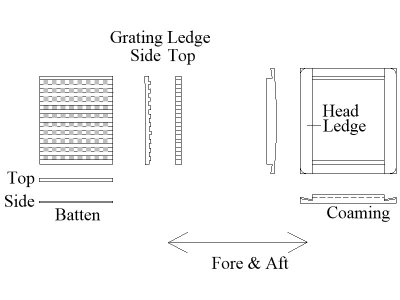
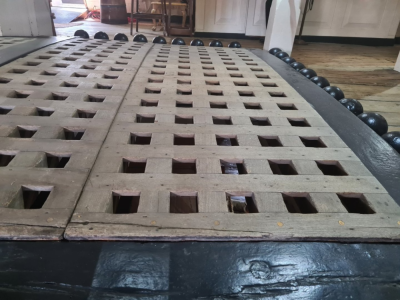
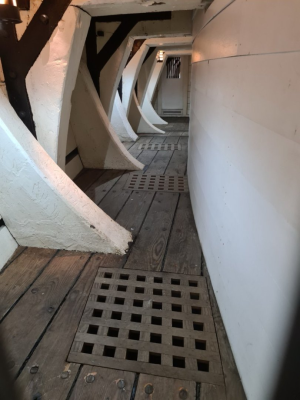
Sorry Tony, Picture below should be easier to explain than words. For some reason, AL has never been very diligent when it comes to designing a kit compared to high quality kit makers like Vanguard and Model Ship Dockyard. Keep in mind very few things were exactly the same from ship to ship. On modern day Victory the battens run athwartships on the carpenter's walk gratings for some reason. Anything seems to be possible from the days of sail.
Allanr
1776159767422.jpeg

1776160682815.png


Carpenter's Walk
1776160643623.png
 
Video 8 - (Complete)
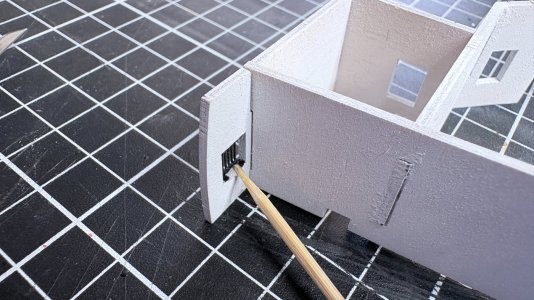
Here I am again with my love/hate relationship with PhotoEtch Redface I knew this was going to be fiddly but those hinges and latches were like teaching a hippopotamus to play a banjo... challenging. Can I suggest if you are new to PE or you struggle with really tiny pieces you may wish to give those hinges a miss.
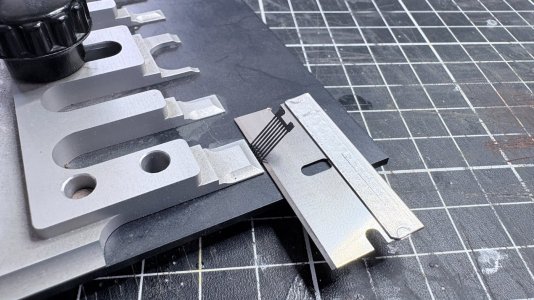
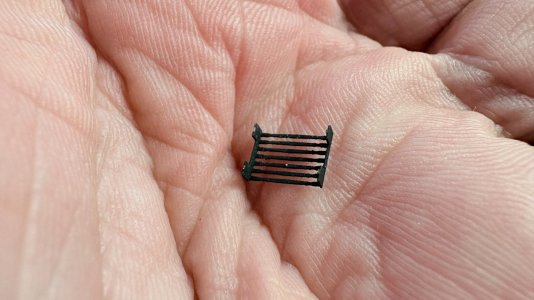
Anyway just one 'TTT' (Tony's Top Tip) for those who are going to attempt the PE. When folding the tops and bottoms of the door grilles it's best to use a PE folding tool, this will give you a crisp sharp bend. Secondly, you have to be very accurate where you fold, it MUST be right on the area where the bars meet the folded top and bottom. If you are not accurate with the bends then the grill will be to small leaving a gap, if to long then you are in big trouble. As I found out on a couple of grills if they are slightly too big then there is the tendency to force the grill into the hole. Let me tell you, these PE parts are extremely bendy, too much force and they buckle badly.

IMG_6054.JPG
My folding tool.

IMG_6055.JPG

IMG_6056.JPG
I placed the parts in place then applied a small amount of CA at the back of each part.

IMG_6059.JPG

IMG_6060.JPG

IMG_6061.JPG

IMG_6062.JPG

IMG_6066.JPG

Thanks for looking.
 
Hi Tony
Based on the way you describe the effort it took to reach this final stage, I can just imagine how many times you gritted your teeth—and probably let slip a curse word or two! I’ve heard a lot about that bending machine but never knew how it worked; now I have a better idea, and I’d say you’ve certainly put it to good use. But seriously, you’ve done an excellent job buddy. Just looking at those hinges, I can imagine how tedious the work must have been to get each one into place. The only thing about the entire structure that particularly caught my eye was this: what exactly are all those compartments? Storage lockers? Or prison cells? Do you have any idea?
Regards
 
Video 8 - (Part 2)
Today I painted the rooms,

View attachment 592051
A couple of coats of white paint which I let dry before a light sand and another coat, applied with an airbrush.

View attachment 592054
I rescribed the door frames where the paint had filled in the groove and re-puttied a couple of areas that need some attention. Tomorrow when the putty is fully cured I will give everything another light sand and another coat of thinned paint.

View attachment 592055

View attachment 592056

View attachment 592057

View attachment 592058

View attachment 592059

View attachment 592060

View attachment 592052
I blackened the door grills and the hinges and latches with AL's blackening solution. It seemed to work OK but when dry a lot of the black simply rubbed off. I may just go with the greyish colour and give them a light coat of varnish to lock the blackening in.

View attachment 592053

View attachment 592061

Thanks for looking
TJ
Nice work with the airbrush Tony.
 
Hi Tony
Based on the way you describe the effort it took to reach this final stage, I can just imagine how many times you gritted your teeth—and probably let slip a curse word or two! I’ve heard a lot about that bending machine but never knew how it worked; now I have a better idea, and I’d say you’ve certainly put it to good use. But seriously, you’ve done an excellent job buddy. Just looking at those hinges, I can imagine how tedious the work must have been to get each one into place. The only thing about the entire structure that particularly caught my eye was this: what exactly are all those compartments? Storage lockers? Or prison cells? Do you have any idea?
Regards
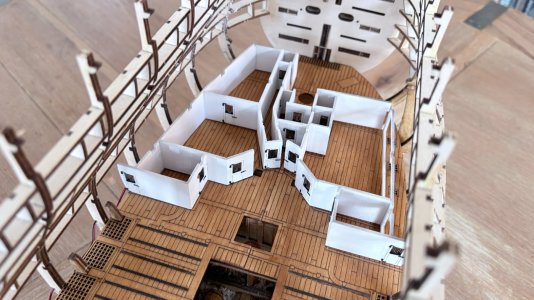
The rooms are all for various types of storage etc or personal cabins for the carpenter, purser and surgeon, also a carpenters store and work room. As far as I’m aware Victory didn’t have cells, offenders were punished usually by flogging in front of the ships company and in very severe punishments would end up on the orlop deck in the sick bay
 
Tony would you have a plan showing the position of all the lights used on the Victory ( and the size & power for the LED's used. I plan to do something similar after I finish the 1/200 Bismark.
The kit does not come with the lights, you have to but the lighting kit sold by AL separately. They are 3V LED's. The video instructions show all the positions of each LED.
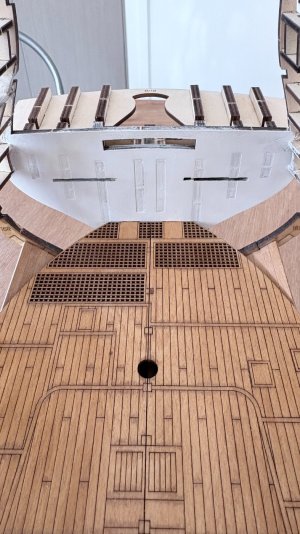
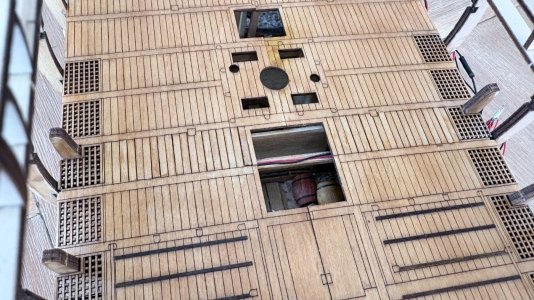
Hope this helps.
T
 
Hi Tony
Based on the way you describe the effort it took to reach this final stage, I can just imagine how many times you gritted your teeth—and probably let slip a curse word or two! I’ve heard a lot about that bending machine but never knew how it worked; now I have a better idea, and I’d say you’ve certainly put it to good use. But seriously, you’ve done an excellent job buddy. Just looking at those hinges, I can imagine how tedious the work must have been to get each one into place. The only thing about the entire structure that particularly caught my eye was this: what exactly are all those compartments? Storage lockers? Or prison cells? Do you have any idea?
Regards
Yes they were tedious to sat the least. AlanOES has described the rooms later in this thread.
Thanks
TJ
 
Hi Mike
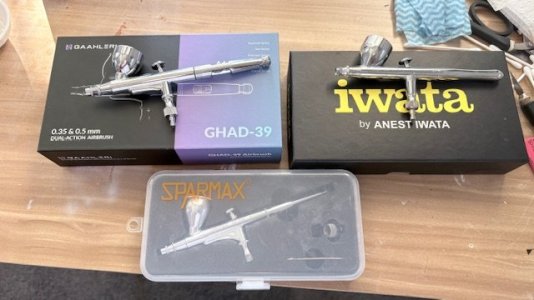
I have 3 main airbrushes which I use for different purposes. 0.35mm needle for fine work, 0.5mm needle for larger coverage and one which I use specifically for metal paints like aluminium (or is it aluminum). ROTF
My latest one is the Gaahleri GHAD-39 which I got from Amazon for $70 AUS ($50 US). It's the cheapest but really good. You get two sizes of needles and I recommend it for a beginner.
It's actually the one I've been using on the Victory.
The Iwata airbrush is a more mid range price.
Airbrushes come to two main flavours; single action and dual action. Single action simply means which you pull back the trigger paint comes out. Dual action you push down for air then back for paint. I would strongly recommend a Dual Action Airbrush as you have heaps more control.
There are heaps of instructional videos on the interWeb. So give it a go they are a really good tool to use.
Best of Luck!
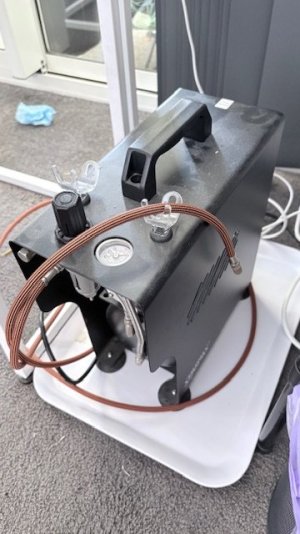
You will also need a compressor. This is my Sparmax 610 but you really don't have to start off as expensive. A small one like the one I have shown here will definitely suit your purposes.
Hope this helps.

IMG_6072.jpg

Screenshot 2026-04-18 at 6.55.09 am.png

IMG_6073.jpg

Screenshot 2026-04-18 at 6.59.11 am.png
 
Hi Mike
I have 3 main airbrushes which I use for different purposes. 0.35mm needle for fine work, 0.5mm needle for larger coverage and one which I use specifically for metal paints like aluminium (or is it aluminum). ROTF
My latest one is the Gaahleri GHAD-39 which I got from Amazon for $70 AUS ($50 US). It's the cheapest but really good. You get two sizes of needles and I recommend it for a beginner.
It's actually the one I've been using on the Victory.
The Iwata airbrush is a more mid range price.
Airbrushes come to two main flavours; single action and dual action. Single action simply means which you pull back the trigger paint comes out. Dual action you push down for air then back for paint. I would strongly recommend a Dual Action Airbrush as you have heaps more control.
There are heaps of instructional videos on the interWeb. So give it a go they are a really good tool to use.
Best of Luck!
You will also need a compressor. This is my Sparmax 610 but you really don't have to start off as expensive. A small one like the one I have shown here will definitely suit your purposes.
Hope this helps.

View attachment 593016

View attachment 593015

View attachment 593017

View attachment 593014
Very good description Tony
That compressor looks similar to mine
 
Video 10 - (Part 1)
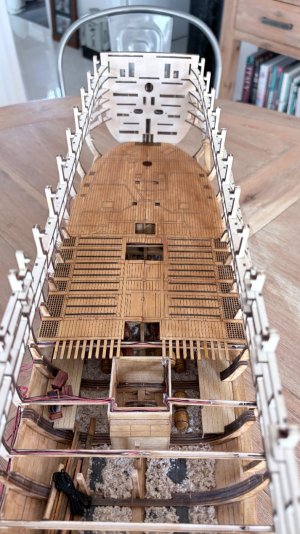
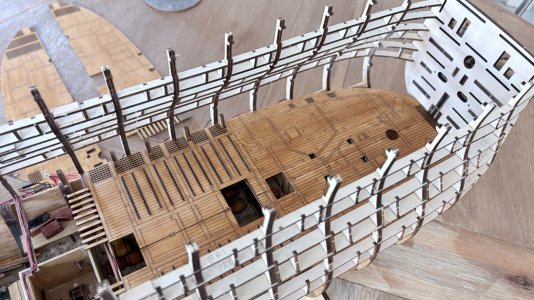
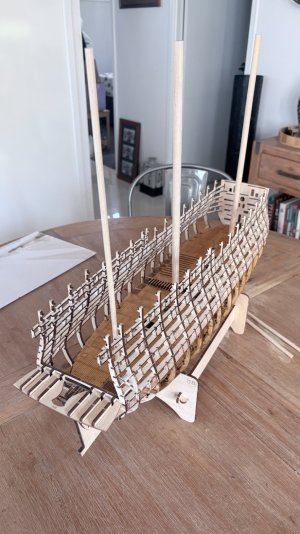
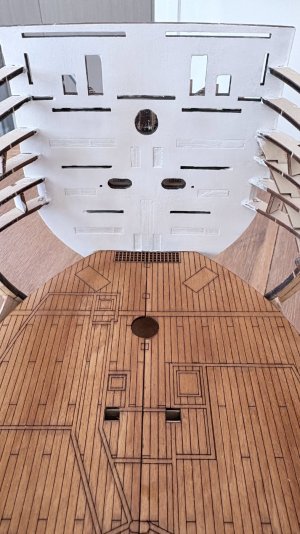
Installing the spars on the deck, then attaching the actual deck. It's been well documented by others that the finger joint approach used by AL is less than ideal. At one point I did consider attaching front right to back right, just to concentrate on getting a good join, but decided in the end that it may not give me enough wiggle room if there are alignment issues. Plus I may break the join bending the whole assemble engaging the small tabs front & rear.
I did employ some rather unusual cantilever techniques to persuade the joints to align flush. The results although not perfect were better than I hoped for.

IMG_5994.JPG
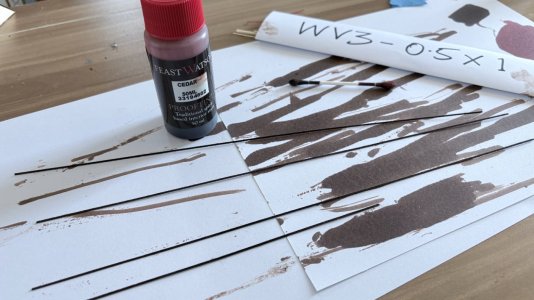
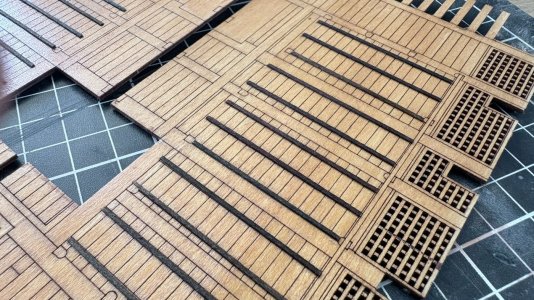
I used stain for these parts, intending to use it where AL 42 Dark Red Leather paint was used. However after some experimentation painting two adjacent colours (for example the two colour grates) I found I was getting bleed issues. I really don't want to buy any more paints as I have lots already, so I will mix my own brown colour from my Tamiya supply.

IMG_6002.JPG

IMG_6069.JPG
Loose test fit.

IMG_6070.JPG

IMG_6068.JPG
Everything OK withs masts so far. No doubt the next deck will show any issues.

IMG_6071.JPG
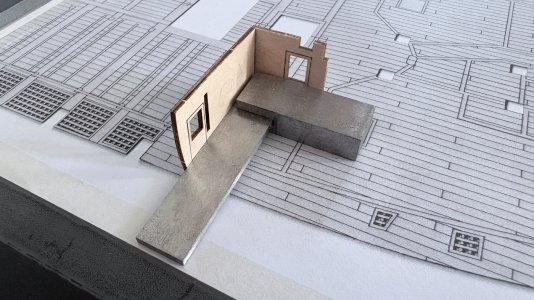
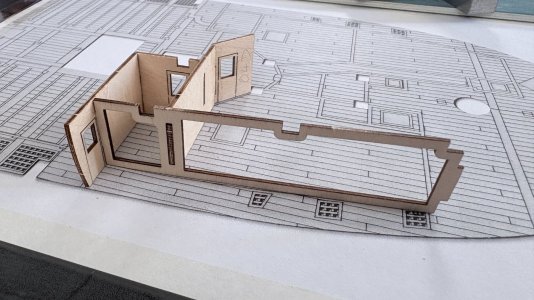
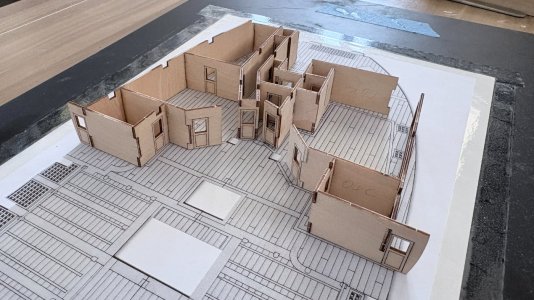
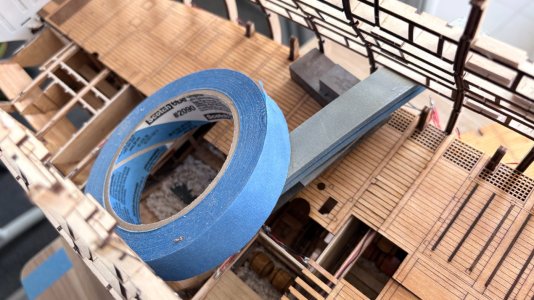
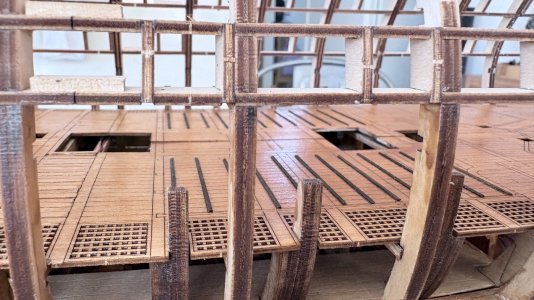
Quick peek at some of the rooms in situe.

IMG_6075.JPG
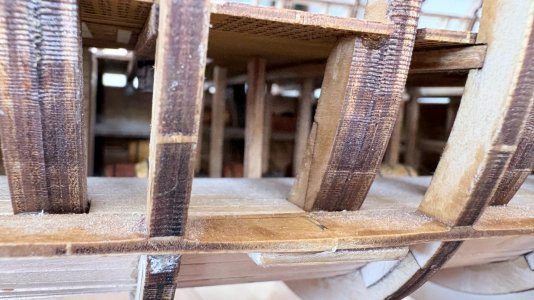
After much pushing up and down and wiggling this way and that, I found that if I stood on one leg put my finger in my ear and adopted some less than conventional techniques I could just about manoeuvre the fingers into a decent position.
As you may see from the image above I concentrated on the top 8 or so fingers then flooded the area with diluted wood glue, wiped off the excess and let it dry for a few hours.
Then repeated the process for the remaining fingers. Yes it's a long process but IMHO worth it.

IMG_6076.JPG


IMG_6078.JPG

IMG_6085.JPG
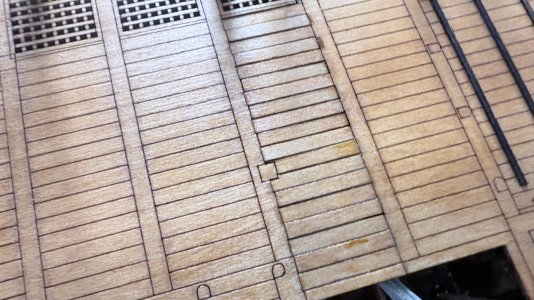
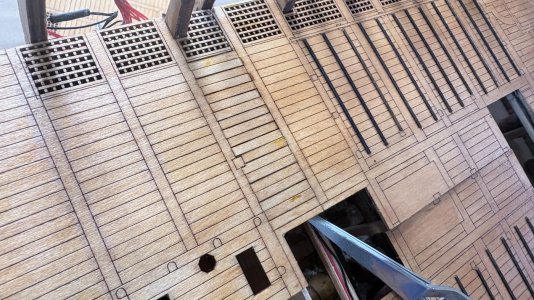
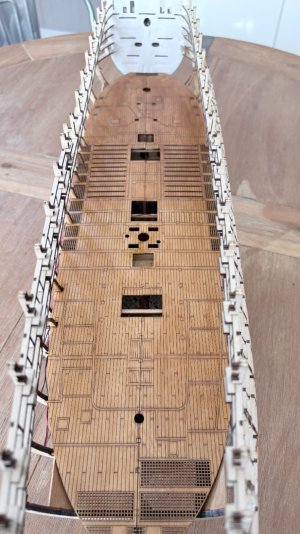
The deck in place.

IMG_6086.JPG

IMG_6087.JPG

IMG_6088.JPG
Very happy with the final results.

IMG_6090.JPG

IMG_6091.JPG

IMG_6092.JPG
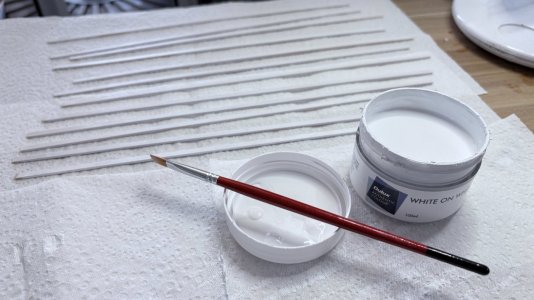
The timbers for the inner planking painted white. I used a sample pot of house paint which gives great coverage. Once this is dry and I have a had a beer I will give them a light sand and apply a thin second coat.

Thanks for looking
Tony
 
Last edited:
Back
Top