Calculations... calculations... and more calculations.
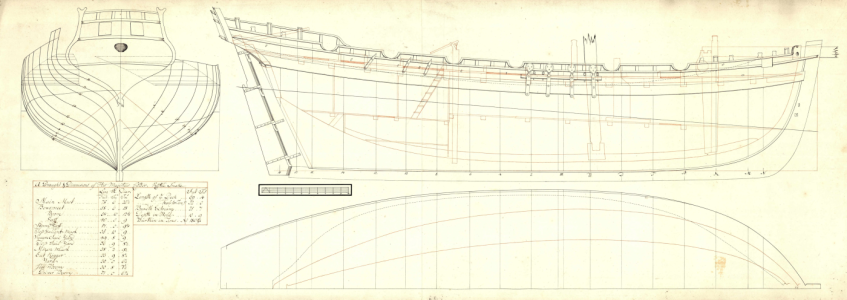
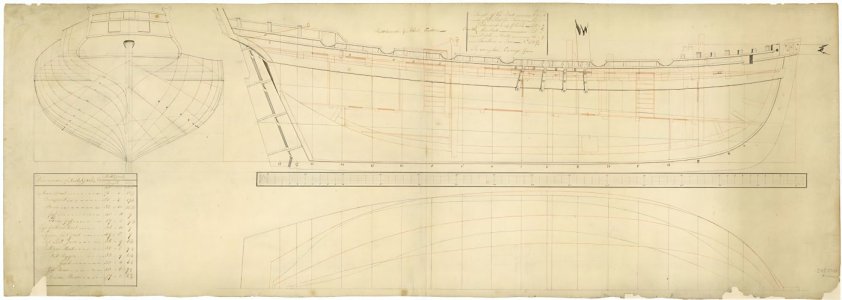
Some people simply build models, others review their builds... but I also really love to study everything related to what I'm building. I spend a lot of time reading literature, anatomy, and drawings. And since Alert's anatomy is written with significant errors, inaccuracies, and omissions, I regularly question all the information in this book.
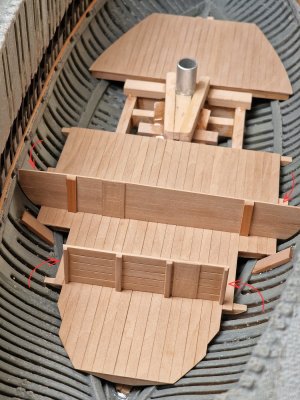
In order to continue working on the deck, I need to know exactly what needs to be where, so I can get all the nail placements right.
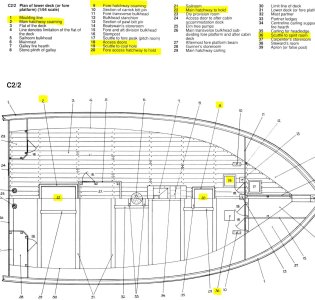
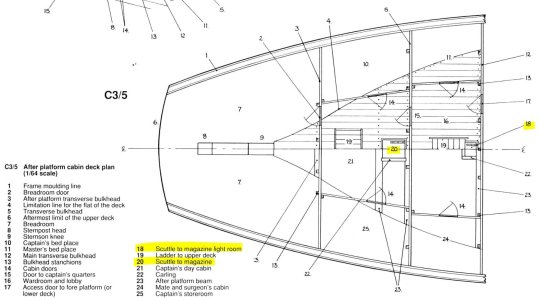
The gratings and ladders are partially positioned, and now I need to determine the exact location of everything else. I understand that there are drawings for this... but that's the problem... there are no drawings, only anatomy, which is full of contradictions, so everything needs to be done on site.
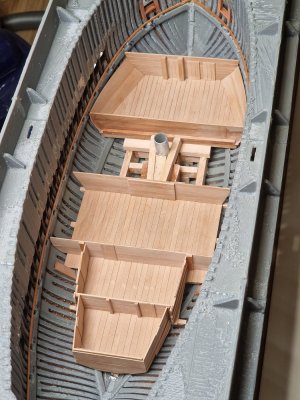
To start, I made dummies of several elements.
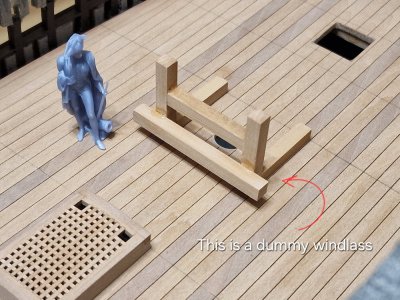
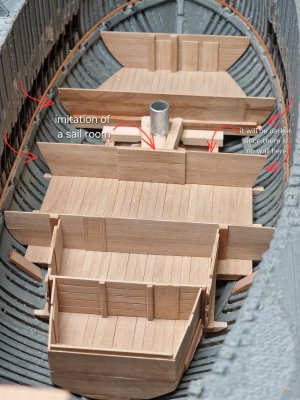
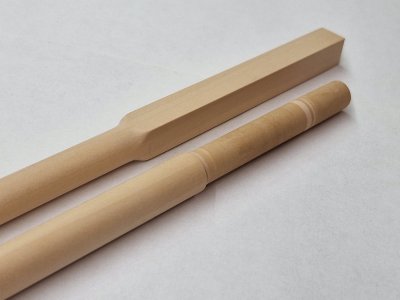
The Windlass is a dummy, just to illustrate its dimensions and position. I'll say right away that I intentionally made it wider, as it needs to rest on the load-bearing boards (which is more logical), and there needs to be enough room for the anchor lines, ribs, and rigging blocks. This is the only thing I intentionally changed slightly; the rest were modified solely based on the original archival drawings and when there was a clear error in the anatomy.
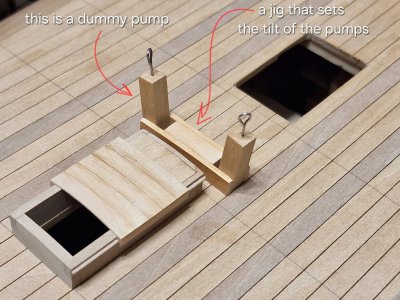
I also made dummy pumps with the ability to adjust the correct angle. They're also positioned a bit wider, but you'll see later why this is a logical step.
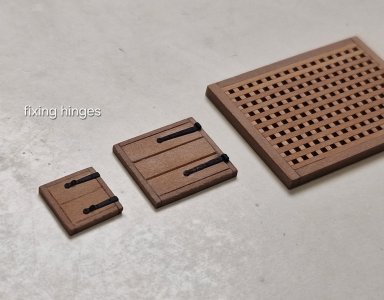
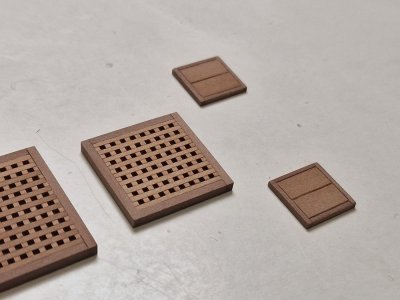
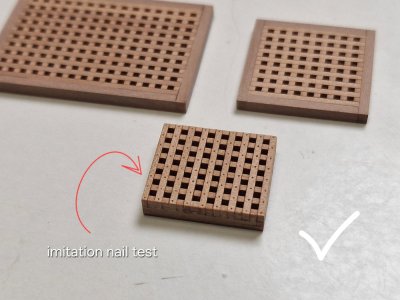
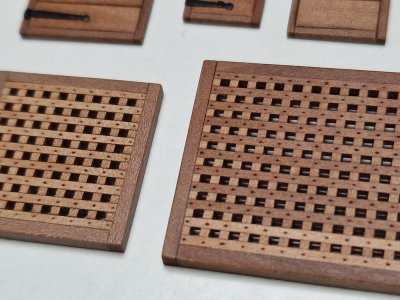
By the way, I'm going to redesign the bilge grating! Based on the grate's ridge count, I made it the specified width, and after comparing the dimensions with the archival drawings, I realized I needed to add another ridge to make it wider. But I was already planning to make a duplicate grate (you'll see why later, but then I changed my mind, and now it's possible).
And all this work for one...
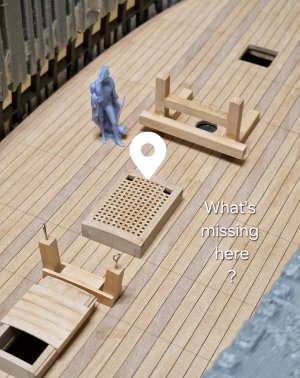
...for what the ship lacks! That's space for a lifeboat!
Not to mention that, anatomy-wise, a small boat doesn't correspond to common sense or reality (but more on that later), and there's simply no room on the hull for a cutter that's the right size for this ship.
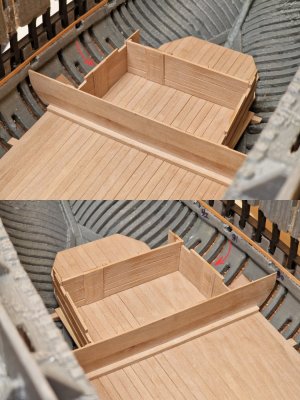
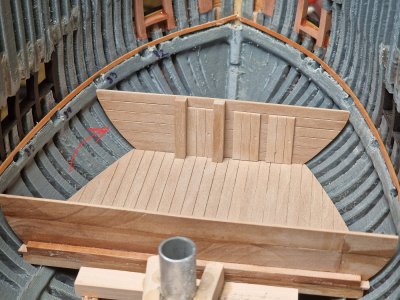
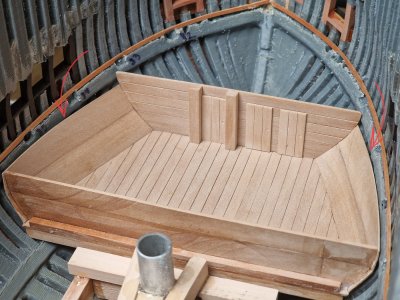
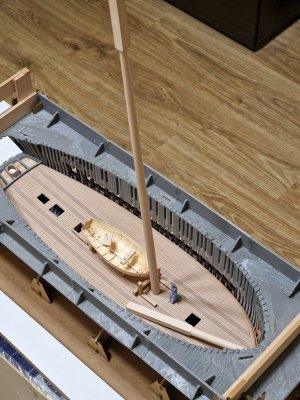
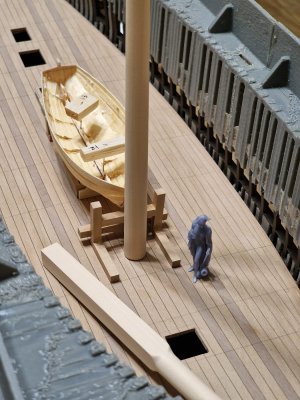
To help me understand all this, I made a dummy of the boat as well.
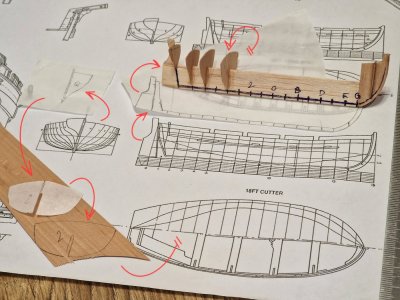
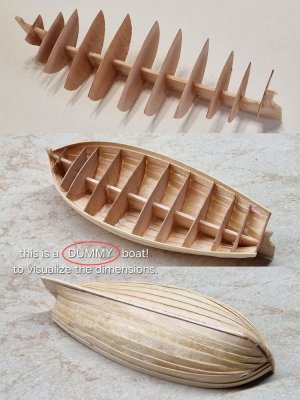
I glued pins to the rectangular bases and pinned the boat to them, adjusting its height.
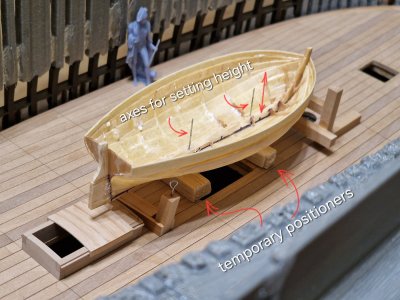
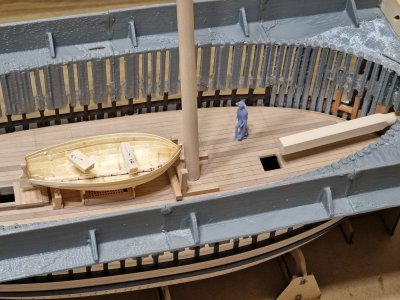
Once I had determined the height, I made temporary stands for the boat.
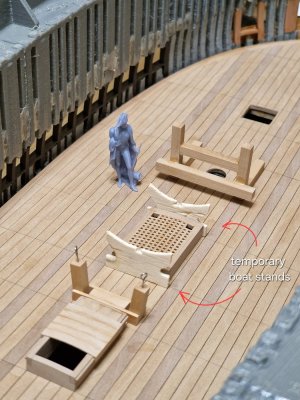
I didn't just pluck their design from scratch; it's common practice on such vessels. These supports were bolted to the beams on the sides and also to the grating frame for reinforcement.
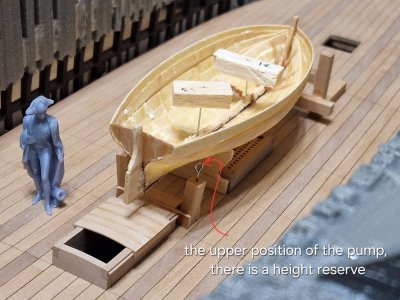
The boat was then secured with ropes to ribs in the deck.
Even with the boat so low, the pump was in its highest position and could operate without any problems.
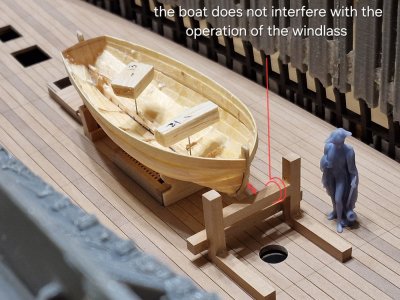
And the boat in front doesn't interfere with the windlass.
The boat should be as low as possible for stability and to keep the boom low. An inverted second boat (most likely a yawl) was also placed on it. But it couldn't be any lower, as it would interfere with the pumps or bump into the front.
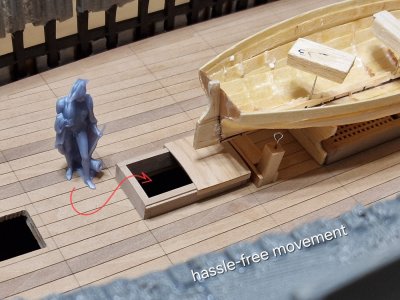
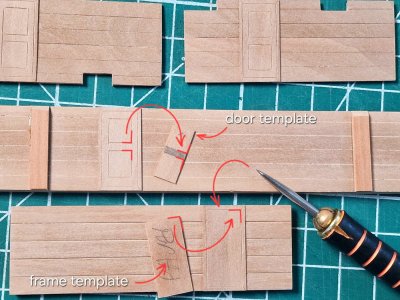
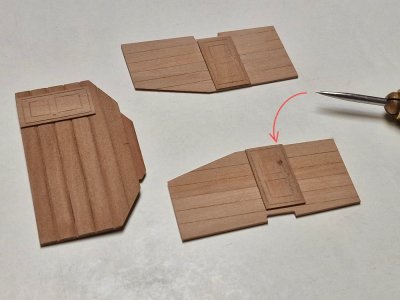
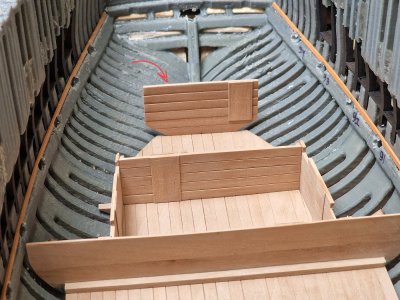
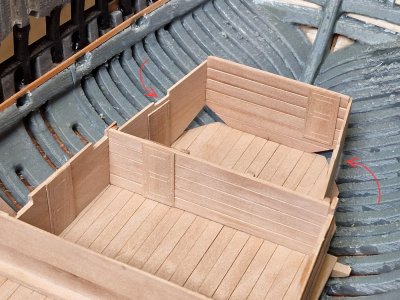
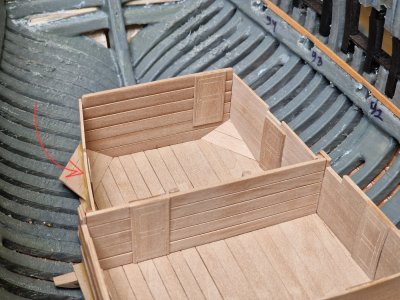
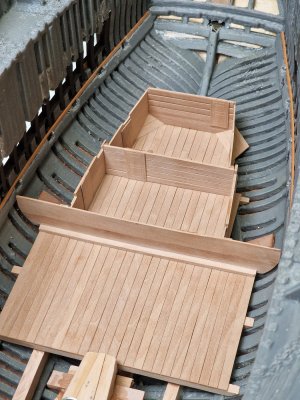
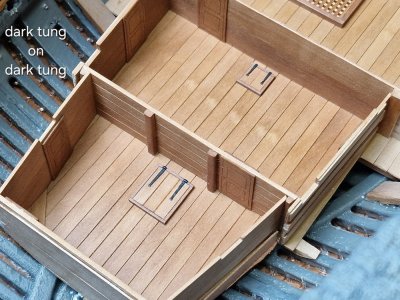
And finally... in the original archival drawings, the ladder (with a sliding door) led from one side to the other. But the author of the anatomy designed the ladder so that it led from front to back, which simply didn't allow for room for a boat, and which simply wasn't a reality.
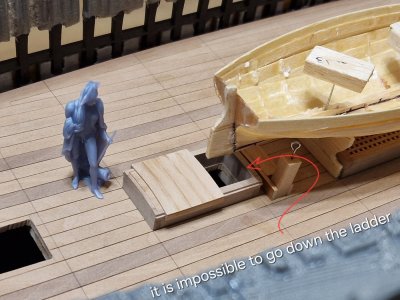
And since this defied common sense, I did as in the photo below. I simply rotated the entrance 180 degrees. And since the stairs from the upper to the lower deck weren't permanent (meaning they could always be removed to increase space and reinstalled in case of an emergency or need), this design is not only logical but also completely legitimate.
This is just a small part of the work I've done on the drawings. I'll simply post the material as I structure it into coherent threads (because I'm working on so many aspects at once, it's easy to get confused).














 . On the one hand, I enjoyed it immensely because of your rational, thoughtful approach. On the other hand, it reminded me of the nightmares I experienced while designing the entire ship. The only difference between our cases is that I used 3D modeling, and I can't even count how many hundreds of times I had to make various extremely time-consuming modifications to finally get everything to fit together. That is, to achieve a logically correct result, similarly to the way you present above.



 . I still hack but at least I have been shown how to by your log. Just wonderful skill- respect. Cheers Grant