• Win a Free Custom Engraved Brass Coin!!!
    As a way to introduce our brass coins to the community, we will raffle off a free coin during the month of August. Follow link ABOVE for instructions for entering.
  • PRE-ORDER SHIPS IN SCALE TODAY!

    The beloved Ships in Scale Magazine is back and charting a new course for 2026!
    Discover new skills, new techniques, and new inspirations in every issue.

    NOTE THAT OUR FIRST ISSUE WILL BE JAN/FEB 2026

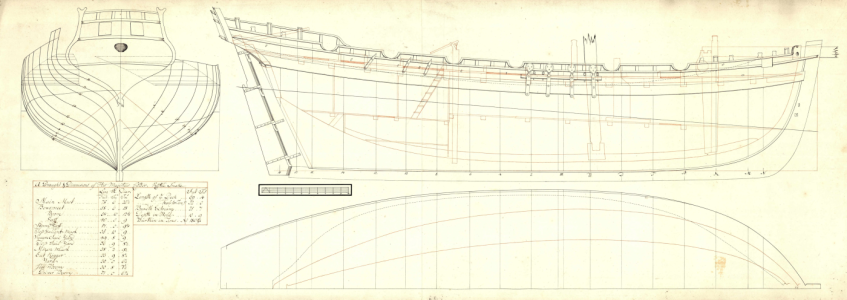
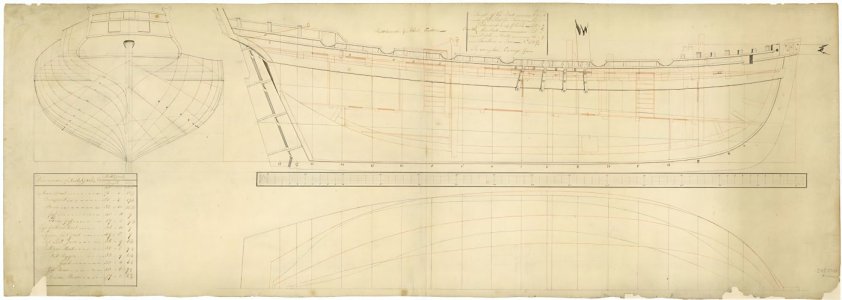
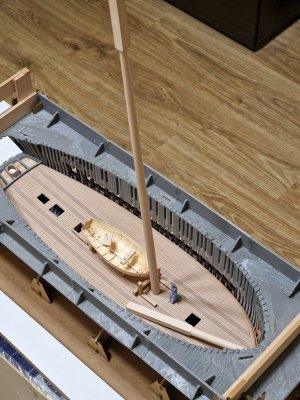
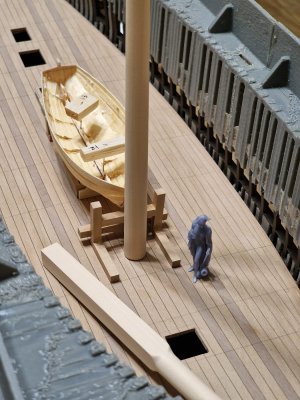
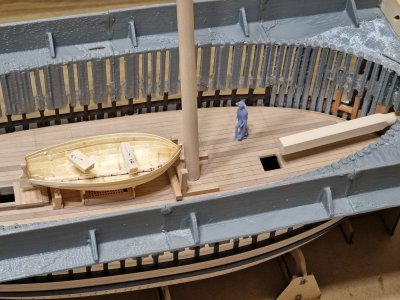
HMS Alert [1777] 1:48 POF by serikoff. (Two hulls: skeleton and fully rigged)

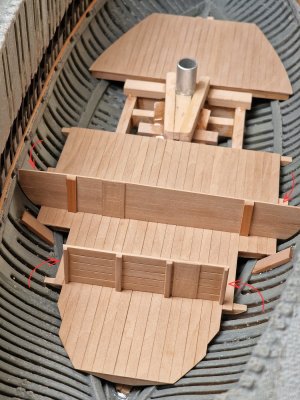
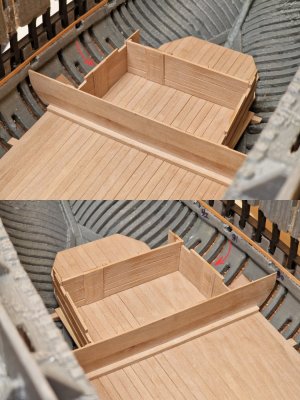
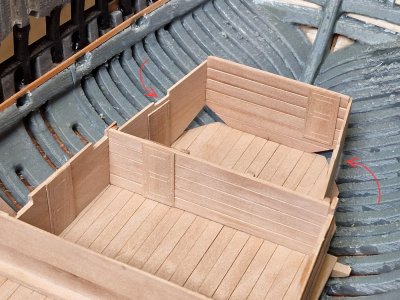
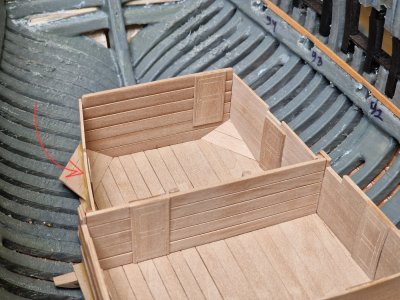
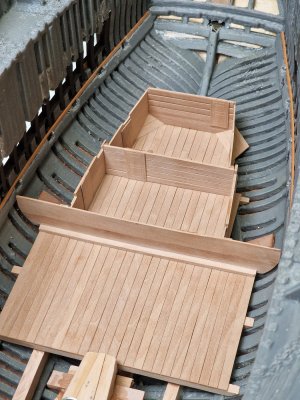
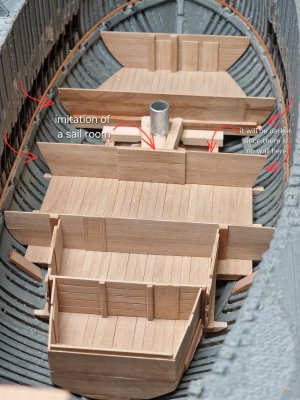
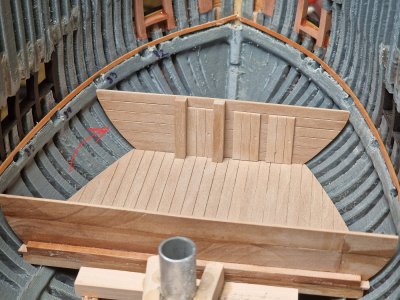
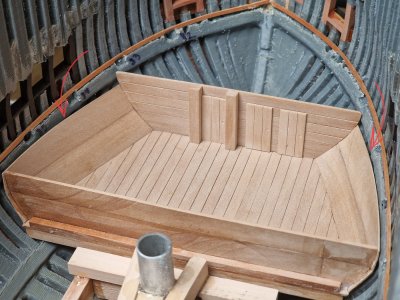
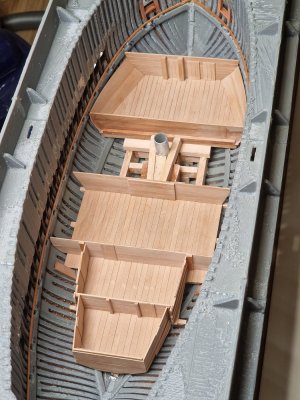
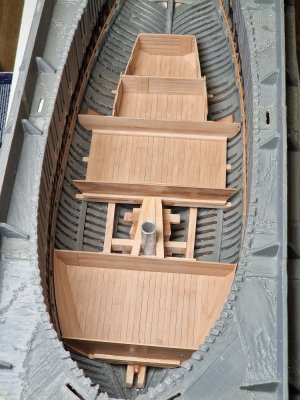
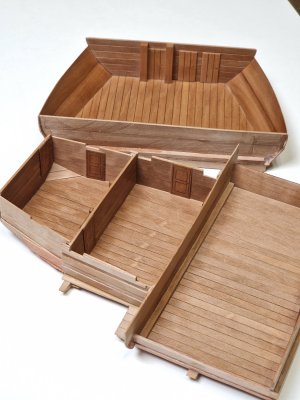
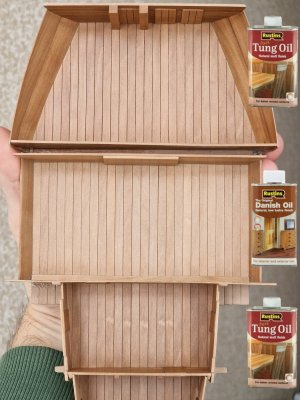
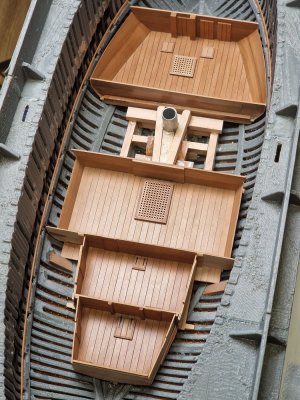
Since the lower deck will be practically invisible, the main parameter in its implementation is speed. Therefore, I made all the filling, as we say: “dendrophycal” method (excuse the expression) “from shit and sticks.”

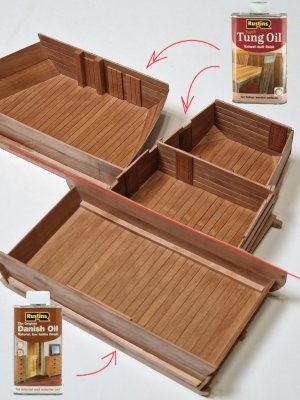
That is, I used all the leftover materials, scraps and uncalibrated blanks. I did this so that there was more space for experiments with coating with oil and bitumen. I'm thinking of covering the hull with Rustins Tung oil, but with the deck either the same or Danish Rustins oil. I'll see how it all turns out under the bitumen.

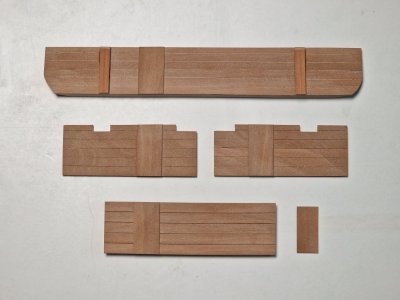
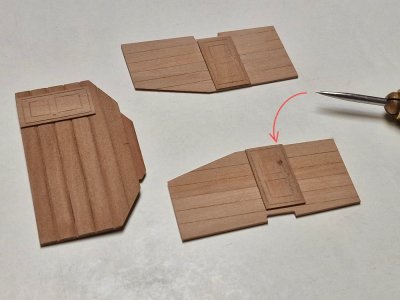
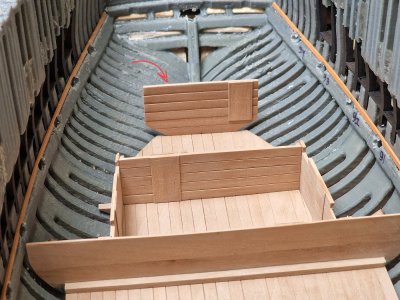
So, I installed walls and imitation doors on fragments of the deck. I repeat! The location of the walls, the height of the deck itself and other elements may have errors (they will still not be visible). And there were no central walls near the mast at all (I installed them as a visor from the lighting that I am planning).
Alert 1971.jpg

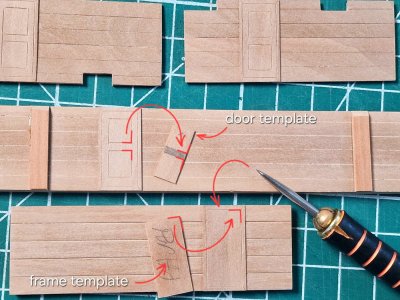
I made primitive stencils to create the outline of the doors, and scratched them with a needle.

Alert 1972.jpg

Alert 1973.jpg

Alert 1974.jpg

Alert 1975.jpg

Alert 1976.jpg

Alert 1977.jpg

Alert 1978.jpg

Alert 1979.jpg

Alert 1980.jpg

Alert 1981.jpg

Alert 1982.jpg

Alert 1983.jpg

Alert 1984.jpg

Oil coating is next... uh...
 
So now comes the most interesting part – the oil coating.

It's not for nothing that I did all the things that won't be visible... I'll be experimenting with exactly all of this.

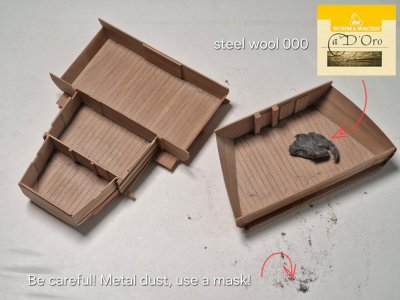
Alert 1985.jpg

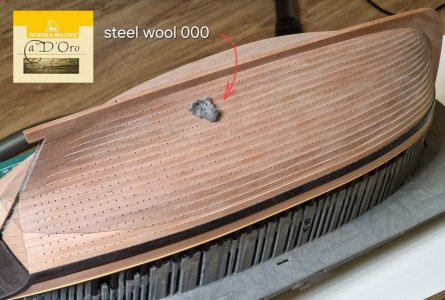
First, I polished everything with Borma Wachs 000 steel wool (a fantastic wool, all the varieties from 0000+, 000, and 00, highly recommended!!)

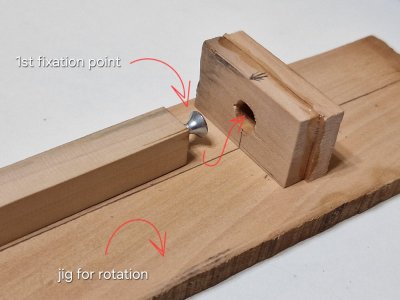
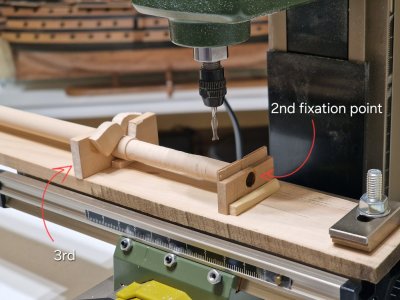
Then I made a special jig for applying oil. This was used by masters of the day who applied shellac paint and varnish to musical instruments, but the principle can be used here too.

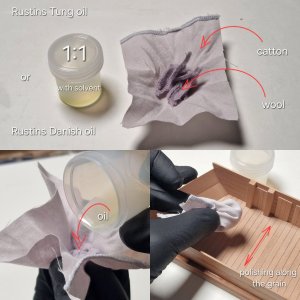
The idea is not to coat the oil with a thick film with a brush, but to polish with at least a 1:1 ratio of oil and solvent (I use thinner for artists' oil paints, it's odorless).

Alert 1986.jpg

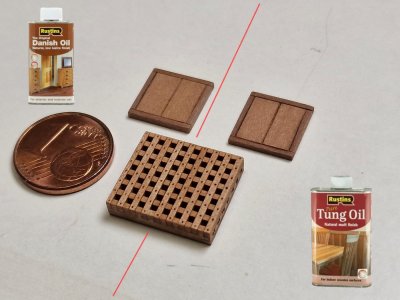
I experimented with two oils at once (Tung and Danish oils from Rustins).

First, I dilute the oil in a separate container, then pour it onto wool threads or pieces of fabric and wrap them in cotton cloth, making a sort of teddy bear. This creates a marker effect. The excess oil is always inside the wool, preventing it from dripping, and the oil evenly saturates the wood through the cloth. If you notice less oil, simply press harder on the wool, and the cloth will become damp again, but not dripping wet.

This method isn't very convenient in corners (there, it's better to use a damp, but not wet, brush with oil diluted more than 1:1)... and it's better to use it on larger surfaces... but since I was simulating the effect by applying it to the upper deck, I did it this way. Apply along the grain with a buffing motion, then wipe off any excess with a paper towel.

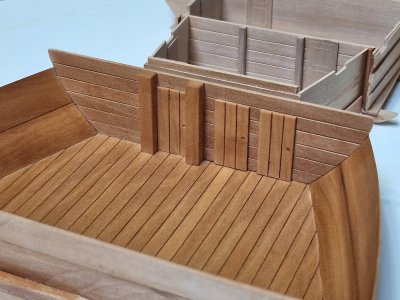
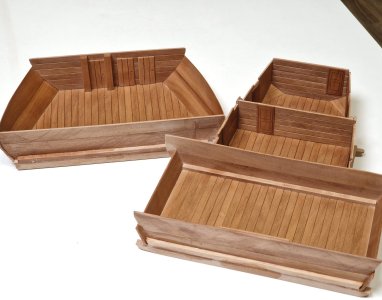
And here are the results:

Alert 1987.jpg

Alert 1988.jpg

Alert 1989.jpg

Alert 1990.jpg

It's hard to tell the difference in the photos, but Tung's color is more brown and rich, and therefore darker. Danish's is lighter (like a faded color), but it's a cool beige. My wife, like me, liked the result of Tung's, even though it's darker, which isn't ideal for a deck. But the issue with the pear wood... it'll be dark anyway, and how dark it is isn't that critical.

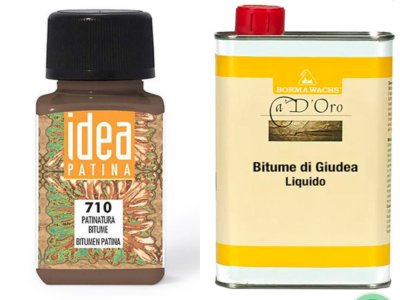
Now we'll wait a month and see what happens, and then in a month I'll coat it with bitumen. Speaking of which, I used Idea Patina 710 before, but it's difficult to work with. It's thick like resin and needs to be thinned with solvent, but the problem is that it's impossible to calculate the proportions, and that's definitely not the case with it.

Alert 1992.jpg

The one I want to try (Antique Bitumen) is already liquid, and you can calculate exactly how much you need and how much solvent, which is convenient. Incidentally, it's from the same company as the steel wool. There's also Antique Patina from the same company, but from the video review, I realized it's not brown, but more of a gray tone. That's not quite right, since I want a dark, dark brown, not a dark gray. Anyway, I'll show you the results in a month.
 
When I don't like something... I just can't leave it as is.

Three days of construction - in the trash... I removed every bolt I had installed from the hull...

Alert 1993.jpg

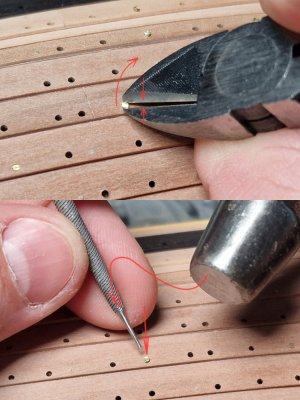
I pulled some out with wire cutters, and hammered or knocked some out of the case with a sharpened file.

And here's why I removed the brass bolts:

1. The color bothered me... brass is yellow (I don't understand why I chose that). The bolts were bronze, and what looked like bronze... copper. I thought about blackening the brass, but it's better to patinated the copper, which will look more authentic.

2. Because the boards were glued to plastic, the fixation was weak, and the bolts started falling out of the holes. Not all of them, just a few, but that's a bad sign... it can happen at any moment. This method is only good for solid wood, not plastic.

3. The bolt head repeatability also left much to be desired... It looked good on the test pieces, but on the case, I didn't like the result.

4. Not a major factor, but a significant one: it was very inconvenient to cut the brass wire on the body, and drilling with a drill bit on the body is also very dangerous, as it can damage the boards. Overall, this method is good, but time-consuming.

And now I'm back where I started...

Alert 1994.jpg

... I polished the case with steel wool and started again.

Alert 1995.jpg

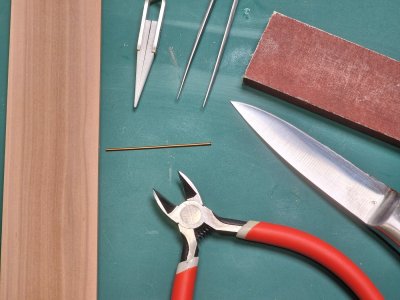
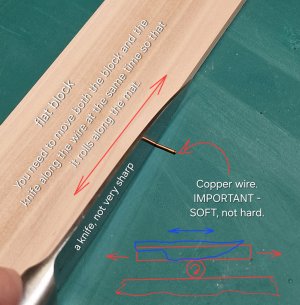
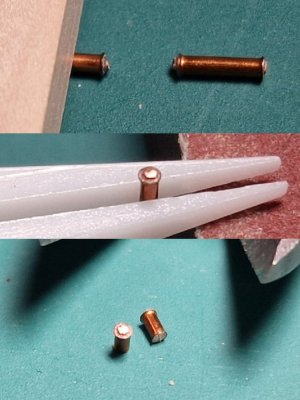
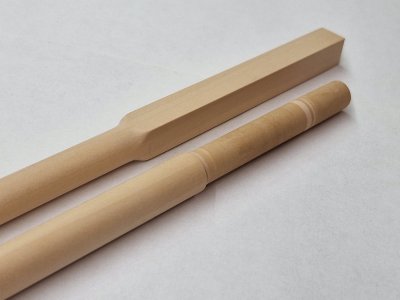
Tip: To make a smooth piece of wire, place it on a flat plate and slide it over it so that it rotates between the plate and the table.

Alert 1996.jpg

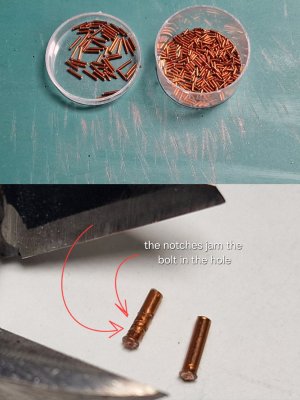
This principle is used for cutting and shaping bolts. Place the plate and knife on a SOFT copper wire and slide it back and forth so the wire rotates. With several passes, the knife (not sharp) cuts off a piece of the wire, creating an expansion zone at the edges.

Alert 1997.jpg

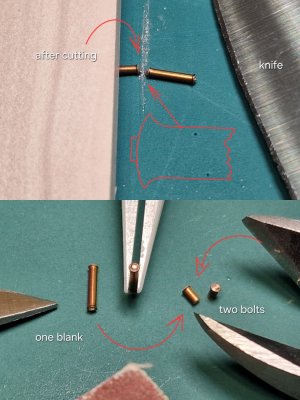
A zone similar to the bolt axis forms on the end face. If you cut this blank with nippers, you'll get two bolts.

In just a few minutes, you can make five blanks, or 10 bolts, which is very fast.

Alert 1998.jpg

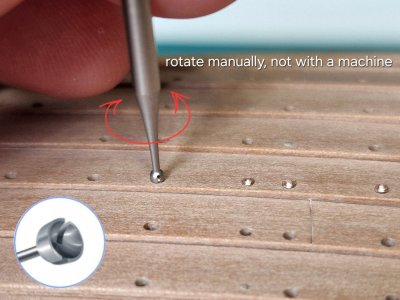
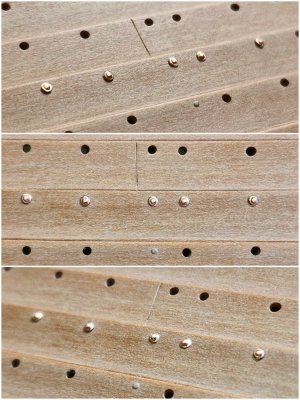
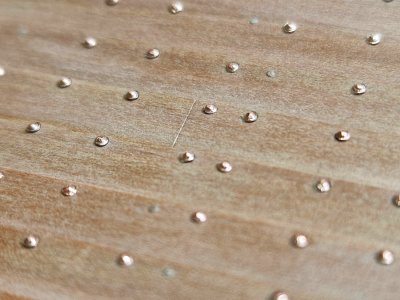
Then I simply insert the bolt into the hole, and it wedges due to the flare at the end, which is a huge plus! After that, I use a burr (by hand) to adjust the shape of the bolt head. Since copper is soft, this is easy to do, very quickly, and without a machine, without the risk of damaging the hull.

Alert 1999.jpg

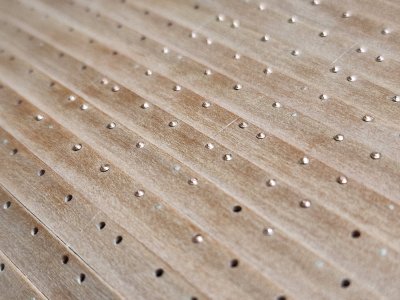
Well, here is the result.

Alert 2000.jpg

As I mentioned, I plan to patinated the bolts to give them an aged effect.

Alert 2001.jpg

Alert 2002.jpg

The shape still isn't quite what I'd like, but it's very close, and that's the main thing!

1. There's a fair amount of repeatability.

2. The bolts don't fall out and hold well.

3. I really like the color; it's just... brass just doesn't cut it.

So ahead lies the production and fixing of 100,500 bolts... again.

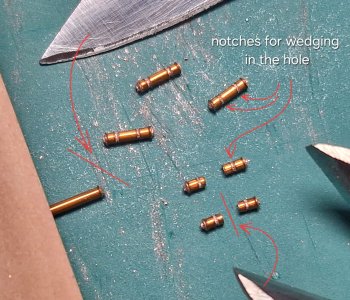
UPD: By the way! To increase friction and improve the bolt's grip in the hole, you can make notches on the bolt's surface with pliers.

Alert 2003.jpg
UPD 2: To speed up the process, I made similar movements while cutting the blanks, but without cutting the wire, just creating a groove around the circle. This deformation is what holds the wire tightly in the hole.

Alert 2004.jpg
 
Last edited:
Indeed, respect for your choice to replace them, Sergey.
Regards, Peter
Thank you friends for supporting me in my choice.


By the way, I added a life hack to the previous post about how to strengthen the bolt's hold in the hole... you need to make notches on the bolt's surface. It's a good thing this idea came to me at the beginning of the project, rather than at the end.. ROTF
 
Lower Deck Gratings and Hatches.

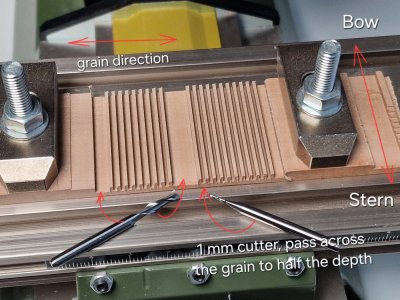
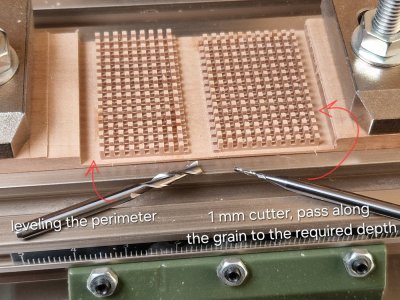
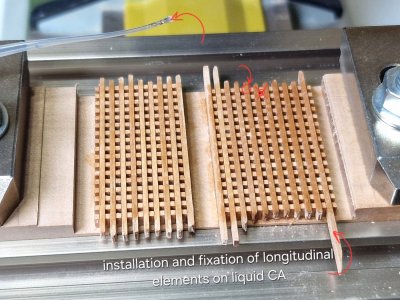
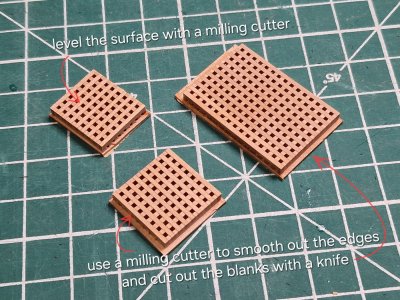
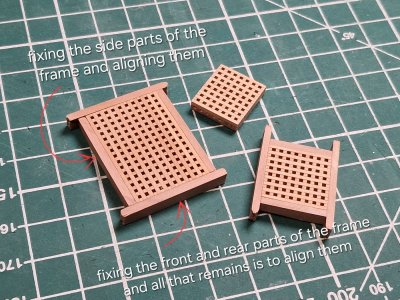
To be able to test how the gratings would look under oil, I decided to make test gratings for the lower deck. They won't be visible, but I'll be able to test different oils and bitumen on them.

This time, I'll be making them regular.

Alert 2005.jpg

Alert 2006.jpg

Alert 2007.jpg

Alert 2008.jpg

Alert 2009.jpg


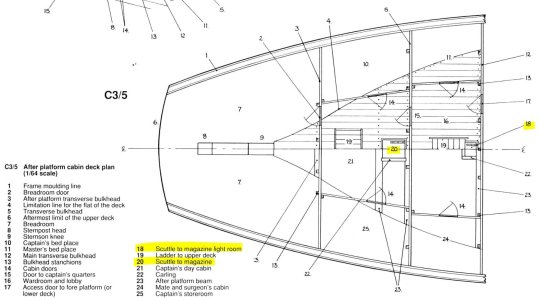
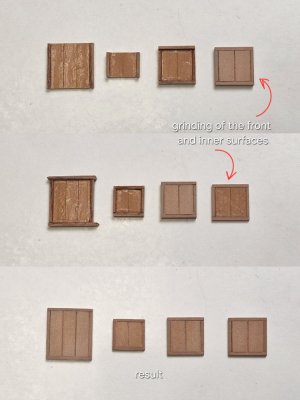
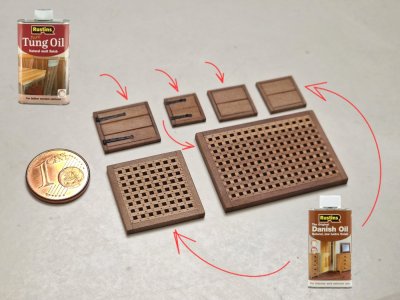
There are 4 more small hatches on the lower deck: two in front for the spirit room and the coal room.

Alert 2010.JPG

(There are also fore and main hatches with gratings, which I already showed earlier)...

...and also two small ones at the back: to the powder room and for lighting the powder room.

Alert 2011.JPG

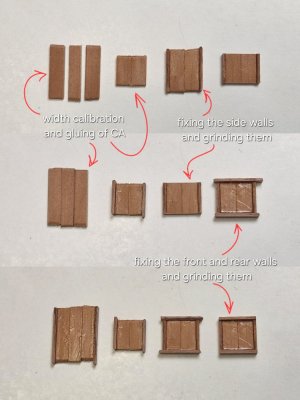
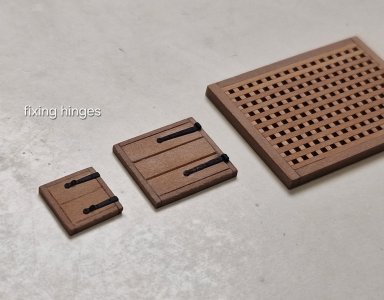
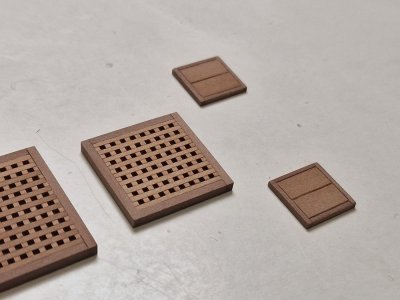
I decided to make them too:

Alert 2012.jpg

Alert 2013.jpg

I had some gun hinges left over from the Victory project (modeled and 3D printed, then spray-painted with matte paint), so I glued them on for clarity. They're unlikely to be visible, but I don't mind.

Alert 2014.jpg

Alert 2015.jpg

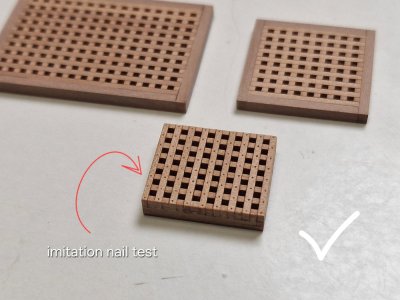
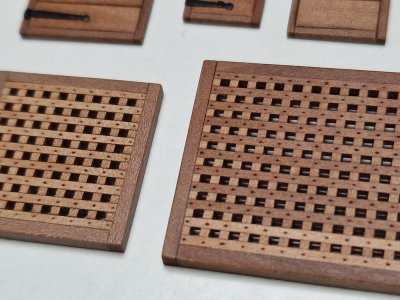
On a small fragment that I made specifically for this purpose, I made an imitation of nails and I liked the result, I did the same on the main gratings.

Alert 2016.jpg

I made the imitation with a needle and then treated everything with 000 steel wool.


Now it's time to apply the oil...

A week has passed, and here's the wood tone under the oils:

Alert 2017.jpg

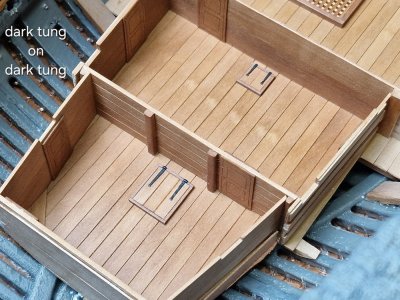
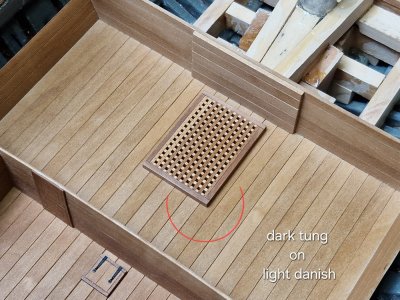
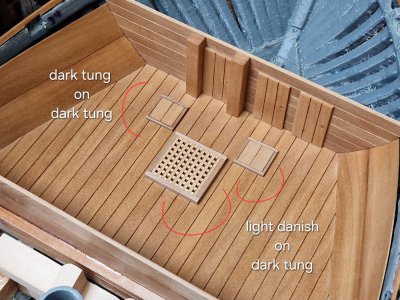
Visually, it's clear that the Tung oil darkened the wood more, while the Danish oil is lighter.

I like the Tung oil better in terms of color, but it shows more of the difference between the light and dark areas, making the grain clearer. While I don't like the Danish oil as much in terms of shade, it's lighter and doesn't show as much of the difference in the wood. Basically, I'll wait another 2-3 weeks and then seal it with bitumen, and then I'll know which is better. One question is whether I should reapply the oil (and how that will affect the gloss and texture)... and I'm also concerned that after the Tung oil has cured, at a certain angle, an uneven texture is visible (alternating matte and semi-matte patches)... it's difficult to explain.

Now, just a comparison:

Alert 2018.jpg

Alert 2019.jpg

Alert 2020.jpg

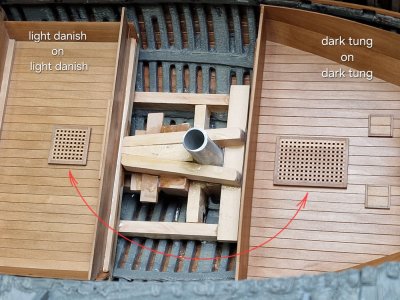
The Danish finish (left) has a more rippled frame, while the Tung finish (right) has a more uniform frame.

Below, you'll see dark details on a light deck and vice versa, and dark details on a dark deck and vice versa.

Alert 2021.jpg

Alert 2022.jpg

Alert 2023.jpg

Well, below I changed the gratings for comparison and this option:

Alert 2024.jpg

And in the end, I still have no idea what I'm going to do on the main deck, and everything will be determined only by the appearance after applying the bitumen... and maybe a second layer and then bitumen... it's complicaaaaaaaated with that...

Alert 2025.jpg
 
Back
Top