Let me get this right. If you can confirm if I’m on the right track here.
This is one of those “lightbulb moments” in rope making, so I just want to confirm it clearly for anyone following along — and for my own sanity as I head into making my first proper rigging rope.
When you see rope described as something like:
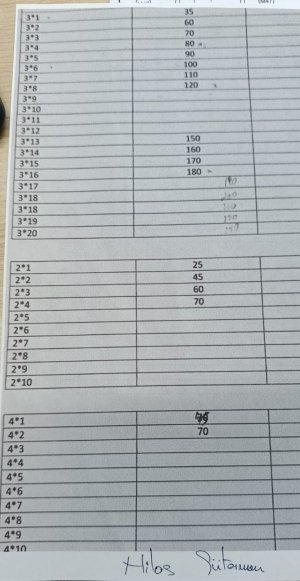
2×3
or
1×4
This is what it actually means.
Breaking the Numbers Down
Using 2×3 as the example:
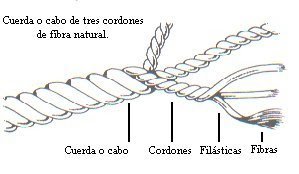
- The first number (2)
This is how many individual threads are twisted together to make one strand.
So in my case:
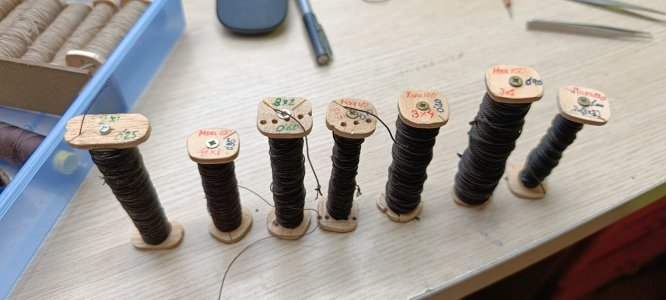
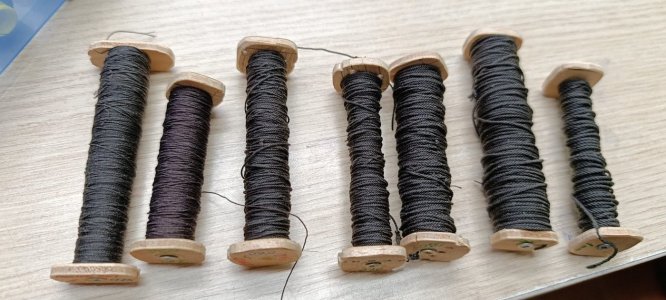
- 2 layers of Gütermann Mara 120
- Twisted together in the same direction
- That produces one finished strand
- The second number (×3)
This is how many finished strands are then twisted together to form the final rope.
So:
- You make 3 identical strands
- Then twist those 3 strands together in the opposite direction
- And that completes the rope
What That Means in Practice
Let’s put this into real rope-making terms:
- 1×3
- Very fine rope
- 1 thread per strand
- 3 strands total
- Good for light running rigging at small scales
- 2×3
- Slightly heavier rope
- Good for medium rigging or lighter standing rigging
- 3×3, 4×3, 5×3, etc.
- Increasingly heavier rope
- Diameter builds quickly
- Ideal for large-scale models
- 1×4 or 2×4
- Four-strand rope
- More round and “full” in appearance
- Seen on some historic rigging applications, but less common than 3-strand rope on warships

Applying This to My 1:50 San Felipe
For my 1:50 scale San Felipe, I’m targeting 1.5–1.7 mm rope for the main standing rigging.
That likely means something along the lines of:
- 8×3 or 9×3 using Mara 120.
- The rope making machine I purchased will twist upto 4 ropes together max at a time.
Does this mean I can not use Mara 120 to make thicker ropes?
- Or possibly 2×3 or 3×3 using Tera 20. My research tells me that Tera 20 is thicker thread.
The exact combination will come down to:
- Twist tension
- Lay length
- How tightly the rope closes on itself
This is where the rope-making machine really shines — I can test, measure, adjust, and repeat until the rope looks right, not just measures right.
Twist Direction (Important Detail)
Just to complete the picture:
- Threads → Strand: twisted in one direction
- Strands → Rope: twisted in the opposite direction
This opposing twist is what:
- Locks the rope together
- Prevents untwisting
- Gives real rope its strength and structure













 WAWAK is a commercial supply house and they pretty much have everything.