• Win a Free Custom Engraved Brass Coin!!!
    As a way to introduce our brass coins to the community, we will raffle off a free coin during the month of August. Follow link ABOVE for instructions for entering.
  • PRE-ORDER SHIPS IN SCALE TODAY!

    The beloved Ships in Scale Magazine is back and charting a new course for 2026!
    Discover new skills, new techniques, and new inspirations in every issue.

    NOTE THAT OUR FIRST ISSUE WILL BE JAN/FEB 2026

Making your own Ropes

I ordered the PL4 from Domanof

I will try the Guterman thread available locally and experiment. the suggested thread mentioned don’t appear to be available in Australia.

The Guterman treads available here in store where I live are just called Guterman polyester thread.

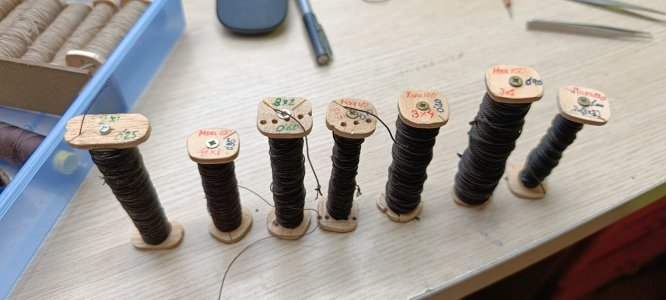
I will first try this one shown in image

View attachment 574382
Hi Phillip. I was chatting to you on another Facebook page yesterday. As far as I can ascertain, the most important features to look for in threads are 100% monofilament polyester overlocking threads. Gutermann is the most famous for us modellers, not least because it is high quality and has some very useful shades (722 light beige and 696 dark brown). However, you have to go with what's available locally. I just Googled polyester overlocking threads in Australia, and up came Homecraft Textiles (homecrafttextiles.com.au) selling 5,000 metre spools for $3.99, and looks to have quite a colour range. Might be worth a try.
 
Pedí el PL4 de Domanof

Probaré el hilo de Guterman disponible localmente y experimentaré. El hilo sugerido mencionado no parece estar disponible en Australia.

Los hilos Guterman disponibles aquí en la tienda donde vivo se llaman simplemente hilo de poliéster Guterman.

Primero probaré este que se muestra en la imagen.

[ADJUNTAR]574382[/ADJUNTAR]
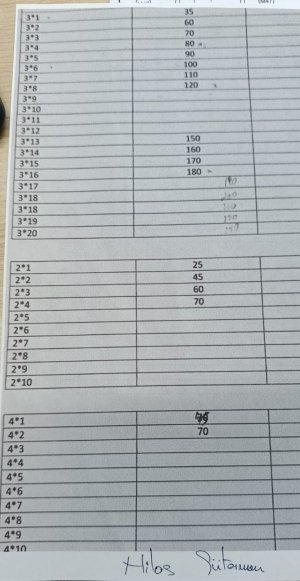
Hola, ese es demasiado grueso, estariamos hablando de 030 mm 0´35 mm, para depende de que lo vayas a usar se ira de escala, en serio, la maquina que he hecho me costo una mañana de hacer, motores de impresora vieja, transformadores de modem o similar, madera de chapacumen, y lo unico los rodamientos que si que pedi a Aliexpress, ten en cuenta que el hilo Mara 120 de Gütterman es de 0´10 0´15 mm y con ese te sale los cabos que quieras. Te adjunta tabla con los grosores dependiendo del nº de hilos que pongas en cada filatica, con el hilo de Mara 120olaImagen de WhatsApp 2026-01-31 a las 17.35.04.jpeg
 
Last edited:
When you go to the link I shared (post #8), you will discover that not sewing thread but lock yarn will give the best result. Gunterman is a brand that sells this and will give a good result, but also Serafil 120/2 of the brand Amann will give you a good result. Ropes of scale, I believe, also sells lockyarn for those who want to make their on rope. An endless rope making machine is not difficult to use, but it is limited in use. Rope of scale and modeltakelgarn (Germany) use machines like I use. The Domanoff machine that YT speaks about is easy to use, but also limited in lenght (or you live in a castle with a high tower and you love to run the stairs up and down). A horizontal rope machine is the best to use (especially for use old guys), like the reel thing unlimeted in lenght. It's no higher mathematic to build your own, but if you don't like that there are a lot of machines on the market. I sell this one for a cheap price.
But like I said there are more to buy or DIY. Read the link I first share and @Masters Mate also repleyed (post #11).
Thanks, I’ve already ordered the PL4. But I’m still interested in yours. How much to Australia
 
Hi, that's too thick. We'd be talking about 0.30 mm or 0.35 mm. Depending on what you're going to use it for, it might be too thick. Seriously, the machine I made took me a morning to complete. I used old printer motors, modem transformers or similar parts, and plywood. The only thing I ordered from AliExpress was the bearings. Keep in mind that Gütterman's Mara 120 thread is 0.10 or 0.15 mm thick, and you can make as many strands as you need with that. I've attached a table with the thicknesses depending on the number of strands you use in each row, using Mara 120 thread.View attachment 574460
the thing is, how to scale the ropes needed on a model ship... im working in 1:96. i understand real rope is measured by circumference and we use diameter for our models. the complication comes in when choosing a thread. what size thread do i use for a certain scaled size finished rope?

i have no idea what that table is refering to. what is 2*9 or any of the left column means.
 
Last edited:
the thing is, how to scale the ropes needed on a model ship... im working in 1:96. i understand real rope is measured by circumference and we use diameter for our models. the complication comes in when choosing a thread. what size thread do i use for a certain scaled size finished rope?

i have no idea what that table is refering to. what is 2*9 or any of the left column means.
visit this log
everything is explained. you have to experience and make a log about the rope you make. If there is 3x4 rope, that means rope with 3 strands and each strand is 4 yarns. The outcome of the rope depends on which yarn you use, the setup of your ropewalk, which ropewalk you use, and the settings. This can result in different thicknesses. That is why you should keep a log for yourself. But please visit that log, not only me but also others explain their work.
 
Last edited:
i saw your project, very impressive and a great explanation of rope style n types. i really never knew much about rope. thanks.

the rope walk is an easy diy project... ive made several types with my cub scouts back in the day and even made one from my old triple head norelco shaver. anyone with a bit of skill can do that... its not rocket science... we are very talented folks after all. so the making of the rope isnt a problem... its finding materials n how they finish.

im still confused with weights for commonly available threads such as gutterman found in almost any department store. when trying to pick a thread color in a particular material, it only comes in one weight.. and there are no set standardized weights from brand to brand to reference. so how can i make several weight ropes for my ship if the thinnest i can make is already out of scale? id hate to buy so many spools n still cant find what i need. thats where your and other experianced diyers can help. i see you like one particular brand thread. ive never seen it on the shelves here so i can compare it to other brands for color and weight n material vs minimum finished diameter rope. i see you can increase diameters by using more threads or will that not be appropiate for righing n usage?

like i said, i dont know much about rope other than your linked post and a few other threads on the subject. its still very vague to me, especially with limited resources. in my 50+ years of scratch building ships, ive never used diy rope, only single thread off the spools. i also never used synthetic threads so im lost when picking synthetic materials.

btw what are the numbers in the center column of crisjsca's chart?
 
Last edited:
La cuestión es, ¿cómo escalar las cuerdas necesarias para un modelo de barco? Estoy trabajando en 1:96. Entiendo que la cuerda real se mide por circunferencia y usamos el diámetro para nuestros modelos. La complicación surge al elegir un hilo. ¿Qué tamaño de hilo uso para una cuerda terminada de cierto tamaño a escala?

No tengo idea a qué se refiere esa tabla. ¿Qué significa 2*9 o cualquiera de las columnas de la izquierda?
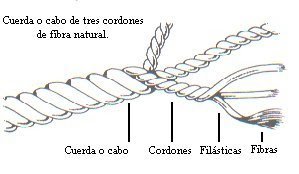
Buenos días, un cabo normalmente se compone de tres cordones, y cada cordón puede estar compuesto de varias filásticas, en la tabla el primer nº es los cordones que componen el cabo construido con Gütterman Mara 120, osea 3 cordones por una filasticas sale un cabo de 0´35 mm, 3 cordones de 2 filásticas sale un cabo de 0´60 mm, 3 cordones de 3 flásticas sale un cabo de 0'70 mm....así sucesivamente.
El siguiente recuadro serán cabos construidos con solo 2 cordones, 2 cordones x 1 filástica= 0´25mm, 2 cordones x 2 filásticas= 0´45, así sucesivamente...
El último recuadro seria para cabos construidos con 4 hilos, mismo sintema, 4 hilos x 1 filástica= 0´45 mm, y así todos...
El grosor de los cabos se mide, enrollando en una varilla, 10 o 20 vueltas del cabo a medir, bien pegadas las vueltas, se mide la anchura resultante y se divide por las vueltas. Espero que ahora se haya entendido. Un saludo.

cuerda.jpg
 
Good morning, a rope is normally made up of three strands, and each strand can be made up of several plies. In the table, the first number is the number of strands that make up the rope made with Gütterman Mara 120, that is, 3 strands with one ply makes a rope of 0.35 mm, 3 strands with 2 plies make a rope of 0.60 mm, 3 strands with 3 plies make a rope of 0.70 mm... and so on.
The following section will show ropes constructed with only 2 strands, 2 strands x 1 yarn = 0.25mm, 2 strands x 2 yarns = 0.45mm, and so on...
The last box would be for ropes constructed with 4 strands, same system, 4 strands x 1 strand = 0.45 mm, and so on for all...
The thickness of the rope is measured by wrapping it 10 or 20 times around a rod, making sure the wraps are tight. The resulting width is then measured and divided by the number of wraps. I hope that's clear now. Best regards.

View attachment 575708

Buenos días, un cabo normalmente se compone de tres cordones, y cada cordón puede estar compuesto de varias filásticas, en la tabla el primer nº es los cordones que componen el cabo construido con Gütterman Mara 120, osea 3 cordones por una filasticas sale un cabo de 0´35 mm, 3 cordones de 2 filásticas sale un cabo de 0´60 mm, 3 cordones de 3 flásticas sale un cabo de 0'70 mm....así sucesivamente.
El siguiente recuadro serán cabos construidos con solo 2 cordones, 2 cordones x 1 filástica= 0´25mm, 2 cordones x 2 filásticas= 0´45, así sucesivamente...
El último recuadro seria para cabos construidos con 4 hilos, mismo sintema, 4 hilos x 1 filástica= 0´45 mm, y así todos...
El grosor de los cabos se mide, enrollando en una varilla, 10 o 20 vueltas del cabo a medir, bien pegadas las vueltas, se mide la anchura resultante y se divide por las vueltas. Espero que ahora se haya entendido. Un saludo.

View attachment 575708
ooooohhh that explains it very nicely. i now see the numbers are 0.xx mm for each winding. thats worth a million bucks! thanks.

im out the door so ill have to get back to my reply later to continue our conversation.
 
ok so; did a bit of math to scale the mm diameters to my scale of 1:96. i see a 0.3 mm is approximately 1" diam rope.

in your diagram i see you also have 3 ropes of 3 strands each to make a heavier rope as well as other ways to increase diam by using more strands for each rope. its all coming together now.

ill have to go back to steef66 thread and figure out which rope would be appropiate for each application n loads.

thanks guys for sharing your expertise and taking the time to explain everything, and foremost, having the patience.

i am going to give this a try. now off to michaels to find the materials... thats another challenge in itself. im not up on synthetic materials. so far my cotton n linens have served me well on my old ships of 50years to present. they are in need of replacing and now with this diy rope making, it will give my old ships a well deserved face lift.
 
In regards to making your own ropes. I think I’m starting to work this out. As mentioned before I ordered the ship works shop PL4-4 rope making machine.

I’m waiting for it to arrive.

A lot of the mentioned ropes are not easy to find here in Australia.

I managed to find Guterman Mara 120 as well as Tera 20 thread online. There also on the way to me now.

My first rope I need to makes is for the main rigging of a 1:50 scale san Felipe I’m building. I’m looking at 1.5 to 1.7mm rope.

These threads I just mentioned. Can I make rope that thick?
 
Last edited:
Let me get this right. If you can confirm if I’m on the right track here.

This is one of those “lightbulb moments” in rope making, so I just want to confirm it clearly for anyone following along — and for my own sanity as I head into making my first proper rigging rope.

When you see rope described as something like:

2×3

or

1×4

This is what it actually means.


Breaking the Numbers Down


Using 2×3 as the example:

  • The first number (2)
    This is how many individual threads are twisted together to make one strand.
    So in my case:
    • 2 layers of Gütermann Mara 120
    • Twisted together in the same direction
    • That produces one finished strand

  • The second number (×3)
    This is how many finished strands are then twisted together to form the final rope.
    So:
    • You make 3 identical strands
    • Then twist those 3 strands together in the opposite direction
    • And that completes the rope

What That Means in Practice

Let’s put this into real rope-making terms:

  • 1×3
    • Very fine rope
    • 1 thread per strand
    • 3 strands total
    • Good for light running rigging at small scales

  • 2×3
    • Slightly heavier rope
    • Good for medium rigging or lighter standing rigging

  • 3×3, 4×3, 5×3, etc.
    • Increasingly heavier rope
    • Diameter builds quickly
    • Ideal for large-scale models

  • 1×4 or 2×4
    • Four-strand rope
    • More round and “full” in appearance
    • Seen on some historic rigging applications, but less common than 3-strand rope on warships
⚓ Applying This to My 1:50 San Felipe


For my 1:50 scale San Felipe, I’m targeting 1.5–1.7 mm rope for the main standing rigging.

That likely means something along the lines of:

  • 8×3 or 9×3 using Mara 120.
  • The rope making machine I purchased will twist upto 4 ropes together max at a time.
Does this mean I can not use Mara 120 to make thicker ropes?
  • Or possibly 2×3 or 3×3 using Tera 20. My research tells me that Tera 20 is thicker thread.
The exact combination will come down to:

  • Twist tension
  • Lay length
  • How tightly the rope closes on itself

This is where the rope-making machine really shines — I can test, measure, adjust, and repeat until the rope looks right, not just measures right.


Twist Direction (Important Detail)


Just to complete the picture:

  • Threads → Strand: twisted in one direction
  • Strands → Rope: twisted in the opposite direction

This opposing twist is what:

  • Locks the rope together
  • Prevents untwisting
  • Gives real rope its strength and structure

 
Last edited:
im still confused with weights for commonly available threads such as gutterman found in almost any department store. when trying to pick a thread color in a particular material, it only comes in one weight.. and there are no set standardized weights from brand to brand to reference. so how can i make several weight ropes for my ship if the thinnest i can make is already out of scale? id hate to buy so many spools n still cant find what i need. thats where your and other experianced diyers can help. i see you like one particular brand thread. ive never seen it on the shelves here so i can compare it to other brands for color and weight n material vs minimum finished diameter rope. i see you can increase diameters by using more threads or will that not be appropiate for righing n usage?

like i said, i dont know much about rope other than your linked post and a few other threads on the subject. its still very vague to me, especially with limited resources. in my 50+ years of scratch building ships, ive never used diy rope, only single thread off the spools. i also never used synthetic threads so im lost when picking synthetic materials.

btw what are the numbers in the center column of crisjsca's chart?

Steef66 gave you the link to his great treatment of laying up your own scale rope in his response above. To that I will add the collection of threads and posts on rope making that is on the Model Ship World forum: https://modelshipworld.com/topic/27...t-to-know-how-see-these-tutorials-and-topics/ You will find posts there by Chuck Passaro, who sells the Syren Rope Rocket (https://syrenshipmodelcompany.com/ropewalk.php) and Alexey Domanoff (AKA "Aleksei Domanov"), the engineer who designed the line of what is probably the most popular powered scale rope making machines in the world: https://www.shipworkshop.com/product-page/pl4-series-endless-rope-making-machines-with-traverse. (The Rope Rocket is not presently available due to tariff restrictions.) All you have to do is to read over all this information and you will have everything you need to make scale rope. It takes some fiddling around and you should take notes so you can replicate lay-ups you've made previously.

I did not find the operation of the Shipworkshop PL4 to be very "intuitive." There's a lot more going on in its "little black box" than just on-off switches and rheostats. There seem to be chips in there that do a bit of thinking for you and you really do need to study the instructions to learn how to operate the machine. Alexey Domanoff has a YouTube channel and his video on operating the PL4 is a big help. (https://www.youtube.com/results?search_query=Aleksei+Domanov) Review the operating instructions and you will find a "recipe chart" for making a wide range of sizes of scale rope from a variety of available thread brands. (See:https://www.shipworkshop.com/_files/ugd/261ffb_78bd683d2cf649b88c671c133ebcbfbe.pdf) As it seems you've discovered, there are a number of sizing conventions in the thread industry (two main ones) and the differences between them can get confusing. They are important if good scale rope is to be made, so you should pay close attention to the thread sizes. You can make thicker scale rope by either multiplying the number of threads you lay up as yarns in a strand, or by increasing the size of the thread you are using as a strand. (I find it a lot easier to vary the thickness of the thread than the number of yarns that make up a strand.) Buy your thread online from WAWAK sewing supplies: https://www.wawak.com/thread/thread-by-brand/gutermann/ Don't expect to find the range of colors you will want to necessarily be in your local "fabric store," if you even have a local "fabric store." They seem to be going the way of the "local hobby shops!" :( WAWAK is a commercial supply house and they pretty much have everything.
 
Last edited:
Let me get this right. If you can confirm if I’m on the right track here.

This is one of those “lightbulb moments” in rope making, so I just want to confirm it clearly for anyone following along — and for my own sanity as I head into making my first proper rigging rope.

When you see rope described as something like:

2×3

or

1×4

This is what it actually means.


Breaking the Numbers Down


Using 2×3 as the example:

  • The first number (2)
    This is how many individual threads are twisted together to make one strand.
    So in my case:
    • 2 layers of Gütermann Mara 120
    • Twisted together in the same direction
    • That produces one finished strand

  • The second number (×3)
    This is how many finished strands are then twisted together to form the final rope.
    So:
    • You make 3 identical strands
    • Then twist those 3 strands together in the opposite direction
    • And that completes the rope

What That Means in Practice

Let’s put this into real rope-making terms:

  • 1×3
    • Very fine rope
    • 1 thread per strand
    • 3 strands total
    • Good for light running rigging at small scales

  • 2×3
    • Slightly heavier rope
    • Good for medium rigging or lighter standing rigging

  • 3×3, 4×3, 5×3, etc.
    • Increasingly heavier rope
    • Diameter builds quickly
    • Ideal for large-scale models

  • 1×4 or 2×4
    • Four-strand rope
    • More round and “full” in appearance
    • Seen on some historic rigging applications, but less common than 3-strand rope on warships
⚓ Applying This to My 1:50 San Felipe


For my 1:50 scale San Felipe, I’m targeting 1.5–1.7 mm rope for the main standing rigging.

That likely means something along the lines of:

  • 8×3 or 9×3 using Mara 120.
  • The rope making machine I purchased will twist upto 4 ropes together max at a time.
Does this mean I can not use Mara 120 to make thicker ropes?
  • Or possibly 2×3 or 3×3 using Tera 20. My research tells me that Tera 20 is thicker thread.
The exact combination will come down to:

  • Twist tension
  • Lay length
  • How tightly the rope closes on itself

This is where the rope-making machine really shines — I can test, measure, adjust, and repeat until the rope looks right, not just measures right.


Twist Direction (Important Detail)


Just to complete the picture:

  • Threads → Strand: twisted in one direction
  • Strands → Rope: twisted in the opposite direction

This opposing twist is what:

  • Locks the rope together
  • Prevents untwisting
  • Gives real rope its strength and structure

nope, the first number is for the strands and the second number is for the count of yarns in one strand.
3 strand rope is the most common rope you make. 4 strands is difficult. because it could collapse without core.
2 strands? I make that only when I need very thin rope. It doesn't look good on thicker rope, like 0,4 mm diameter.
so 3x1, 3x2, 3x3, 3x4, 3x5.........3x20 are all 3 strands and the second number is how many yarns there are in one strand.

The rope making machine I purchased will twist upto 4 ropes together max at a time.
You discovered the limitation of that machine. I seen people solving that to twist more yarns on the spool before you start turning. But that is a lot of work. Or you need to use thicker yarns. I don't know how this wil look in the end result. When I look to people that are an example in rope making here on the forum, like Mati.n, Kudin or archjofo, they use a ropewalk like the real thing.

I like the PL4, sometimes I wished I had one. Especially when I need a lot of 3x1 rope. You always need that a lot.
 
Last edited:
As it seems you've discovered, there are a number of sizing conventions in the thread industry (two main ones) and the differences between them can get confusing. They are important if good scale rope is to be made, so you should pay close attention to the thread sizes. You can make thicker scale rope by either multiplying the number of threads you lay up as yarns in a

yes, it gets more involved the more i dig but this is exactly what im looking for in order to have the appropriate rope for its application. i love the research and appreciate all the help. its details like this that makes the biggest difference in appearance.

as for the machine... i really dont need a store bought, i can build my own and have done it in the past. i just never used my machines to make ropes for my ships. but now that i have access to the information, i will certainly start doing it.

realize the internet is recent for us old farts. sharing this kind of information was only published in books or by word of mouth through friends... and not much was relating to this hobby. i studied climbing ropes when i was actively involved but thats a completely different animal.

again, thanks for sharing.
paul
 
no os compliques tanto la cabeza, haceros la máquina, y hacer unos cuantos metros de cabo, que irá a la basura, hasta que entendáis como funciona, y pilleis la práctica, yo ahora hago cabos de 6 m de longitud en mi salón, cuando monto la máquina, uso todo el día y hago muchos m de diferentes calibres. Práctica error, y al final premio, hay gente que tiene tabla hasta de los pesos a poner, yo a ojo y salen perfectos. De verdad, no es tan difícil. Un saludo al mundo
 
Back
Top