• Win a Free Custom Engraved Brass Coin!!!
    As a way to introduce our brass coins to the community, we will raffle off a free coin during the month of August. Follow link ABOVE for instructions for entering.

School for Shipmodel Building School for model ship building

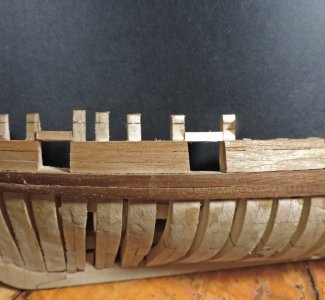
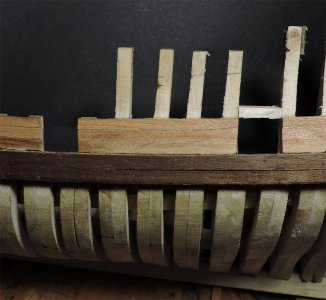
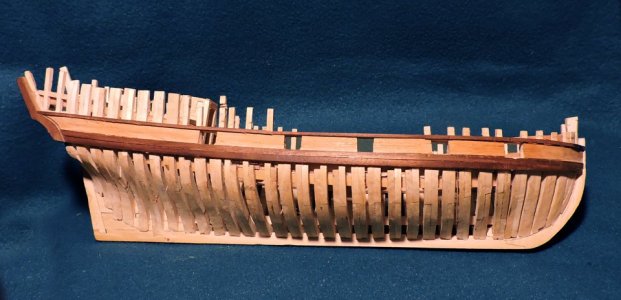
The way i work is to start big and work the piece down to a snug fit on the model. What i am fitting is the front edge to the wale and planking, once the curve is cut in the planking it is now a matter of fitting the molding to the planking.
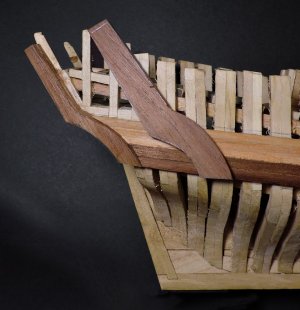
up work5.jpg

The more you sand and adjust the front edge the more material you're losing at the other edge, so that is why i start big to leave enough material to work both edges
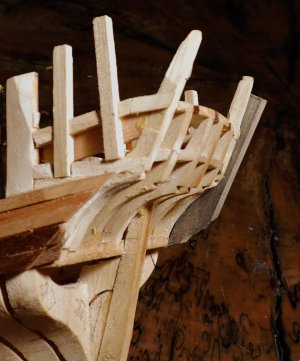
up work6.jpg

You need an overlap at the stern edge for the stern planking to butt against
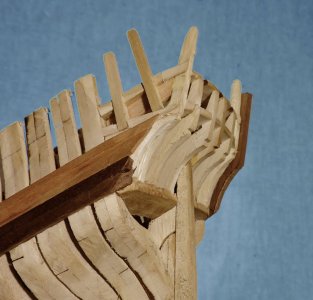
up work7.jpg

With a lot of shaping and testing the fit to the hull finally the molding is the proper shape and in place and a nice tight fit to the wale and planking.
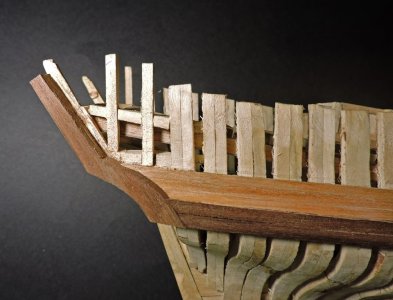
up work8.jpg
 
Last edited:
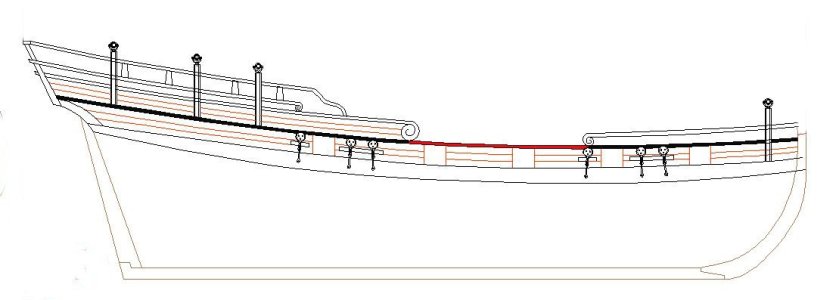
Almost ready to start the upper works but first there is a molding that runs from stem to stern along the top of the bulwark planking. In model ship building it is common for one thing depending on something else and if you are doing thing out of order you find yourself in trouble. The red section of the molding is actually the edge of the cap rail so it has to go in first.

Capture molding.JPG

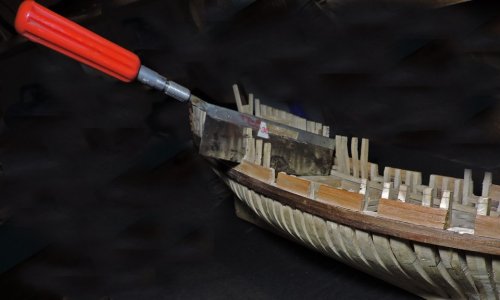
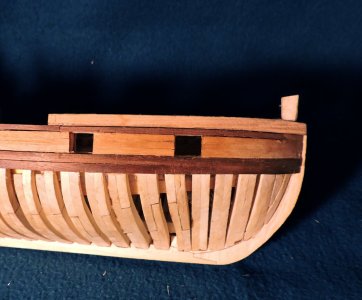
Before the cap rail can go in the gun ports have to be cut in and those are cut with a razor saw
.

up work9.jpg

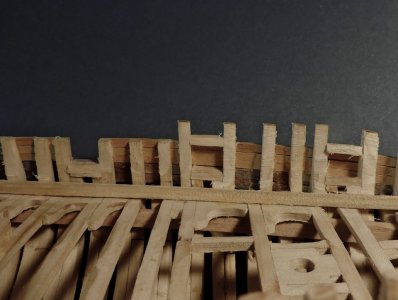
Oops i put the top of the gun ports in before i cut them out, no big deal i just cut through the top of the ports then redid the tops

up work10.jpg

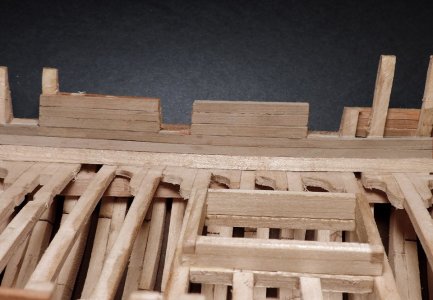
The inside of the bulwarks has to be planked before the cap rail so i will get that done this week

up work11.jpg
 
Last edited:
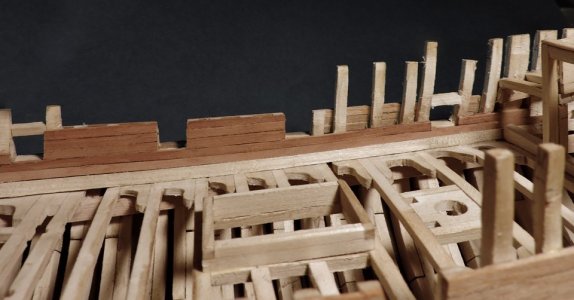
I left off with an oops! with the gun ports by putting in the top head piece and not cutting out the port first. The problem was an easy fix by ripping out the top timber then cutting out the port and reinstalling the top timber. Now with that fixed i can move on to the bulwark planking

up work12.jpgup work13.jpg


a lesson here is to spend a little time looking at the model and planning your next step so you do not have to back track or rip thing out.
 
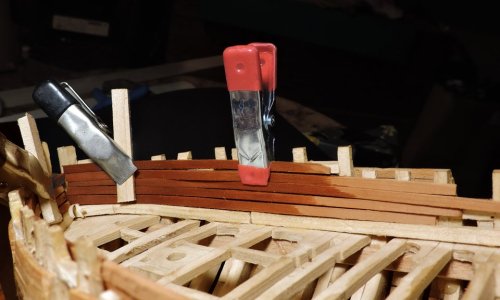
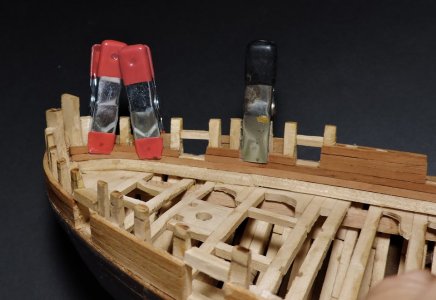
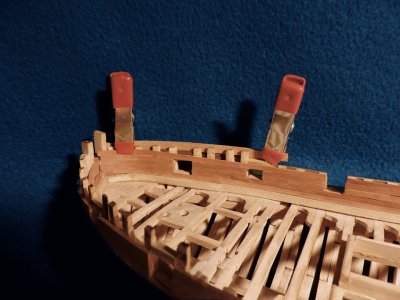
I tried to bend the planking dry but ended up breaking them, the curve is just to tight for a dry bend so i soaked the ends of the planks in hot water for about 20 minutes, they bent with ease. Wet wood is soft so i never use a clamp directly on the plank i always use a piece of scrap between the clamp and the plank. Well except for the red clamp but the planks will be cut at the gun port.

up work14.jpg

I started the inside of the bulwark planking in the center and worked my way to the bow and stern plank by plank.


up work15.jpgup work16.jpg

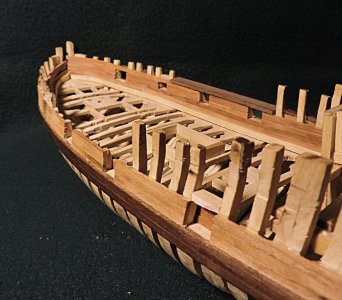
The inside of the bulwarks are finished except for the last upper plank at the bow, i set the cap rail on the center section.

up work17.jpg

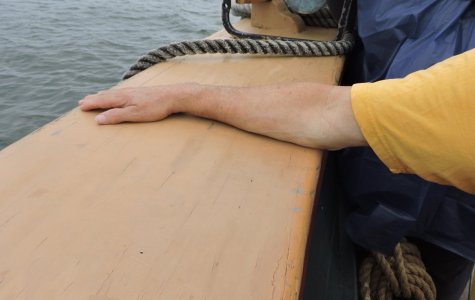
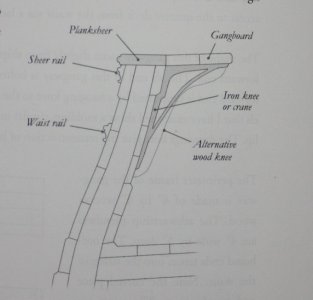
cap rails are a much bigger timbers than expected

DSCN0094.JPGDSCN6878.JPG

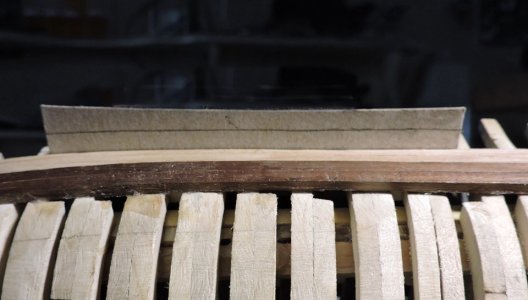
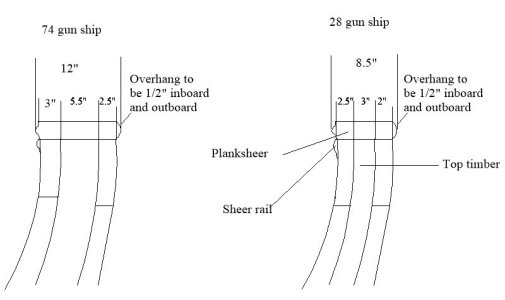
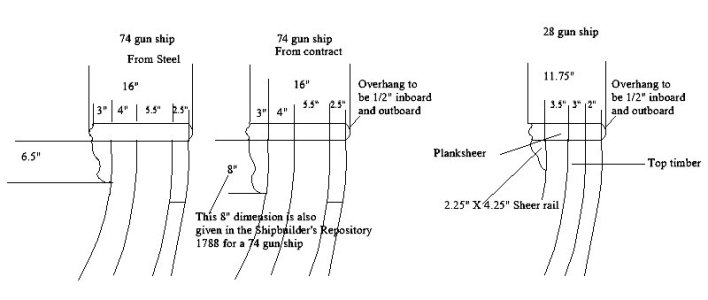
The center cap rail although it looks straight it actually has a slight curve> to get the right shape and fit use a piece of cardboard and trace the bulwark then move you cardboard pattern up to the width of the bulwark and make another line. You have to take into account an overhang so the cap rail meets the outside molding.


DSCN1127.jpg
 
Last edited:
The molding runs along the top of the bulwark planking and meets the cap rail.

up work18.jpg


At the bow the final plank has a taper wide at the stem and tapers back. There will be a cap rail on top and a scroll at the end.

up work19.jpg

What makes planking a kit difficult is the lack of sheet stock or wider planks to make tapered planks both at the bottom of the hull as well as fitting planking at the top. With all the same width planking provided in a kit you can only taper from the width to the smaller end. Very often you need that full width and you need to taper a plank to the wider end.

On the inside of the bulwark at the bow the taper runs opposite of the outside. On the outside the last plank is wider at the stem and tapers back, on the inside the last plank is narrower at the stem and widens as it goes back. The reason for the reverse tapering is because the deck rises as it approaches the bow give less room for the inside planking.

up work20.jpg
 
Back
Top