
-

SUBSCRIBE TO SHIPS IN SCALE TODAY!
The beloved Ships in Scale Magazine is back and charting a new course for 2026!
Discover new skills, new techniques, and new inspirations in every issue.
NOTE THAT OUR NEXT ISSUE WILL BE MARCH/APRIL 2026 -

Win a Free Custom Engraved Brass Coin!!!
As a way to introduce our brass coins to the community, we will raffle off a free coin during the month of August. Follow link ABOVE for instructions for entering.
You are using an out of date browser. It may not display this or other websites correctly.
You should upgrade or use an alternative browser.
You should upgrade or use an alternative browser.


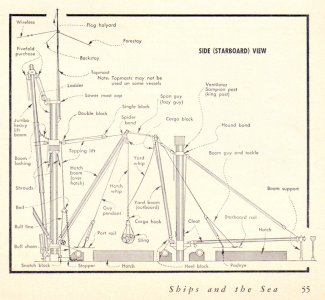
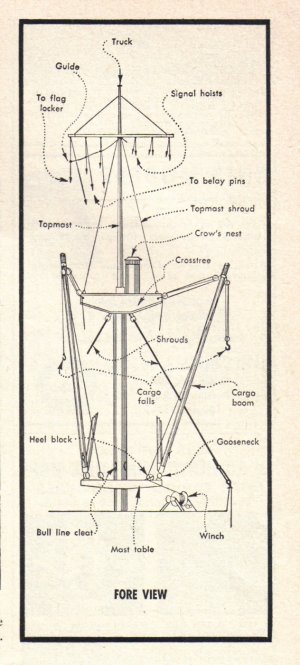
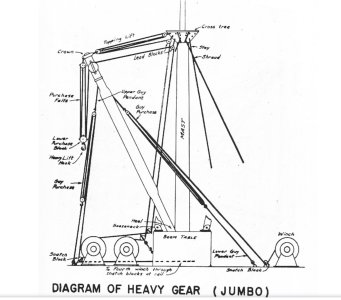
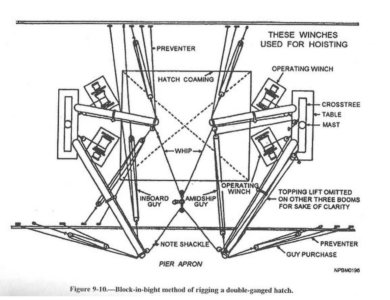
Thank you Roger, Jerome and others who have posted real world experience with similar ships and other advice to help me get this project right, the input is very helpful and definitely appreciated. Hopefully I'll have some time today between other projects to make more progress on the hull, I'll post photos as progress is made.
And Jerome thanks so much for the rigging diagrams! This is my first ship build so I'm not very familiar with the rigging - those drawings will be incredibly helpful!
And Jerome thanks so much for the rigging diagrams! This is my first ship build so I'm not very familiar with the rigging - those drawings will be incredibly helpful!


Fantastic project, photos, and all information from others watching this site.
Jim
Jim
- Joined
- Jun 29, 2024
- Messages
- 1,813
- Points
- 488

To add a little to my piping story. As fabricators of the piping our responsibility ended when the piping was delivered to the dock down the street from out shop. But to our surprise, several specialists hired by the shipper arrived to oversee loading and our conference room became their office.
A stowage expert. This guy literally mapped out every piece of piping loaded within the ship’s cargo spaces. This included leaving one hold empty, but piping stowed on deck. I believe that the empty hold was later flooded to get under the Detroit River bridge
Cargo surveyors. These guys inspected the cargo to certify that it was in good condition when shipped.
The manager of the port’s stevedoring company. His guys did the actual loading. I believe that this included operating the vessel’s cargo gear.
A representative of the company insuring the cargo.
There were others that I don’t remember. My point is that shipping this piping was carefully planned by knowledgeable people within the marine shipping industry. I would assume that the same thing happens all of the time at ports around the world.
Roger
A stowage expert. This guy literally mapped out every piece of piping loaded within the ship’s cargo spaces. This included leaving one hold empty, but piping stowed on deck. I believe that the empty hold was later flooded to get under the Detroit River bridge
Cargo surveyors. These guys inspected the cargo to certify that it was in good condition when shipped.
The manager of the port’s stevedoring company. His guys did the actual loading. I believe that this included operating the vessel’s cargo gear.
A representative of the company insuring the cargo.
There were others that I don’t remember. My point is that shipping this piping was carefully planned by knowledgeable people within the marine shipping industry. I would assume that the same thing happens all of the time at ports around the world.
Roger
Last edited:
Roger,To add a little to my piping story. As fabricators of the piping our responsibility ended when the piping was delivered to the dock down the street from out shop. But to our surprise, several specialists hired by the shipper arrived to oversee loading and our conference room became their office.
A stowage expert. This guy literally mapped out every piece of piping robe loaded within the ship’s cargo spaces. This included leaving one hold empty, but piping stowed on deck. I believe that the empty hold was later flooded to get under the Detroit River bridge
Cargo surveyors. These guys inspected the cargo to certify that it was in good condition when shipped.
The manager of the port’s stevedoring company. His guys did the actual loading. I believe that this included operating the vessel’s cargo gear.
A representative of the company insuring the cargo.
There were others that I don’t remember. My point is that shipping this piping was carefully planned by knowledgeable people within the marine shipping industry. I would assume that the same thing happens all of the time at ports around the world.
Roger
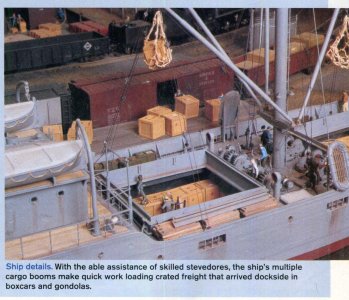
Thanks again for the info. All this talk of cargo loading is making me think I should build my ship the same way Howard Lloyd did - with an open cargo hold, crates and stevedores inside loading/unloading...
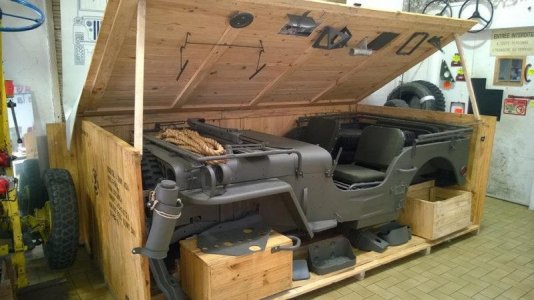
Since I'm an independent product designer and I've done products for more than a half dozen Jeep and offroad trailer companies, maybe my load should be WWII crated Jeeps.


Your work is much cleaner than mine. My bulkheads weren’t numbered so I had to guess where they went. Several crumbled as I cut them, and I had to make new ones from scratch. I love your progress. Hopefully you can see some of my mistakes so you know how to avoid them.Sorry if I might be boring people with detail, I can post only major milestones if people prefer. Thinking through the details is how I work, I learned long ago in my work as an automotive accessories designer that there's no substitute for thinking and planning before grabbing the tools.
Here's more detail, I lowered the bulkheads today. I used a 3/4" wide scale to mark the locations for cuts to lower the bulkheads 3/4" and once marked I cut them with a razor blade.
View attachment 563794
Work in progress, the five bulkheads in the center of the hull have been cut. The bulkheads still are just setting in place, not glued to the base yet.
View attachment 563796
All bulkheads cut:
View attachment 563795
Due to the flare of the hull, shortening the bulkheads makes them wider than the base at the bottom. I planned for this - when I cut the 1/4" plywood I'll be using as a sub-base to glue this entire assembly to I'll cut to the proper contour to match the bottoms of the bulkheads.
View attachment 563797
If I'm posting too much detail I'll be happy to post less.
This is great info! I can use it in mine as well.Here’s a few drawings of cargo gear arrangements that may help if the plans are not clear enough
View attachment 563860
View attachment 563861
View attachment 563862
View attachment 563863
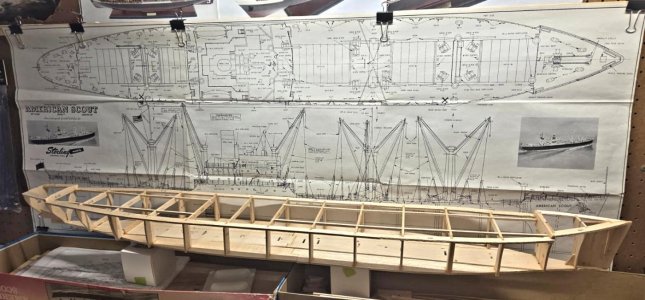
The basic hull structure is complete. According to the kit instructions, the next step would be to build the lower part of the hull but since I'm doing this as a waterline model, my next step will be to add a 1/4" plywood base. I'll shape it to match the wider profile of the bottom of the hull that resulted from shortening the bulkheads 3/4" at the bottom.
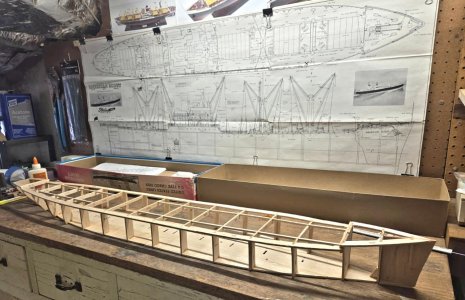
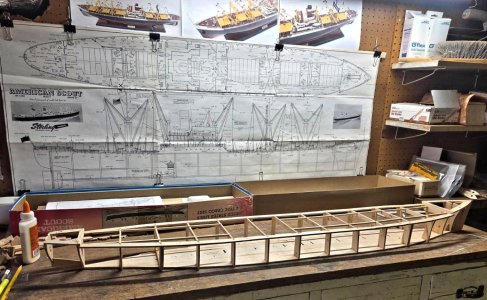
Comparing the hull to the plans to see how tall the finished ship will be with the masts and rigging:
After adding the plywood base I'll perfect the fairing of the hull - the kit parts are fairly accurate but not absolutely perfect so some work to make sure the hull is faired correctly is in order.
Comparing the hull to the plans to see how tall the finished ship will be with the masts and rigging:
After adding the plywood base I'll perfect the fairing of the hull - the kit parts are fairly accurate but not absolutely perfect so some work to make sure the hull is faired correctly is in order.
You’re moving along at a pretty good clip!The basic hull structure is complete. According to the kit instructions, the next step would be to build the lower part of the hull but since I'm doing this as a waterline model, my next step will be to add a 1/4" plywood base. I'll shape it to match the wider profile of the bottom of the hull that resulted from shortening the bulkheads 3/4" at the bottom.
View attachment 564151
View attachment 564152
Comparing the hull to the plans to see how tall the finished ship will be with the masts and rigging:
View attachment 564153
After adding the plywood base I'll perfect the fairing of the hull - the kit parts are fairly accurate but not absolutely perfect so some work to make sure the hull is faired correctly is in order.
I've had some down time over the past few days as I've been waiting for coats of paint to dry renovating our early 1800's homeYou’re moving along at a pretty good clip!
 . Progress might slow a bit now.
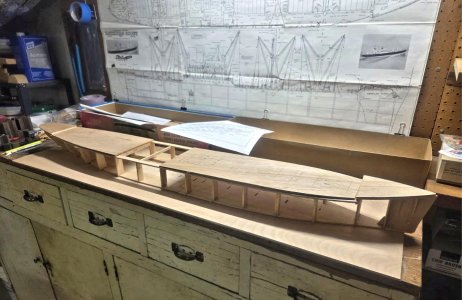
The next step is to make the plywood base and secure the hull assembly to it. In the photo below the hull is sitting on the plywood blank. Also in the photo I've set the deck pieces in place to check the fit. According to the instructions the next step is to sheath the hull, but I'm thinking it will be best to work on fairing the hull and fitting the deck pieces precisely so the hull sheathing step results in a perfectly faired hull and deck fit. What sequence did you use for the sheathing and deck fitting Vic?
I struggled with it because of the poor quality of the wood. The sheathing varied from 1/16” to paper thin. In one place, the sheathing couldn’t be bent to cover the bottom part. That was ok because I would cut it later to close to the water line. I had a little problem with the plywood base as well. I guess I didn’t outline it as well as I should have, but it shouldn’t matter much since it will be submerged. I did fair the bulkheads front and back. The hardest part was where the sheathing and the strakes meet at the front and back. Neither the strakes nor the sheathing were consistently the same thickness. That necessitated voluminous sanding. In places there are still slight bulges. The fiberglass helped smooth things out some. Also, some of the strakes were unusable. If I had it to do again, I’d think hard about making my own out of better wood. It would be good to make sure that the strakes and sheathing are the same thickness.I've had some down time over the past few days as I've been waiting for coats of paint to dry renovating our early 1800's home
The next step is to make the plywood base and secure the hull assembly to it. In the photo below the hull is sitting on the plywood blank. Also in the photo I've set the deck pieces in place to check the fit. According to the instructions the next step is to sheath the hull, but I'm thinking it will be best to work on fairing the hull and fitting the deck pieces precisely so the hull sheathing step results in a perfectly faired hull and deck fit. What sequence did you use for the sheathing and deck fitting Vic?
View attachment 564230
Thank you, that's very helpful. I'll check the thickness of the sheathing and strakes in my kit and if they're not consistent I'll make a run to the hobby shop for new wood.I struggled with it because of the poor quality of the wood. The sheathing varied from 1/16” to paper thin. In one place, the sheathing couldn’t be bent to cover the bottom part. That was ok because I would cut it later to close to the water line. I had a little problem with the plywood base as well. I guess I didn’t outline it as well as I should have, but it shouldn’t matter much since it will be submerged. I did fair the bulkheads front and back. The hardest part was where the sheathing and the strakes meet at the front and back. Neither the strakes nor the sheathing were consistently the same thickness. That necessitated voluminous sanding. In places there are still slight bulges. The fiberglass helped smooth things out some. Also, some of the strakes were unusable. If I had it to do again, I’d think hard about making my own out of better wood. It would be good to make sure that the strakes and sheathing are the same thickness.
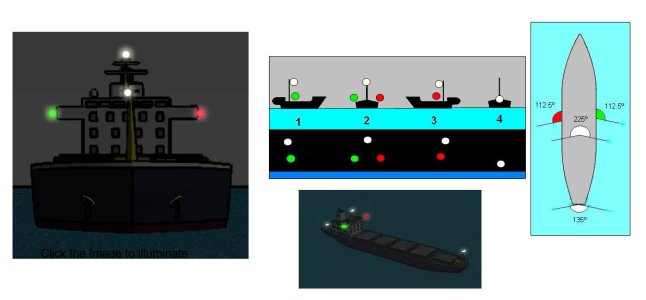
Planning ahead... does anyone have any references on the navigation lights that would typically be used on a cargo ship like this? I did some Google searching but didn't find anything useful that applied to this type of ship. What lights would a ship like this have and where would they be positioned? I'm considering adding LED lighting to the model but want to get it right. Also if there's information on lighting that might be on the ship while it's at the dock for loading/unloading that would be helpful too.

Good morning. I’m pulling up a chair to watch this build. Enjoy. Cheers Grant
With a little more searching I collected these images showing where navigation lights need to be placed so I'll add LEDs in those positions and appropriate wiring to power them.Planning ahead... does anyone have any references on the navigation lights that would typically be used on a cargo ship like this? I did some Google searching but didn't find anything useful that applied to this type of ship. What lights would a ship like this have and where would they be positioned? I'm considering adding LED lighting to the model but want to get it right. Also if there's information on lighting that might be on the ship while it's at the dock for loading/unloading that would be helpful too.

- Joined
- Jan 21, 2023
- Messages
- 398
- Points
- 138

look at Sheet 5 - Top of Houses, Bridges, Boat & Cabin Decks in this link as it shows light locations.
AKA-107 USS Vermilion Booklet of General Plans https://archive.org/details/aka107bogp1968
AKA-107 USS Vermilion Booklet of General Plans https://archive.org/details/aka107bogp1968
Thank you! The drawings are very helpful, both running lights and other lights are shown. I'll build accordingly.look at Sheet 5 - Top of Houses, Bridges, Boat & Cabin Decks in this link as it shows light locations.
AKA-107 USS Vermilion Booklet of General Plans https://archive.org/details/aka107bogp1968
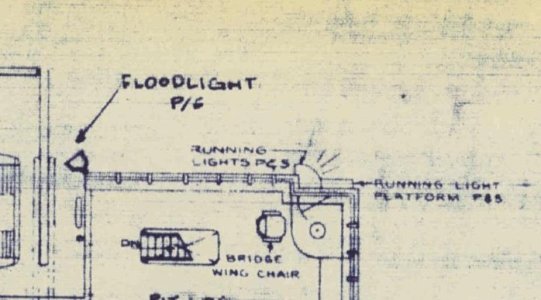
My kit has pewter lights for port and starboard.
I haven't dug into the hardware box yet but I image they're solid castings? Maybe they can be drilled out to install LEDs, if not I'll have to come up with something else.My kit has pewter lights for port and starboard.
They look like an L-shaped piece of lead. I do like the fact that they have some ridges like the real ones have. On the hatches, make sure the rectangular supports for the hatch covers line up with the hatch holes. Mine don’t fit. I’ll have to remake them.