Hi, Chuck.
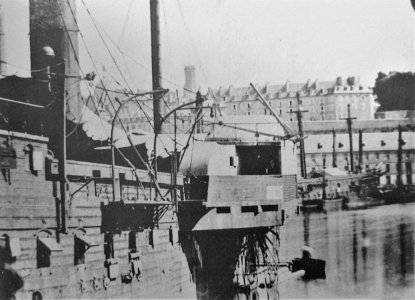
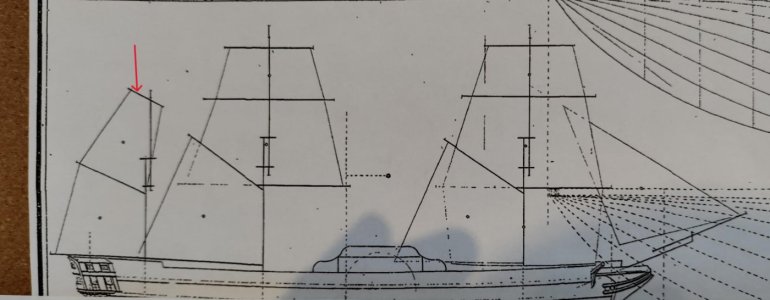
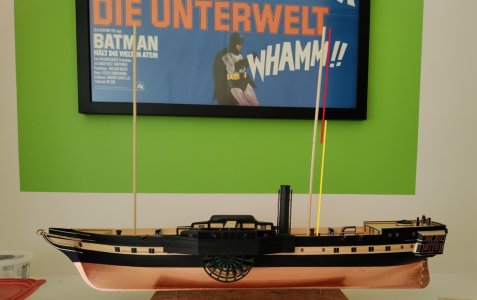
Since I couldn’t find specific original plans for L’Orenoque itself in my library, the answers are based on how similar era ships were handled and general rigging practice.
According to: Elements and Practice of Rigging and Seamanship, traditional square-rigged sailing ships (even late ones like
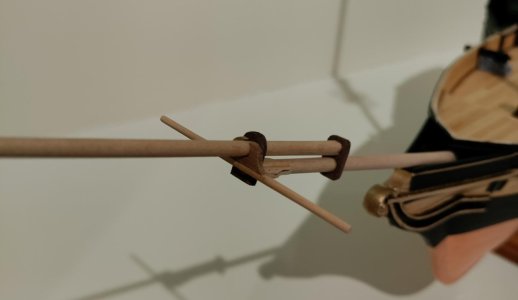
L’Orenoque still had) often used hoops on mast sections where spars and rigging pass around the mast, mostly on lower masts, and often on topmasts too, depending on construction. Mast hoops help keep the spars (yards/topyards) aligned and rigging manageable. So expect hoops on the lower masts and also on the mizzen topmast if it carried spars or if rigging passed around it.
- Lower masts: nearly always have hoops where shrouds and tackles pass.
- Topmasts often do have hoops too, but fewer and smaller than on lowers.
- Mizzen topmast: yes, if it carried yards or stays, it would usually have hoops sized for those lines.
Woulding (Wooling?) on Lower Masts — All Three? 
On ships of this period, you would generally wrap the mast with thin strips of wood or canvas before serving with rope (
“woulding” or sometimes spelled
wooling), to protect it and create a smooth surface for shrouds/serving. Normally, it should
served all three lower masts that had shrouds and tackles.
- Lower masts very often were served/woolded where shrouds, stays, deadeyes and hoops were rigged.
- It was common practice on all three lower masts where rigging loads concentrated.
Crow’s Feet?
Crow’s feet are small lines that go from the mast top rim outward to stays or yard lines to keep canvas, studsails, or awnings clear of the mast and tops. They are a rigging feature you see on many period sailing ships.
- They usually run through holes on the rim of the mast top and attach back to stays or to blocks on the rigging.
- Their function is to keep the foot of the sail from rubbing on the top or rigging and to support canvas/awnings.
- They’re not structural — they’re rigging detail.
So
crow’s feet can be included around the mast top if you want that level of accuracy — especially if the top has euphroe or holes for them.












 . And I have to drive 4.5 hours, round trip, to pick them up
 Although I can't say for certain that Billig's HMS Warrior is the next on the stocks, she is here and calling my name - the case will be something like twice the price