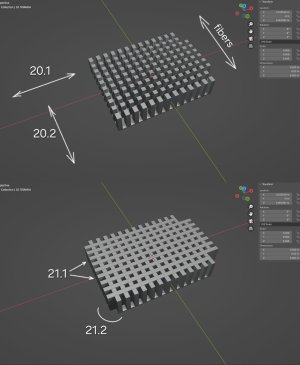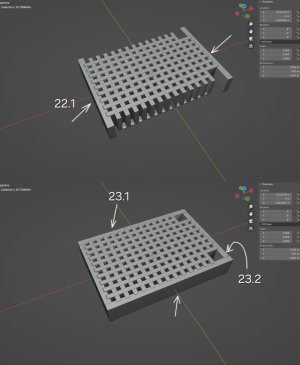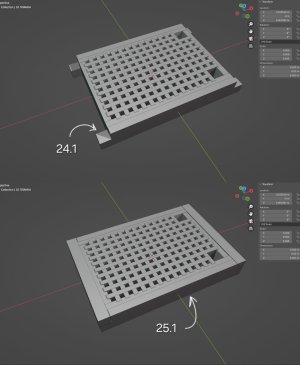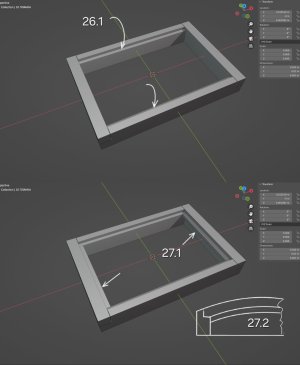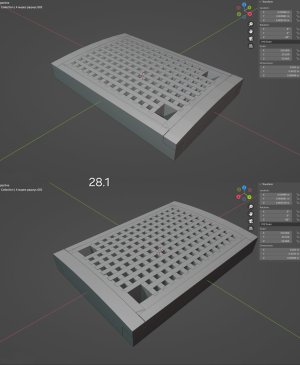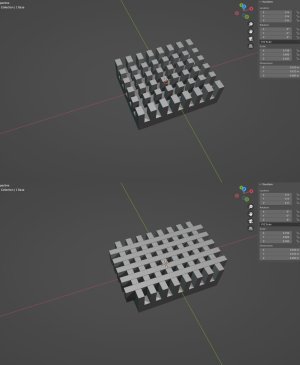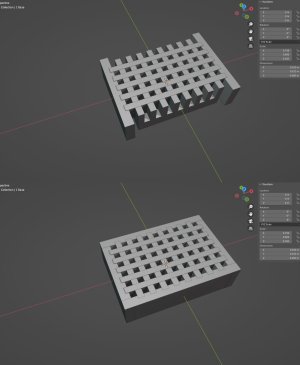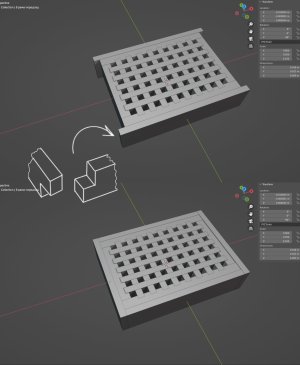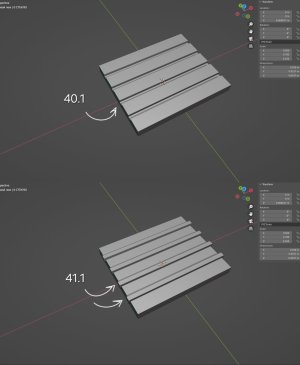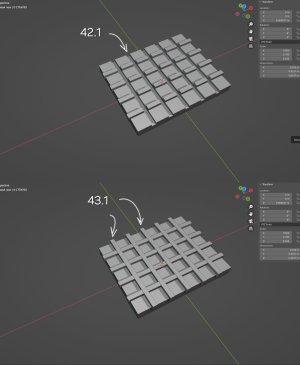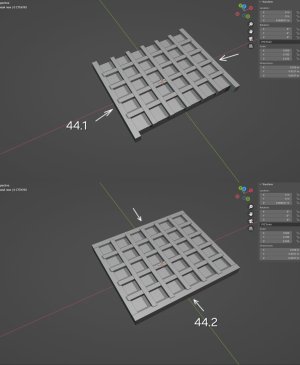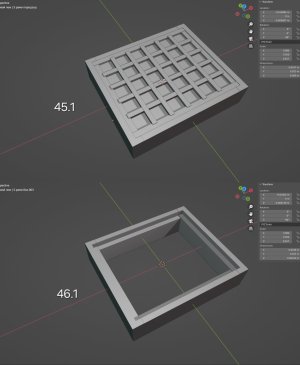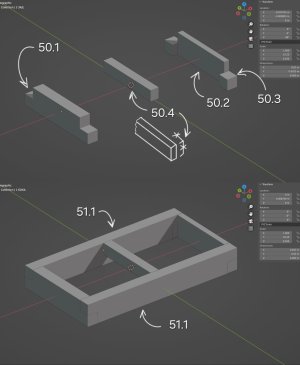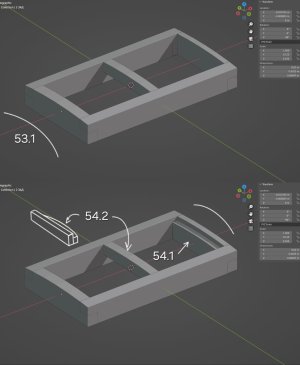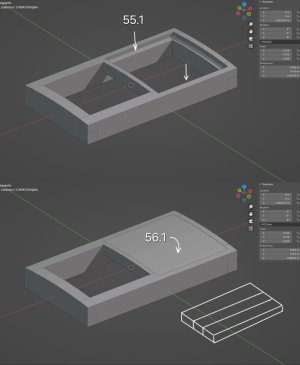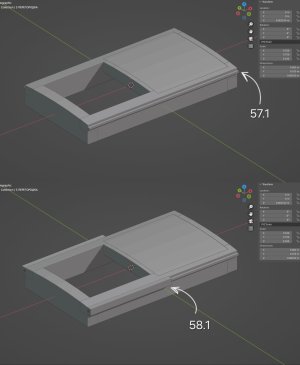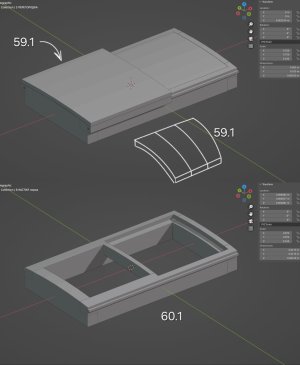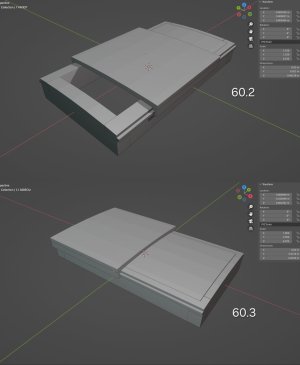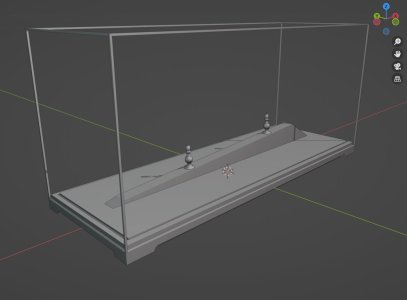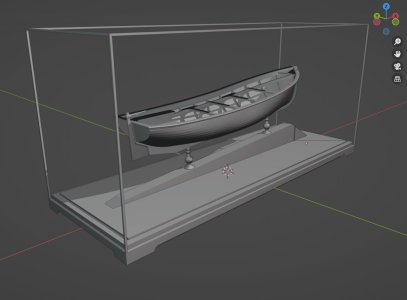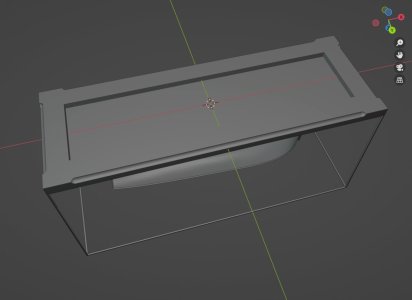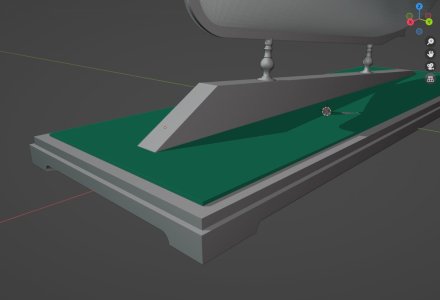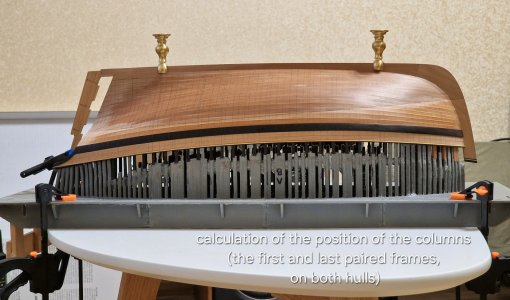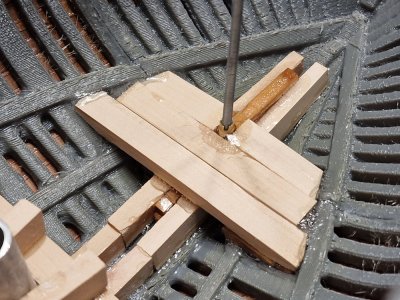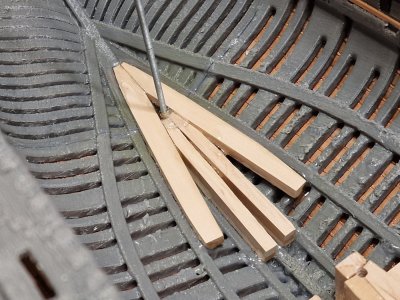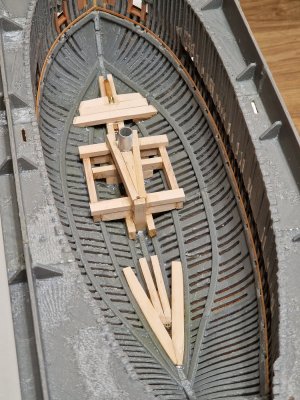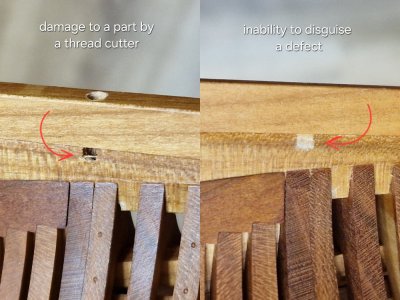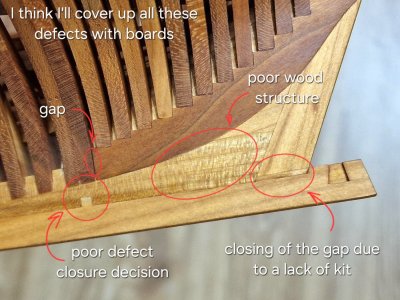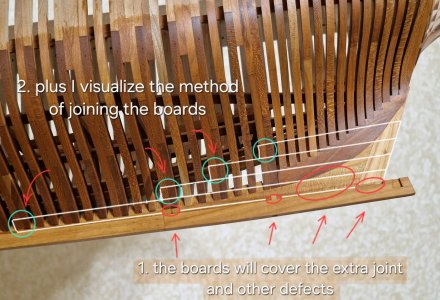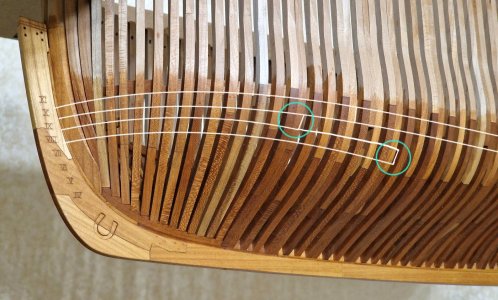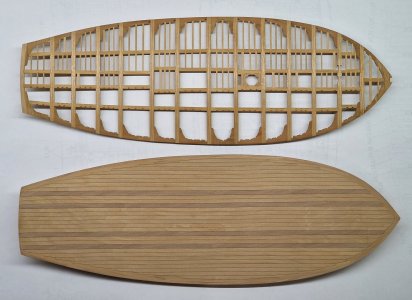





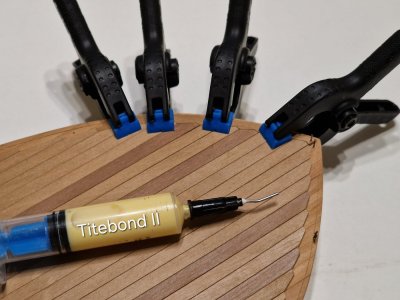
Everything is ready for gluing. I glued it with TiteBond II...
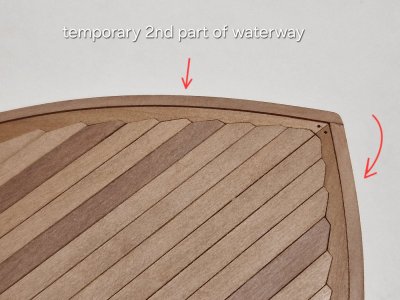
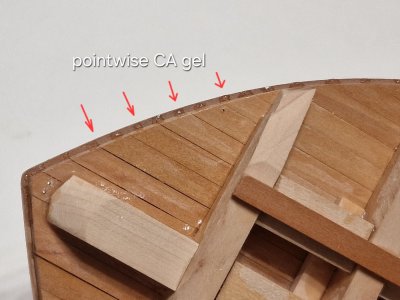
Then I glued on the temporary waterway, or rather, the second part of it. I applied it to the CA gel in dots so that I could remove it later.
After that, I sanded the surface first with 120-grit sandpaper, then with 150-grit. The mark was the absence of areas that had been coated with oil.
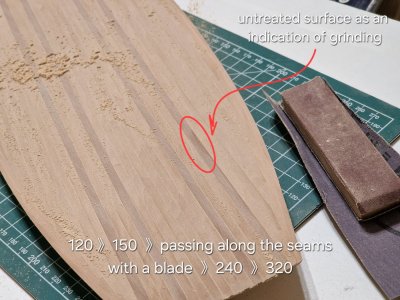
Then I widened the seams with a blade and after that I sanded with 240 and 320 grit sandpaper.
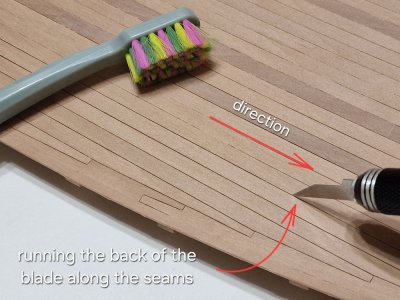
Recommendation! Do not use a needle to widen (calibrate) joints! Due to the varying density of wood, the needle may deform it differently, and the gap may be uneven (of varying thickness) and not perfectly straight. I also do not recommend using the sharp edge of a blade! If the sharp edge hits the glue or tightly fitted slats, the blade may slip from the gap and scratch the board. I recommend using the thinnest blade (as in the photo) but with the back of the blade. The principle is to use light, gradual movements along the joint, so that the blade follows the seam. As you go deeper, the sharp edges of the back of the blade will scrape out a smooth gap instead of squeezing the wood. The key is to do this carefully and very gradually, trying to scratch everything in one or two passes. The first passes should be made at a 45-degree angle, and the last ones at almost 90 degrees. This will ensure uniform blade penetration and calibrate the gaps to the desired thickness.
This is still an intermediate result. The long gaps between the boards are almost 100% ready, but I will still calibrate the gap along the waterway border in a slightly different way, I will tell you about this a little later.
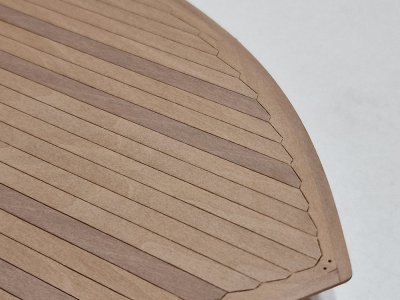
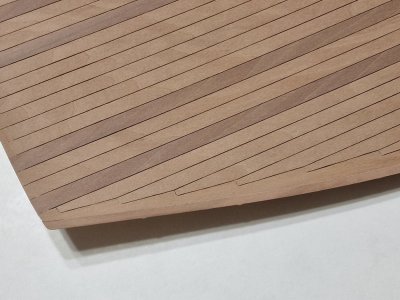
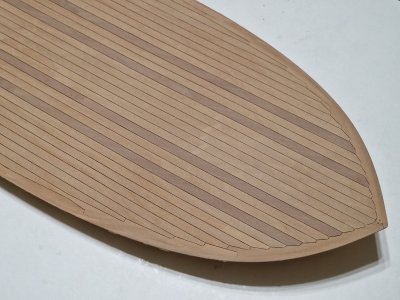
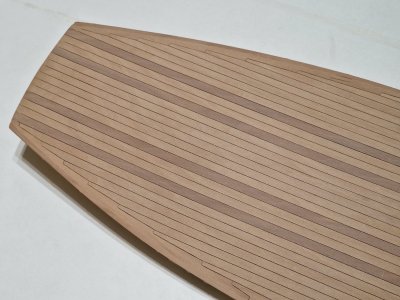
A few words about why I do it this way:
1 - Seam calibration is a much simpler and faster method than precisely matching all the boards without gaps.
2 - When humidity changes, the wood has room to expand and the deck will not bulge. (This is precisely why this procedure was performed – sealing the seams with resin and horsehair.)
3 - There are no unnecessary steps when using various spacers to simulate caulking (resin seams), which complicates and slows down the process.
4 - Using bitumen in this method best simulates resin seams.
But again, this is just my opinion.
Then I glued on the temporary waterway, or rather, the second part of it. I applied it to the CA gel in dots so that I could remove it later.
After that, I sanded the surface first with 120-grit sandpaper, then with 150-grit. The mark was the absence of areas that had been coated with oil.
Then I widened the seams with a blade and after that I sanded with 240 and 320 grit sandpaper.
Recommendation! Do not use a needle to widen (calibrate) joints! Due to the varying density of wood, the needle may deform it differently, and the gap may be uneven (of varying thickness) and not perfectly straight. I also do not recommend using the sharp edge of a blade! If the sharp edge hits the glue or tightly fitted slats, the blade may slip from the gap and scratch the board. I recommend using the thinnest blade (as in the photo) but with the back of the blade. The principle is to use light, gradual movements along the joint, so that the blade follows the seam. As you go deeper, the sharp edges of the back of the blade will scrape out a smooth gap instead of squeezing the wood. The key is to do this carefully and very gradually, trying to scratch everything in one or two passes. The first passes should be made at a 45-degree angle, and the last ones at almost 90 degrees. This will ensure uniform blade penetration and calibrate the gaps to the desired thickness.
This is still an intermediate result. The long gaps between the boards are almost 100% ready, but I will still calibrate the gap along the waterway border in a slightly different way, I will tell you about this a little later.
A few words about why I do it this way:
1 - Seam calibration is a much simpler and faster method than precisely matching all the boards without gaps.
2 - When humidity changes, the wood has room to expand and the deck will not bulge. (This is precisely why this procedure was performed – sealing the seams with resin and horsehair.)
3 - There are no unnecessary steps when using various spacers to simulate caulking (resin seams), which complicates and slows down the process.
4 - Using bitumen in this method best simulates resin seams.
But again, this is just my opinion.





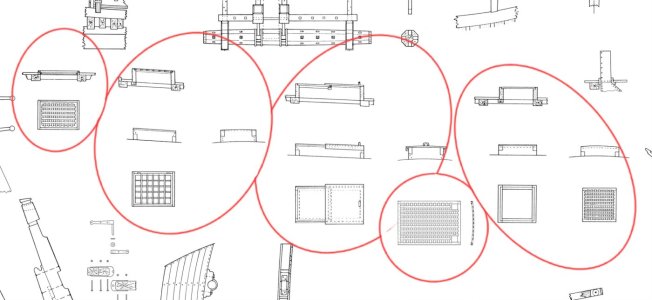
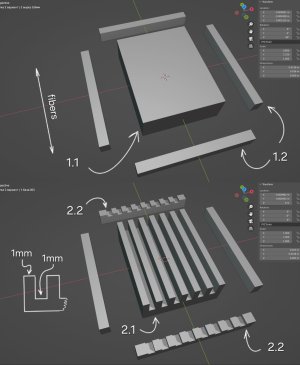
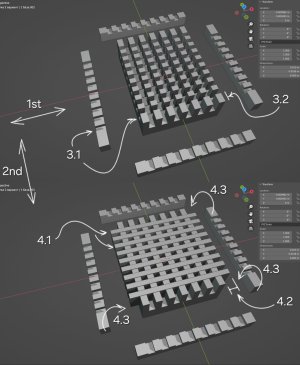
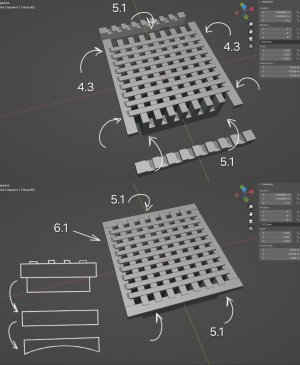
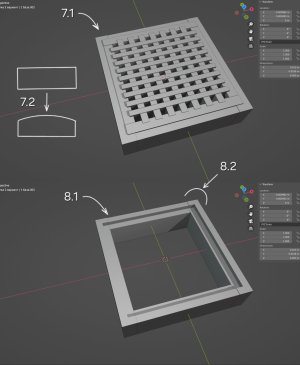
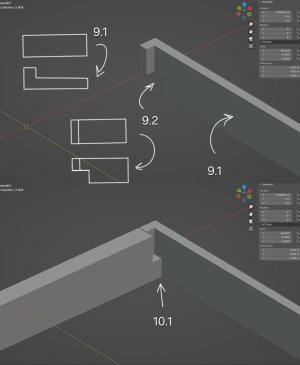
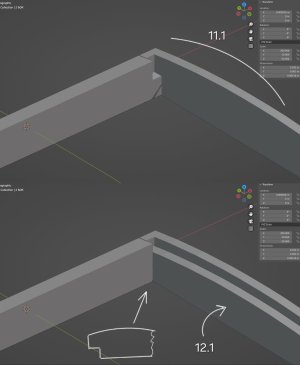
 rope grating (hold)