• Win a Free Custom Engraved Brass Coin!!!
    As a way to introduce our brass coins to the community, we will raffle off a free coin during the month of August. Follow link ABOVE for instructions for entering.

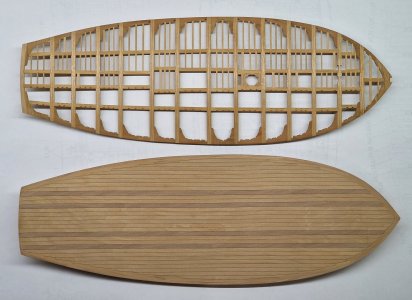
HMS Alert [1777] 1:48 POF by serikoff. (Two hulls: skeleton and fully rigged)

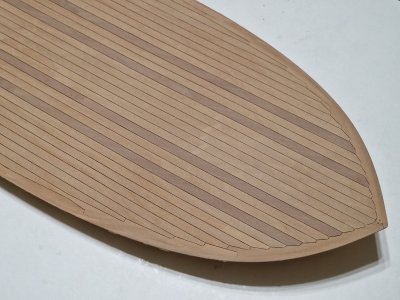
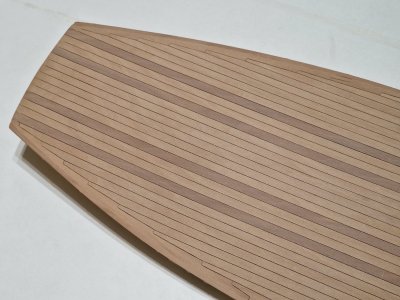
Everything is ready for gluing. I glued it with TiteBond II...
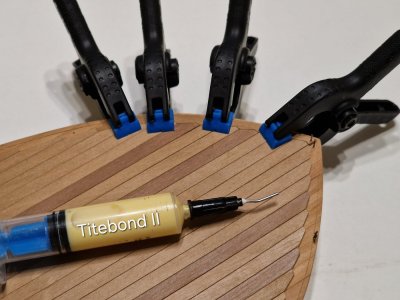
Alert 1644.jpg

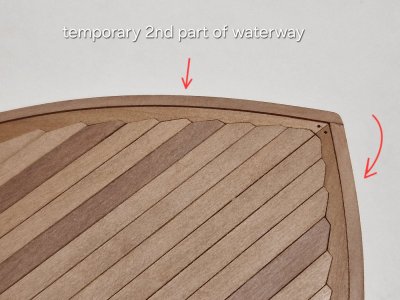
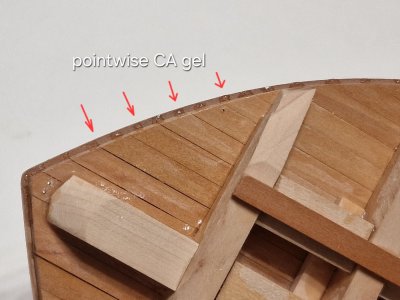
Then I glued on the temporary waterway, or rather, the second part of it. I applied it to the CA gel in dots so that I could remove it later.
Alert 1645.jpg

Alert 1646.jpg

After that, I sanded the surface first with 120-grit sandpaper, then with 150-grit. The mark was the absence of areas that had been coated with oil.
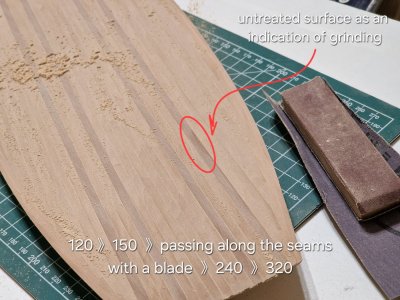
Alert 1647.jpg

Then I widened the seams with a blade and after that I sanded with 240 and 320 grit sandpaper.
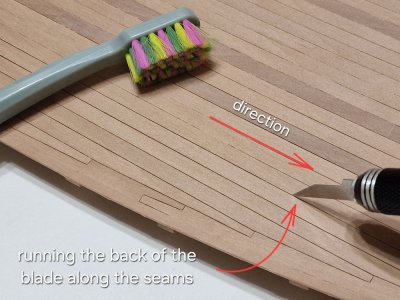
Alert 1648.jpg

Recommendation! Do not use a needle to widen (calibrate) joints! Due to the varying density of wood, the needle may deform it differently, and the gap may be uneven (of varying thickness) and not perfectly straight. I also do not recommend using the sharp edge of a blade! If the sharp edge hits the glue or tightly fitted slats, the blade may slip from the gap and scratch the board. I recommend using the thinnest blade (as in the photo) but with the back of the blade. The principle is to use light, gradual movements along the joint, so that the blade follows the seam. As you go deeper, the sharp edges of the back of the blade will scrape out a smooth gap instead of squeezing the wood. The key is to do this carefully and very gradually, trying to scratch everything in one or two passes. The first passes should be made at a 45-degree angle, and the last ones at almost 90 degrees. This will ensure uniform blade penetration and calibrate the gaps to the desired thickness.

This is still an intermediate result. The long gaps between the boards are almost 100% ready, but I will still calibrate the gap along the waterway border in a slightly different way, I will tell you about this a little later.
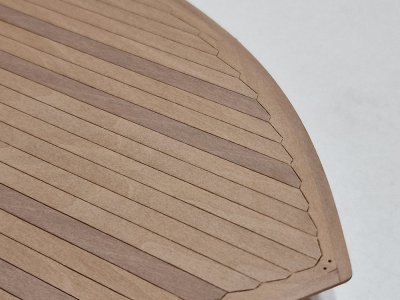
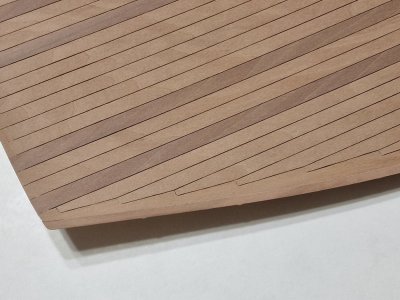
Alert 1649.jpg

Alert 1650.jpg

Alert 1651.jpg

Alert 1652.jpg

A few words about why I do it this way:

1 - Seam calibration is a much simpler and faster method than precisely matching all the boards without gaps.
2 - When humidity changes, the wood has room to expand and the deck will not bulge. (This is precisely why this procedure was performed – sealing the seams with resin and horsehair.)
3 - There are no unnecessary steps when using various spacers to simulate caulking (resin seams), which complicates and slows down the process.
4 - Using bitumen in this method best simulates resin seams.

But again, this is just my opinion.
 
Hey Sergey,

As always, spot on. And thank you very much for showing us. I hope I understood you correctly: you pull the back of the knife along the planks, which creates these precise lines. But you don't fill in the gaps between the planks that this creates? Or do you fill them in?

P.S. Sorry for my poor English, I hope you understand what I mean? :rolleyes:
 
Hey Sergey,

As always, spot on. And thank you very much for showing us. I hope I understood you correctly: you pull the back of the knife along the planks, which creates these precise lines. But you don't fill in the gaps between the planks that this creates? Or do you fill them in?

P.S. Sorry for my poor English, I hope you understand what I mean? :rolleyes:
Yes, absolutely right. I run the back of the blade over the surface, and the resulting gap remains. Then oil and bitumen get into it, and the area will be stained with bitumen, imitating resin. Because of the gaps, each board appears as a separate piece, not blending into a single plane.
 
Based on your workshop, descriptions, and drawings, even someone without much experience could attempt to build such a model. If something is unclear, you always explain the problem. I really like your journal, keep up the good work!
 
Yes, absolutely right. I run the back of the blade over the surface, and the resulting gap remains. Then oil and bitumen get into it, and the area will be stained with bitumen, imitating resin. Because of the gaps, each board appears as a separate piece, not blending into a single plane.
Hey Sergey,

Thank you for confirming me. That's great! Thank you! Thumbsup
 
Sergey,

Thanks so much for your wonderful explanations. Your work is incredible and your write ups help me to learn wonderful tips.

Cheers,
Rebus
 
Based on your workshop, descriptions, and drawings, even someone without much experience could attempt to build such a model. If something is unclear, you always explain the problem. I really like your journal, keep up the good work!
Thank you. I also found very informative reviews at one time and was very happy about it. Now, I'm glad that I'm providing the same benefit. I hope :D

Lovely technique.
Thank you Thumbsup

Hey Sergey,

Thank you for confirming me. That's great! Thank you! Thumbsup
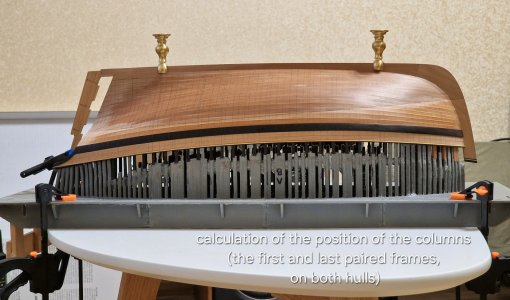
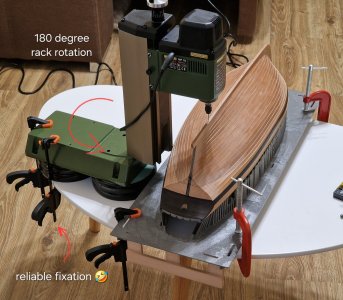
I'll be back on deck in a bit, but for now I'm still calculating the gratings, I'll be talking about that soon.

Sergey,

Thanks so much for your wonderful explanations. Your work is incredible and your write ups help me to learn wonderful tips.

Cheers,
Rebus
Thank you for your praise. We will keep up the good work.
 
This post is for those who are interested and interested in learning...

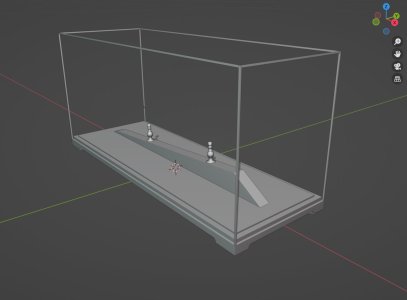
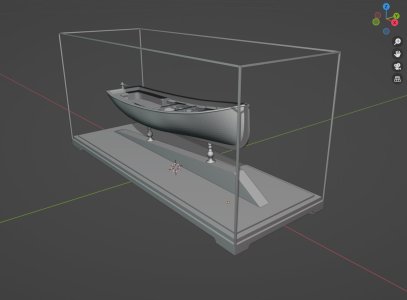
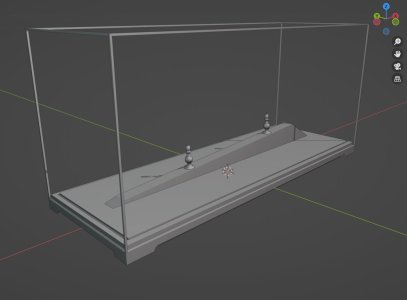
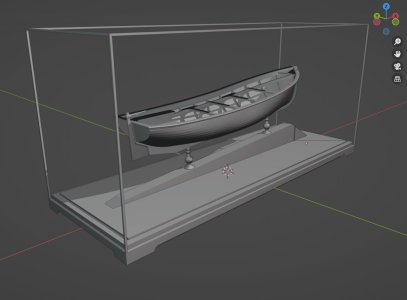
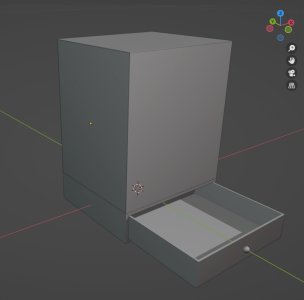
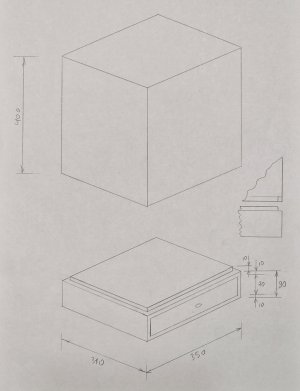
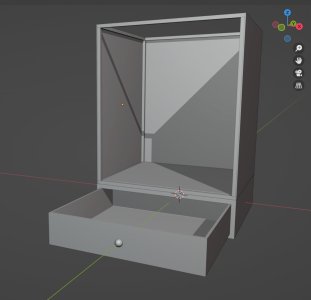
Today I worked mostly in Blender. For those unfamiliar, it's a 3D modeling program.

I'd like to share a little advice.

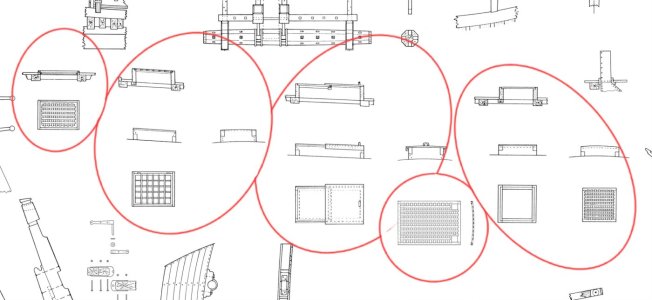
Before marking out the deck, let alone nailing and cutting holes, it's essential to calculate everything! This will avoid problems later when something doesn't line up or overlaps.

How I do it:

1. First, naturally, you need to build the deck and finish it. In my case, I have two (one skeletal, the other planked. Therefore, I need to prepare two sets of gratings: a fully assembled one and just the frames).

2. Then you need to calculate the positions and sizes of all the fittings on the deck, nail lines, board joints (I try not to make joints right away, but glue whole boards along the entire length of the deck), and especially gratings and hatches.

3. When making the gratings: the most important thing is to calculate the number of longitudinal and transverse grating pieces and avoid making mistakes.

4. You need to make the grating first, and then build a frame around it. Don't do it the other way around, making the frame first and then trying to fit the grating into it. A ±1 mm deviation in size won't be noticeable if you see the frame is slightly larger after gluing the gratings, but reducing the grating to fit into the frame will definitely be noticeable due to asymmetry or thin outer edges.

5. Then, using the already made frame (with grating), mark the deck. Even if you find you've gone slightly beyond the required boundary (say, a beam), it's not a problem; you can shift the nailing line so the nails are at the correct distance from the frame. It's worse when the nails are already in place, but the frame is either far away from them, close to them, or even overlapping the nails. The same applies to other elements on the deck, especially the joints between the boards. If you need to move the nail line, you can also move the joints between the boards. However, if there are already joints, moving the nail line will result in artifacts and overlapping joints or misalignments. Again, no one will notice if the entire nail line and joints are misaligned without visualizing the beams under the board, but nailing that isn't in a single, straight line or joints that don't hit the nails will be very noticeable.

6. Then, nail along this marking and do a final sanding to ensure everything is level, and only then cut the holes for the grates and hatches.

7. After that, I'll install the deck in place, glue the waterway, and even then, I won't glue all the deck parts (gratings, hatches, etc.) in place, as work on the ship will continue, and to avoid damaging anything, fixing them will be done last. It's better to make everything disassemblable, so you can always try on any part, but still be able to remove it.

I'll be showing my lattice calculations soon; there's a lot to show! It'll be interesting!

Screenshot_20251206_012809_Gallery.jpg
 
Last edited:
I've been calculating hatches and gratings on the deck for three days now. And since I'm building two hulls, there will be two sets as well.

I'll probably create a separate thread on the manufacturing and, more importantly, calculations of gratings and hatches, but only after testing.

And today I'll share the guide I made for myself (because with my faulty memory, I might forget everything).

I highly recommend reading the post above (#709), as it explains the purpose of all this and the value of the time spent on it.

So, calculations for gratings, hatches and gangway.


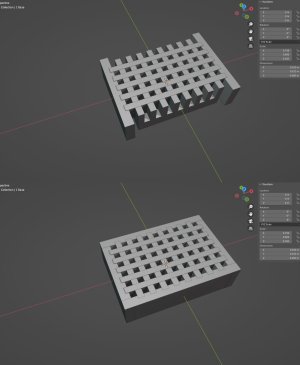
Front grating

Note: The X-axis (red line) is the deck axis (in the photo, from right to left is from fore to stern). The Y-axis (green line, top to bottom) is from larboard to starboard. The Z-axis is the height. In short, the interface menu is at the front of the ship. (The exception is the gangway, where it's the other way around.)

Cutter HMS Alert 1777 11.jpg


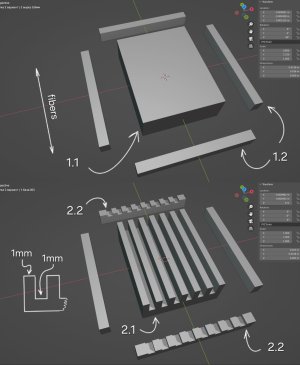
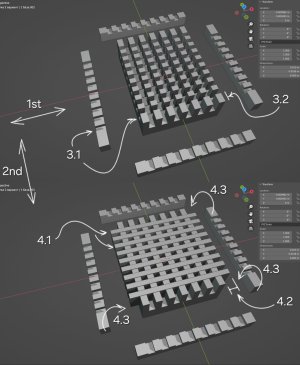
1.1 - Blank: The wood fibers runs along the green line. The blank dimensions should be calculated based on the following steps; they will provide clear routing boundaries.
1.2 - The dimensions of the side grille pieces should also be determined after understanding all the subsequent steps.

2.1 - Routing grooves with a 1 mm cutter at 1 mm intervals.
2.2 - Routing in the same way, either simultaneously or remotely, but the groove depth should be 0.5 mm.

Cutter HMS Alert 1777 12.jpg

3.1 - Milling grooves with a 0.8 mm cutter at 0.8 mm intervals (of course, it's easier to do 1 mm, but in my case, that's the format and quantity specified in the drawings). Groove depth: 0.5 mm.
Note: It's better to mill across the grain first, then along it, that is, the opposite of what's shown in the photo. I decided not to redo it. This will reduce the risk of chipping.
3.2 - Length of side rectangles = interval + 0.5 mm (this is the depth of the grating's insertion into its side).

4.1 - Slats that are inserted into the longitudinal grooves (in my case, 0.8 mm thick).
4.2 - Length of protruding part = interval + 0.5 mm (as in point 3.2, and this will apply to all gratings below).
4.3 - The transverse side pieces of the grating are turned 90 degrees and glued to the base of the grating.

Cutter HMS Alert 1777 13.jpg

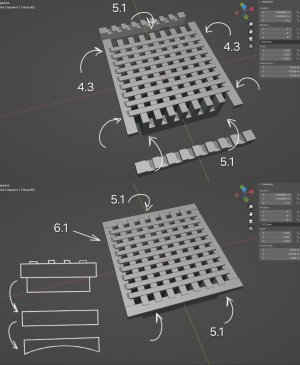
5.1 - The longitudinal side pieces are secured to the base in the same manner. When secured, the transverse pieces (4.3) are trimmed to the length of the interval (less 0.5 mm).

6.1 - After the entire grating is assembled, its upper surface is aligned to a single plane. The lower surface is then trimmed to the desired thickness and, if desired, profiled to accommodate the deck curve.

Cutter HMS Alert 1777 14.jpg

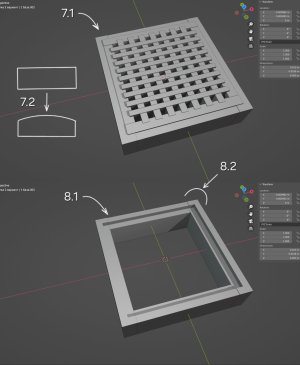
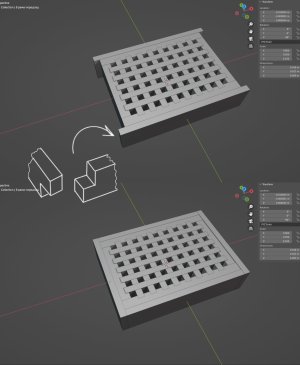
7.1 - The grating with the frame. It will be installed on the deck, which is covered with planks.
7.2 - After securing the grating to the frame, the upper surface is profiled to fit the deck's curve.

8.1 - The grating frame. It will be installed on the deck as a "skeleton."
8.2 - The connection of this angle is described below, as is the profiling of this frame to fit the deck's curve; it differs from the assembled grating.

Cutter HMS Alert 1777 15.jpg

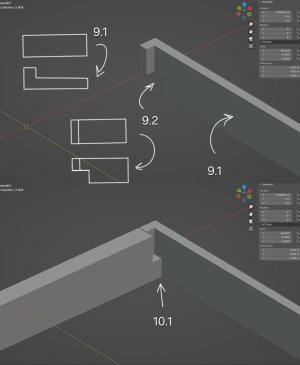
9.1 - First, mill the first plane on the front and rear parts, as shown in the photo.
9.2 - Then mill the second plane.

10.1 - Then glue the frame pieces (4 pieces) together.

Cutter HMS Alert 1777 16.jpg

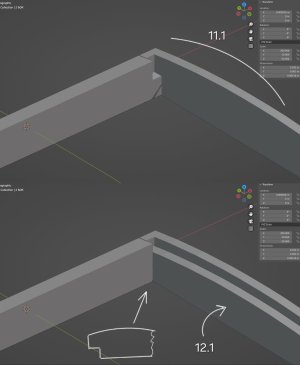
11.1 - Afterwards, they are given the deck profile (as specified in 7.2).

12.1 - In parallel, two more parts are profiled to the desired deck curve and glued in place at the mark to the depth of the lattice.

Cutter HMS Alert 1777 17.jpg

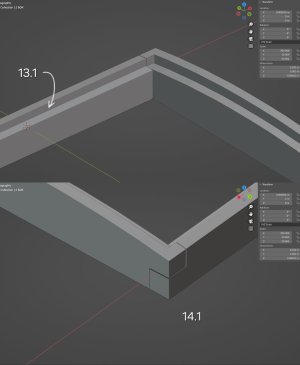
13.1 - Straight grooves for the grating are milled into the side frame pieces. For the version where the gratings will be assembled with the frame, for simplicity, a straight groove for the grating can be milled around the entire perimeter of the grating.

14.1 - This ensures a proper connection not only on the inside but also on the outside of the grating frame.


Anchor rope grating (hold)

Cutter HMS Alert 1777 21.jpg

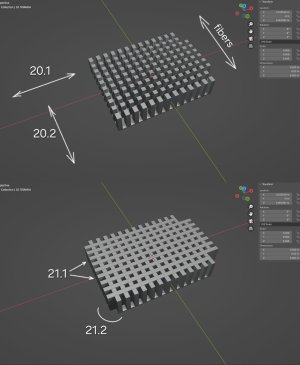
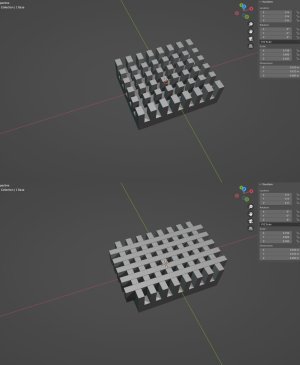
20.1 - Route across the grain (along the Y axis) with a 1 mm cutter at 1 mm intervals.
20.2 - Then along the grain.

21.1 - Insert the 1 mm slats.
21.2 - The protruding edges of the slats and base should be equal to the interval + 0.5 mm to allow for immersion into the side grating pieces.

Cutter HMS Alert 1777 22.jpg

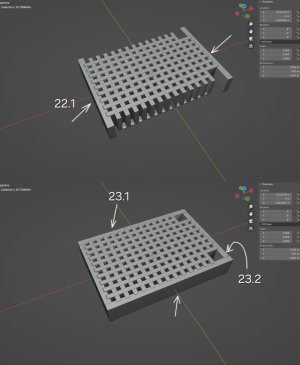
22.1 - Installing the front and rear grating sections as described previously.

23.1 - Installing the side grating sections.
23.2 - A tricky spot for the anchor cable. To make things easier, you can simply remove the excess. If I do the correct version, I'll show it in the review when I'm making it.

Cutter HMS Alert 1777 23.jpg

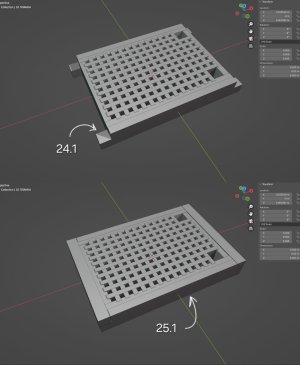
24.1 - Installing the side frames with milled joint grooves. (See also 26.1)

25.1 - Installing the front and rear frame sections with joint grooves.
Then the grating and frame are profiled to fit the deck curve (see 7.2 in the previous description).

Cutter HMS Alert 1777 24.jpg

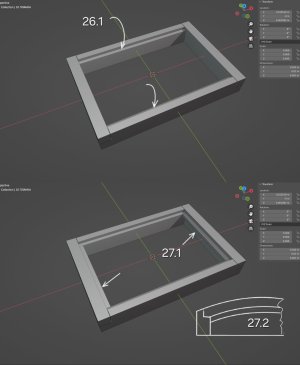
26.1 - Grooves are made in the side sections of the frame before securing the grating.

27.1 - Locking strips are secured to the front and rear sections. (In the simple version, the grating rests on them, and after assembly, the entire structure is profiled to follow the curvature of the deck (see 7.2).
27.2 - In the complex version, the entire structure is first profiled without gluing the frame and grating together, and only then is the curved strip glued to the frame profile.

Cutter HMS Alert 1777 25.jpg

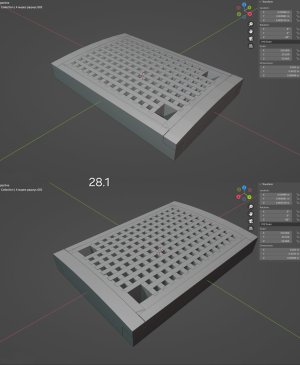
28.1 - Profiled grille assembly with frame.


Rear grating

30.1 All steps for the rear grating are identical to those for the two gratings described previously. The only difference is that the rear grating frame is significantly shorter and thinner, but the connection remains via grooves (see image 3).

Cutter HMS Alert 1777 31.jpg

Cutter HMS Alert 1777 32.jpg

Cutter HMS Alert 1777 33.jpg


Skylight

Cutter HMS Alert 1777 41.jpg

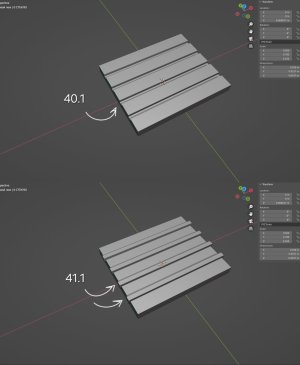
40.1 - Base: acrylic (plexiglass). 0.8 mm grooves are milled into it at 2.5 mm intervals.

41.1 - 0.8 mm slats are glued into these grooves. Their edges protrude by 0.3 mm; they will be recessed into the side sections of the structure.

Cutter HMS Alert 1777 42.jpg

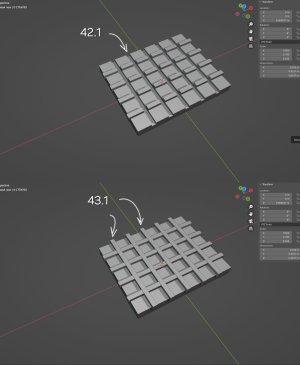
42.1 - Mill 0.8 mm cross grooves at 2.5 mm intervals (including the slats).

43.1 - Glue the 0.8 mm slats into these grooves, also extending 0.3 mm at the edges.
To create a profiled structure, before attaching the cross slats, bend the base to the desired angle and glue the slats along this angle. After gluing, the slats will fix this angle. To achieve this, perform step 44.1 first, then 43.1, so that the front and back edges also bend to the desired angle.

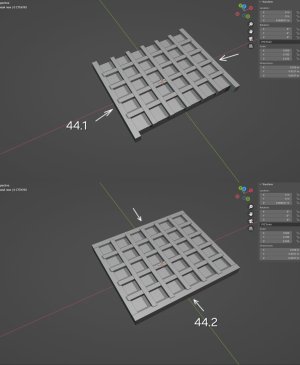
Cutter HMS Alert 1777 43.jpg

44.1 - Attach the front and back pieces to the base.

44.2 - Then glue the side pieces (the principle is the same as described previously, but the depth is 0.3 mm).

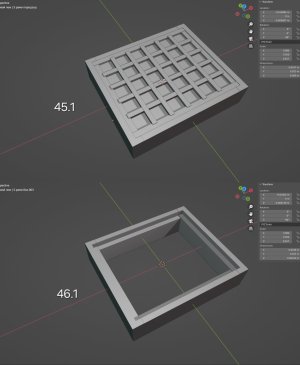
Cutter HMS Alert 1777 44.jpg

45.1 - Skylight with Frame. For complex profile shapes, the frame must be prepared as described above (see 9.1-14.2).

46.1 - Skylight Frame (see 9.1-14.2)


Gangway

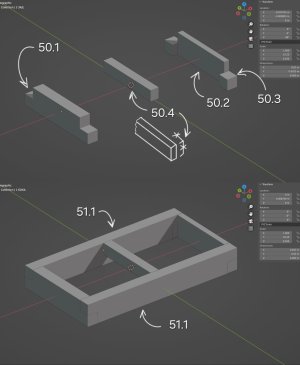
Note: The ladder is accidentally rotated 180 degrees, so its front part is facing left!

Cutter HMS Alert 1777 51.jpg

50.1 - Front frame part with milled grooves for connecting to the side parts (51.1)
50.2 - The rear part is first milled along the plane for part 54.1.
50.3 - Then the end groove is milled for connecting to the side parts (51.1)
50.4 - The middle part is divided lengthwise into two halves (not shown in the image; to understand the principle, see 54.2 and 55.1)

51.1 - Side frame parts with grooves for connecting to the front and rear parts. Gluing the frame.

Cutter HMS Alert 1777 52.jpg

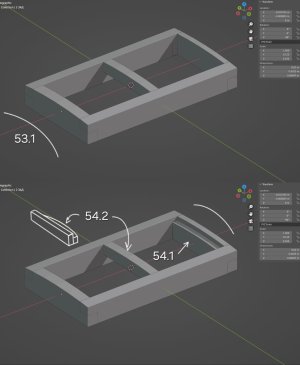
53.1 - Frame profile for deck curvature (see 7.2)

54.1 - Second section of the rear wall, previously profiled for deck curvature along with 53.1.
54.2 - A similar section is also attached to the middle section of the frame (not shown in the image; this was previously discussed in 50.4).

Cutter HMS Alert 1777 53.jpg

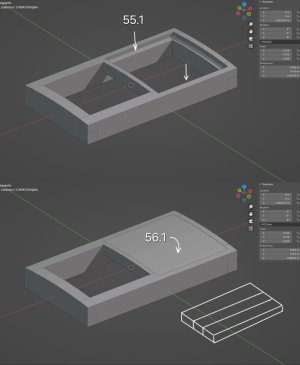
55.1 - Routing grooves for the boards on the side frame sections. To simplify the process, this routing can be done along the entire perimeter (both the back and middle sections).

56.1 - Filling the space between the grooves with slats longitudinally.

Cutter HMS Alert 1777 54.jpg

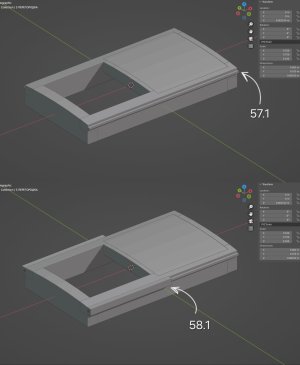
57.1 - Installing the lid mechanism guides.

58.1 - Installing the mechanism hinges. For simplicity, the hinges can be glued to the housing. For a sliding lid, the hinges are glued to the lid.

Cutter HMS Alert 1777 55.jpg

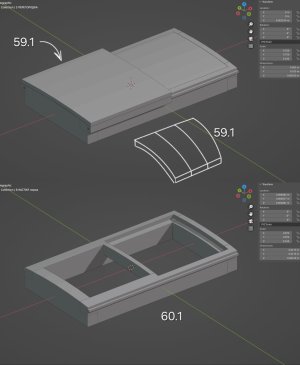
59.1 - Transverse fixation of the lid boards. The boards are bent to the frame profile, glued separately, and then glued to the hinges if the lid needs to be movable.

60.1 - Gangway frame for the "skeleton" body

Cutter HMS Alert 1777 56.jpg

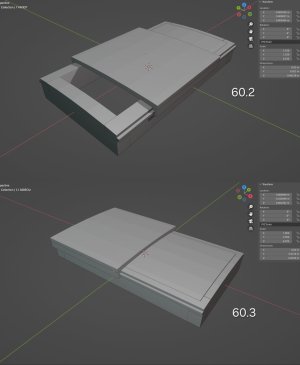
60.2 - A partially retracted lid with no lower deck (the lower deck is painted black, and only the ladder is visible through half the opening).

60.3 - A fully closed lid (the simplest option).


I hope you found this information interesting. These calculations apply not only to this model but to others as well; the key is to understand the logic, and the numbers can be substituted for any drawing and scale you need.
 
Last edited:
I've been calculating hatches and gratings on the deck for three days now. And since I'm building two hulls, there will be two sets as well.

I'll probably create a separate thread on the manufacturing and, more importantly, calculations of gratings and hatches, but only after testing.

And today I'll share the guide I made for myself (because with my faulty memory, I might forget everything).

I highly recommend reading the post above (#709), as it explains the purpose of all this and the value of the time spent on it.

So, calculations for gratings, hatches and gangway.


Front grating

Note: The X-axis (red line) is the deck axis (in the photo, from right to left is from fore to stern). The Y-axis (green line, top to bottom) is from larboard to starboard. The Z-axis is the height. In short, the interface menu is at the front of the ship. (The exception is the gangway, where it's the other way around.)

View attachment 562469


1.1 - Blank: The wood fibers runs along the green line. The blank dimensions should be calculated based on the following steps; they will provide clear routing boundaries.
1.2 - The dimensions of the side grille pieces should also be determined after understanding all the subsequent steps.

2.1 - Routing grooves with a 1 mm cutter at 1 mm intervals.
2.2 - Routing in the same way, either simultaneously or remotely, but the groove depth should be 0.5 mm.

View attachment 562486

3.1 - Milling grooves with a 0.8 mm cutter at 0.8 mm intervals (of course, it's easier to do 1 mm, but in my case, that's the format and quantity specified in the drawings). Groove depth: 0.5 mm.
Note: It's better to mill across the grain first, then along it, that is, the opposite of what's shown in the photo. I decided not to redo it. This will reduce the risk of chipping.
3.2 - Length of side rectangles = interval + 0.5 mm (this is the depth of the grating's insertion into its side).

4.1 - Slats that are inserted into the longitudinal grooves (in my case, 0.8 mm thick).
4.2 - Length of protruding part = interval + 0.5 mm (as in point 3.2, and this will apply to all gratings below).
4.3 - The transverse side pieces of the grating are turned 90 degrees and glued to the base of the grating.

View attachment 562488

5.1 - The longitudinal side pieces are secured to the base in the same manner. When secured, the transverse pieces (4.3) are trimmed to the length of the interval (less 0.5 mm).

6.1 - After the entire grating is assembled, its upper surface is aligned to a single plane. The lower surface is then trimmed to the desired thickness and, if desired, profiled to accommodate the deck curve.

View attachment 562489

7.1 - The grating with the frame. It will be installed on the deck, which is covered with planks.
7.2 - After securing the grating to the frame, the upper surface is profiled to fit the deck's curve.

8.1 - The grating frame. It will be installed on the deck as a "skeleton."
8.2 - The connection of this angle is described below, as is the profiling of this frame to fit the deck's curve; it differs from the assembled grating.

View attachment 562490

9.1 - First, mill the first plane on the front and rear parts, as shown in the photo.
9.2 - Then mill the second plane.

10.1 - Then glue the frame pieces (4 pieces) together.

View attachment 562491

11.1 - Afterwards, they are given the deck profile (as specified in 7.2).

12.1 - In parallel, two more parts are profiled to the desired deck curve and glued in place at the mark to the depth of the lattice.

View attachment 562492

13.1 - Straight grooves for the grating are milled into the side frame pieces. For the version where the gratings will be assembled with the frame, for simplicity, a straight groove for the grating can be milled around the entire perimeter of the grating.

14.1 - This ensures a proper connection not only on the inside but also on the outside of the grating frame.


Anchor rope grating (hold)

View attachment 562497

20.1 - Route across the grain (along the Y axis) with a 1 mm cutter at 1 mm intervals.
20.2 - Then along the grain.

21.1 - Insert the 1 mm slats.
21.2 - The protruding edges of the slats and base should be equal to the interval + 0.5 mm to allow for immersion into the side grating pieces.

View attachment 562498

22.1 - Installing the front and rear grating sections as described previously.

23.1 - Installing the side grating sections.
23.2 - A tricky spot for the anchor cable. To make things easier, you can simply remove the excess. If I do the correct version, I'll show it in the review when I'm making it.

View attachment 562499

24.1 - Installing the side frames with milled joint grooves. (See also 26.1)

25.1 - Installing the front and rear frame sections with joint grooves.
Then the grating and frame are profiled to fit the deck curve (see 7.2 in the previous description).

View attachment 562500

26.1 - Grooves are made in the side sections of the frame before securing the grating.

27.1 - Locking strips are secured to the front and rear sections. (In the simple version, the grating rests on them, and after assembly, the entire structure is profiled to follow the curvature of the deck (see 7.2).
27.2 - In the complex version, the entire structure is first profiled without gluing the frame and grating together, and only then is the curved strip glued to the frame profile.

View attachment 562501

28.1 - Profiled grille assembly with frame.


Rear grating

30.1 All steps for the rear grating are identical to those for the two gratings described previously. The only difference is that the rear grating frame is significantly shorter and thinner, but the connection remains via grooves (see image 3).

View attachment 562502

View attachment 562503

View attachment 562504


Skylight

View attachment 562505

40.1 - Base: acrylic (plexiglass). 0.8 mm grooves are milled into it at 2.5 mm intervals.

41.1 - 0.8 mm slats are glued into these grooves. Their edges protrude by 0.3 mm; they will be recessed into the side sections of the structure.

View attachment 562506

42.1 - Mill 0.8 mm cross grooves at 2.5 mm intervals (including the slats).

43.1 - Glue the 0.8 mm slats into these grooves, also extending 0.3 mm at the edges.
To create a profiled structure, before attaching the cross slats, bend the base to the desired angle and glue the slats along this angle. After gluing, the slats will fix this angle. To achieve this, perform step 44.1 first, then 43.1, so that the front and back edges also bend to the desired angle.

View attachment 562507

44.1 - Attach the front and back pieces to the base.

44.2 - Then glue the side pieces (the principle is the same as described previously, but the depth is 0.3 mm).

View attachment 562508

45.1 - Skylight with Frame. For complex profile shapes, the frame must be prepared as described above (see 9.1-14.2).

46.1 - Skylight Frame (see 9.1-14.2)


Gangway

Note: The ladder is accidentally rotated 180 degrees, so its front part is facing left!

View attachment 562512

50.1 - Front frame part with milled grooves for connecting to the side parts (51.1)
50.2 - The rear part is first milled along the plane for part 54.1.
50.3 - Then the end groove is milled for connecting to the side parts (51.1)
50.4 - The middle part is divided lengthwise into two halves (not shown in the image; to understand the principle, see 54.2 and 55.1)

51.1 - Side frame parts with grooves for connecting to the front and rear parts. Gluing the frame.

View attachment 562513

53.1 - Frame profile for deck curvature (see 7.2)

54.1 - Second section of the rear wall, previously profiled for deck curvature along with 53.1.
54.2 - A similar section is also attached to the middle section of the frame (not shown in the image; this was previously discussed in 50.4).

View attachment 562514

55.1 - Routing grooves for the boards on the side frame sections. To simplify the process, this routing can be done along the entire perimeter (both the back and middle sections).

56.1 - Filling the space between the grooves with slats longitudinally.

View attachment 562516

57.1 - Installing the lid mechanism guides.

58.1 - Installing the mechanism hinges. For simplicity, the hinges can be glued to the housing. For a sliding lid, the hinges are glued to the lid.

View attachment 562517

59.1 - Transverse fixation of the lid boards. The boards are bent to the frame profile, glued separately, and then glued to the hinges if the lid needs to be movable.

60.1 - Gangway frame for the "skeleton" body

View attachment 562518

60.2 - A partially retracted lid with no lower deck (the lower deck is painted black, and only the ladder is visible through half the opening).

60.3 - A fully closed lid (the simplest option).


I hope you found this information interesting. These calculations apply not only to this model but to others as well; the key is to understand the logic, and the numbers can be substituted for any drawing and scale you need.
Hey Sergej,

I had no idea you were so good with Blender software. Your explanations are once again world class, and I'm very happy to hear from you. Your drawings in Blender are fantastic. Actually, I think you should have a professorship. Because I think you would be a very good teacher. Just great. Thanks for showing us. :D Thumbsup
 
Back
Top