• Win a Free Custom Engraved Brass Coin!!!
    As a way to introduce our brass coins to the community, we will raffle off a free coin during the month of August. Follow link ABOVE for instructions for entering.
  • PRE-ORDER SHIPS IN SCALE TODAY!

    The beloved Ships in Scale Magazine is back and charting a new course for 2026!
    Discover new skills, new techniques, and new inspirations in every issue.

    NOTE THAT OUR FIRST ISSUE WILL BE JAN/FEB 2026

Bomb Ketch Salamandre 1:48

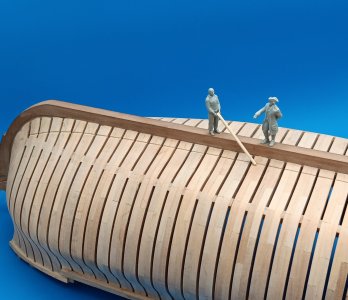
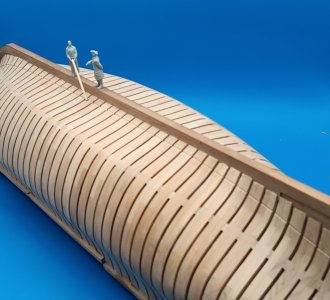
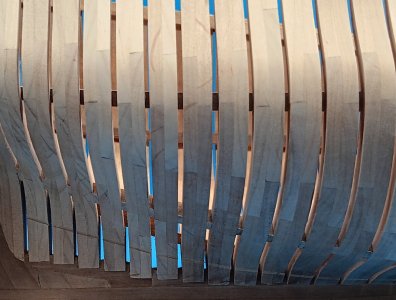
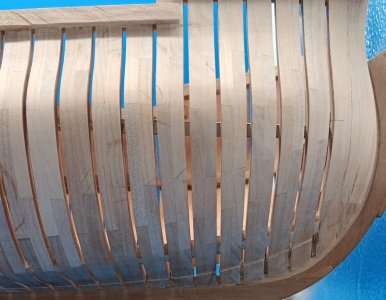
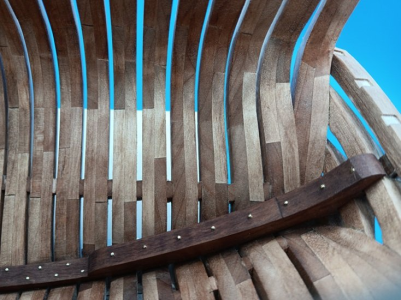
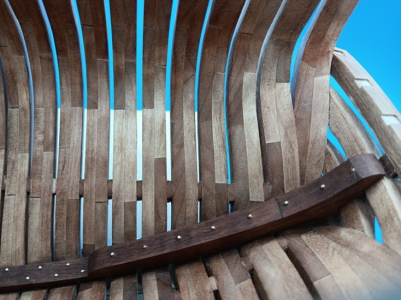
18 days caressing with rasps, sanding sticks and scrapers and the lines of "Salamandre" have appeared. Some small blemishes but overall, I'm satisfied.

Next up, the eel channels.

Bow:
View attachment 573170

Stern:
View attachment 573173View attachment 573174View attachment 573175


midships:
View attachment 573171View attachment 573172

Sideview:
View attachment 573176View attachment 573177

Ovrhead:
View attachment 573178

Interesting view of the stern:
View attachment 573180

A low spot that needed filling:
View attachment 573179
Wow that is quality stuff Brad. Bravo. Real ebony for the wales is the way to go. I tried to mill some with my hand tools but gave up as it is super hard wood. Love your work. Cheers Grant
 
Looks terrific Brad - very nice work !!!!
Wow that is quality stuff Brad. Bravo. Real ebony for the wales is the way to go. I tried to mill some with my hand tools but gave up as it is super hard wood. Love your work. Cheers Grant
You should more than satisfied. Gorgeous!
Wow! That was worth every bit of the effort! Great outcome, Brad!
Thanks all for the kind words!

Grant, I think the ebony will work nicely, from my test steaming/bending.

Early on, there was some discussion about using Alder (which is on the softer end of hardwood). A few of the blemishes are due to small chips of Alder coming off on crisp (or thin) edges, while sanding or filing. Not sure this would happen if all the frames were made of pear???

Most are hardly discernable unless magnified in photos or with bright light and glasses. One chip-out, on the stern counter timbers, I will try and fill/sand/blend. I'll post some closeups before/after when I fill it.
 
Started experimenting with the Limber Channels (eel channels).

It's terrifying to cut a gouge in every frame, that took 18 days to fair smooth. I needed a foolproof, repeatable method before cutting the channels.

Many beautiful models omit this detail (possibly, the builders are also terrified of marring a beautifully faired hull)??

Below process is very basic stuff. I want to help anyone by sharing the method this shipyard came up with.

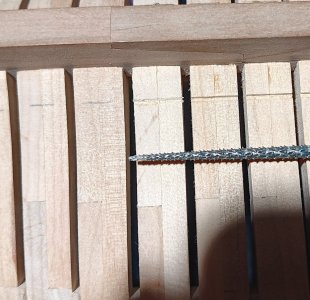
1. Below photo shows how small a 4x4 inch limber channel is. A square jewelers file is shown next to the channel.
20260127_193415.jpg

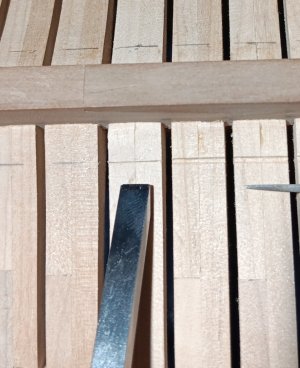
2. Shipyard laid out a line, then used a sharp chisel to define the centerline of the channel.
20260127_194038.jpg
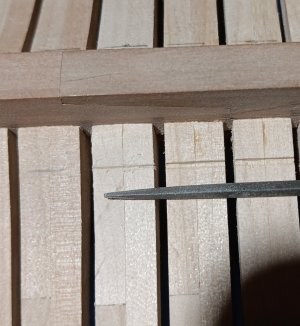
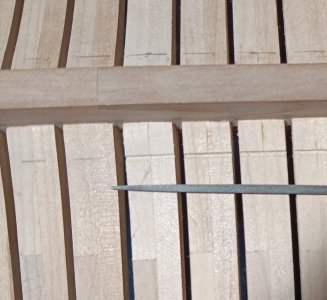
3. Next a triangle jewelers file increased the depth of this chisel line.
20260127_194252.jpg

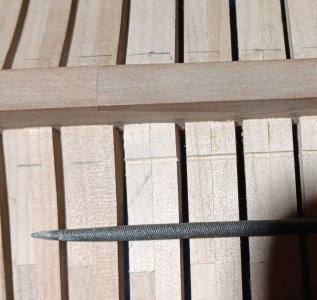
4. A few passes with a round jeweler's file increased the width and depth slightly.
20260127_193834.jpg

5. Next a rough #2 cut round rasp quickly cut to the final depth and width.
20260127_194634.jpg

6. A round file smoothed the edges.
20260127_194834.jpg

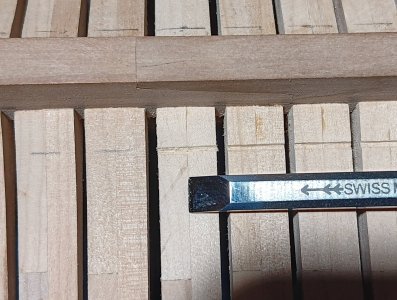
7. The chisel squared the round edges.
20260127_195105.jpg

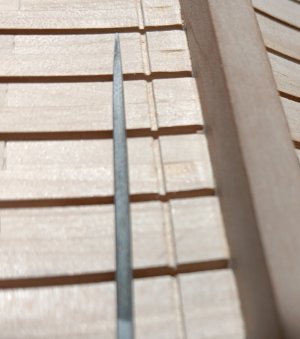
8. Finally, a few passes with a square jeweler's file gave a square 4"x4" limber channel.
20260127_195421.jpg

6 minutes/frame x 86 frames = 516 mins (estimate 8.5 hours to do all the frames).

Sorry for the long post. This worked for me and I hope it helps someone else in the future.

 
Started experimenting with the Limber Channels (eel channels).

It's terrifying to cut a gouge in every frame, that took 18 days to fair smooth. I needed a foolproof, repeatable method before cutting the channels.

Many beautiful models omit this detail (possibly, the builders are also terrified of marring a beautifully faired hull)??

Below process is very basic stuff. I want to help anyone by sharing the method this shipyard came up with.

1. Below photo shows how small a 4x4 inch limber channel is. A square jewelers file is shown next to the channel.
View attachment 573600

2. Shipyard laid out a line, then used a sharp chisel to define the centerline of the channel.
View attachment 573603
3. Next a triangle jewelers file increased the depth of this chisel line.
View attachment 573604

4. A few passes with a round jeweler's file increased the width and depth slightly.
View attachment 573602

5. Next a rough #2 cut round rasp quickly cut to the final depth and width.
View attachment 573605

6. A round file smoothed the edges.
View attachment 573606

7. The chisel squared the round edges.
View attachment 573607

8. Finally, a few passes with a square jeweler's file gave a square 4"x4" limber channel.
View attachment 573608

6 minutes/frame x 86 frames = 516 mins (estimate 8.5 hours to do all the frames).

Sorry for the long post. This worked for me and I hope it helps someone else in the future.

Good morning Brad. You have plenty skills. Making a limber channel is something I won’t attempt at the moment. “Safe option”. Well mine would look like the hind leg of a donkey ROTF. Respect. Cheers Grant
 
Three New updates!

1. 6-year-old granddaughter's inoperable, brain tumor, finally showed signs of shrinkage! 2mm after 4 months on a new chemo regimen! Prayers for continued shrinkage are welcomed!

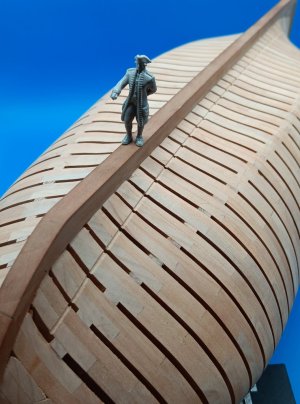
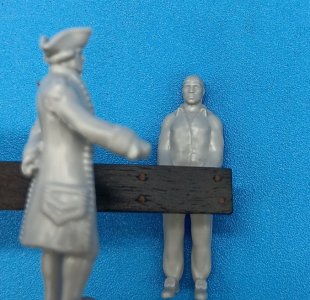
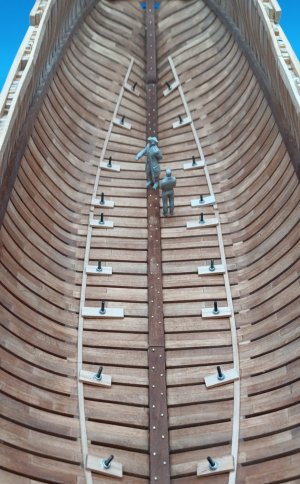
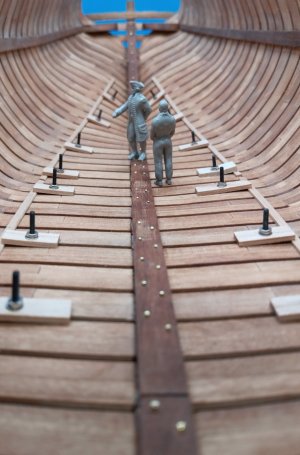
2. Two different 3D figures, from Kiev, arrived today. They are available in any scale and very detailed. Here is a link: French Officers. Below shows the Shipyard Superintendent and PO Brutis reviewing the Limber Channel progress.

20260130_173131.jpg

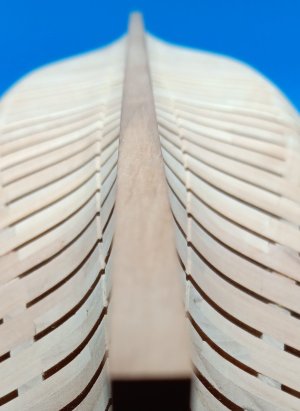
3. The Limber Channels were completed! 2-hours/day, while babysitting our 3-year-old grandson (naptime or after bedtime). Some views:

20260130_173155.jpg20260130_173741.jpg20260130_174527.jpg20260130_174653.jpg20260130_174804.jpg

Thanks for your continued interest.
 
. 6-year-old granddaughter's inoperable, brain tumor, finally showed signs of shrinkage! 2mm after 4 months on a new chemo regimen! Prayers for continued shrinkage are welcomed!
Good morning Brad. Freak this is hard. I wish you and your family all the best Brad. That is so cool about the shrinkage and may this continue. She will most certainly be in my prayers. Cheers Grant
 
Grant, Paul, and Russ...Thank you for the prayers and thoughts for little Abby. She is incredible!

Treenail experiment, for the wales.

The ones on the right are from "Safeway" brand toothpicks and take seconds to make.
The ones on the left are from pearwood and take much longer.

treenail test.jpg

Dimensions:
Hole drilled: .033inches = 1.58". Slightly oversized (actual treenails would be about 1.1-1.3"). But smaller and I'll be breaking drill bits left and right!
Barnes draw plate hole #41

As far as I can tell in these pictures the toothpicks (right) look just as good as the pearwood, so toothpicks it will be!
 
Grant, Paul, and Russ...Thank you for the prayers and thoughts for little Abby. She is incredible!

Treenail experiment, for the wales.

The ones on the right are from "Safeway" brand toothpicks and take seconds to make.
The ones on the left are from pearwood and take much longer.

View attachment 574537

Dimensions:
Hole drilled: .033inches = 1.58". Slightly oversized (actual treenails would be about 1.1-1.3"). But smaller and I'll be breaking drill bits left and right!
Barnes draw plate hole #41

As far as I can tell in these pictures the toothpicks (right) look just as good as the pearwood, so toothpicks it will be!
Your math is good. But are you sure that was Byrnes hole #41? That seems too large to me (?).

I made treenails out of boxwood and to get them to 0.6 mm (0.023 inches) I went all the way to a hole in the mid 20's (maybe 24/26 range). Drill bit was just over 0.6 mm.

Not suggesting you need to shoot for something that small (in fact, I doubt pear can be drawn to 0.6 mm) - just thinking #41 is bigger than 0.33 inches (no, I have not checked it myself - just thinking out loud...).
 
Not suggesting you need to shoot for something that small (in fact, I doubt pear can be drawn to 0.6 mm) - just thinking #41 is bigger than 0.33 inches (no, I have not checked it myself - just thinking out loud...).
I just checked.

I drew down a toothpick to 41, and diameter was 0.036" which give a nice snug fit in the .033" hole.

I did some test holes with 0.030" and 0.027" bits. I'll relook at them, as I don't want the treenails to be overpowering visually!!

What did you use to drill the 0.6mm holes (a hand held drill, rotary tool or a magic dental tool)? Any clues/advice appreciated!

Those bits get really fragile at that diameter, and I end up snapping them with a hand drill.
 
What did you use to drill the 0.6mm holes (a hand held drill, rotary tool or a magic dental tool)? Any clues/advice appreciated!
You can't use a hand-held drill (nor do you want to for this volume of holes). I use a mini-rotary tool. I don't think I broke a single drill bit. You only go in a few mm.

My posting was not a challenge to the treenail size. If you like the look just proceed as you planned. I was just worried about your #41 results.
 
A plan is developing!

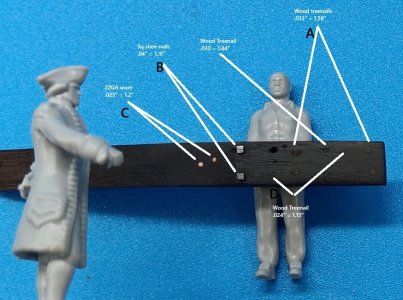
20260201_114531.jpg

My thoughts:

I believe French Wales would look like A.
Why? I think the bolt heads would be countersunk and covered with a plug/wood bung.
Why would bolts be covered and not exposed?
1. To prevent corrosion from salt spray.
2. To prevent gouging and scraping piers or other ships tied alongside.

I believe major interior structures (Keelson, Riders, Bow Hooks, etc) would look like B.
Why? The bolt head would be left exposed, since they wouldn't be rubbing against other ships/piers/etc.
I like the square shoe-nails that arrived today so much I may redo the round bolt heads on my keelson below, IF I can get them out easily!

My "Artistic License" plan? Use C and D, to copy the beautiful method Tobias used on his "Le Rochefort"
1. Below the Wales: Bolts and Treenails of .024-.025" (scale: 1.15-1.2") alternating, sanded flush.
2. The Wales: Bolts of .025" (scale: 1.2"), sanded flush. I like the effect, especially against the dark ebony wood.
3. Above the Wales: Treenails of matching wood for a very subtle nailing effect.

Any feedback or thought appreciated.

These are the keelson bolts I MAY replace, if I can get the round ones out.
1769978292839.png

Thanks for watching.

1769976903043.png
 
PO Brutis laid out templates to define the lines for the first plank of the thick stuff (shadowed in below):
20260205_215252.jpg

Shipyard superintendent confirmed the "step up" on the three risers matched and approved the lines!

Now, the shipyard will attempt to steam and bend the "thick stuff" to follow these templates.

20260205_202716.jpg20260205_202859.jpg
 
Back
Top